CoreLogic’s 2016 Housing Market Forecast: A Comprehensive Outlook
As the calendar turns, real estate experts eagerly release their annual predictions, shaping expectations for buyers, sellers, and investors alike. For 2016, CoreLogic, a leading provider of consumer, financial, and property information, has stepped to the forefront with its detailed forecast and data brief. While some voices, like Steve Brown, may have painted a picture of “doom and gloom,” CoreLogic’s report offers a significantly more optimistic perspective. Their analysis suggests not only a robust increase in home sales and overall housing demand but also a continued upward trajectory for rental prices. This comprehensive outlook from CoreLogic’s Office of the Chief Economist provides invaluable insights into the anticipated shifts within the housing economy, offering a clearer roadmap for the year ahead.
Key Predictions for the 2016 Housing Market
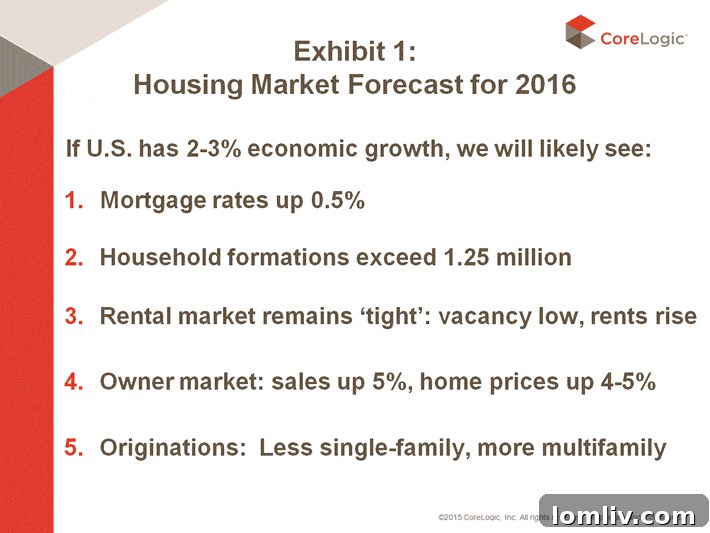
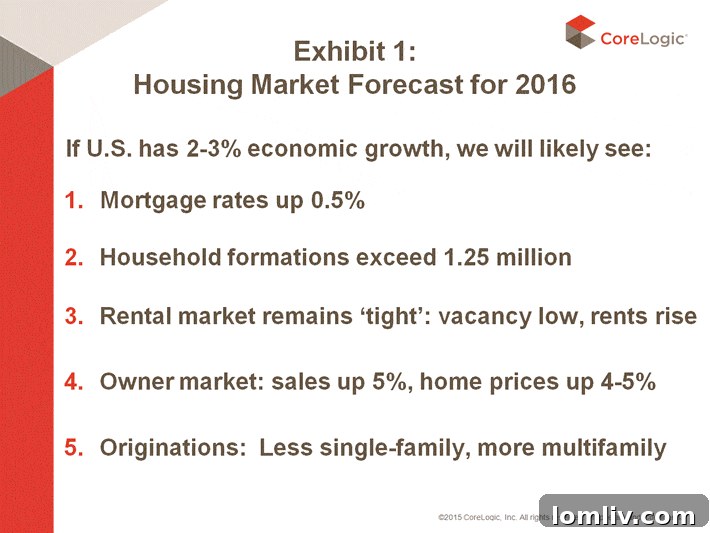
Dr. Frank Nothaft, Senior Vice President and Chief Economist at CoreLogic, outlined five critical features expected to define the housing market in 2016. These predictions collectively paint a picture of steady growth, influenced by broader economic improvements and evolving demographic trends. Understanding these core forecasts is essential for anyone navigating the complex world of real estate, from first-time homebuyers to seasoned investors, seeking to make informed decisions in the upcoming year.
1. Interest Rates Will Gradually Move Higher
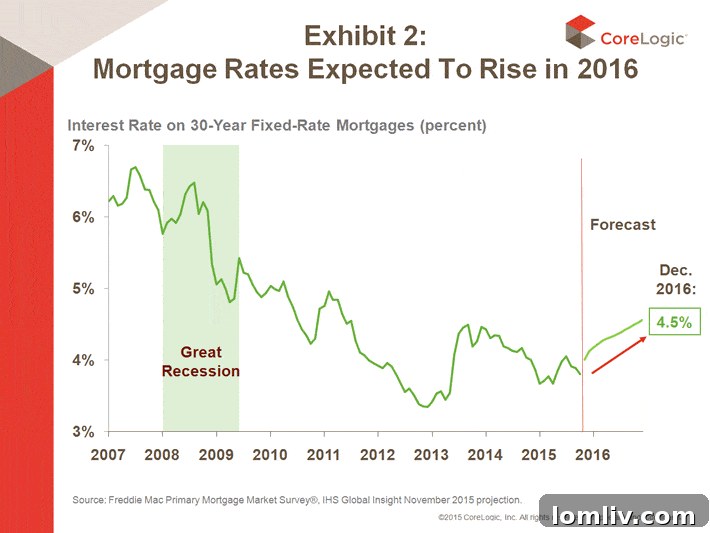
One of the most anticipated shifts in the financial landscape for 2016 involves interest rates. CoreLogic predicts a gradual but noticeable increase, primarily driven by the Federal Reserve’s expected adjustments to short-term interest rates. The Fed is anticipated to raise rates by approximately one percentage point by the end of 2016, a strategic move signaling growing confidence in the overall economic recovery and a proactive approach to managing inflation. This will have direct and varied implications for different types of mortgages and housing affordability.
Homeowners currently holding adjustable-rate mortgages (ARMs) or home-equity loans (HELOCs) are most likely to experience a rise in their monthly payments as the rates on these products reset in response to the Fed’s actions. For those considering new fixed-rate mortgages, such as the popular 30-year loan, rates are also projected to climb, potentially by half a percentage point, reaching around 4.5 percent by year-end. While this represents an increase from recent historical lows, it’s crucial to contextualize this prediction: despite the rise, mortgage rates are expected to remain historically low when viewed against long-term trends, still offering attractive financing opportunities for many prospective buyers. This gradual upward movement of rates will undoubtedly influence buyer urgency, potentially prompting some fence-sitters to enter the market sooner, and it will also reshape refinancing decisions throughout the year.
2. Household Formations Will Significantly Add to Housing Demand
A significant and often underestimated driver of increased housing demand in 2016 is the projected surge in household formations. CoreLogic forecasts that more than 1.25 million new households will be established next year, a robust increase that reflects positive developments in the labor market. As the economy strengthens, unemployment rates decline, and job opportunities expand, more individuals and families gain the financial stability needed to move out on their own, whether into a rental unit or a purchased home.
This demographic shift is particularly impactful as younger generations, especially millennials, increasingly enter their prime earning and household-forming years. Improved employment prospects provide the confidence and means for these individuals to establish independent living situations, whether leaving parental homes, moving out of shared housing, or starting families. This influx of new households will exert substantial pressure on the housing market, creating a palpable increase in the need for both rental units and entry-level homes, thereby stimulating demand across the entire housing spectrum. This trend underscores the fundamental link between a healthy job market and a vibrant housing sector, demonstrating how economic prosperity directly translates into a greater need for residential properties.
3. Rental Homes Will Continue to Be in High Demand
Building on the theme of increased household formations, the rental market is poised for another year of intense demand. Currently, rental vacancy rates are at or near their lowest levels in two decades, indicating a severe shortage of available units across many regions. This scarcity, combined with the influx of new households – many of whom will initially opt for renting due to affordability challenges in the purchase market or lifestyle choices – is expected to keep the rental market exceptionally tight throughout 2016.
CoreLogic’s report highlights that rents are continuing to rise at a pace faster than general inflation, a clear symptom of the persistent supply-demand imbalance. This high demand extends across both apartment complexes and single-family rental homes, making it challenging for renters to find affordable options in many desirable areas. Young households, in particular, are expected to be key drivers of this demand, often preferring the flexibility and lower upfront costs associated with renting as they establish careers and save for future homeownership. For real estate investors, this sustained strong rental market presents ongoing opportunities, albeit within an environment of increasing property values and fierce competition for desirable assets. Understanding these dynamics is crucial for both renters facing rising costs and investors evaluating potential returns.
4. Home Sales and Home Prices Will Likely Increase
Beyond the booming rental sector, CoreLogic anticipates a strong performance for the homeownership market in 2016. Overall purchase demand is expected to lift home sales to their highest levels since 2007, marking a significant milestone in the housing market’s recovery journey. This optimistic forecast is rooted in a strengthening economy, which has fostered an enhanced sense of financial security and confidence among potential homebuyers. Improved employment, stable wages, and a general feeling of economic stability are key contributors to this positive shift.
Nationally, home prices are also projected to continue their upward trend, although at a more moderate and sustainable pace compared to previous years. The CoreLogic Home Price Index recorded a robust year-over-year increase of 6 percent in the preceding 12 months. For 2016, the expectation is for price increases in the range of 4-5 percent. This moderation suggests a healthier market environment, less prone to the rapid, unsustainable appreciation seen in pre-recession years, yet still providing homeowners with consistent equity growth. The improved economic climate, characterized by job growth, rising wages, and consumer confidence, collectively contributes to a more confident homebuyer base, translating into increased transaction volumes and steady price appreciation across various segments of the market. This scenario benefits both sellers, who see their investments grow, and buyers, who can purchase in a stable, predictable market.
5. The Dollar Volume of Single-Family Mortgage Originations Will Fall Approximately 10 Percent
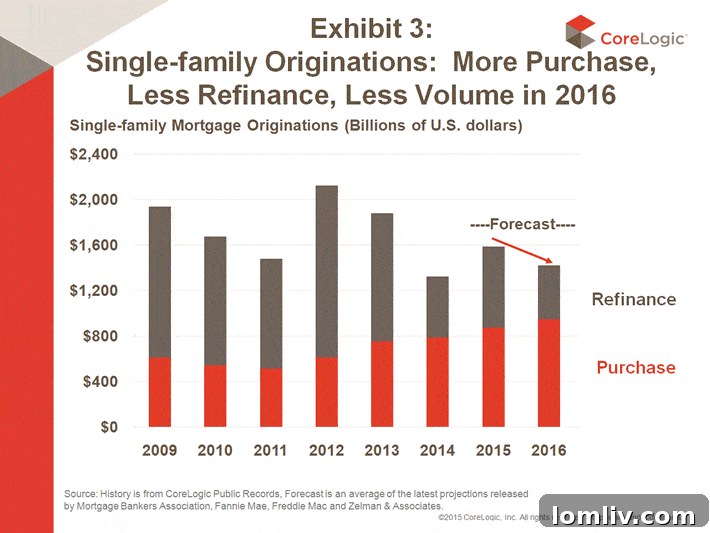
Despite the positive outlook for home sales and prices, CoreLogic forecasts a counter-intuitive trend: a roughly 10 percent decline in the dollar volume of single-family mortgage originations. This projection, however, requires a deeper look into its underlying components, revealing a nuanced picture of the lending landscape.
While originations for home purchase loans are expected to rise by about 10 percent in volume next year – a direct reflection of increased home sales – and home equity lending is also anticipated to grow as property values rise, these gains will be significantly offset by a sharp decline in refinancing activity. A substantial 34 percent drop in refinance originations is projected, primarily due to rising mortgage rates and a dwindling pool of borrowers who would find a strong financial incentive to refinance. As interest rates creep upwards, fewer homeowners will benefit from exchanging their existing mortgage for a new one at a lower rate. This sharp reduction in refinance volume is the primary factor pulling down the overall single-family mortgage origination numbers.
Conversely, multifamily originations are expected to rise, mirroring the strong demand in the rental market and an increase in new construction projects for apartment complexes and other multi-unit dwellings. This growth in multifamily lending reflects higher property values in urban centers and the persistent need for new development to meet ongoing housing demand, adding to permanent mortgage usage in that sector. This dichotomy highlights a shift in the mortgage market, moving away from refinancing booms towards a stronger focus on purchase and new construction lending.
Broader Economic Context and Outlook for 2016
Dr. Frank Nothaft aptly summarizes the overarching economic sentiment that underpins these housing predictions: “As we approach the start of 2016, the consensus view among economists is that economic growth will continue, and the U.S. will enter an eighth consecutive year of expansion in the second half of next year.” This sustained period of growth is a critical foundation for the housing market’s health, providing the stability and confidence necessary for consumers to engage in significant financial decisions like homeownership.
Most forecasts align on an economic growth rate of between 2 and 3 percent during 2016. This moderate yet steady expansion is expected to generate a sufficient number of jobs to exert further downward pressure on the national unemployment rate. A robust job market directly translates to higher consumer confidence, increased disposable income, and greater financial stability for households, all of which are vital ingredients for a thriving real estate sector. The interconnectedness of economic performance and housing market vitality is undeniable, and CoreLogic’s predictions are firmly anchored in this positive macroeconomic outlook, suggesting a virtuous cycle where economic strength fuels housing demand, and a healthy housing market, in turn, contributes to broader economic stability.
Conclusion: A Year of Measured Growth and Shifting Dynamics
CoreLogic’s 2016 housing market forecast presents an encouraging picture of measured growth and evolving dynamics. Far from a “doom and gloom” scenario, the predictions highlight a market characterized by increasing demand for both ownership and rental properties, primarily driven by a strengthening economy and a new wave of household formations. While interest rates are set to rise gradually, they are expected to remain historically low, supporting continued buyer activity and keeping mortgage payments manageable for many.
The moderation in home price appreciation signals a healthier, more sustainable market, moving away from rapid, unsustainable gains towards steady, predictable growth. The nuanced outlook for mortgage originations, with a clear distinction between declining refinance activity and rising purchase/home equity loans, offers a more granular understanding of lending trends and the changing needs of borrowers. Overall, 2016 appears poised to be a year of continued recovery and expansion for the U.S. housing market, demanding informed decisions from all participants as they navigate its shifting currents and capitalize on the opportunities presented by a more stable and growing economy.