The Future of Texas Real Estate: How Evolving Remote Work Trends are Shaping 2024 and Beyond
As we navigate the ever-evolving landscape of the modern workforce, a critical question emerges for the Texas real estate market: How will the dynamic shifts in remote work trends influence property values, migration patterns, and housing demand across the Lone Star State in 2024 and for years to come?
The profound connection between flexible work arrangements and the real estate market became undeniably clear during the unprecedented challenges of the COVID-19 pandemic. Widespread shelter-in-place orders compelled millions of professionals to vacate traditional corporate offices, giving rise to a new era of remote work. This dramatic pivot irrevocably altered perceptions of where and how work could be conducted, triggering a significant wave of demographic shifts.
The impact of this shift on Texas was particularly pronounced. According to a report by Axios Austin, the percentage of Texans working remotely surged from a mere 6 percent in 2019 to an impressive 16 percent in 2021. While 2020 presented unique circumstances that made it an outlier in statistical analysis, the subsequent years solidified remote work as a powerful, enduring force in the job market, directly influencing housing preferences and interstate migration.
The Evolution of Remote Work: A Brief History
While the pandemic dramatically accelerated its adoption, the concept of remote work, or telecommuting, is far from new. Its origins can be traced back to the advent of the internet and broadband technology, which enabled the efficient transmission of large data files and liberated communication from restrictive phone lines. For decades, various industries have leveraged these technological advancements to offer limited flexibility, proving that productivity wasn’t solely tied to a physical office space.
Even before the global health crisis, remote work was steadily gaining traction. Between 2017 and 2018, over 34 million full-time workers in the United States already had the option to work from home or remotely. A significant majority of these early adopters reported high levels of satisfaction, often citing improvements in work-life balance, reduced commute stress, and an overall positive impact on their mental well-being. This early success laid the groundwork for the widespread acceptance of remote work when necessity demanded it.
However, the rapid and often unplanned transition to fully remote setups during the pandemic also brought its own set of challenges. While many celebrated the newfound flexibility, questions began to arise about its long-term sustainability and efficacy. Is a fully remote model truly the optimal path for every employee and every organization?
The World Economic Forum, among other thought leaders, has explored the potential downsides of an exclusively remote environment. Concerns have been raised regarding the potential for stifled creativity and innovation due to reduced spontaneous collaboration. The blurring of workplace boundaries can lead to burnout and difficulty disconnecting, while some career development experts hypothesize that prolonged absence from the physical office might stunt professional growth for some individuals. These evolving perspectives have paved the way for a more nuanced approach: the hybrid work model.
The Rise of Hybrid Working and Its Implications for Texas Real Estate
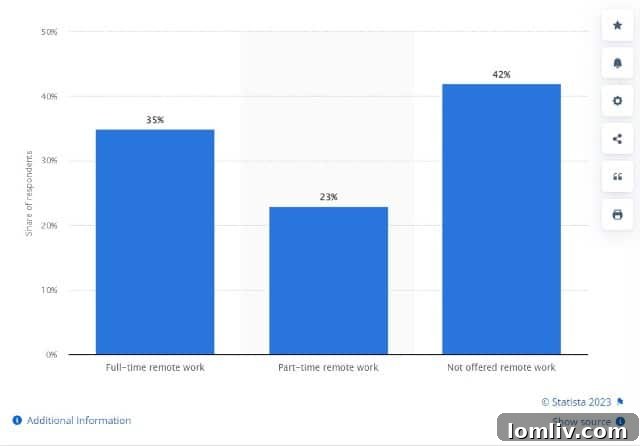
The hybrid model, blending periods of remote work with mandatory in-office presence, has emerged as a favored solution for many modern organizations navigating the post-pandemic workforce. This approach aims to strike a balance, retaining the flexibility valued by employees while recapturing the benefits of in-person collaboration and fostering company culture. However, this pivot has significant implications for the Texas real estate market, which has thrived on the influx of remote workers seeking new homes.
One of the most notable impacts of the fully remote work surge was the accelerated migration of professionals from high-cost-of-living states, particularly California, to more affordable and business-friendly locales like Texas. As a licensed Realtor deeply embedded in the Texas market, I have personally witnessed and facilitated this trend. Over the past few years, I’ve had the privilege of assisting more than 30 individuals and families from states such as California, Oregon, Ohio, Georgia, and New York relocate to Texas. Their primary motivation was often the freedom to maintain their existing jobs while enjoying the myriad advantages Texas offers.
These advantages are compelling and multi-faceted. Remote workers were drawn to Texas for its favorable social, educational, and political climates. The state’s generally warmer actual temperatures and abundant sunshine were also a draw. Critically, the promise of more affordable housing compared to their previous residences, coupled with the absence of a state income tax, presented an irresistible financial incentive. The allure of the Lone Star State, with its robust economy, diverse job markets, and vibrant culture, proved to be a powerful magnet. After all, who wouldn’t want to experience the unique charm and opportunity that Texas embodies?
The evolving corporate stance on remote work now presents a nuanced picture for Texas. While Texas remains highly attractive, the increasing adoption of hybrid work policies means corporations are reevaluating their stance on fully remote employees, particularly those who have moved across state lines. This reevaluation means that companies may no longer readily bless the migration of their employees from places like California as frequently as we’ve observed in recent years. This change in corporate policy could have considerable ramifications, potentially causing a slowdown in the previously booming Texas real estate market driven by out-of-state remote workers.
This shift is echoed by real estate professionals across the state. Many Realtors across the Dallas-Fort Worth (DFW) area, whom I’ve consulted for this article, confirm this emerging trend. They are observing a noticeable deceleration in the number of people relocating to the region specifically for remote work opportunities. One agent recounted a significant sale that fell through at the eleventh hour because the main corporation, based in California, rescinded its permission for the employee to work entirely remotely from Texas, requiring a partial return to the office. This anecdote highlights a growing reality where corporate needs for in-person collaboration and team cohesion are taking precedence over full remote flexibility.
Companies are increasingly recognizing the tangible benefits of having workers back in the office, even if only for a few days a week. The advantages include enhanced team dynamics, improved communication, quicker problem-solving, and a stronger company culture. Consequently, organizations are leaning towards mandating a hybrid schedule rather than allowing employees to operate solely from a home office, especially when that home office is several states away. A Realtor from California corroborated this sentiment, sharing observations that more and more companies are hinting at recalling workers back into physical offices throughout 2024 and are becoming less willing to guarantee future employment for those who insist on remaining fully remote.
Texas Real Estate Outlook: Adapting to New Remote Work Realities in 2024 and Beyond
The evolving corporate stance on remote work presents a new set of challenges and opportunities for the Texas real estate industry. What was once a seemingly boundless opportunity for home builders, mortgage lenders, Realtors, and relocation companies like FindAMover, driven by a surge of remote-enabled migration, might experience a significant tempering in 2024. If companies continue to scale back fully remote options, the stream of new residents moving to Texas primarily for remote work flexibility will undoubtedly diminish.
This does not, however, signal a complete halt or collapse of the Texas real estate market. Far from it. The fundamental strengths that underpin the Lone Star State’s economy—its robust job growth, diverse industries, favorable business climate, and ongoing corporate relocations—will continue to fuel demand. Many major corporations are themselves choosing to move their headquarters and operations to Texas, bringing with them a substantial workforce that will require housing, office space, and commercial services. This organic growth will remain a powerful driver for the market, albeit one with different characteristics than the remote-worker-driven boom.
The adjustment will primarily involve a shift in market dynamics. Sellers, Realtors, and home builders will need to recalibrate their strategies, relying less and less on the specific demographic of migrating families who can maintain their existing out-of-state jobs and work from spacious home offices in Texas. Instead, the focus will increasingly return to local demand, in-state job growth, and the appeal of Texas cities for traditional employment opportunities.
This transition could lead to a more balanced market, potentially easing the intense bidding wars and rapid price appreciation seen in previous years. It might also encourage a renewed focus on building homes and communities that cater to local Texas residents and those moving for traditional employment, rather than solely for the allure of remote work. The cities highlighted in studies, such as the one suggesting Three North Texas Cities Are Ideal For Remote Workers, may still attract talent, but the context for relocation will evolve.
Furthermore, broader economic factors will continue to play a pivotal role. The question of interest rates, often a subject of intense speculation, remains crucial for affordability and buyer confidence. If interest rates decline, as many hope they will, it could provide a renewed stimulus to the market, counteracting some of the softening caused by changing remote work policies. Conversely, persistent high rates would add further pressure.
Welcome to 2024, a year poised to redefine the relationship between work, residence, and real estate. The Texas market, resilient and dynamic as ever, is entering a new phase of adaptation. While the era of unchecked remote-worker migration may be moderating, the state’s intrinsic appeal and economic vitality ensure its real estate market will continue to thrive, albeit in nuanced and evolving ways. The conversation now shifts from “can they work from anywhere?” to “where do companies want their employees to be?” and how that shapes the next chapter of Texas growth. Let’s hope for favorable economic winds, particularly concerning interest rates, to help guide this exciting transition.