

In the highly competitive world of American real estate, the annual Real TRENDS + Tom Ferry rankings serve as a definitive benchmark for excellence, recognizing the industry’s most prolific and successful agents. This year’s prestigious list of the top 1,000 agents once again highlighted outstanding performance, with Ben Caballero’s renowned brand, HomesUSA.com, securing the leading position. His innovative approach and unparalleled success earned HomesUSA.com the top spot for both agent-owned brokerage by volume and agent-owned brokerage by transactions, a testament to his consistent dominance in the new home sales sector.
Ben Caballero, an Addison-based real estate mogul, is no stranger to the pinnacle of industry recognition. In previous years, Caballero and HomesUSA.com have consistently dominated these prestigious lists, earning him numerous Guinness World Records for his staggering sales volume. His unique business model, which specializes in the sale of new construction homes, has repeatedly set new standards for efficiency and scale in the real estate market. His ability to streamline the sales process for home builders has positioned him as a pioneer, demonstrating how specialized services can achieve extraordinary results.
However, the 2020 edition of the Real TRENDS + Tom Ferry The Thousand introduced a significant methodological shift, employing a new way of calculating and categorizing top producers. This evolution in ranking criteria aimed to provide a more nuanced and equitable representation of success across the diverse landscape of real estate teams. The new approach segmented teams based on their size, specifically by the number of licensed Realtors they employ: small teams (2-5 licensed members), medium teams (6-10 licensed members), and large teams (11-plus licensed members). This granular segmentation acknowledges the varying operational models and resources available to different team sizes.
Steve Murray, the respected president of REAL Trends, articulated the rationale behind these changes, stating, “We changed the ranking categories to allow for a more accurate and equal representation of successful agents and teams based on size and business models.” This adjustment underscores the industry’s ongoing effort to adapt its metrics to reflect the dynamic nature of modern real estate practices, ensuring that achievements are recognized within appropriate contexts, whether an individual agent or a large-scale team operation. The goal was to provide a clearer picture of who truly excels within their specific operational frameworks.
While Ben Caballero’s brand excelled in the brokerage categories, the individual agent rankings also celebrated remarkable achievements across the nation. Although Caballero did not take home any individual awards under the new structure, other prominent agents in the Dallas-Fort Worth metropolitan area made their mark. Faisal Halum of Briggs Freeman Sotheby’s International Realty distinguished himself by securing the No. 134 ranking for individual sales volume, boasting an impressive $85,188,521. This substantial volume highlights his expertise in luxury markets and high-value transactions, indicative of a sophisticated client base and an acute understanding of premium properties.
Furthermore, Ashlee McGhee, representing Keller Williams Dallas Preston Road, earned the No. 77 spot in the category of individuals by transaction sides, with a robust 159.3 transactions. This high number of transaction sides points to a consistently active and high-velocity sales practice, often requiring exceptional organizational skills and a broad network of clients. Similarly, Anastasia Riley of Ebby Halliday Realtors also showcased her transactional prowess, landing at the No. 153 spot for individuals by transaction sides with 128 transactions. These individual accomplishments underscore the vibrant and competitive nature of the North Texas real estate market, where dedication and client focus translate directly into measurable success. These agents, through their commitment and strategic approaches, continue to shape the regional real estate landscape, inspiring peers and setting high standards for professional achievement. For those interested in delving deeper into the comprehensive data and rankings, the full Real TRENDS + Tom Ferry The Thousand report is readily accessible, offering invaluable insights into the top echelons of American real estate performance.
The full Real TRENDS + Tom Ferry The Thousand can be found here.
New Survey Shows Homeowners Are Shelling Out to Upgrade Homes

If the monotony of your current living space has started to set in, rest assured, you are far from alone. The unprecedented shifts brought about by recent global events have dramatically altered daily routines, compelling more individuals to spend extended periods within the confines of their homes. This increased domestic time has ignited a widespread desire among American homeowners to embark on, and often complete, significant home improvement projects. From minor aesthetic updates to major structural overhauls, the drive to enhance personal surroundings has become a prominent trend, reflecting a collective need for comfort, functionality, and renewed inspiration in their primary sanctuaries.
Data compiled by LendingTree, a leading online lending marketplace, provides compelling evidence of this surging interest. Researchers at LendingTree observed a higher-than-average rate of personal loan requests specifically earmarked for home improvement endeavors since the onset of the pandemic. To gain a deeper understanding of this phenomenon, their team surveyed consumers who actively utilized LendingTree’s online platform. The objective was to ascertain how these individuals planned to upgrade their living spaces and, critically, how the COVID-19 crisis influenced their decisions and financial strategies.
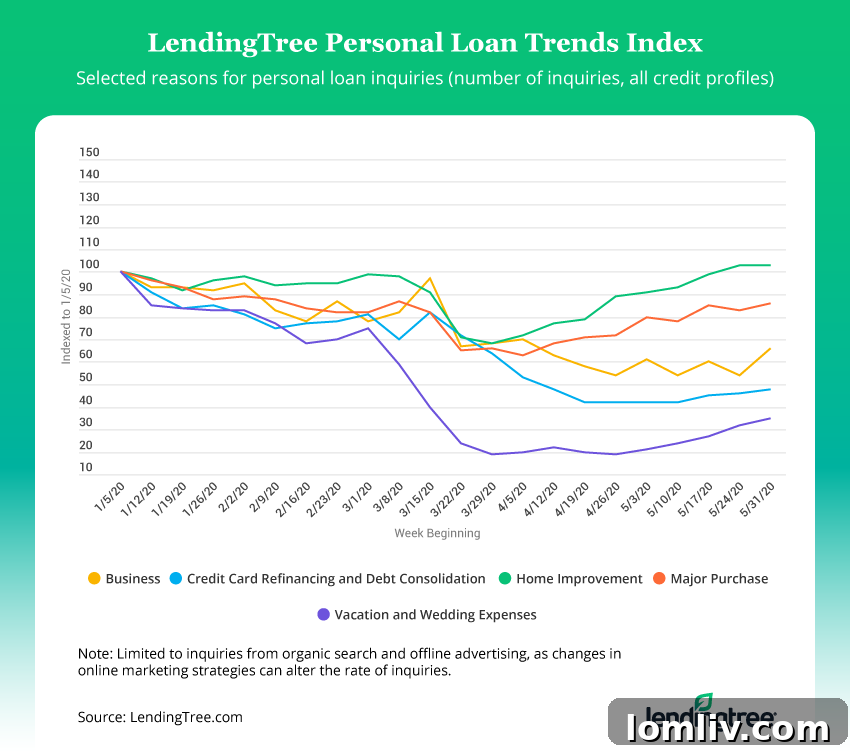
The survey results painted a clear picture of the pandemic’s multifaceted impact on homeowners’ decisions. Approximately one in three loan applicants explicitly stated that the pandemic played a pivotal role in their pursuit of a personal loan for home improvements. Within this segment of consumers, the motivations varied. A notable 18 percent reported that their income had been adversely affected by the pandemic, making it challenging for them to fund the desired purchases or projects out-of-pocket. This highlights a need for external financing to maintain quality of life despite economic uncertainties. Conversely, nearly one in ten consumers decided to tackle home improvement projects precisely because of the increased time they found themselves spending at home. This group sought to optimize their living environments, turning necessity into an opportunity for renovation and personalizing spaces that had become central to work, education, and leisure.
For those consumers who successfully secured a personal loan for home repairs, the focus areas were diverse yet practical. The most commonly repaired fixtures and structural elements included porches, decks, walls, windows, and flooring. These areas often experience significant wear and tear and contribute directly to a home’s curb appeal and internal comfort. A substantial portion of approved applicants, nearly one-third, specifically required funds to address pricey roof damage. This particular need underscores the importance of structural integrity and safety, often representing a critical investment to prevent more extensive and costly issues down the line.
Beyond essential repairs, homeowners also directed their attention towards enhancing specific high-value areas within their homes. The kitchen emerged as the top priority for improvements, capturing the interest of 35 percent of those looking to upgrade. Following closely, the bathroom was a key focus for 26 percent of homeowners. This prioritization makes sound financial sense for homeowners for several compelling reasons: improvements to the kitchen and bathroom are renowned for yielding a positive return on investment (ROI). These renovations not only enhance the daily living experience and appeal to the homeowner but also significantly increase a home’s market value and make it considerably easier to sell when the time comes. Modernized kitchens and bathrooms are often decisive factors for potential buyers, making them strategic investments in both comfort and future resale potential. For a deeper dive into these fascinating home improvement trends and consumer spending data, additional insights can be found by visiting LendingTree.com.
For more data, visit LendingTree.com.
Lack of Inventory Could Keep Home Prices High, Report Shows
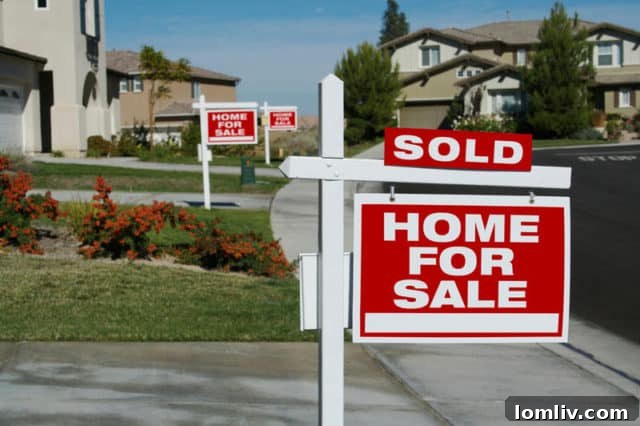
The American housing market continues to navigate a complex interplay of supply and demand, with recent insights from Zillow indicating a persistent challenge for potential buyers. New data reveals that buyer interest is robust and growing nationwide, signaling strong confidence in homeownership despite broader economic uncertainties. However, this escalating demand is confronting a critical bottleneck: a severe lack of fresh inventory. This imbalance is creating upward pressure on home prices, effectively keeping them at relatively high levels across many markets. While some localized markets might experience temporary dips in demand or modest price reductions, the overarching national trend is one where fewer homes available for sale continue to buoy overall price appreciation, sustaining a competitive environment for those looking to purchase.
The phenomenon of low inventory is driven by several factors. Many homeowners, benefiting from historically low interest rates, are choosing to refinance rather than sell, thus reducing the number of existing homes entering the market. Furthermore, lingering uncertainties from the pandemic have made some potential sellers hesitant to list their properties, adding to the inventory shortage. This scenario means that when homes do become available, they often attract multiple offers, leading to bidding wars and driving prices even higher, effectively creating a seller’s market even in regions where demand might fluctuate.
Focusing on a key metropolitan area, the Dallas-Fort Worth region presents a fascinating case study in these dynamics. While the national trend suggests sustained high prices due to low inventory, Dallas-Fort Worth has seen its own unique fluctuations. Home prices in the area are reported to be down by 2.4 percent compared to a year ago, suggesting a slight cooling from previous peaks or perhaps a temporary adjustment in specific submarkets. Intriguingly, inventory in the Dallas-Fort Worth market has actually increased by 6.4 percent over the same period from the previous month, providing a glimmer of hope for buyers seeking more options. This rise in inventory could indicate a regional divergence from national trends, possibly due to new construction coming online or a gradual return of seller confidence.
Despite the slight dip in year-over-year prices, other indicators in Dallas-Fort Worth point to strong market activity. Newly pending sales, a key forward-looking metric, surged by more than 14 percent over the last month. This substantial increase suggests a robust pipeline of deals moving towards closing, reflecting persistent buyer enthusiasm. However, the total listings for sale have seen a noticeable drop of 7.8 percent. This seemingly contradictory data highlights the rapid absorption of new listings by eager buyers, meaning that even with an increase in inventory, properties are being snatched up quickly, preventing a significant buildup of available homes on the market.
Looking ahead, the potential for a second wave of COVID-19, which has already impacted numerous metro areas across the country, introduces a layer of uncertainty into the housing market forecast. Such a development could dampen consumer confidence, potentially causing buyers to pause and sellers to delay listing their homes. Consequently, it is unlikely that the industry will witness any significant gains during what is traditionally the chief selling season for the region. However, the resilience of the housing market, coupled with underlying demand and favorable interest rates, means that a strong rebound in activity and prices is not entirely out of the question in the longer term. Market watchers will need to closely monitor economic indicators and public health developments to anticipate future trends. For those seeking even more detailed statistics and comprehensive analysis of these market movements, the full report from Zillow offers an invaluable resource for understanding the present and future trajectory of the housing landscape.
Want more statistics? See the full list here.