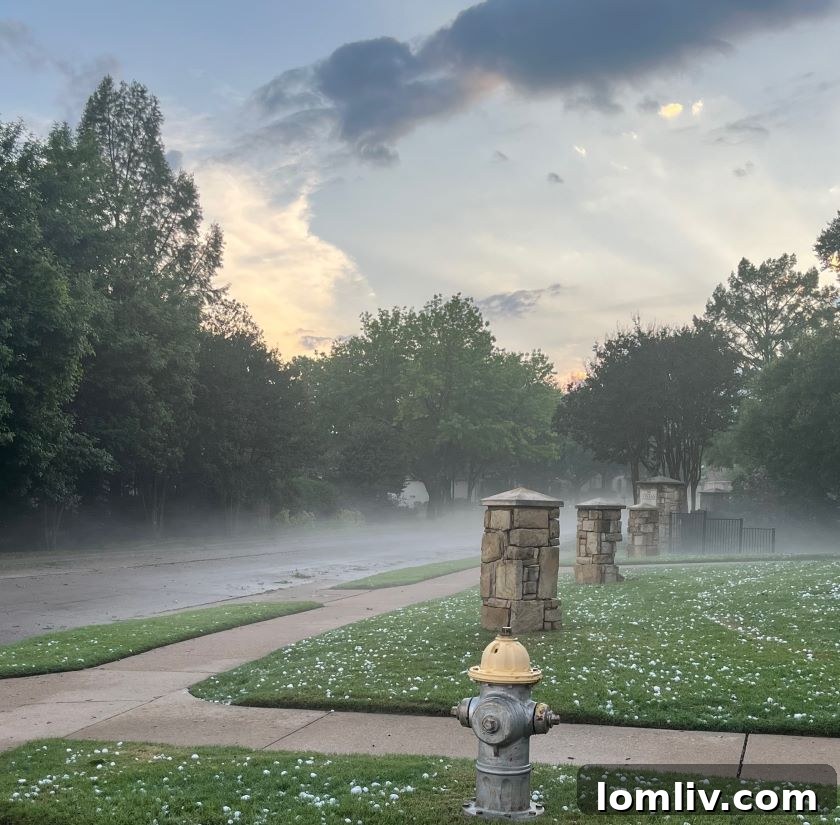
The sky darkens, the wind howls, and then it begins: the distinct, unsettling sound of ice pelting your home. For many homeowners in North Texas, this scenario is all too familiar. What started as a simple trip to see The Super Mario Bros. Movie recently turned into an unexpected crash course in insurance policies and contractor navigation for me, as a relentless hail storm descended upon Collin County. This personal experience unveiled a surprising amount I didn’t know about handling hail damage, a reality faced by countless residents in the Dallas-Fort Worth (DFW) metroplex.
The DFW area is notorious for its severe weather, experiencing an average of 35 hailstorms annually. While this doesn’t mean your property will be hit 35 times a year, the unfortunate truth is that hail damage to homes is an alarmingly common occurrence across this vast region. Whether you’re a long-time resident or considering a move to this vibrant part of Texas, understanding the ins and outs of post-hail recovery is crucial for protecting your most valuable asset.
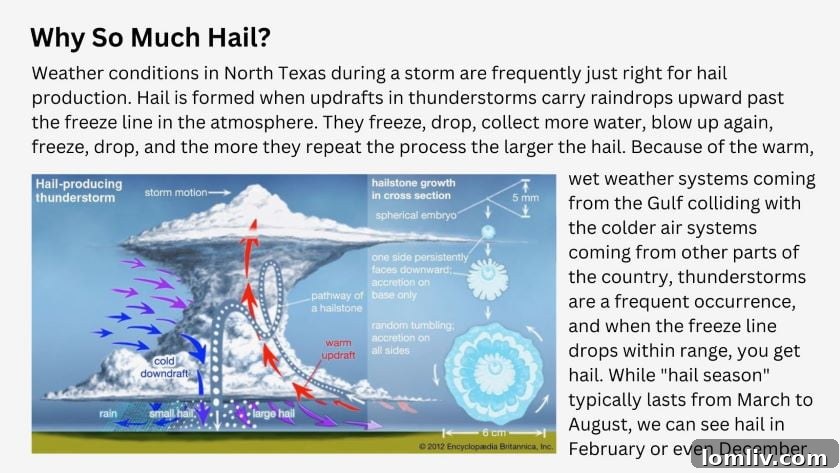
Navigating the Aftermath: A Personal Account of the Allen Hail Storm
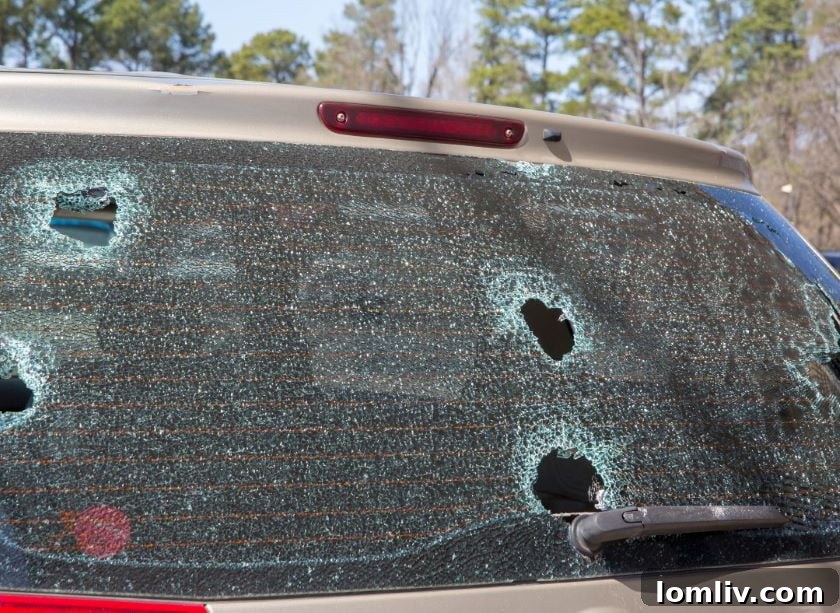
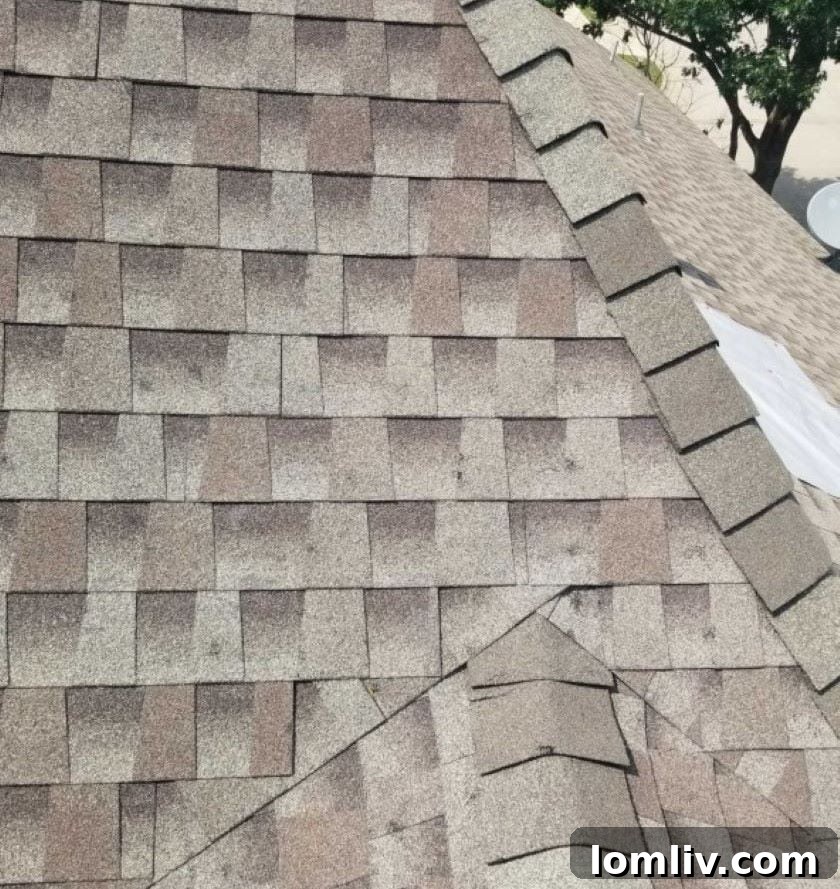
The May 19th storm was particularly aggressive. Our initial encounter was at the movie theater, where our car suffered significant dents and a cracked windshield. By the time the icy deluge subsided, the streets of Allen were bustling with roofers and contractors canvassing door-to-door, eager to secure appointments. Returning home, we discovered further damage to our other vehicles, parked (controversially, as garages are for storage!) in the driveway. The roof told a clear story: several shingles were lifted or missing, and visible hail strikes marred the surface. It was evident we were facing major roof repair, if not a complete replacement. While our windows remained intact, patio lights were shattered, and window casings bore the brunt of the storm’s impact.
The immediate aftermath was overwhelming. A flurry of questions emerged: Should I engage with the roofer who just knocked on my door? Is my insurance company the first point of contact? My neighbor, a general contractor, even offered to manage the entire process, warning against unscrupulous companies and promising “the best people and deals.” This left me pondering the necessity of a general contractor in this complex scenario. The journey to restoring our home had just begun, and it quickly became apparent that a structured approach was desperately needed to avoid common pitfalls.

Essential First Steps: Securing Your Home and Finding Reliable Help
In the initial hours following a hailstorm, ensuring the safety of your family and property is paramount. Conduct a preliminary visual inspection from the ground, looking for obvious signs of damage like missing shingles, broken windows, or structural compromise. Take plenty of photos and videos as immediate documentation – this will be invaluable for your insurance claim. For any immediate threats like active leaks, temporary patches or tarps can be applied, but always prioritize safety and avoid climbing a damaged roof yourself.
Once immediate safety is addressed, the next critical step is finding trustworthy professionals. My background with family in home inspection provided an invaluable resource, leading to a crucial first tip for all homeowners facing hail damage: always seek referrals for contractors and service providers. Home inspectors and Realtors regularly collaborate with various tradespeople and insurance professionals. They possess a network of trusted contacts, making them excellent sources for reliable recommendations. Avoid making hasty decisions based on door-to-door solicitations or the first flyer you receive. A reputable contractor will understand that homeowners need time to make informed decisions.
Understanding Texas Hail Laws: Why Your Roofer Cannot Pay Your Deductible
A common misconception among homeowners after a storm is the idea of a “free roof,” often fueled by contractors offering to absorb or “cover” the insurance deductible. This practice is not only unethical but, more importantly, illegal in Texas. In September 2019, the Texas legislature enacted House Bills 2102 and 2103 to close loopholes that allowed roofing companies to manipulate pricing to cover deductibles. Prior to 2019, an unregulated environment sometimes permitted roofers to absorb this cost. However, this often led to contractors cutting corners, using inferior materials, or performing substandard installations to maintain profit margins. The new legislation explicitly prohibits both the contractor and the homeowner from circumventing deductible payments. Violators face severe penalties, including a $2,000 fine, 180 days in jail, and a Class A misdemeanor, underscoring the seriousness of this law.
The biggest mistake homeowners make after a storm is to choose a roofer based on price. It puts you in a bad position with the insurance carrier, and you’re not doing yourself any favors. There’s actually very little regulation in the roofing industry in Texas, like there is with other industries. There are no license requirements or insurance requirements. Make sure your hire a roofer who is certified, otherwise your warranty won’t be worth anything.
Jesse Helms, Authority Roofing
My personal experience quickly reinforced the importance of these laws. One roofer, while assessing our property, meticulously listed damages, including a tear in our Big Green Egg cover, despite my clear indication that it was unrelated to the hail. He suggested inflating the claim to cover our $5,000 deductible. While saving money is always appealing, the risk of legal repercussions, including fines and jail time, far outweighs any perceived financial benefit. This encounter also served as a stark reminder: if a contractor is willing to deceive your insurance company, they are likely willing to deceive you. Another company offered “Veteran discounts” that would coincidentally cover our deductible, an offer subtly extended after noting my husband’s 82nd Airborne license plate. These tactics, while seemingly helpful, are clear violations of state law and should be a major red flag.
The Definitive Hail Damage Action Plan for North Texas Homeowners
Following the initial shock and my discovery of questionable contractor practices, we leaned on trusted resources. Our Realtor, Joanne Bryan with Coldwell Banker, immediately recommended Jesse Helms with Authority Roofing, a professional she has personally used for years and confidently refers to all her clients. Even Joanne, living near Twin Creeks Country Club, faces her own roof replacement this summer, highlighting how widespread this issue is.
Next, we contacted our home insurance provider, USAA. While our adjuster couldn’t be quoted directly for this article, I sought expert insights from Zack Wiggins with Goosehead Insurance, highly regarded in the industry for his comprehensive knowledge. His advice, combined with our experience, forms the basis of these crucial tips for navigating North Texas hail damage:
- Coordinate Roofer and Adjuster Visits: Schedule your chosen, reputable roofer to be present at the same time as your insurance adjuster. This collaborative approach ensures both parties examine the damage simultaneously, facilitating a more thorough assessment, minimizing back-and-forth communication, and significantly expediting the claim process. Two sets of expert eyes are always better than one for identifying all points of damage.
- Strict Adherence to Texas Deductible Laws: My USAA adjuster unequivocally confirmed the seriousness with which Texas insurance companies enforce the laws regarding deductibles. Do not, under any circumstances, allow a roofer to pressure you into schemes that claim to “cover your deductible.” This practice carries severe legal consequences for both the homeowner and the contractor.
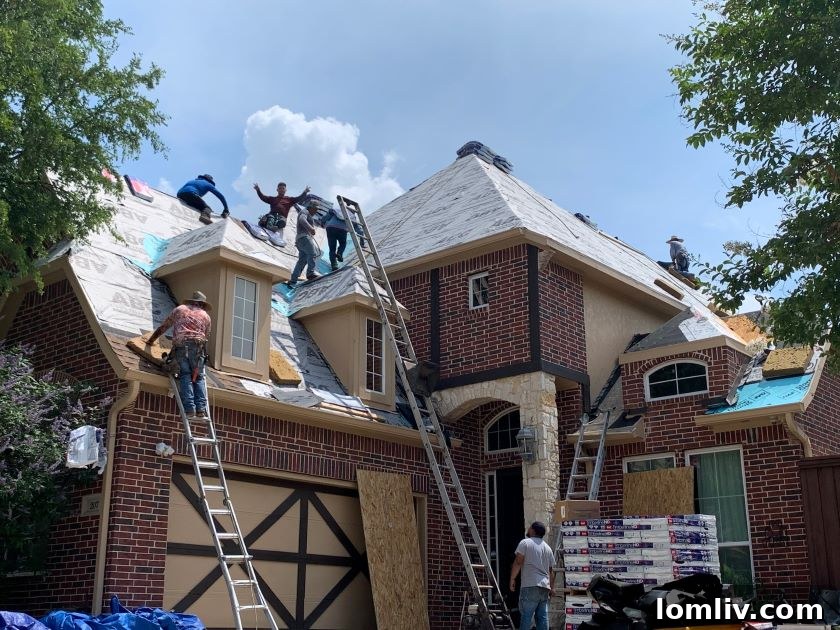
- Strategic Scheduling of Repairs: You typically have 12 months from the date your adjuster submits the claim to schedule your roof repair or replacement. While this offers flexibility, consider scheduling strategically. Repairing your roof in the middle of peak hail season can expose your newly repaired roof to immediate subsequent damage. Remember, home insurance deductibles are unlike health insurance deductibles: you must pay it again for each new claim event. Moreover, multiple claims within a short period can lead to increased insurance rates. Consult with your roofer about the optimal time for the work, taking weather patterns into account. In the interim, your roofer can apply temporary patches to vulnerable areas to prevent further interior damage before permanent repairs commence.
- Understand Your Home Insurance Obligation: Unlike car insurance, where you might have the option to keep the payout and not repair your vehicle, home insurance functions differently. If your adjuster determines a payout for roof repair and you receive the funds, you are legally obligated to use that money to fix your roof. Failing to do so constitutes insurance fraud and can lead to prosecution. The purpose of home insurance is to restore your property, not to provide extra cash.
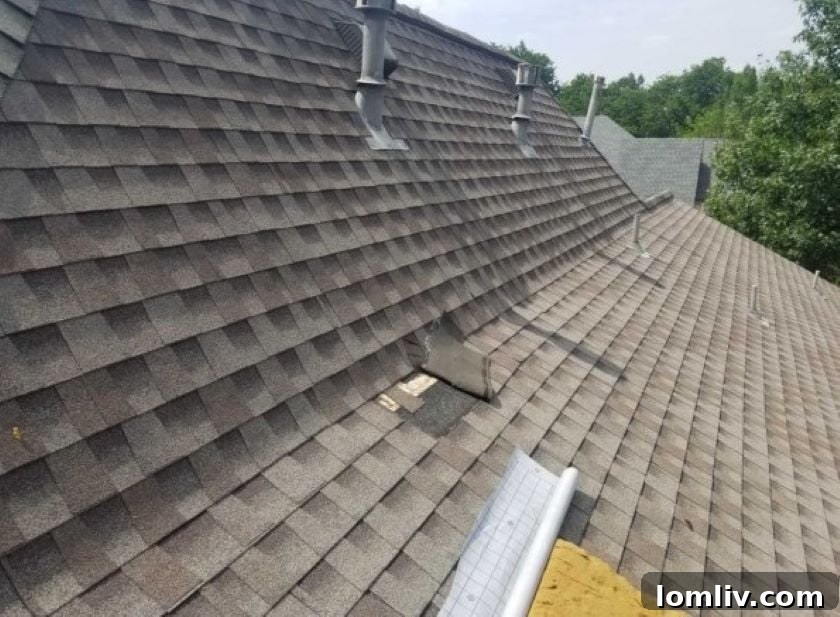
- Opt for Comprehensive Repair Services: Hail damage rarely confines itself solely to the roof. Our experience included damage to door trim, window beading, fascia, AC compressor covers, and even decorative outdoor lighting. Many reputable roofing companies, like Authority Roofing, offer a wider range of home repair services. Choosing a company that can handle multiple types of damage simplifies the entire restoration process, acting as a convenient one-stop-shop and ensuring consistency in workmanship across all repairs.
- Insist on Certified Products and Contractors: Due to the limited regulation in the Texas roofing industry (e.g., no state-mandated licensing or insurance requirements for roofers), product quality and contractor certification are critical. Ensure your roofer uses certified products, as your warranty will largely depend on the manufacturer’s warranty. Moreover, hiring a certified contractor, such as a GAF Factory Certified Master Elite Contractor (like Authority Roofing), guarantees adherence to stringent quality and installation standards, which directly impacts the validity and value of your warranty. Always check a contractor’s website for their certifications and affiliations with leading manufacturers.
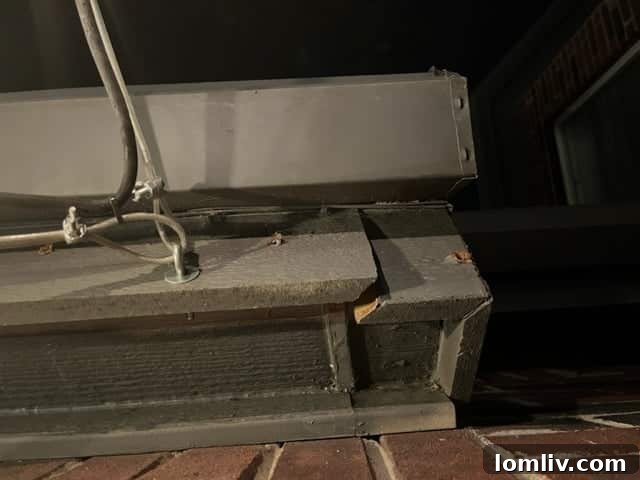
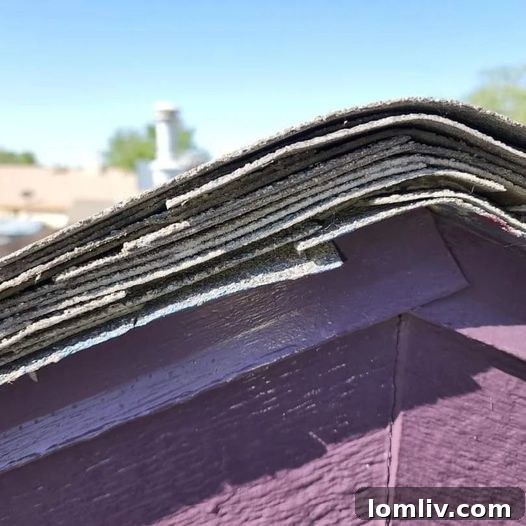
- Consequences of Unrepaired Hail Damage: Ignoring hail damage to your roof is a precarious gamble. Depending on its severity, unrepaired damage will inevitably lead to leaks, potential mold growth, structural compromise, and in extreme cases, roof collapse. Some homeowners consider DIY repairs, such as simply layering new shingles over old ones. As discussed in Upon Closer Inspection, this is a poor and often dangerous practice. My USAA agent confirmed that insurance may deny future claims (e.g., fire, leaks, collapse) if they are a result of unaddressed or improperly repaired hail damage. Jesse from Authority Roofing emphasized that stacking more than two layers of shingles is not only foolish but illegal in Texas due to the significant safety hazards it poses.
- Understanding Home Insurance Deductibles: Many homeowners assume they can shop for a home insurance plan based on a fixed deductible amount, similar to health insurance. However, this is largely a misconception for property coverage. As Zack Wiggins from Goosehead Insurance clarified, your home insurance deductible is typically calculated as a percentage (usually 1-2%) of your home’s replacement value. For instance, if your deductible is 1% on a home with a $500,000 replacement value, your deductible would be $5,000. Therefore, the concept of “low deductible” home insurance plans, as it applies to health coverage, doesn’t translate directly to property insurance. It’s crucial to understand how your specific deductible is calculated to avoid surprises.
- The Invaluable Role of Home Insurance Brokers: Many homeowners remain loyal to a single insurance carrier for decades, often missing out on better rates or more comprehensive coverage. This “I’ve been with All County Lizards for 25 years” mentality can be costly. Home insurance brokers are independent professionals who work for you, not a specific insurance company. Annually, at renewal time, they shop the market across multiple carriers to find the best rates and coverage options tailored to your needs. If a superior plan emerges, they inform you, ensuring you always have optimal protection without the legwork.
The biggest thing is not being underinsured when you need it. I really try to educate people when they’re choosing a plan or renewing. It’s a balance of saving money versus having adequate coverage. You don’t want the worst case to happen and you’re not covered. I advise people the same way I get coverage for my own family.
Zack Wiggins, Goosehead Insurance
While I sincerely hope you never need to apply any of these lessons, understanding the process of handling hail damage in North Texas is an empowering form of preparedness. May any damage you encounter be minimal, your insurance coverage comprehensive, and your experiences with our region’s powerful hailstorms be limited to the joyful, resilient moments, like my child’s playful romp after the recent storm: