In the vast landscape of online content, one might initially question the connection between a tale of fast food and the world of real estate. However, in an era where every home boasts a kitchen and every occupant occasionally seeks culinary convenience beyond their four walls, the lines blur. This week, we delve into an incident that, while seemingly an outlier in a real estate publication, echoes themes of consumer trust, unexpected discoveries, and the sometimes bizarre realities that touch our daily lives – much like uncovering a hidden flaw in a property. So, buckle up, because this story, involving a trip to the border (Taco Bell, that is), is about to take an unexpected turn, proving that even in the most mundane transactions, the extraordinary can occur.
The allure of fast food is undeniable. It’s the go-to for many of us – a quick, accessible solution when time is a luxury, hunger strikes fiercely, and the desire for a specific flavor profile calls. For those with a demanding schedule, perhaps an agent rushing between showings or a contractor on a tight deadline, places like Taco Bell offer a familiar haven. Within a mere fifteen-minute window, one can grab a meal, potentially connect to Wi-Fi, and then, perhaps, brace for the consequences later. It’s a transaction built on speed, convenience, and a certain expectation of consistency, an unspoken contract between consumer and provider. But what happens when that contract is spectacularly breached?
Before any purists raise an eyebrow, let’s firmly establish the surprisingly robust connections to our core subject. Firstly, the incident revolves around an object initially identified as a doorknob. Every single home, apartment, and commercial property we discuss in real estate is equipped with doorknobs. They are fundamental elements of property access, security, and design. Thus, an unexpected appearance of such an item in a meal undeniably ties back to the built environment. Secondly, this story, born from a widely popular social media poll conducted among our readership, clearly demonstrates its relevance and appeal. When the community speaks, we listen. And this topic, by a significant margin, captured the imagination and curiosity of many. Consider these connections solidified; a doorknob, whether on a door or in your dinner, certainly merits discussion.

This brings us to the heart of the matter and a story that has captivated online communities. Meet Eve Saint, a resident of Fishkill, New York, whose recent visit to Taco Bell for a seemingly innocent order of nachos escalated into an experience far beyond the realm of typical fast-food mishaps. What began as a simple craving for those cheesy, spicy delights culminated in a baffling discovery that left her, understandably, furious. Her nachos came with an unexpected, and entirely unwelcome, bonus item. In her own words, vividly shared across social media, she described her ordeal: “Taco Bell I’m coming to [expletive deleted for clarity] someone up real funny putting a [expletive deleted] doorknob in my nachos [expletive deleted].”
Imagine the scene: eagerly anticipating your meal, only to uncover a solid, metallic object nestled amongst the chips and cheese. Eve’s rage was palpable, echoing the sentiment of anyone who has ever faced a profoundly disappointing or unhygienic dining experience. It was as if the universe itself had conspired to declare, “Eve, this is ‘nacho’ day,” turning a simple lunch into a memorable, albeit unpleasant, saga. Such an incident not only shatters the immediate enjoyment of a meal but also raises serious questions about food preparation, quality control, and the overall safety standards of a prominent fast-food chain. It transcends a mere inconvenience, delving into the realm of truly shocking consumer experiences.
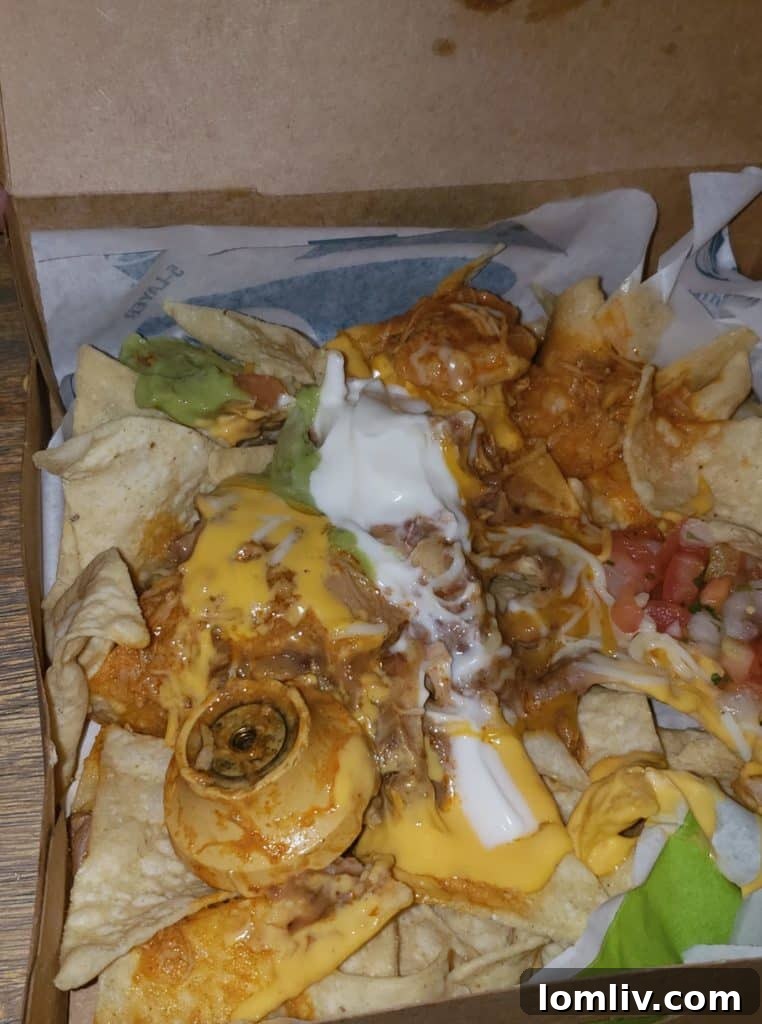
The immediate reaction from social media friends ranged from disbelief to outright concern. When pressed about the authenticity of her startling claim, Eve’s frustration was evident. She retorted, “I wish this [expletive deleted] was fake im hungry and waited in the drive through for 45 mins and im the only one who got a door knob.” Her wait time further amplified the distress, transforming a quick lunch stop into an exasperating hour-long ordeal culminating in this bizarre discovery. Another friend, equally baffled, inquired how such an object could possibly end up in her food. Eve’s response offered a glimpse into the initial confusion and horror: “im so heated cuz i thought it was chicken real quick like wtf.” This statement, while highlighting her immediate shock, also begs a humorous, albeit concerning, question about the kind of chicken Ms. Saint might have encountered previously to mistake a metallic object for it.

Determined to get answers and, presumably, a refund or replacement that didn’t include hardware, Saint attempted to contact the Taco Bell location responsible for her unexpected ‘gift.’ Her efforts were met with initial resistance and a concerning lack of professional courtesy. She recounted the initial interaction: the person on the other end dismissively stated, “‘that’s impossible’ and hung up on me.” Undeterred by this poor display of customer service, Eve persisted, making numerous attempts to reconnect. “they didn’t even answer till i called 10 times,” she explained, painting a clear picture of her escalating frustration and the significant effort required just to have her legitimate complaint acknowledged. Such a response from a service establishment can significantly erode customer trust and loyalty, turning a single unfortunate incident into a public relations challenge.

After what must have felt like an eternity of calling and recounting her bizarre tale, Saint finally managed to secure an apology from the Taco Bell location. They offered her free food, a common resolution in such situations. However, perhaps understandably, Eve declined the offer. After all, who would be eager to consume food from an establishment that had just served them a foreign object, particularly one that had been mistaken for a doorknob? It was during this eventual dialogue that the mystery surrounding the object’s true identity was finally solved. It wasn’t a doorknob at all, but rather the handle to a nacho cheese dispenser. While this clarification perhaps mitigates the initial shock slightly, it hardly lessens the severity of the incident from a food safety perspective. A dispenser handle in one’s food still represents a significant lapse in hygiene and preparation standards.
This unusual event quickly gained traction beyond Eve’s personal social media feed. Media outlets picked up the story, highlighting the public’s fascination with bizarre food discoveries and the potential implications for major food chains. As of the latest reports, Taco Bell corporate is allegedly investigating Saint’s complaint. This corporate involvement underscores the seriousness with which such incidents are (or should be) treated. Food safety regulations are stringent for a reason, designed to protect consumers from exactly these kinds of contamination risks. A foreign object, regardless of whether it’s a doorknob or a dispenser handle, signifies a breakdown in the operational procedures that are meant to ensure a safe and hygienic dining experience. For consumers, these stories serve as a stark reminder to always be vigilant about what’s on their plate, even from trusted brands.

The incident also opens a broader discussion about consumer protection and the power of social media in amplifying individual experiences. In an age where a single tweet can go viral, businesses are held to account more than ever before. What might have once been a quietly resolved customer complaint now has the potential to become a national news story, impacting brand reputation and trust. This digital landscape empowers consumers like Eve Saint to share their stories widely, forcing corporations to address issues publicly and promptly. It’s a double-edged sword: while it can be damaging for businesses, it also pushes for greater transparency and accountability, ultimately benefiting the consumer base by ensuring higher standards of service and product quality.
Taco Bell corporate is allegedly investigating Saint’s complaint, confirming the far-reaching impact of such an incident.

Ultimately, this tale of an unexpected object in fast food resonates on multiple levels. It’s a testament to the unpredictable nature of daily life, the critical importance of robust food safety protocols, and the power of a consumer’s voice in the digital age. Just as a real estate agent must meticulously inspect a property for hidden faults, consumers too must remain vigilant, even when enjoying the convenience of a quick meal. Have you ever encountered something truly bizarre or additional in your food? Was it a momentary shock, or did it traumatize you for life? And was it, by any chance, a doorknob, or perhaps a component of a nacho cheese dispenser? Share your unforgettable experiences in the comments below; your stories help illustrate the wild and wonderful world of consumer adventures.