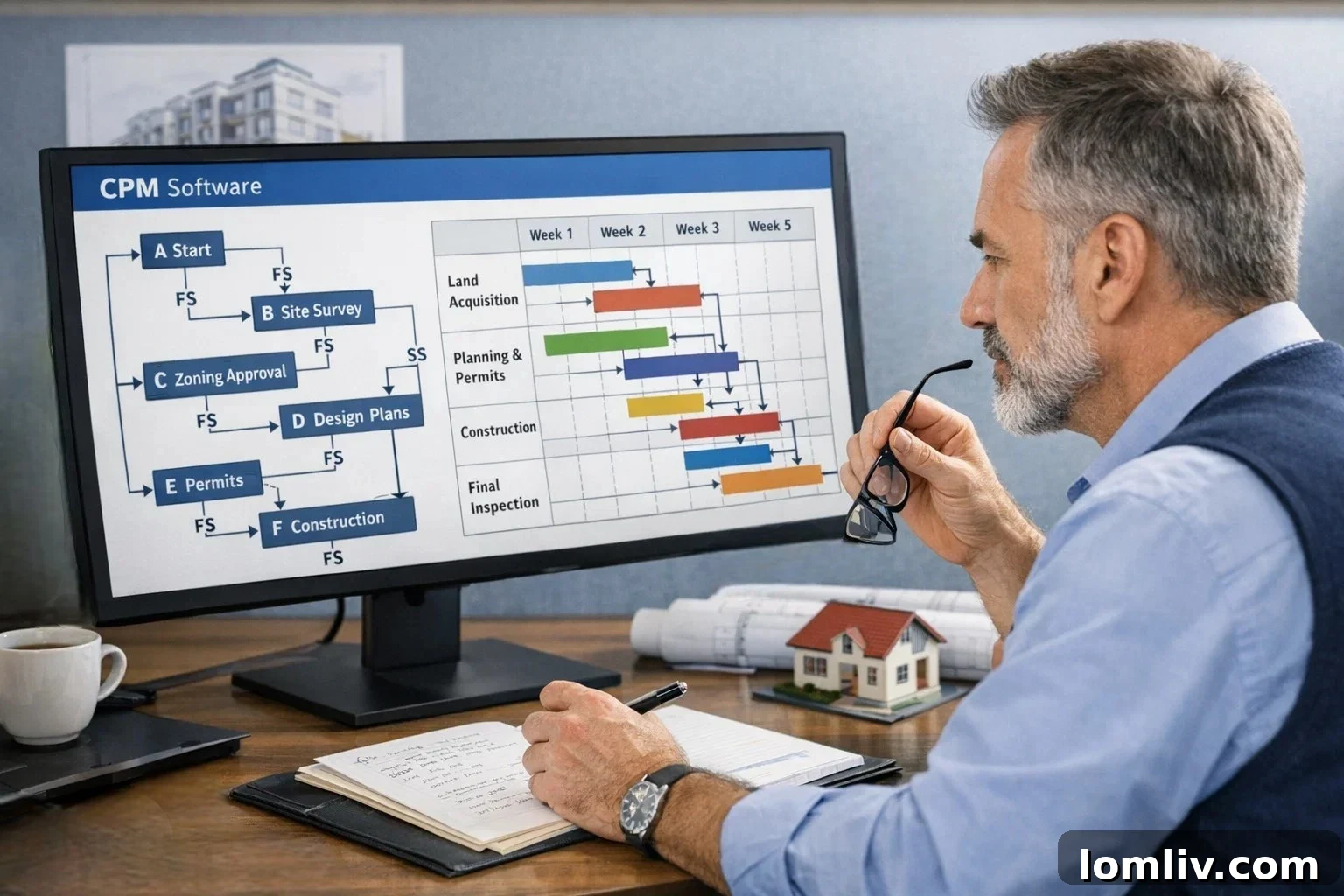
In the dynamic world of property development and construction, meticulous planning is not just an advantage—it’s a necessity. Real estate projects are inherently complex, involving myriad tasks, diverse stakeholders, stringent regulations, and significant financial investments. Effectively navigating these challenges demands a robust framework that provides clarity, control, and foresight. This is precisely where modern project planning, powered by Critical Path Method (CPM) software, becomes indispensable. It allows developers, contractors, and project managers to meticulously map out every task, establish realistic timeframes, understand intricate dependencies, and ultimately control their project schedule with unwavering confidence.
Project planning with advanced CPM software is a systematic approach. It involves listing all project activities, assigning accurate durations based on historical data and expert input, linking task dependencies in a logical sequence, and, crucially, identifying the critical path – the longest sequence of tasks that determines the overall project completion date. This powerful insight reveals which tasks are absolutely vital and have no room for delay, and which ones offer a degree of flexibility. This distinction is paramount in real estate, where factors like permit applications, timely inspections, subcontractor availability, and material deliveries can dramatically impact the final timeline and budget.
By employing this strategic technique, project teams can construct a crystal-clear roadmap, proactively identify potential roadblocks long before they escalate into costly delays, and ensure every team member remains laser-focused on the work that directly influences the project’s finish date. The intelligent software precisely computes the optimal task order and analyzes the ripple effect of schedule impacts, empowering you to make data-driven decisions based on actual schedule logic, rather than relying on gut feelings or risky assumptions. To keep any real estate project on track, from inception to handover, a structured plan illustrating the precise connection between each activity is non-negotiable. This comprehensive article will demystify how CPM software functions and guide you step-by-step on its application, ensuring you maintain absolute control over your real estate ventures from commencement to successful completion.
Understanding Real Estate Project Planning With CPM Software
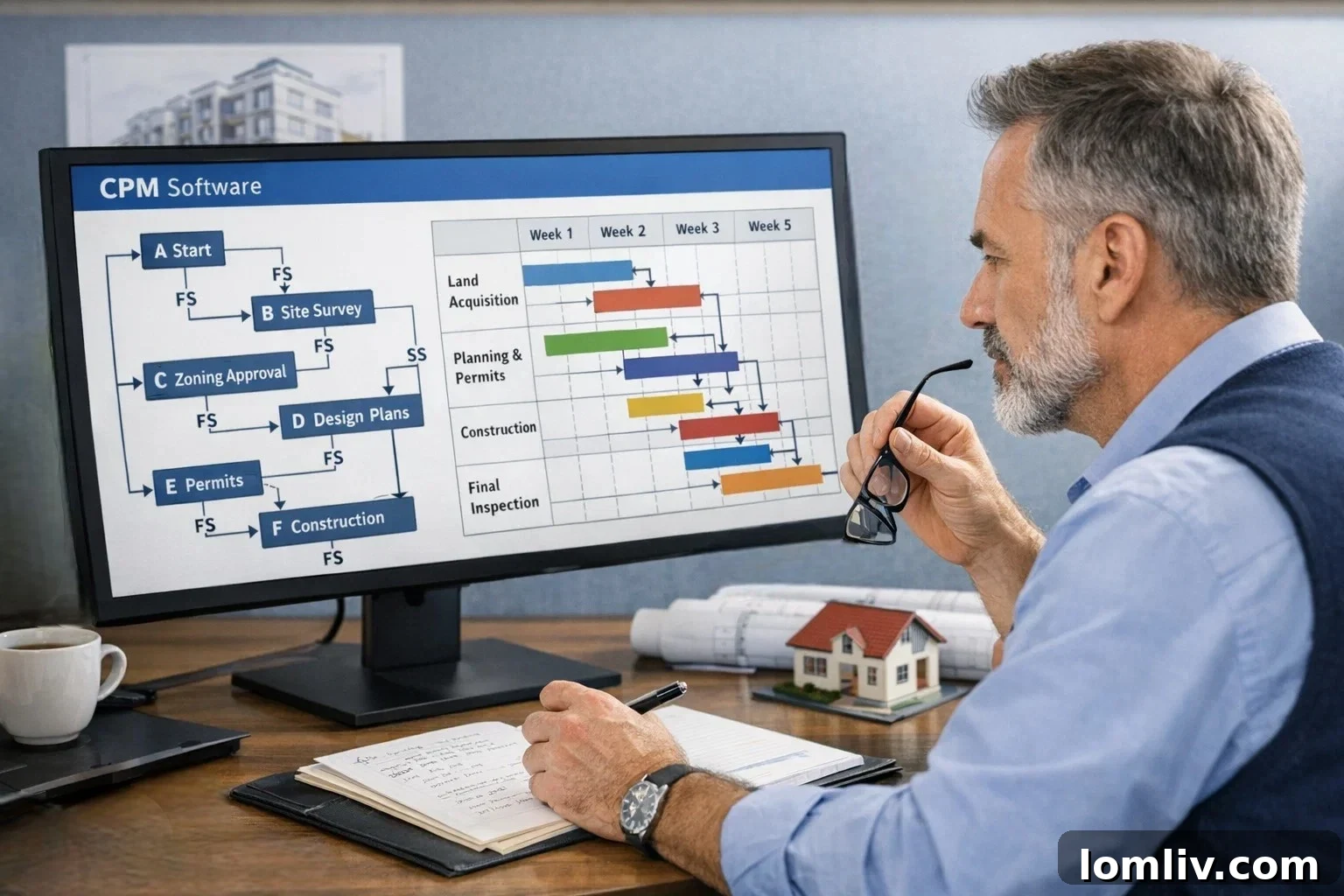
Effective project planning serves as the fundamental framework for delivering real estate projects not just on time, but also within budget. CPM software elevates this framework by adding an unparalleled layer of structure and precision. It meticulously maps out the sequence of tasks, calculates their durations, and defines critical dependencies, providing an intuitive visual representation of what truly drives your project’s completion date. This granular insight is crucial for managing the complex interplay of various trades, regulatory approvals, and supply chain logistics inherent in real estate development.
What Is Project Planning?
At its core, project planning defines the ‘what,’ ‘who,’ and ‘how long’ of every undertaking. It’s the strategic process of outlining the necessary steps, assigning responsibilities to individuals or teams, and estimating the duration for each activity. In essence, you dissect the entire project into manageable, individual activities, then assign specific start and finish dates, and critically, establish the logical links between tasks that are dependent on one another. This foundational step ensures that every piece of the puzzle is accounted for before any physical work begins.
Beyond just tasks and timelines, comprehensive project planning also encompasses the vital allocation of resources—be it human capital, equipment, or financial backing. It involves setting clear milestones, which act as progress markers, and establishing firm deadlines that keep the project moving forward. For a real estate project, this planning phase could include a vast array of activities such as initial site preparation, navigating complex permit acquisition processes, executing foundation work, precise framing, undergoing rigorous inspections at various stages, installing intricate interior finishes, and finally, managing the seamless handover to the client or occupants. This detailed blueprint culminates in a robust schedule that serves as a living guide, informing both daily operational decisions and overarching long-term strategic objectives.
A well-constructed plan meticulously illustrates the logical order of tasks and, more importantly, highlights which potential delays will directly impact the final delivery date. This clarity ensures that project teams can strategically focus their energy and resources on the most impactful tasks at precisely the right time, thereby minimizing wasted effort, preventing rework, and optimizing overall productivity in a high-stakes environment.
What Is CPM Software?
CPM stands for the Critical Path Method, a sophisticated scheduling technique developed in the late 1950s for managing complex projects. It is designed to identify the absolute shortest time required to complete a project by determining the “critical path.” This path is essentially a sequence of project activities that must be completed on time for the entire project to finish on schedule. CPM software automates this intricate process, calculating the precise sequence of activities that have a direct and undeniable impact on the project finish date, all based on the durations assigned to each task and their interdependencies.
Project managers in real estate rely heavily on project planning with CPM software to systematically map out every single task within a comprehensive network diagram. The software then calculates crucial data points such as the earliest and latest possible start and finish dates for each activity. A key feature of CPM is its ability to identify “float” (also known as slack) – the amount of time a task can be delayed without affecting the overall project completion date. This insight is invaluable, as it clearly shows which tasks possess some flexibility and which ones are on the critical path, demanding rigorous control and immediate attention. Therefore, you gain an exceptionally clear, data-driven view of precisely which tasks are mission-critical and require constant monitoring.
The utility of CPM software is particularly pronounced in real estate, where projects involve the intricate coordination of multiple contractors, specialized inspectors, various vendors, and distinct project phases—all of which must remain perfectly synchronized. A significant advantage of modern CPM programs is their dynamic nature: they automatically recalculate the entire schedule instantly whenever a task duration or sequence is altered. This immediate feedback mechanism empowers project managers to test different “what-if” scenarios, analyze the potential impact of changes, and proactively adjust their approach before minor issues spiral into major, costly problems. This predictive capability is a game-changer for maintaining project momentum and mitigating risks in complex construction environments.
The Benefits of Using CPM for Real Estate Project Management
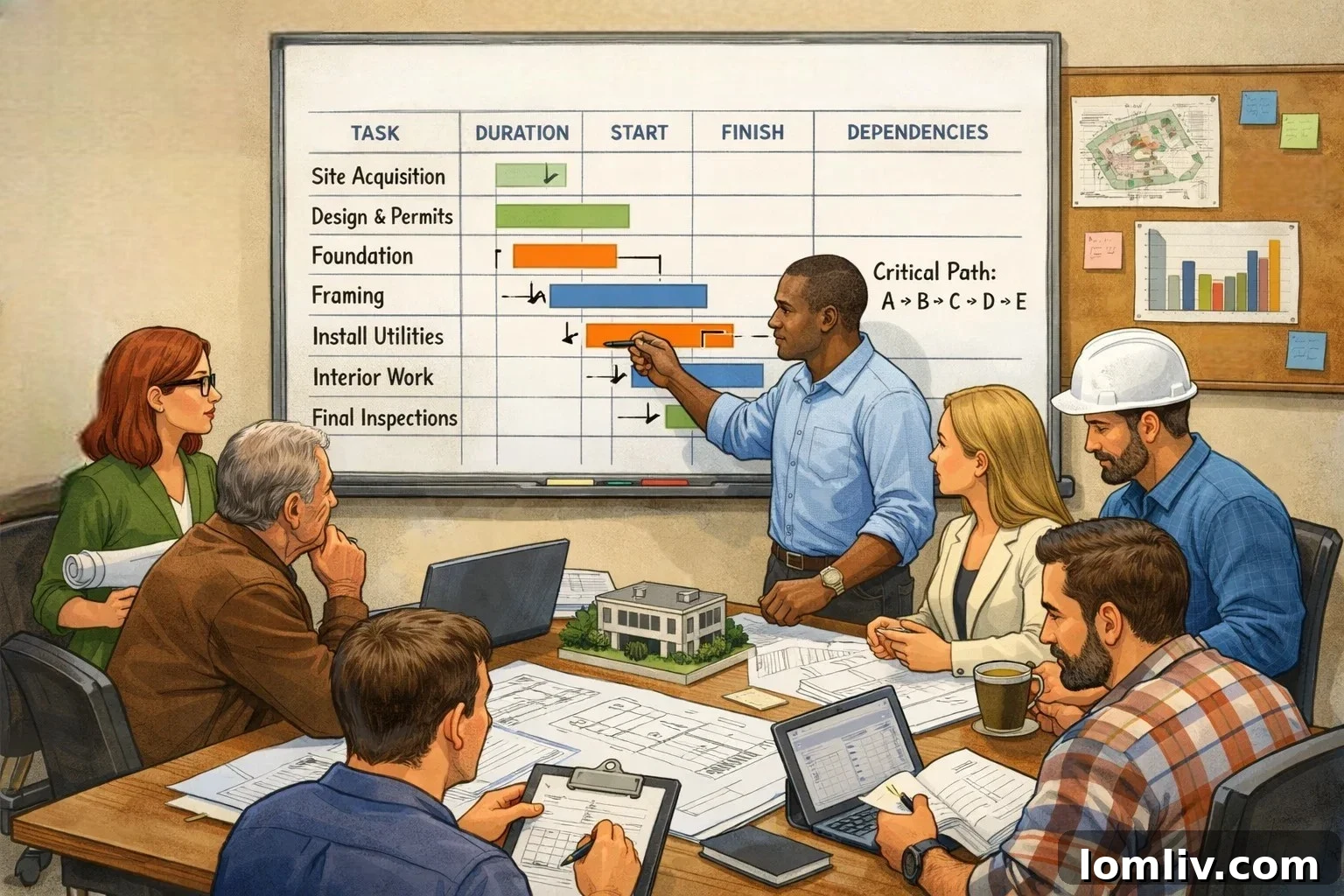
Integrating CPM into real estate project management unlocks a cascade of tangible benefits, fundamentally transforming how projects are planned, executed, and monitored. At its core, CPM reveals precisely which tasks are dictating your project’s timeline, allowing you to strategically focus your attention, allocate resources, and prioritize efforts where they will yield the most significant impact. This targeted approach dramatically reduces unexpected surprises, empowers greater control over development, construction, or renovation schedules, and ultimately safeguards project profitability.
Improved Focus and Resource Allocation
By clearly identifying the critical path, CPM software helps project managers understand exactly where their immediate attention is required. This means resources – whether skilled labor, specialized equipment, or crucial financial allocations – can be precisely directed to critical tasks. Instead of spreading resources thin across all activities, managers can strategically frontload resources on tasks that, if delayed, would push back the entire project. This intelligent resource deployment maximizes efficiency, prevents bottlenecks, and ensures that the most impactful work progresses without hindrance.
Enhanced Coordination and Communication
Real estate projects are complex ecosystems involving a multitude of stakeholders: architects, engineers, general contractors, subcontractors, suppliers, city officials, investors, and future tenants or buyers. CPM provides a single, unified schedule that clearly delineates how the work of one team impacts another. This transparency fosters significantly better coordination, enabling project managers to proactively reduce downtime between contractors, anticipate and resolve potential trade conflicts before they arise, and ensure seamless alignment with inspection schedules and approval processes. A common understanding of the project timeline reduces miscommunication, builds trust, and promotes a collaborative environment.
Proactive Risk Management
CPM is not just a scheduling tool; it’s a powerful risk management instrument. By modeling the project schedule, it inherently helps identify potential bottlenecks and single points of failure. The software allows for “what-if” scenario planning, where project managers can simulate the impact of potential delays (e.g., weather delays, material shortages, labor issues) on the critical path. This foresight enables the development of robust contingency plans, allowing teams to mitigate risks proactively rather than reacting to crises. Understanding which tasks have float also provides a buffer for minor, unforeseen issues, reducing overall project stress and improving stability.
Better Decision-Making and Cost Control
When delays inevitably occur – and they do in real estate – CPM software provides the necessary data to make informed, strategic decisions. If a critical task is behind schedule, project managers can quickly analyze the network, explore options to reallocate resources from non-critical tasks, or even consider changing the sequence of activities to protect the original finish date. This ability to rapidly assess impacts and implement corrective actions is invaluable, as delays directly translate to increased costs—from extended holding costs and interest payments to potential liquidated damages and lost revenue from delayed occupancy or leasing. By optimizing the schedule, CPM directly contributes to keeping project costs under control and maximizing profitability.
Increased Project Visibility and Accountability
CPM creates a transparent view of the project schedule for all stakeholders. Everyone, from the project owner to the individual subcontractor, can see how their work contributes to the overall timeline. This heightened visibility fosters a greater sense of accountability across the entire project team. Performance against the schedule becomes measurable and clear, driving better performance and ensuring that everyone is working towards a common, well-defined goal. This transparency is particularly beneficial when reporting progress to investors or managing expectations with future occupants.
How to Use CPM Software for Project Scheduling
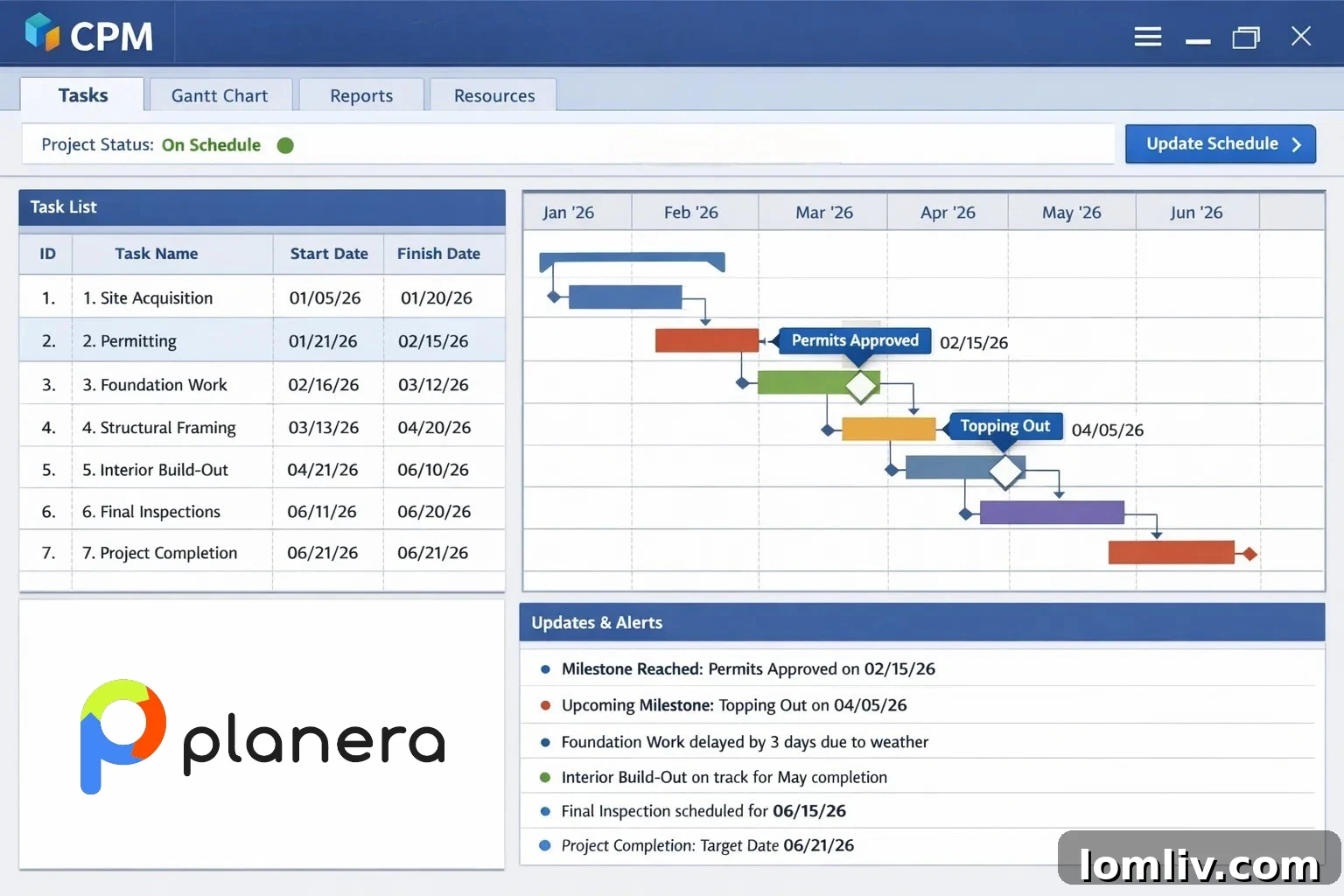
Once you have meticulously defined the scope, job sequence, and initial time frames for your real estate venture, the powerful capabilities of CPM software come into play to orchestrate your project from its very inception to its successful conclusion. The methodology for leveraging this software involves a structured, multi-step process: initial setup, precisely linking tasks to reflect dependencies, analyzing the dynamically generated critical path, and continuously controlling and updating the schedule to ensure the project remains firmly on track and achieves its objectives.
1. Creating Your Project
The journey begins by initiating a new project file within your chosen CPM software. Here, you’ll input foundational information such as the project name, its official start date, and the target finish date. These critical dates serve as the driving forces for the schedule calculations of all subsequent tasks, making it imperative to confirm them with key stakeholders, including clients, investors, and senior management, before proceeding further. Establishing a clear, agreed-upon project scope and objectives at this stage is also vital to prevent scope creep later on.
Next, you’ll configure the project calendar. The software uses this data to accurately calculate job durations and resource availability. This involves meticulously specifying working days, identifying any holidays or non-working periods, and defining the standard daily work hours. For instance, if your construction team operates an 8-hour workday, five days a week, entering these specific settings ensures that the schedule precisely reflects actual working time, excluding weekends and public holidays, leading to more realistic timelines.
Finally, you’ll add high-level phases or major project milestones. In the context of a typical real estate project, these overarching phases might include planning and design, permit acquisition, extensive site work and preparation, structural construction, systems installation (HVAC, electrical, plumbing), various inspection stages, and the ultimate final turnover or commissioning. These macro phases are instrumental in organizing the myriad detailed tasks that follow, creating a logical, digestible framework before you dive into the minutiae of individual activities.
2. Adding and Linking Tasks
This stage requires breaking down the project into its smallest, manageable components. Each distinct piece of work, known as an activity or task, is then entered into the CPM system with a clear, descriptive name and an estimated duration. Each task should represent a specific, actionable item, such as “Pour Foundation Slab,” “Install Rough-In Wiring,” “Schedule Final Building Inspection,” or “Complete Interior Finishes Walkthrough.” The level of detail here directly correlates with the accuracy and utility of your schedule.
The next crucial step is to define and set up task dependencies. Most robust CPM software platforms offer a variety of common dependency types to accurately model the flow of work:
- Finish-to-Start (FS): This is the most prevalent dependency type, where Task B cannot begin until Task A is completely finished. For example, “Foundation Curing” (Task B) cannot start until “Concrete Pour” (Task A) finishes.
- Start-to-Start (SS): Task B can start only after Task A has started, though not necessarily finished. An example might be “Interior Painting” (Task B) starting shortly after “Drywall Installation” (Task A) has commenced, allowing the painting crew to follow behind the drywallers.
- Finish-to-Finish (FF): Task B can only finish after Task A has finished. For instance, “Final Site Cleanup” (Task B) can only finish after “Landscaping Installation” (Task A) is complete.
You must meticulously determine the correct relationships based on how the actual work flows and the physical constraints of the project. For example, all necessary permits must be officially approved before any significant site work can physically commence. Similarly, the foundation work must be entirely completed and cured before framing can legitimately begin, and preliminary building inspections need to be passed before interior finishing trades can move forward. By establishing these precise relationships, the software constructs a logical network that accurately mirrors the real-world constraints and operational sequence of your real estate project.
3. Finding the Critical Path
Once all activities have been entered into the system and their dependencies accurately linked, the CPM software automatically performs complex calculations to identify the longest continuous chain of dependent tasks. This sequence, known as the critical path, dictates the total project duration. Any delay, even a minor one, in an activity on this critical path will inevitably postpone the entire project completion date. Understanding this path is paramount for project success in real estate.
You can visually identify tasks that have zero float (or slack), meaning they possess no extra time beyond their estimated duration without impacting the project’s finish date. These are the critical tasks that demand vigilant monitoring and management. Conversely, other tasks will have a certain amount of “float,” which provides a degree of flexibility. This flexibility allows for minor adjustments or the strategic shifting of resources if necessary, without immediately threatening the project deadline.
If the calculated project finish date is not aligned with your desired target or contractual obligations, the critical path view offers actionable insights. You can strategically adjust task durations (e.g., by adding more resources or working overtime), explore changing task dependencies where feasible (e.g., by performing certain non-critical work in parallel instead of in strict sequence), or consider “crashing” the schedule (investing additional resources to shorten critical task durations). For example, you might fast-track a permitting phase by assigning dedicated resources or explore value engineering alternatives that reduce the time required for certain construction elements. This iterative process allows you to leverage the critical path analysis to make highly informed schedule decisions, moving beyond mere assumptions and into strategic optimization. This level of precision is especially vital for construction projects, where delays on key critical path tasks can have significant cascading effects, pushing back vital inspections, occupancy dates, property closings, and ultimately, listing timelines, impacting revenue and stakeholder satisfaction.
4. Monitoring Progress and Updating Schedules
Project management with CPM is an ongoing, dynamic process, not a one-time event. You must regularly enter actual progress data, including actual start dates, the percentage of work completed for each task, and actual finish dates. The software then dynamically recalculates the entire schedule, replacing initial estimates with real-time data. This ensures your project plan remains a living document that accurately reflects the current status of the project.
If a critical path task experiences a delay, the system will immediately highlight this and display the new projected overall finish date, providing instant visibility into potential overruns. This real-time feedback empowers project managers to take swift, decisive action. Such actions might include reallocating personnel from tasks with float, rescheduling subcontractors to compensate for lost time, or strategically compressing later tasks that still possess available float to bring the project back on track. The ability to react quickly and intelligently is a hallmark of effective real estate project management.
Furthermore, it’s crucial to regularly compare the current, updated schedule against the original baseline schedule that was saved before the project commenced. This baseline comparison graphically illustrates where delays are occurring, quantifying how far the project has deviated from the initial plan. This vital historical data helps in identifying recurring issues and responding faster to common challenges prevalent in real estate, such as unexpected permit delays, supply chain disruptions leading to material shortages, unforeseen rescheduled inspections, or client-initiated change orders. This continuous monitoring and comparison give you significantly greater control over time, costs, and stakeholder expectations throughout the entire lifecycle of the project, ensuring a smoother journey from groundbreaking to grand opening.
The Bottom Line
In the highly competitive and complex real estate landscape, leveraging CPM software for project planning is no longer a luxury but a strategic imperative. It empowers real estate teams to meticulously organize the intricate sequence of activities, precisely identify the longest chain of dependent tasks – the critical path – and construct far more reliable and achievable project timelines. This comprehensive understanding ensures that project managers clearly know which activities are truly controlling the final delivery date, enabling them to assign valuable resources more effectively and proactively adjust plans before minor delays escalate into significant, costly overruns.
The discipline of regularly updating your project schedule with actual progress keeps you continuously informed as changes unfold, facilitating quick, data-driven decisions that are essential for maintaining momentum. With the analytical power of CPM software, you gain an exceptionally clearer and more nuanced view of schedule risks when managing multifaceted development, complex construction, or extensive remodeling work. This strategic foresight allows for seamless alignment of critical elements like inspections, subcontractor schedules, and material delivery timelines, ultimately leading to greater project predictability, reduced financial exposure, and more successful outcomes in the demanding world of real estate.