
As the mercury rises and summer temperatures soar, many homeowners find themselves dreading the arrival of their next electricity bill. Keeping your living space comfortably cool during a sweltering summer can indeed be an expensive endeavor, with air conditioning units often running continuously to combat the heat. However, there’s good news: achieving a cooler home doesn’t have to mean breaking the bank. There are numerous effective strategies you can employ to significantly reduce indoor temperatures without placing an overwhelming burden on your AC system or your wallet.
Our experienced home energy inspectors have compiled a comprehensive list of practical and impactful tips. These insights are designed not only to provide immediate relief from oppressive summer heat but also to translate into tangible savings on your monthly utility expenses. By implementing these straightforward yet powerful recommendations, you can enjoy a more comfortable home environment while simultaneously embracing greater energy efficiency and financial prudence.
1. Strategically Time Your Appliance Usage to Minimize Heat Gain
Many common household appliances, while essential for daily living, are significant contributors to indoor heat. Appliances like washing machines, clothes dryers, dishwashers, and ovens release substantial amounts of heat into your home as they operate. When these appliances are run during the hottest parts of the day, your air conditioning system has to work considerably harder and longer to counteract the added thermal load, leading to increased energy consumption and higher bills. The heat generated by these devices can quickly elevate your home’s ambient temperature, making your AC less efficient at maintaining a desired coolness.
To combat this, a simple yet effective strategy is to schedule their use for the evening hours, after the sun has set and outdoor temperatures begin to drop. Running your washer, dryer, or dishwasher late at night means the heat they produce has less impact on your indoor comfort and your AC’s workload. Furthermore, consider taking your cooking outdoors whenever possible. Grilling not only offers a fantastic way to enjoy delicious meals but also ensures that all the heat from cooking remains outside your home. This prevents your kitchen from becoming a sauna and keeps your AC from having to fight an unnecessary battle against internal heat sources. By shifting the timing of these heat-generating activities, you can significantly reduce the strain on your cooling system and achieve greater energy savings.
2. Seal Your Home’s Envelope: Windows and Doors Are Key Vulnerabilities
One of the most overlooked culprits for energy waste in homes, especially during summer, is air leakage. Over time, the seals around windows and doors can degrade, weatherstripping can become brittle, and caulk can crack, creating tiny gaps and openings. While these may seem insignificant, they act as direct conduits for energy exchange: cool, conditioned air from inside your home leaks out, and hot, humid air from the outside seeps in. You might believe your home is completely sealed, but often, it’s quietly losing efficiency through these unnoticed imperfections. This constant battle against infiltrating heat forces your AC to run longer and harder, consuming more electricity to maintain a comfortable temperature.
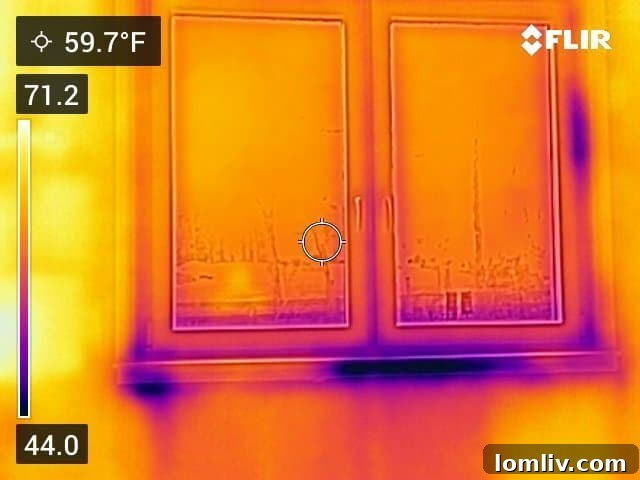
Thermal imaging is an excellent tool for visualizing these hidden issues, as demonstrated in the image above. It clearly illustrates areas where temperature changes indicate air leakage, such as around the edges of a window that desperately needs re-caulking. Identifying and addressing these vulnerabilities is crucial. Simple solutions like applying fresh caulk around window and door frames, replacing worn weatherstripping, or installing door sweeps can make a dramatic difference. These inexpensive fixes create a tighter seal, preventing valuable cool air from escaping and blocking unwanted heat and humidity from entering. The result is a more consistent indoor temperature, reduced strain on your HVAC system, and substantial savings on your energy bills, making your home more comfortable and energy-efficient.
3. Optimize Your Ceiling Fans for Maximum Cooling Effect
Ceiling fans are often underestimated as a cooling tool, frequently being run in the wrong direction during summer months. To truly enhance your home’s cooling efficiency, it’s essential to understand and utilize your ceiling fan’s seasonal settings. During warmer months, ensure your ceiling fans are set to rotate counter-clockwise from your perspective looking up at the fan. This specific rotation creates a downward airflow, pushing cool air directly towards the living space below. This downward breeze generates a noticeable wind-chill effect on your skin, similar to a natural outdoor breeze, which makes you feel cooler even if the ambient air temperature remains the same.
The beauty of this effect is that it allows you to comfortably raise your thermostat setting by several degrees, often as much as 4 to 7 degrees Fahrenheit, without sacrificing personal comfort. While the standard human comfort range in the summer is typically between 72°F and 78°F, a well-utilized ceiling fan can make 78°F feel as pleasant as 72°F. This seemingly small adjustment translates into significant energy savings, as every degree you raise your thermostat can reduce cooling costs by approximately 1-3%. Standard ceiling fans are remarkably energy-efficient, using far less electricity than central air conditioning units. They are an excellent, cost-effective way to supplement your AC, lowering the perceived temperature in a room by as much as 7 degrees and allowing your primary cooling system to work less intensively, thereby prolonging its lifespan and reducing your overall energy footprint.
4. Effectively Block Solar Heat Gain to Keep Interiors Cooler
One of the most significant sources of unwanted heat in a home during summer is direct sunlight streaming through windows. This phenomenon, known as solar heat gain, can quickly and dramatically increase indoor temperatures, forcing your air conditioner to work overtime. The sun’s powerful rays carry thermal energy that, when absorbed by surfaces inside your home, converts into heat, making rooms feel stifling even on moderately warm days.
For a long-term and highly effective solution, consider investing in energy-efficient or thermal windows. These advanced windows are specifically designed with multiple panes of glass and inert gas fills, providing superior insulation against heat absorption and transfer. While a larger upfront investment, they offer substantial savings on energy bills over time. A more immediate and budget-friendly option involves strategically covering your windows. White or reflective window coverings are highly recommended, as they bounce sunlight and heat away from your home. Conversely, dark or black curtains or shades, while effective at blocking light, tend to absorb solar radiation, trapping heat between the window and the fabric and ultimately transferring it into your living space. Therefore, opt for light-colored blinds, reflective films, or insulated curtains that have a white backing.
Beyond window coverings, exterior shading solutions offer another powerful defense. Planting deciduous trees strategically around your home, especially on the east and west sides, provides excellent shade during the summer when their leaves are full. In winter, once the leaves fall, they allow sunlight to enter and warm your home. Installing awnings over south-facing windows or those exposed to intense afternoon sun is another effective way to block solar heat before it even reaches your windows. These exterior measures significantly reduce the amount of heat entering your home, making it easier and more cost-effective to cool.
5. Leverage Exhaust Fans to Vent Hot, Humid Air Outdoors
Exhaust fans in your bathroom and kitchen are not just for removing odors; they are powerful tools for controlling indoor humidity and heat. When you cook, especially by boiling or steaming, a significant amount of heat and moisture is released into your kitchen. Similarly, a hot shower or bath generates a large volume of steam and raises the temperature and humidity in your bathroom. Without proper ventilation, this hot, moist air circulates throughout your home, making it feel muggier and warmer, forcing your air conditioner to work harder to both cool and dehumidify the air.
By actively using your kitchen range hood and bathroom exhaust fans, you can effectively pull this hot, humid air directly out of your home and vent it outdoors. This prevents the heat and moisture from spreading to other rooms, keeping your overall indoor environment cooler and drier. It’s particularly important to use these fans during and immediately after cooking or showering. For optimal results, leave the bathroom fan running for about 15-20 minutes after a shower to ensure all residual moisture is cleared. This simple habit contributes significantly to maintaining a more comfortable indoor climate and reducing the workload on your AC system, leading to greater energy efficiency.
6. Make the Switch: Ditch Incandescent Lights for Energy-Efficient Bulbs
If you’re still using old-fashioned incandescent light bulbs in your home, you’re not just wasting energy on lighting; you’re also adding unnecessary heat to your living space. Incandescent bulbs are notoriously inefficient because they produce light by heating a filament to extreme temperatures. A staggering 90 percent of the energy consumed by an incandescent bulb is released as heat, with only about 10 percent converted into visible light. This means that for every incandescent bulb glowing in your home, it’s essentially acting as a miniature heater, contributing to the overall thermal load that your air conditioner has to combat, especially during the summer.
The solution is simple and highly effective: switch to more energy-efficient lighting options like Compact Fluorescent Lamps (CFLs) or, even better, Light Emitting Diodes (LEDs). Both CFLs and LEDs consume significantly less electricity and, critically, emit very little heat. LEDs, in particular, are at the forefront of lighting technology, using up to 90% less energy than incandescents and lasting exponentially longer. Making this switch not only drastically lowers your lighting portion of the electric bill but also reduces the heat generated within your home, thereby easing the burden on your AC unit. This dual benefit—lower direct electricity costs for lighting and reduced cooling demand—makes upgrading your bulbs one of the smartest and easiest energy-saving decisions you can make. The visual evidence of incandescent heat is clear: these bulbs literally emit enough heat to discolor and scorch ceilings over time, a stark reminder of their inefficiency and heat output.
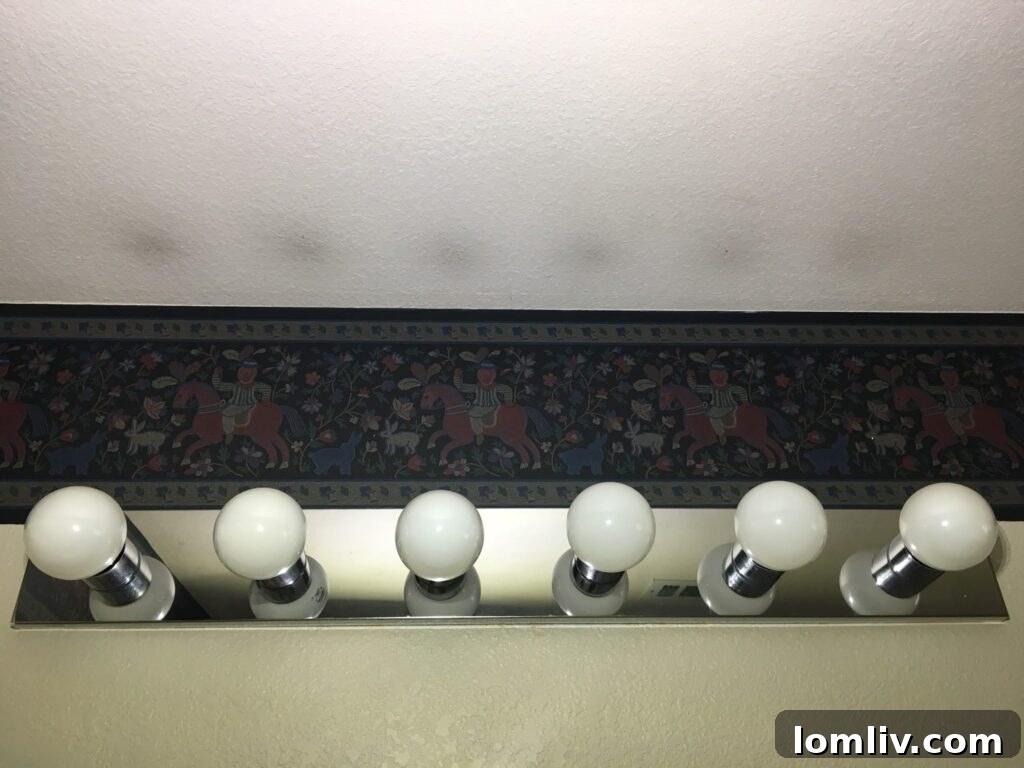
Incandescent bulbs literally emit enough heat to discolor the ceiling.
7. Prioritize Regular and Thorough AC System Maintenance
Your air conditioning system is the heart of your home’s cooling efforts, and like any complex machinery, it requires consistent care to operate at peak efficiency. While many homeowners diligently change their air filters regularly—a crucial first step—it’s easy to overlook other vital components that also need attention. Dirty or clogged vents inside your home, as well as neglected outdoor AC condenser units, can severely hinder your system’s performance, leading to reduced airflow, decreased cooling capacity, and significantly higher energy consumption.
Consider the impact of dust and debris: normal dust buildup can reduce airflow by as much as 1 percent each week. Over a month, this can equate to a 4% loss in efficiency, and over a full season, the cumulative effect can be substantial. Beyond just filters, evaporator coils (located inside your home) and condenser coils (part of the outdoor unit) collect dirt, dust, and grime over time. These coils are responsible for the critical heat exchange process. When they are dirty, heat transfer is impeded, forcing the compressor to work harder and longer to achieve the desired cooling effect. This not only drives up your electric bill but also puts undue stress on the entire system, potentially shortening its lifespan and increasing the likelihood of costly breakdowns.
Regular professional maintenance, typically once a year, involves thoroughly cleaning these coils, checking refrigerant levels, inspecting electrical components, and ensuring all moving parts are functioning correctly. This proactive approach ensures your AC unit runs as efficiently as possible, delivering consistent cooling while minimizing energy waste. Keeping your AC components clean is not just about comfort; it’s about safeguarding your investment, ensuring a healthy indoor environment, and significantly reducing your summer cooling costs. Proper air conditioning care is indeed self-care for your home and your budget during the hottest months.
By integrating these comprehensive tips into your summer routine, you can create a more comfortable, energy-efficient, and cost-effective living environment. From optimizing appliance use to sealing your home’s envelope and ensuring your AC is well-maintained, each step contributes to a greener footprint and a lighter utility bill. Don’t let the summer heat dictate your comfort or your finances; empower yourself with these smart cooling strategies.