
Health Insurance and Housing Stability: Uncovering the Causal Link to Rent and Mortgage Payments

The narratives of individuals facing overwhelming medical debt and resorting to crowdfunding platforms like GoFundMe to cover essential living expenses are increasingly common. These poignant stories, once considered isolated anecdotes, are now strongly supported by robust empirical evidence. A significant new study has definitively established a direct, causal relationship between access to health insurance and a household’s capacity to meet crucial financial obligations, such as rent and mortgage payments. This research sheds light on a critical, often-overlooked dimension of financial stability in America.
Released this year, a seminal study by Emily A. Gallagher (University of Colorado-Boulder’s Leeds School of Business), Radhakrishnan Gopalan (Washington University’s Olin Business School), and Michal Grinstein-Weis (Washington University’s George Warren Brown School of Social Work), provides compelling data. Their findings reveal that health insurance does much more than just cover medical bills; it fundamentally underpins a household’s financial resilience, directly impacting their ability to maintain housing security.
The scope of this research extends beyond the tragic cases of catastrophic illnesses. It meticulously traces the cascading financial challenges that can arise even from routine sickness. For an uninsured individual, a few days of missed work due to an untreated illness can trigger a severe financial setback, potentially leading to missed housing payments. In contrast, an insured person might swiftly consult a doctor, receive prompt treatment, and return to work with minimal disruption, preventing the onset of financial instability.
As the researchers explained in their study synopsis, “When people think of health insurance, they often think of its effect on health. They may even go a step further and think about its effects on a person’s medical expenses and their medical debt. Our study says that health insurance has significant downstream benefits to a person’s finances that show up in their home payments.” This perspective shifts the discourse from purely medical outcomes to broader economic well-being, highlighting the ripple effect of healthcare access.
“These indirect benefits may not be so salient to health policymakers, but they are extremely important to the overall financial stability of the person,” they emphasized. “On top of this, they carry broader economic implications.” The study advocates for a comprehensive view of health insurance, recognizing its pivotal role in the larger economic landscape and individual financial health.
Methodology: Unpacking the Causal Link
To establish a clear causal link, the research team employed an ingenious methodology. They compared households that were remarkably similar in most aspects, with one crucial distinction: their eligibility for health insurance assistance under the Affordable Care Act (ACA). Specifically, they focused on low-income households residing in states that did not expand Medicaid. This created a sharp, almost artificial, dividing line:
- One group of households just barely qualified for generous ACA marketplace subsidies, enabling them to afford comprehensive health insurance.
- The other group, with incomes just below the eligibility threshold for these subsidies (i.e., below 100 percent of the poverty line), often found themselves without affordable insurance options. In these non-expansion states, individuals below 100% of the federal poverty line were left in a “coverage gap” – too “rich” for Medicaid (which wasn’t expanded) and too “poor” for ACA marketplace subsidies.
“In these states,” the report clarified, “if you have an income above 100 percent of the poverty line, you get access to the Obamacare subsidies. But, if you have an income below 100 percent of the poverty line, you are out of luck.” This stark contrast allowed the researchers to isolate the impact of insurance status with unprecedented clarity.
Their rigorous analysis led to a profound conclusion: approximately a quarter of rent or mortgage delinquencies among people near the poverty line in these states are directly attributable to the lack of access to ACA marketplace subsidies. This isn’t merely a correlation; it’s a demonstration of causality.
“We show in the paper that this isn’t merely correlation but that it is causal,” the authors write. “Going from being uninsured to having heavily-subsidized Marketplace insurance substantially lowers your probability of being delinquent on your home payments.” This is a powerful statement, linking a specific policy intervention to tangible improvements in housing security.
Significant Impact: From Financial Precarity to Stability
The study quantified this impact with compelling figures. For those who gained insurance, the probability of being late on rent or mortgage payments decreased significantly, shifting from roughly a one in three chance to about a one in five chance. This translates to a substantial improvement in financial stability for vulnerable households. The positive effects were particularly pronounced among households identified as having a higher likelihood of health problems, either due to a history of medical debt or self-reported medical issues throughout the year.
Crucially, these dramatic effects were absent in states that *did* expand Medicaid. In those states, the disparity in insurance access around the poverty line does not exist, as Medicaid covers those below the poverty line, and ACA subsidies seamlessly cover those above. This comparison further validates the study’s central hypothesis: the “coverage gap” created by non-expansion directly contributes to housing insecurity.
Broader Economic and Social Implications
The implications of these findings extend far beyond individual households, influencing the broader economy and society. The researchers also attempted to quantify the implied social savings derived from fewer late rent and mortgage payments, comparing them to the dollar amount distributed in subsidies. This is a complex calculation, as the social costs of evictions are notoriously difficult to measure comprehensively. While existing studies detail the severe consequences of evictions—such as vacant and damaged properties, adverse childhood experiences leading to developmental delays, and increased homelessness—there is a scarcity of research that accurately quantifies these societal costs. Foreclosures, however, have seen some attempts at quantification.
“Nonetheless, if we assume (for sake of argument) that an eviction costs society around $10,000,” the researchers posited, “then our estimates would imply that about 32 percent of the subsidy would be offset by the social savings associated with fewer home delinquencies.” They acknowledge the simplistic nature of this analysis, noting it doesn’t account for the costs of raising revenue for subsidies (e.g., higher taxes, interest on government debt). “Nonetheless,” they conclude, “the calculations indicate that lower home payment delinquency carries large incidental benefits that should be considered when evaluating the overall cost of expanding access to affordable health insurance.” This highlights the often-unseen benefits of social safety nets.
Impact on the Real Estate Market
The study’s revelations also have significant ramifications for the real estate market. The researchers explained how the ACA’s mechanisms indirectly bolster housing stability. On one hand, the ACA raises revenue through tax penalties that disproportionately affect high-income individuals, such as taxes on wages over $200,000 and surtaxes on various investment incomes. On the other hand, many high-income individuals are investors in bond mutual funds, which frequently hold mortgage-backed securities (MBS).
The study’s key insight here is that when more people have health insurance and are therefore better able to meet their rent and mortgage payments, the underlying stability of these payments improves. This, in turn, should enhance the risk-return ratio on MBS, making them more attractive to investors. “An implication of our study is that people with health insurance are better able to meet their rent and mortgage payments, which, in turn, should improve the risk-return ratio on MBS,” they noted.
Landlords also reap financial benefits from this enhanced stability. More secure cash flows reduce the risks associated with tenant defaults and evictions, a particularly critical factor in today’s housing market, characterized by high rental costs and a severe lack of affordable supply, especially on the low-income side. This means that expanded health insurance access isn’t just a social good; it’s an economic stabilizer for the entire housing ecosystem.
The ACA’s Design: Successes and Gaps
To further understand these dynamics, we spoke with one of the study’s authors, Emily Gallagher. She elaborated on the two primary components of the Affordable Care Act when it was implemented in 2014.
“The first was this expansion of Medicaid,” she explained. “States were supposed to expand Medicaid to people not earning up to 138 percent of the poverty line.” This aimed to cover the lowest-income populations. “And then once you earn more than 138 percent you roll on to these exchanges where you get subsidies up until you make 400 percent of the poverty line,” Gallagher continued. The subsidy structure is designed to be highly progressive, meaning “you get huge subsidies if you are in a lower income and still eligible and very little once you’re close to 300 percent.”
For those at the lower end of the income spectrum who qualify, the benefits are substantial. “You get great health insurance for, you know, a $20 premium a month and you get something like a 94 percent actuarial value health insurance plan, meaning that the plan is going to kind of cover on average 94 percent of your costs, which is just a fantastic health insurance plan,” she detailed. However, as income rises, subsidies rapidly diminish, making plans considerably more expensive for those in higher income brackets.
This ideal scenario plays out in states that embraced Medicaid expansion. “That’s basically what was supposed to happen and that’s how it is in states that expanded Medicaid,” Gallagher confirmed. The stark contrast emerges in states like Texas, which opted against Medicaid expansion. “What happened is you have people put the line for insurance now becomes 100 percent the poverty line,” she explained.
“So if you earn under 100 percent of the poverty line you’re pretty much out of luck,” she stated bluntly. “The only thing you might be able to afford is a super catastrophic plan with gigantic deductible that you’ll never be able to pay and if you have an income above 100 percent of the poverty line you get this incredibly generous health insurance.” This creates a “coverage gap” where the most financially vulnerable are left without affordable options, while those just slightly better off receive excellent coverage. It’s precisely this policy-induced disparity that Gallagher and her colleagues leveraged for their study.
“We use these states that did not expand Medicaid where there’s just this incredibly clear line where if you’re on one side you’re out of luck, and if you’re on the other side of it you get a better plan than I get through the University Colorado,” Gallagher noted. This clear division allowed the researchers to isolate comparable groups and precisely measure the impact of health insurance access on their financial outcomes, particularly their ability to make home payments on time. “It’s just a really interesting variable first because your rent or your mortgage bill is not the bill you want to skip,” she added, emphasizing the criticality of these payments. “You might juggle your gas bill with your electric bill due date, and you might put off paying your cell phone bill one month, but you’re really going to try and make your rent on time.”
The Challenge of Data: Why This Connection Went Undiscovered
The researchers expressed surprise that this critical relationship between healthcare coverage and housing delinquencies hadn’t been thoroughly investigated before. Gallagher explains that the availability of specific data was a key factor, particularly post-ACA passage. While some studies have explored links between insurance expansion and general financial well-being, the direct connection to rent and mortgage delinquencies remained largely unexamined.
“A couple of groups of people have been making connections between these health insurance expansions and financial well-being,” Gallagher noted, referencing studies on Medicaid’s effect on credit scores and loan offers, and the established fact that health insurance reduces medical expenses and debt. However, the specific challenge lay in the nature of housing payment data. “But it’s been really difficult for most people with standard datasets to look at home payment delinquency because rent delinquencies are not reported anywhere — that’s the first thing,” she said.
Furthermore, standard survey data often lacks the detailed income information necessary to accurately determine eligibility for these complex insurance programs. “So you kind of need the convergence of that detailed income information, which we were able to do because we have tax data,” Gallagher explained. Their ability to link tax data with survey data provided the unique opportunity to conduct this groundbreaking analysis. “We just got sort of lucky with this data set,” she humbly added.
Another significant hurdle in studying housing precarity is the difficulty in accurately measuring evictions. Gallagher points to Matthew Desmond’s acclaimed book “Evicted” as a prime example of this challenge. “You know a big chunk of the point he’s making at the beginning which is that we just aren’t measuring evictions properly,” she said. Many evictions occur informally—a landlord posts a notice on a door, and a tenant leaves. “And you know that’s never reported anywhere it doesn’t show up with the credit bureaus, and it doesn’t show up in any sort of formal municipal data sets.” Consequently, actual eviction rates are likely much higher than official statistics indicate.
Gallagher clarified that their study measures “home payment delinquency” rather than direct evictions. “Now I must say that in my paper I can’t actually say we’re measuring eviction as an outcome,” she acknowledged. “What we’re looking at is home payment delinquency but obviously home payment delinquency is the antecedent of foreclosure and evictions.” This distinction is important but underscores the study’s relevance, as delinquency is a clear precursor to more severe housing crises.
Beyond Catastrophe: The Impact of Everyday Illness
The study also powerfully underscores that it isn’t solely catastrophic health events—like cancer or severe accidents—that threaten housing stability. For many low-income individuals, even minor illnesses can have profound financial consequences. “I think that those are the things that people don’t realize probably most lower income people do not get access to paid sick leave for themselves,” Gallagher highlighted. “So if they can’t come into work because they had an ear infection that they can’t get treated because they can’t afford the office visit and medication, they’re not bringing in income and therefore they’re more likely at the end of the month to have trouble making their rent.” This emphasizes the critical role of preventative and routine care, made accessible by insurance, in maintaining continuous employment and income, which directly translates to housing security.
The Dallas Context: A Case Study in Disparity
How do these national findings resonate in a major urban center like Dallas, Texas? Dallas provides a particularly relevant case study, as Texas is one of the states that did not expand Medicaid, thus creating the very “coverage gap” analyzed by the study. Late last year, reports indicated that Dallas was among the top five cities in the country for eviction rates.
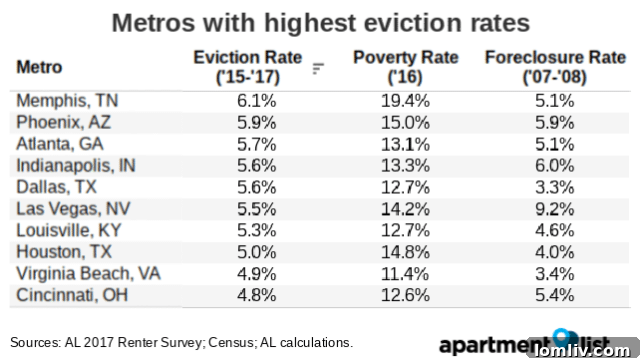
Chris Salviati, a housing economist with ApartmentList.com, provided sobering statistics: “We estimate an eviction rate of 5.6 percent for the Dallas metro, which is the No. 5 highest rate of the nation’s 50 largest metros.” Further analysis by Salviati’s team revealed the disproportionate impact on lower-income residents: low-income renters accounted for 8.1 percent of evictions, while middle-income and high-income renters experienced rates of 6.3 percent and 2.8 percent, respectively. These figures underscore the acute housing precarity faced by Dallas’s most vulnerable populations.
Despite these challenges, there have been some improvements in insurance coverage in Dallas County. According to the Dallas Economic Opportunity Assessment, a collaborative effort by the Communities Foundation of Texas and the Center for Public Policy Priorities, uninsured rates for all racial and ethnic groups in Dallas County have decreased since the ACA was signed in 2009. This translates to an impressive increase of almost 322,000 insured individuals in the county.
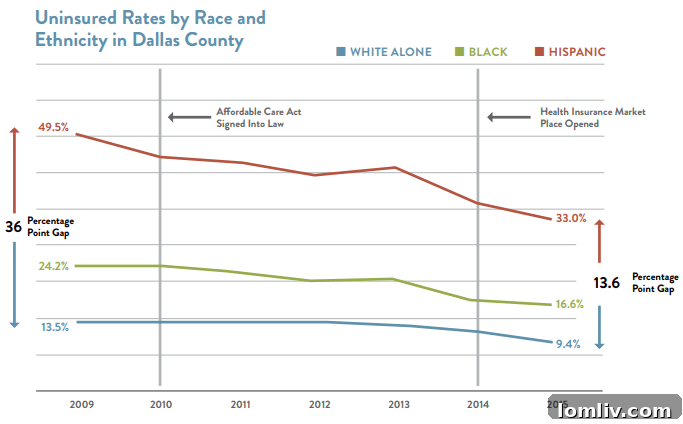
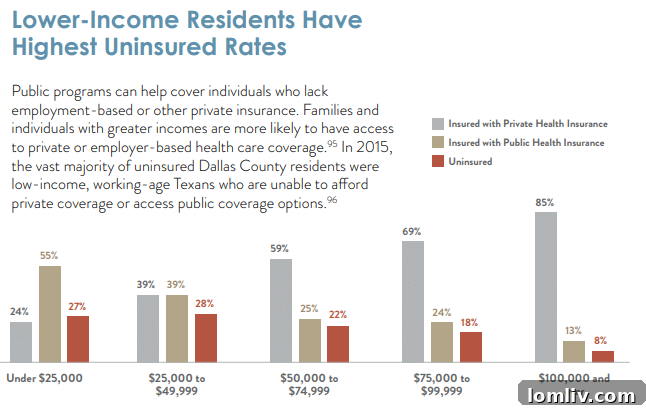
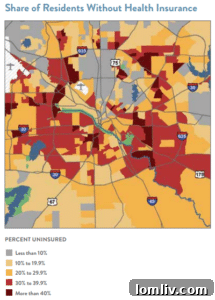 Despite these gains, the persistent “coverage gap” in Texas remains a significant issue. “Texas legislators did not elect to expand Medicaid under the Affordable Care Act, allowing nearly 100,000 low-income Dallas residents to fall into a coverage gap who otherwise would have access to this public health insurance program,” the assessment noted. “In 2015, the vast majority of uninsured Dallas County residents were low-income, working-age Texans who are unable to afford private coverage or access public coverage options.”
This insurance rate gap is also inextricably linked to broader issues of opportunity and racial equity. The uninsured rate for Hispanic residents in Dallas County is three and a half times higher than for white residents, and nearly two times higher for Black residents. In 2015, over a quarter of Dallas County residents did not have private or public insurance, a figure that included 12 percent of children and two percent of the elderly. These disparities highlight systemic issues that affordable healthcare access could significantly mitigate.
As the three professors concluded, “The implication is that health costs play a determinant role in the financial lives of low-income households as they have a profound effect on their ability to make one of their most important financial obligations — paying for shelter.” The data emerging from Dallas strongly supports this powerful conclusion, illustrating the real-world consequences of healthcare policy decisions on the financial well-being and housing security of its residents.
Conclusion: A Holistic View of Health and Home
This groundbreaking study offers an invaluable perspective on the interconnectedness of public health policy and economic stability. It moves beyond the traditional understanding of health insurance as merely a tool for managing medical costs, demonstrating its fundamental role in securing one of life’s most basic needs: shelter. By revealing a clear causal link between health insurance coverage and the ability to make rent or mortgage payments, the research by Gallagher, Gopalan, and Grinstein-Weis demands a more holistic approach from policymakers.
The findings underscore that investing in affordable healthcare access, particularly through mechanisms like the Affordable Care Act’s subsidies, yields significant downstream benefits that extend to housing security, community stability, and even the broader real estate market. For low-income households, the ability to access preventative care and treat minor illnesses without financial ruin is not just a matter of health; it’s a matter of keeping a roof over their heads. As the data from Dallas poignantly confirms, ignoring this connection comes at a substantial societal cost, exacerbating eviction rates and perpetuating cycles of poverty and insecurity. It is clear that health and home are not separate concerns but two sides of the same coin of financial well-being.
(Note: The deadline for open enrollment for insurance on the Affordable Care Act exchanges is Dec. 15. Details can be found here.)