Unveiling the Truth Behind School Ratings: Why GreatSchools Scores Don’t Tell the Whole Story for Dallas Homebuyers
Don’t let misleading online school ratings derail your dream home purchase. Discover how to truly evaluate school quality in Dallas ISD.
Navigating the complex world of real estate, especially when family needs are paramount, often leads prospective homebuyers to a critical juncture: school districts. The convenience of online platforms like Realtor.com or Zillow, with their readily available school rankings from sites like GreatSchools, offers what appears to be a straightforward solution. You scroll, you see a number, and you make an immediate judgment about a neighborhood’s educational prospects. But what if these seemingly definitive numbers are not just incomplete, but fundamentally misleading? What if relying solely on a 4/10 or a 7/10 score means you’re overlooking a hidden gem or dismissing an entire community without understanding its true educational landscape?
For far too long, many homebuyers in the Dallas area have hesitated on purchasing what might be their perfect home, all due to a low GreatSchools rating. This article aims to challenge that paradigm, urging you to step back from those numbers and delve deeper. While these ratings are designed to offer a snapshot, they frequently fail to capture the nuanced realities of school performance, student growth, and community engagement. By understanding the limitations of these popular metrics and exploring more comprehensive data sources, you can make a truly informed decision, potentially unlocking fantastic housing opportunities in neighborhoods you might have previously discounted.
The Problem with Popular School Rating Systems
The allure of a simple, digestible rating is undeniable. In a world saturated with information, a 1-10 score provides an immediate sense of clarity. GreatSchools, one of the most prominent platforms, claims its “Summary Rating” offers “an overall snapshot of school quality based on how well a school prepares all its students for postsecondary success—be it college or career.” Their calculation considers various themed ratings, including Test Scores, Student or Academic Progress, College Readiness, Equity, Advanced Courses, and even flags for discipline and attendance disparities.
On the surface, this methodology sounds robust. However, the application of these criteria can often lead to ratings that dramatically diverge from the reality on the ground, particularly when compared against state accountability systems that factor in a broader, more granular set of indicators. The discrepancy often arises because state accountability systems are designed to capture a wider array of student growth, school improvement, and equity measures that might not be fully weighted or even considered in popular commercial rating algorithms. This gap can lead to highly successful schools, recognized for their significant achievements, receiving surprisingly low scores on platforms that heavily emphasize standardized test performance over holistic progress.
Case Studies: Unmasking the Discrepancies in Dallas ISD
Let’s examine some concrete examples from Dallas ISD that highlight the significant chasm between GreatSchools ratings and the Texas Education Agency (TEA) accountability summaries. These instances reveal that a low score on one platform often masks a story of genuine educational excellence and dedication.
W.T. White High School: A Tale of Two Ratings
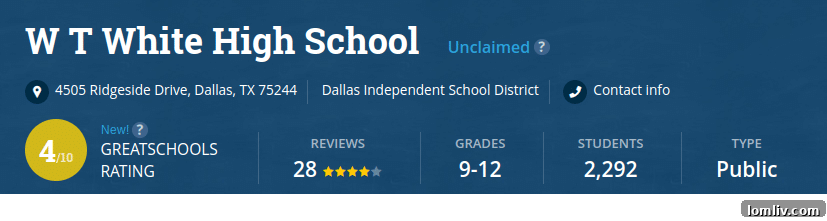
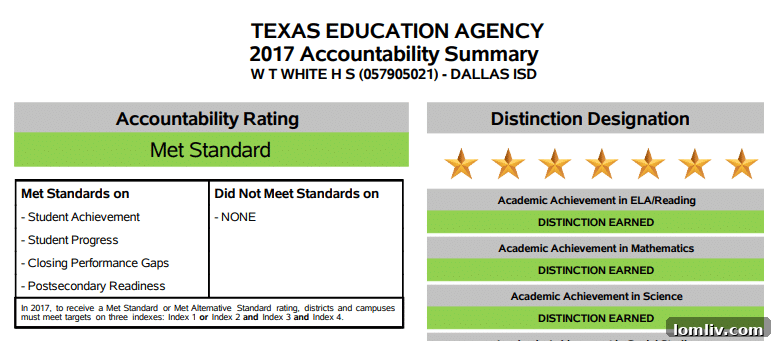
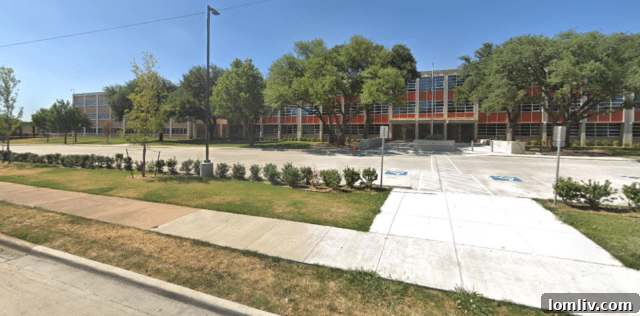
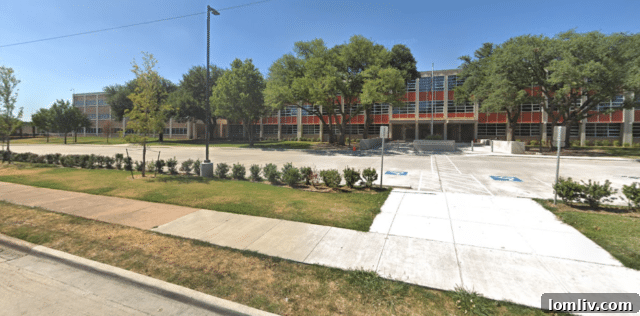
Consider W.T. White High School. On GreatSchools, it may display a modest rating, such as 4/10. However, a deeper dive into its Texas Education Agency (TEA) accountability summary reveals a vastly different picture. In 2017, W.T. White High School achieved an extraordinary feat: it received seven distinctions from the TEA. This made it the only comprehensive high school in the entire district to earn all seven distinctions, recognizing excellence in areas like Academic Achievement in English Language Arts/Reading, Mathematics, Science, Social Studies, Top 25% in Student Progress, Top 25% in Closing Performance Gaps, and Postsecondary Readiness. Even in subsequent years, like 2018, the school continued to secure four distinctions, consistently demonstrating high levels of achievement across multiple indicators. The stark contrast between a 4/10 popular rating and such significant state-level recognition highlights a fundamental disconnect that could lead many homebuyers to prematurely dismiss a truly high-performing institution.
Jack Lowe Sr. Elementary: A National Contender with a Mid-Tier Score
The trend of under-representation by GreatSchools continues with Jack Lowe Sr. Elementary. Despite its GreatSchools rating of 5/10, this elementary school boasts impressive credentials. Last year, it not only met state standards but also earned three distinctions from the TEA. More notably, Jack Lowe Sr. Elementary was nominated by the state for consideration as a national Blue Ribbon School. The National Blue Ribbon Schools Program identifies and recognizes elementary, middle, and high schools that are either among the state’s highest-performing schools overall or schools with high percentages of disadvantaged students that are making significant progress in improving student outcomes. For a school to be nominated for such a prestigious national award while carrying a merely average online rating underscores the limitations of simplified scoring systems.
Titche Elementary: Overlooked Excellence
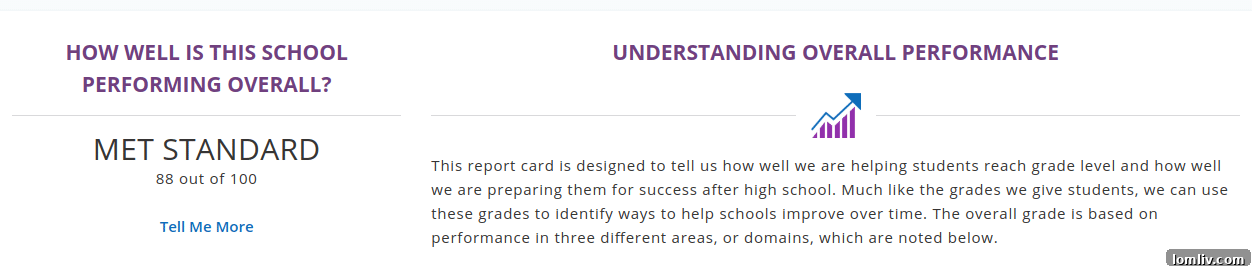
Another compelling example is Titche Elementary, which received a “big fat 3/10” from GreatSchools. Yet, similar to the other examples, its performance according to the TEA tells a story of remarkable success. Titche Elementary earned six distinctions from the state and nearly achieved an ‘A’ in Texas’s A-F accountability rankings, pulling down an impressive 88 score overall. This places Titche in the upper echelons of Texas schools, making its 3/10 GreatSchools rating almost inexplicable. Such a discrepancy is not just misleading; it actively conceals the significant progress and high quality of education being delivered at the school.
Woodrow Wilson High School: A Celebrated Success Story Underrated
Woodrow Wilson High School is frequently celebrated as a true success story within Dallas ISD, known for its vibrant community and strong academic programs. Yet, on GreatSchools, it also registered a 4/10. Like W.T. White, Woodrow Wilson earned seven distinctions from the TEA last year and secured a solid ‘B’ in the state’s A-F rankings. These schools are not outliers; they are symptomatic of a broader issue where popular online ratings fail to adequately reflect the multifaceted achievements and improvements happening in public education, particularly in diverse urban districts like Dallas ISD. These discrepancies, found quickly, suggest that many more exist, waiting to be uncovered by diligent research.
Beyond the Numbers: A Holistic Approach to School Evaluation
The examples above clearly demonstrate that relying solely on a single, aggregated online school rating is insufficient and can lead to flawed decision-making. Just as you wouldn’t buy a house without a thorough home inspection, you shouldn’t dismiss a neighborhood based on an incomplete school assessment. A holistic approach, similar to conducting thorough due diligence, is essential to truly understand the quality of education a school provides. This comprehensive strategy involves looking beyond superficial scores and engaging with multiple, more reliable data sources and direct interactions.
So, if a quick Google search won’t suffice, where should a discerning homebuyer or real estate agent look for accurate, meaningful information about a school? The answer lies in combining official state data with direct engagement and community insights. This multi-pronged strategy will provide a much clearer and more accurate picture of a school’s environment, academic rigor, and overall fit for your family’s needs.
Your Essential Toolkit for True School Assessment
To accurately assess a school’s quality, move beyond simplistic online ratings and utilize these comprehensive resources:
- The TEA Website (Texas Education Agency): Your Primary Data Source
The TEA website is the official repository for detailed accountability data for every school in Texas. Here, you can delve into comprehensive reports that go far beyond a single number. You’ll find specific metrics on student achievement, student growth, how well schools are closing achievement gaps among different student groups, college and career readiness indicators, and more. Understanding TEA distinctions – which recognize exemplary performance in specific areas – provides far more insight than an aggregated score. Look for information on academic progress, financial transparency, teacher qualifications, and specific program offerings. This data is rigorously collected and provides a transparent, state-mandated view of school performance.
- The State’s A-F Accountability Portal (txschools.gov): Clear Performance Grades
Texas employs an A-F grading system for its schools, offering a straightforward yet comprehensive way to understand overall performance. This portal provides detailed reports explaining how each school’s grade is derived, considering multiple components of academic performance. It’s a fun fact that in a recent year, only 11 schools across the entire state achieved a perfect score, and an impressive six of those were located right here in Dallas ISD. This system offers a more nuanced and official evaluation than commercial rating sites, highlighting genuine successes and areas for improvement with clarity.
- Engage with the School’s PTA/PTO (Parent-Teacher Association/Organization): The Parent Perspective
No data report can fully capture the intangible aspects of a school’s culture and community. Engaging with the Parent-Teacher Association (PTA) or Parent-Teacher Organization (PTO) for your prospective school offers invaluable insights. Many PTAs/PTOs maintain active websites, Facebook pages, or local community groups. Reach out to parents directly. Ask about the school’s atmosphere, parent involvement, extracurricular activities, communication with staff, and how the school supports diverse student needs. These firsthand accounts provide a pulse on the daily life and spirit of the school community that no numerical rating can convey.
- Direct School Contact: Website, Principal, and Tour: Experience it Firsthand
The most direct way to assess a school is to engage with it directly. Start by thoroughly exploring the school’s official website for information on curriculum, special programs (like STEM, arts, dual language), staff directory, mission statement, and recent news. Then, don’t hesitate to call the principal’s office. Express your interest as a prospective parent and inquire if you can schedule a tour. During a tour, observe classroom environments, student-teacher interactions, the condition of facilities, and the overall energy of the school. Ask specific questions about student support services, disciplinary policies, and how the school fosters a sense of belonging for all students.
- Leverage Your Network and Local Experts: Unfiltered Insights
Sometimes, the most honest and revealing information comes from personal connections. Tap into your existing network – friends, colleagues, local community groups, and especially experienced real estate agents specializing in particular neighborhoods. Someone in your extended network likely has a child attending the school you’re researching, or knows someone who does. These firsthand accounts, often shared candidly, can offer invaluable perspectives on a school’s strengths, challenges, and overall environment that official data might not convey. Local real estate professionals, like Bethany Erickson, who are deeply immersed in the community, can also be a vital resource, guiding you towards verified information and local insights.
And yes, you can ask me directly! I’m here to help you navigate these important decisions. Feel free to reach out via email, or message the Daltxrealestate.com Facebook page. My goal is to equip you with the accurate information you need.
The Changing Landscape of Dallas ISD: A Story of Progress
It’s crucial to acknowledge the incredible strides Dallas ISD has made in recent years. Just five years ago, a significant number – 43 schools – did not meet state standards. Today, that number has dramatically shrunk to only four. This remarkable transformation is a testament to dedicated leadership, innovative programs, and the hard work of educators, students, and families across the district. This progress means that the odds are overwhelmingly in your favor that the home you’re considering, or the property you’re looking to sell, is zoned for a truly terrific school. This positive trend underscores why relying on outdated or overly simplistic ratings is particularly detrimental now, as it could lead you to miss out on thriving educational communities that have undergone significant improvement.
Conclusion: Invest Wisely, Inspect Thoroughly
Ultimately, the point is this: much like there are more nuanced ways to understand a neighborhood’s safety – delving into community watch programs, local engagement, and specific crime prevention efforts rather than just a raw crime rate – there are also vastly superior, more complete methods to ascertain the true quality of a school. These methods move beyond a single, often misleading, numerical rating.
Purchasing a home is one of the most significant investments you’ll ever make. You wouldn’t consider closing on a property without a comprehensive home inspection to understand its structural integrity, systems, and potential issues. Applying the same diligent inspection mindset to the schools associated with that property is equally, if not more, critical. Don’t nix a potential dream home simply because you relied on an incomplete and potentially inaccurate online school rating. Invest the time to truly inspect the school, understand its achievements, and connect with its community. By doing so, you ensure you’re making the best possible decision for your family’s future and discovering the hidden gems within Dallas ISD.
Bethany Erickson is the education and public policy writer for Daltxrealestate.com and Director of Audience Engagement for Candy’s Media. She is a recognized journalist and thought leader in education and real estate, a member of the Online News Association, the Education Writers Association, the International Academy of Digital Arts and Sciences, the National Association of Real Estate Editors, and the Society of Professional Journalists. Her accolades include the 2018 NAREE Gold winner for best series and a 2018 Dallas Press Club Hugh Aynsworth Award winner. Contact her at [email protected].