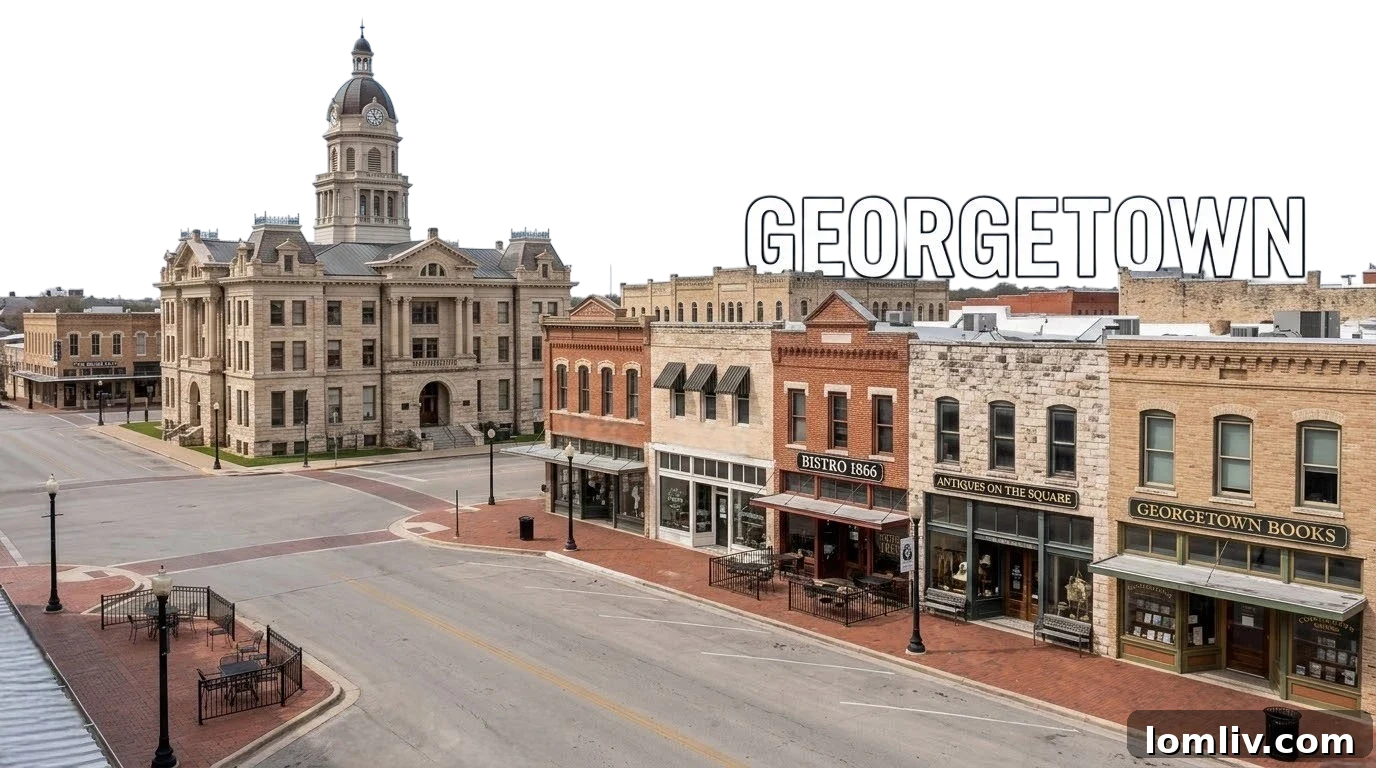
Georgetown is about 30 miles north of Austin, but the two cities feel different. As the seat of Williamson County and home to Southwestern University, the oldest university in Texas, Georgetown has developed a distinct identity. It has ranked highly for growth in recent years while retaining many of the qualities that attract people in the first place.
Newcomers often need a few weeks to get a true sense of the city. Tourist guides tend to highlight the same popular spots, but the places locals visit most often aren’t always the ones that appear at the top of a search result.
This guide focuses on recommendations from residents—the everyday places and experiences that give Georgetown its character.
Start at the Historic Downtown Square
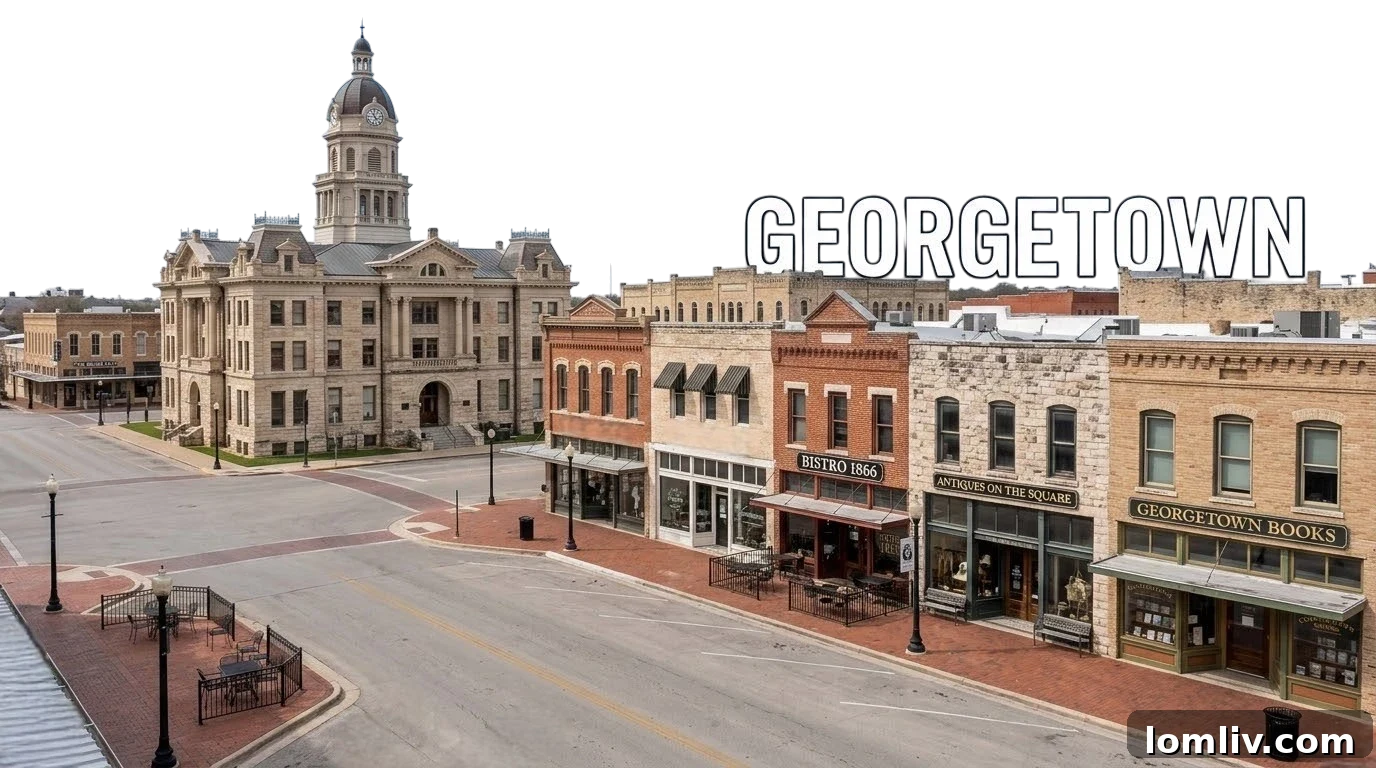
The downtown square is the natural place to begin exploring Georgetown. Often called one of the most beautiful town squares in Texas, it remains the city’s cultural and social hub. The courthouse and surrounding buildings have been preserved, and many house independent restaurants, boutiques, cafes, and galleries rather than national chains.
What stands out to new residents is that the square is actively used. Weekends bring concerts, farmers markets, and festivals, while weekdays bring lunches on patios and evening strolls with dogs. Spending a Saturday morning on the square quickly reveals why Georgetown feels different from a typical suburb.
Where Locals Actually Eat
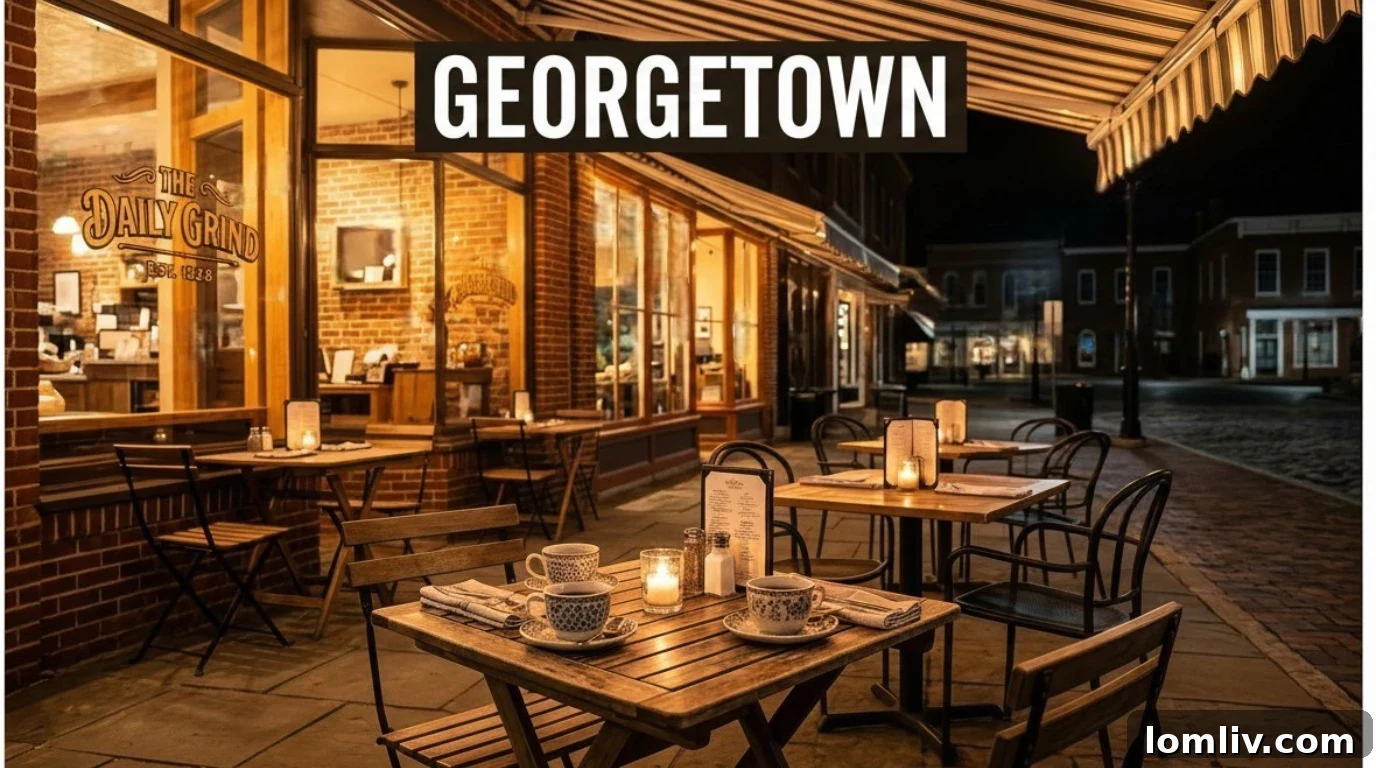
Georgetown’s restaurant scene has expanded in recent years, and several spots come up repeatedly in local conversations.
Monument Cafe, just south of the square, is a longtime favorite for hearty Texas-style meals, fresh ingredients, and homemade desserts. Encantada Cocina + Cantina took over the former El Monumento space and offers polished Mexican dining near Blue Hole Park. For special occasions, Wildfire—located just off the square—is known for steaks and seafood in an elevated setting. For more casual nights, the square itself supports a rotating collection of independent eateries, taprooms, burger joints, and pizza places that residents frequent.
For coffee, Red Horn Coffee House and Taproom has become a popular community spot. It pairs coffee with craft beer and light fare, making it convenient for a morning work session or a relaxed evening with friends.
Outdoor Spaces Locals Actually Use
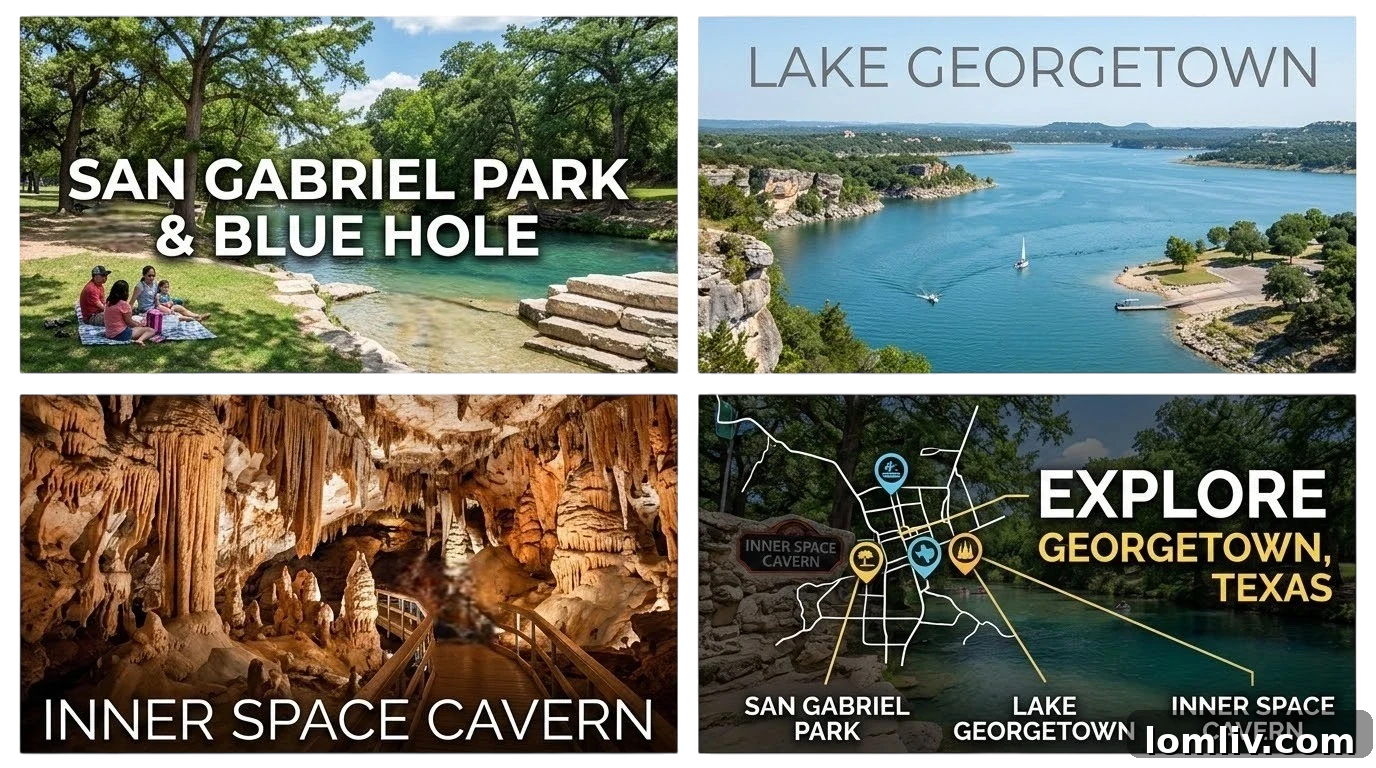
Georgetown’s natural setting plays a big role in its identity. The city is centered on the San Gabriel River, and the parks and trails that follow it are woven into daily life for many residents.
San Gabriel Park and Blue Hole
San Gabriel Park is the focal point of the local park system, offering trails, picnic areas, sports fields, and river access. Blue Hole, a picturesque lagoon within walking distance of the square, is one of the town’s most photographed spots and a favorite cooling place in summer. The limestone bluffs and sheltered setting give Georgetown a natural landmark most suburbs lack.
Lake Georgetown
A few miles west of downtown, Lake Georgetown provides hiking trails, boat ramps, and secluded coves. The Goodwater Loop—a long trail circling the lake—has become a popular route for hikers, trail runners, and cyclists on weekends.
Inner Space Cavern
Just outside city limits, Inner Space Cavern was discovered during Interstate 35 construction in the 1960s and has offered guided tours for decades. Though it may sound like a typical tourist stop, it’s a genuinely interesting destination worth visiting.
Annual Events That Define the City
Georgetown’s event calendar includes festivals and celebrations that many residents plan for each year. The Red Poppy Festival in spring is the largest, celebrating the city’s title as the Red Poppy Capital of Texas with live music, food vendors, a parade, and family activities.
Other regular events include the Christmas Stroll in December, Second Saturday Market Days on the square, and frequent live music during the warmer months. These gatherings help newcomers feel connected to the community more quickly.
What Newcomers Should Know About Local Growth
Georgetown has been one of Central Texas’s fastest-growing cities. Residential development, commercial expansion, and new tech and manufacturing projects have changed the local pace of life. Most longtime residents feel the city has managed growth reasonably well without losing its character, but the changes are noticeable.
Practically, expect ongoing construction in some corridors, shifting traffic patterns around Interstate 35 and other major roads, and continual development of new neighborhoods in the southwest and northern areas. The city has also been updating its Unified Development Code for the first time since 2003 to better reflect current priorities and development trends.
A Practical Note for People Still Settling In
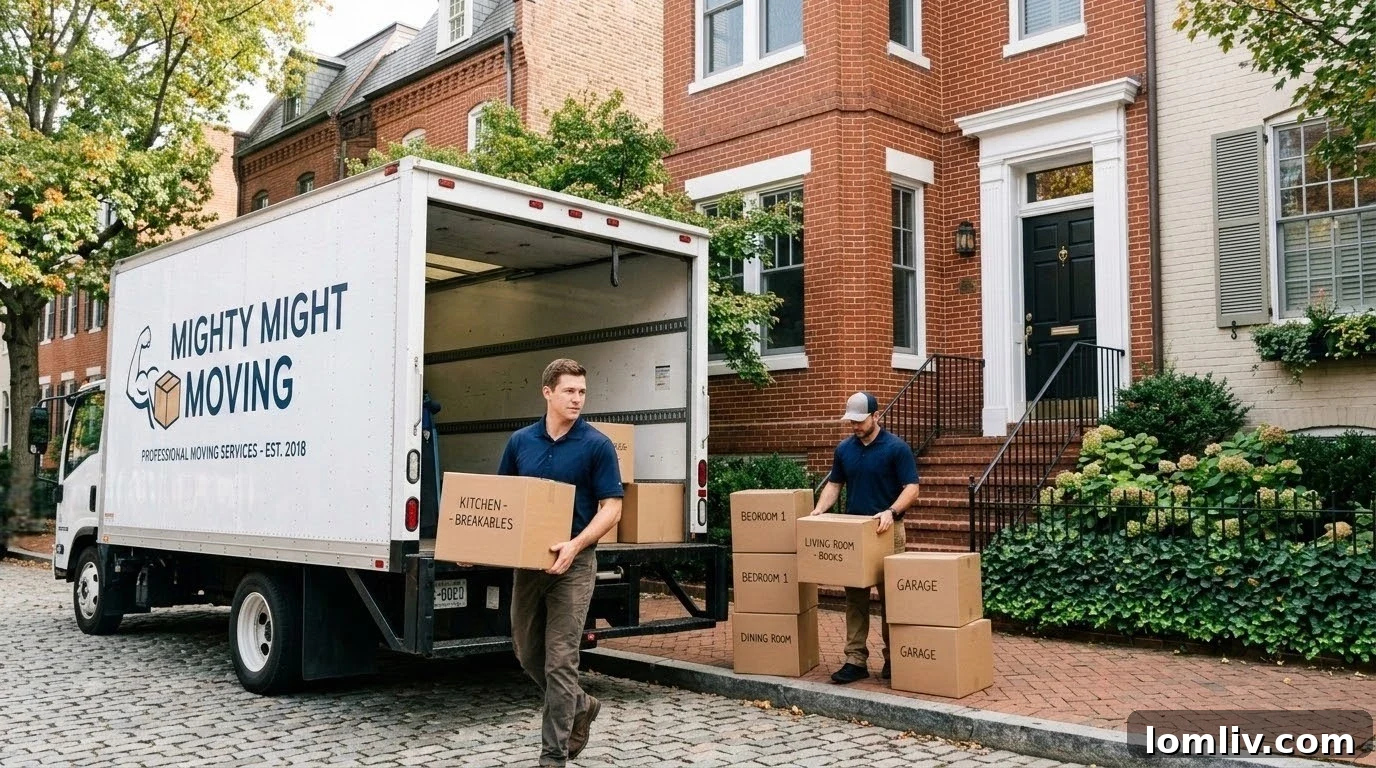
Moving to a new city involves many small decisions: finding reliable grocery stores, identifying neighborhoods that match school and commute needs, and learning daily routines. In Georgetown, asking neighbors and coworkers for recommendations is often the quickest way to find what you need—word of mouth still matters here.
For the move itself, hiring experienced local movers can make the first week much smoother. Local crews understand neighborhood layouts, apartment complexes, older streets near the square that require careful navigation, and rules in newer developments. That local knowledge often saves time and stress during relocation.
Making Yourself at Home in Georgetown
Georgetown rewards people who live in it rather than just visit. The square, river, community events, and relaxed weekday pace are often cited by residents as reasons they stayed. Newcomers who embrace those elements—spending time on the square, exploring river trails, finding a favorite coffee shop, and attending a couple of festivals—tend to feel at home sooner than those who treat the city only as an Austin suburb.
The city has welcomed new residents for generations, and the best way to become part of it remains simple: visit the places locals love and make them part of your routine.