

Dallas & Grand Prairie Real Estate: Top Schools and Market Insights for Savvy Realtors
For real estate professionals navigating the dynamic Dallas and Grand Prairie markets, staying informed is paramount. This comprehensive guide delves into critical insights, from the prestige of top-nominated schools that significantly influence property values to the latest shifts in new home sales and inventory levels across North Texas. Understanding these trends empowers realtors to better serve clients, whether they are families prioritizing education or investors seeking prime opportunities. Our in-depth analysis provides the essential details you need to excel in today’s competitive landscape.
Recognizing Excellence: Four Local Schools Nominated for National Blue Ribbon Honors
 Education is a cornerstone of community value, and top-tier schools are powerful magnets for families and a significant driver of real estate demand. This year, the Dallas-Fort Worth metroplex celebrates a remarkable achievement as four of its local institutions have been nominated for the prestigious 2019 National Blue Ribbon School award. Texas Education Agency Commissioner Mike Morath proudly announced that three Dallas ISD schools and one Grand Prairie ISD school are among the select 26 nominations from across Texas. This recognition not only elevates the schools themselves but also shines a spotlight on the neighborhoods they serve, making them particularly attractive to prospective homebuyers.
The National Blue Ribbon Schools program, established by the U.S. Department of Education, is a testament to academic excellence and significant progress in closing achievement gaps. It is a highly coveted award, signifying that a school’s students are either performing at exceptionally high levels or are making substantial strides towards educational equity. For realtors, understanding which schools hold such distinctions is invaluable. It provides a compelling selling point for properties within these attendance zones and underscores the long-term investment potential of homes in these communities.
Spotlight on Nominated Schools: Driving Value in Dallas and Grand Prairie
Among the distinguished nominees are three institutions from Dallas ISD and one from Grand Prairie ISD, each recognized for their unique contributions to student success:
- Walnut Hill Elementary School (Dallas ISD): Nominated as an exemplary high-performing school, Walnut Hill Elementary serves its surrounding community with a commitment to academic rigor. Its location and strong reputation make homes in its vicinity highly desirable for families seeking quality elementary education. Realtors should highlight this school’s achievements when marketing properties in the Walnut Hill area of Dallas.
- Jack Lowe Sr. Elementary School (Dallas ISD): Also a neighborhood school, Jack Lowe Sr. Elementary received its nomination for exemplary achievement in closing achievement gaps. This distinction is particularly powerful, demonstrating the school’s dedication to ensuring all students, regardless of background, have the opportunity to succeed. For agents, this speaks volumes about the inclusive and supportive environment, appealing to a broad spectrum of buyers.
- Judge Barefoot Sanders Law Magnet (Dallas ISD): As a magnet school, Judge Barefoot Sanders Law Magnet attracts students from across the district, offering specialized programs that foster advanced learning. Its nomination as an exemplary high-performing school underscores its consistent academic excellence. While not tied to a specific neighborhood attendance zone in the traditional sense, its presence enhances the overall educational prestige of Dallas and can be a draw for families with high school-aged children seeking specialized academic paths.
- Grand Prairie Fine Arts Academy (Grand Prairie ISD): This magnet school stands out for its unique focus on the arts, combined with rigorous academics. Nominated as an exemplary high-performing school, it offers an unparalleled educational experience for students passionate about fine arts. Its nomination elevates Grand Prairie ISD’s profile and makes the city an attractive option for families prioritizing a strong arts education alongside academic achievement.
The path to becoming a National Blue Ribbon School is rigorous. All nominated schools will now embark on an intensive application process through the U.S. Department of Education. Final results are eagerly anticipated in September 2019, with winning schools set to be honored at an exclusive awards ceremony in Washington, D.C. For real estate professionals, these nominations are not just news; they are powerful tools that can differentiate listings and add significant value to property pitches in Dallas and Grand Prairie.
Navigating the Dallas-Fort Worth Real Estate Market: Is a Cool-Down Looming?
The Dallas-Fort Worth (DFW) real estate market has been a powerhouse for years, characterized by robust growth and strong demand. However, recent data from HomesUSA.com’s December report suggests that the region’s dynamic new home sales market might be entering a period of cooling. For realtors, understanding these subtle shifts is crucial for advising clients, setting accurate expectations, and formulating effective sales strategies.
The HomesUSA.com New Home Sales Index, a key metric tracking the Days on Market (DOM) for new constructions before they sell, revealed an interesting trend. While the sales pace showed a slight improvement, with DOM dropping marginally from 115.54 days in November to 115.42 days in December, the overall volume of new home sales experienced a decline, moving from 1,336 to 1,312. This suggests a more cautious market where homes might be selling slightly quicker, but fewer transactions are occurring overall.
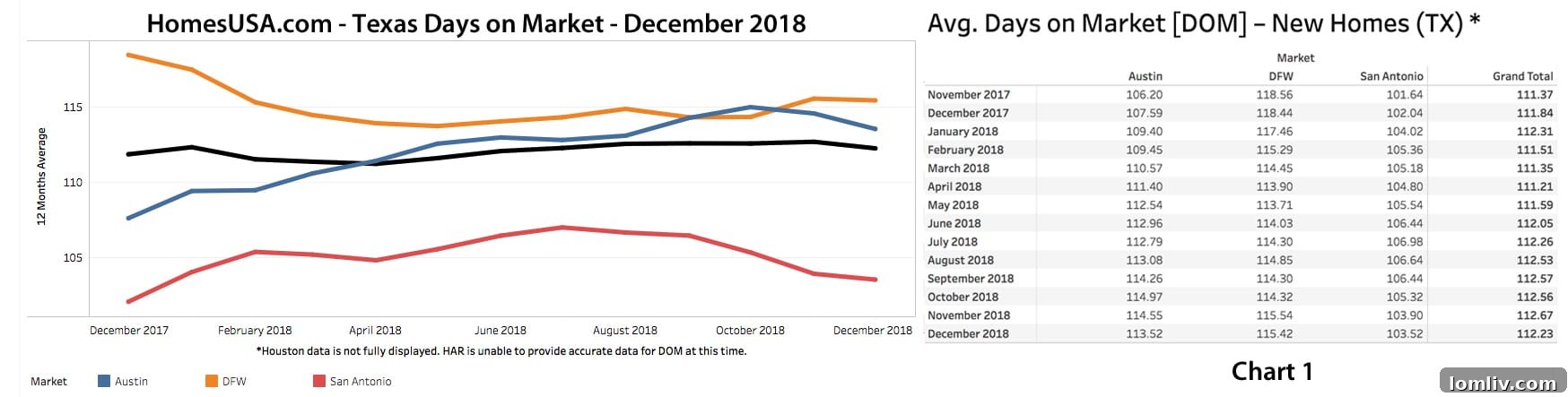
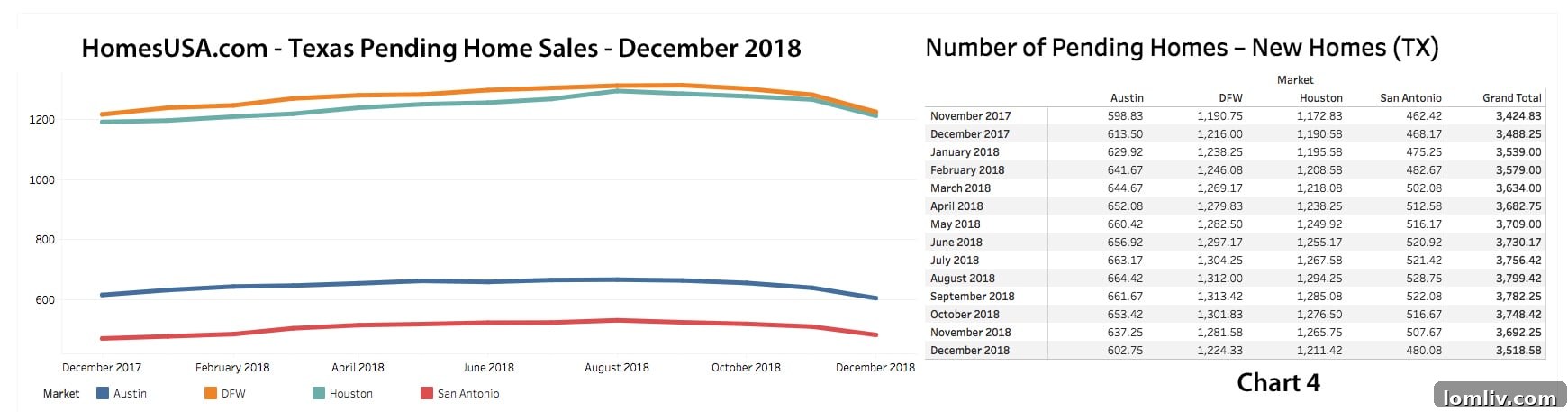
Further indicators reinforce this potential cool-down. Pending sales in North Texas, measured by a 12-month rolling average, stood at 1,224 in December, a decrease of 54 compared to November. The average price of a new home also saw a modest dip, falling from $376,458 in November to $375,960 in December. While these changes might seem minor individually, collectively they paint a picture of a market losing some of its previous momentum.
Ben Caballero, owner of HomesUSA.com, wisely posed the question, “Do these numbers reflect cooling in Dallas-Ft. Worth? Or is a large part of this simply seasonal impact? Time will tell.” This sentiment encapsulates the current uncertainty. December often brings a natural slowdown in real estate activity due to holidays and colder weather, making it challenging to discern seasonal fluctuations from genuine market shifts. However, for realtors, it’s imperative to consider both possibilities. If it’s merely seasonal, the market might rebound strongly in spring. If it signals a true cool-down, agents need to adjust their pricing strategies, marketing efforts, and client expectations accordingly.
Silver Linings: A Record Year and Broader Trends
Despite the recent decelerations, it’s essential to remember that 2018 still marked a record year for new home sales in DFW. This long-term strength provides a solid foundation, and the current softening, even if it is a genuine cool-down, might be a healthy normalization rather than a downturn. Furthermore, the statewide trend offers a glimmer of positivity: the New Home Sales Index for Texas saw a drop from 112.67 days in November to 112.23 days in December. This indicates that the DFW market’s slightly improved DOM is part of a broader, positive statewide movement in sales pace.
For realtors, this mixed bag of data necessitates a nuanced approach. While the market remains robust in historical context, vigilance is key. Educating clients about these trends – explaining the difference between a slowing market and a collapsing one, and preparing sellers for potentially longer DOM or slightly adjusted asking prices – will be vital in maintaining trust and successful transactions. Emphasize the overall strength of 2018 and the slight improvement in sales pace, even as you acknowledge the dip in volume and average price.
Understanding Inventory Shifts: A Key Indicator for North Texas Realtors
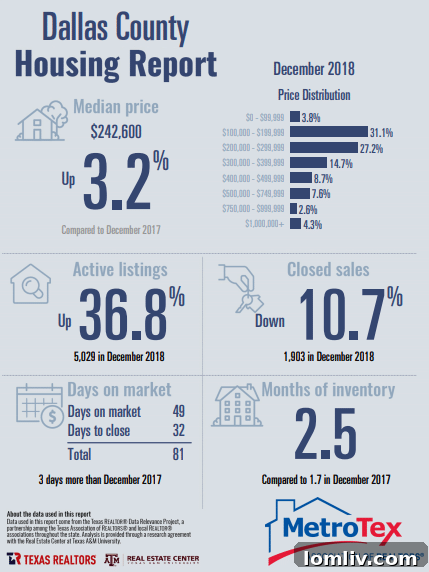
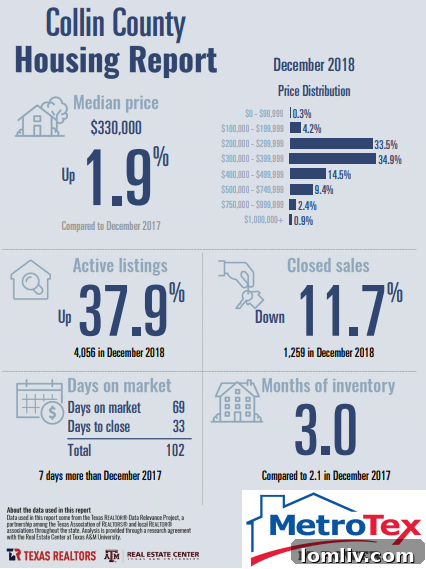
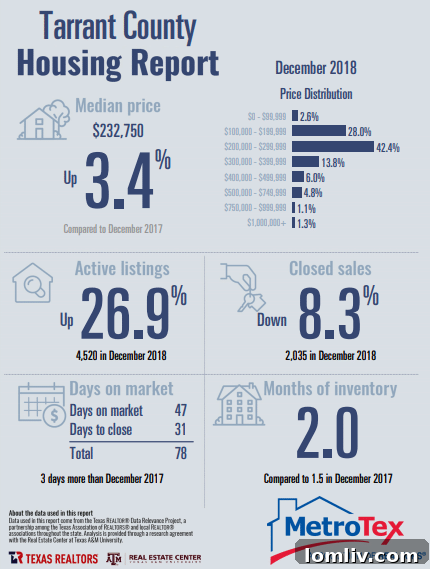
One of the most significant indicators of market health, and a critical factor for real estate professionals to monitor, is the Months of Inventory (MOI). This metric quantifies how long it would take for all current homes on the market to sell, given the current sales pace, assuming no new homes are added. A balanced market typically hovers around 6 months of inventory. Anything significantly below suggests a seller’s market, while anything above indicates a buyer’s market. Recent reports show that Months of Inventory is up across North Texas, a trend that carries significant implications for both buyers and sellers.
Implications of Rising Inventory for Realtors and Clients
An increase in months of inventory signals a shift from an intensely competitive seller’s market towards a more balanced, or even a buyer-friendly, environment. Here’s what this means for real estate transactions:
- For Buyers: Rising inventory often translates to more choices, less intense bidding wars, and potentially more negotiating power. Buyers who may have been priced out or frustrated by limited options in previous years might find new opportunities. Realtors can leverage this to encourage hesitant buyers to re-enter the market, emphasizing the broader selection and potential for favorable terms.
- For Sellers: An increase in inventory means more competition. Homes need to be priced strategically and marketed exceptionally well to stand out. Sellers might need to temper expectations regarding quick sales and premium prices that were common in recent years. Realtors must advise sellers on competitive pricing, home staging, and robust marketing strategies to attract buyers in a market with more options.
- For Investors: A market with increasing inventory could present opportunities for investors seeking to purchase properties at more reasonable prices or negotiate better deals, especially for those looking to expand their portfolios.
Monitoring localized inventory levels – whether by city, neighborhood, or property type – is crucial for realtors. The overall “North Texas” trend provides a macro view, but micro-market analysis will yield the most actionable insights. For comprehensive, localized data, real estate professionals should regularly consult resources like the MetroTex Association of Realtors’ market reports. These reports offer granular details that can help agents fine-tune their strategies, whether it’s advising a seller on the optimal listing price in a specific Dallas suburb or guiding a buyer through the best opportunities in Grand Prairie’s diverse neighborhoods.
In conclusion, the North Texas real estate market, while showing signs of potential normalization, remains dynamic and full of opportunities. By staying informed about educational achievements and critical market metrics like Days on Market and Months of Inventory, realtors can provide unparalleled service and strategic guidance to their clients. The ability to interpret these trends and communicate their implications effectively is what truly sets a top-tier real estate professional apart.