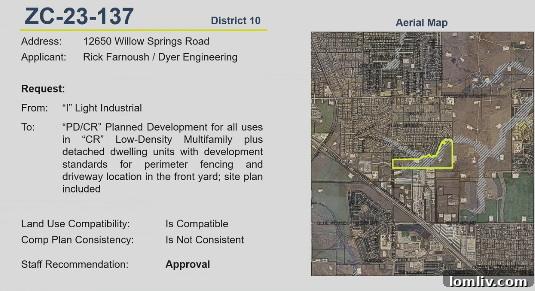
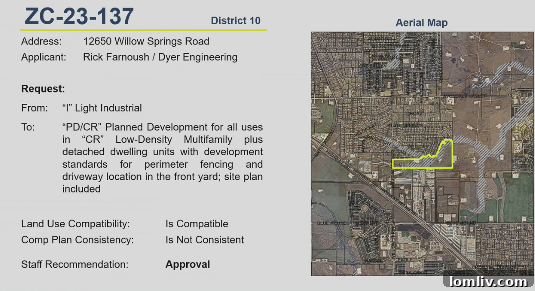
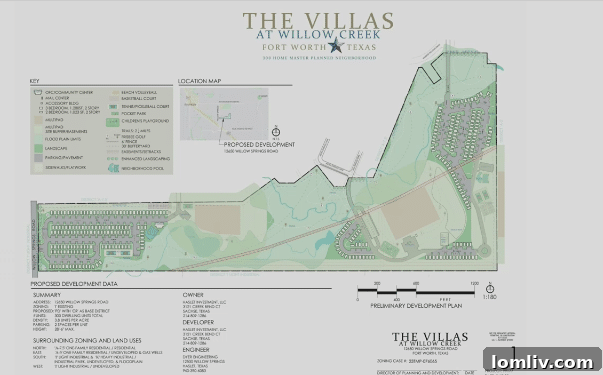
Fort Worth, Texas, a city experiencing rapid growth and an ever-increasing demand for housing, is currently at the center of a contentious debate surrounding a proposed 79-acre build-to-rent development. This ambitious project, slated for Willow Springs Drive, aims to introduce 300 new homes to the area, a move proponents argue will help address the city’s housing shortage. However, the proposal has ignited significant opposition from local residents, whose primary concerns revolve around the potential for severe traffic congestion and adverse impacts on existing property values.
The developer, Jack Dyer, recently sought and received a 60-day postponement from the Fort Worth Zoning Commission during a brief hearing on October 11. This delay provides critical time for Dyer to engage in further discussions with adjacent property owners and community stakeholders, a necessary step given the strong resistance encountered. The core of the proposal involves a pivotal zoning change, transitioning the land from its current light industrial designation to a planned development. This change is fundamental for the project to proceed and reshape a significant portion of the Willow Springs area.
“We’re going to request a continuance at this time to address some of the issues and see if we can’t make a few changes to accommodate the [adjacent property owners],” Dyer stated during the commission meeting, highlighting the developer’s intent to seek common ground and potentially revise aspects of the plan in response to community feedback. This period of negotiation and re-evaluation is crucial for the future of the development and its relationship with the established neighborhoods.
Understanding the “build-to-rent” model is key to grasping the nuances of this discussion. According to comprehensive research from leading real estate consultants CBRE, build-to-rent (BTR) developments are defined as “new residential communities, increasing U.S. housing supply and helping to address the nation’s housing shortage.” These communities are specifically designed and constructed for the rental market, distinguishing them from traditional single-family homes built for sale. BTR properties typically offer the appealing characteristics and spaciousness of single-family residences, providing renters with features and amenities not commonly found in conventional multifamily rental properties such as apartment complexes. This model has gained significant traction across the United States, particularly in fast-growing metropolitan areas like Fort Worth, as it caters to a demographic seeking flexible housing options without compromising on space or privacy. It offers an attractive alternative for individuals and families who desire the feel of a detached home but prefer the financial flexibility and reduced maintenance responsibilities associated with renting.
Residents Mobilize: Strong Opposition to Build-to-Rent on Willow Springs Road
The proposed build-to-rent community on Willow Springs Road has galvanized strong opposition from local residents, who are deeply concerned about the ramifications for their established neighborhoods. Speaking passionately before the Fort Worth Zoning Commission, Callie Jones of Aspen Springs Lane and Chelsea Faxon of Whisper Willows Drive articulated the collective concerns of their community. They represented a formidable coalition, including three adjacent homeowners associations (HOAs) and approximately 700 petitioners who have formally expressed their opposition to the requested zoning change. This widespread sentiment underscores the significant apprehension within the community regarding the project’s impact.
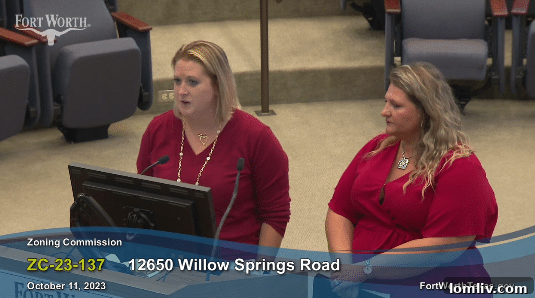
Faxon clearly outlined the two principal issues fueling the residents’ resistance: the anticipated severe increase in traffic volume and the potential negative effect on existing property values. These concerns are not merely speculative; they stem from the current realities and future projections for their rapidly expanding area. Residents feel that the quality of life they currently enjoy, and the significant investments they have made in their homes, are directly threatened by this type of high-density rental development.
Prior to the Zoning Commission hearing, representatives from the three concerned HOAs had engaged in a meeting with Rick Farnoush, a representative from Dyer Engineering, the firm behind the development. Residents had hoped for a productive dialogue that would lead to tangible solutions or significant revisions to the proposal. However, Faxon expressed disappointment, stating, “We walked away from that meeting believing the applicant was going to investigate our considerations. That does not appear to have happened.” This perceived lack of responsiveness from the developer’s team has only intensified residents’ resolve to oppose the project, fostering a sense that their voices are not being adequately heard or their concerns genuinely addressed.
The context for these concerns is rooted in the significant growth experienced by the area around 12650 Willow Springs Road in north Fort Worth. As Faxon highlighted, this particular quadrant of the city has witnessed an explosion in population in recent years, with almost 20,000 new residents calling it home. This rapid demographic expansion has already placed considerable strain on the local infrastructure, particularly the roadways. Adding to the complexity, the Avondale Haslet street widening project, a crucial initiative to expand the thoroughfare from two lanes to four, is not expected to commence until next year, with a projected completion date stretching to 2027. This means that for several years, residents will contend with construction and increased traffic on existing, already overburdened roads.
The current infrastructure deficiencies are already impacting daily life. Homeowners point out that many of their neighborhoods lack basic amenities like sidewalks, forcing children to wait for school buses in neighbors’ front yards – a testament to the underdeveloped pedestrian infrastructure. The prospect of 300 additional homes, potentially introducing upwards of 600 more drivers onto these already struggling streets, is a daunting one for residents. “The addition of 300 more homes, potentially 600 more drivers, sounds overwhelming to our already-overwhelmed neighborhood streets,” Faxon articulated, capturing the palpable sense of dread within the community. While acknowledging the inevitability of growth in Fort Worth, residents are firm in their demand to “understand the impact of the growth on our streets” and ensure that development proceeds responsibly and sustainably.
A significant point of contention for residents is the developer’s apparent unwillingness to conduct a comprehensive traffic study. Faxon underscored this critical omission, noting that without such a study, the true impact of an additional 600 vehicles on the local road network cannot be accurately assessed or adequately planned for. This lack of data-driven analysis leaves residents feeling vulnerable to unforeseen consequences and frustrated by what they perceive as a disregard for their safety and daily commutes. They emphasize their pride in their homes, which represent their largest personal investments, ranging in size from 2,400 to a spacious 4,000 square feet. The introduction of a high-density, multifamily rental development without stringent restrictive covenants governing aspects like size, character, or aesthetic consistency, poses a tangible risk to the carefully cultivated environment of their neighborhoods.
Faxon eloquently argued that if the primary objective is increased housing density, there are alternative development models that could achieve this without compromising existing community standards and property values. She suggested that “if density is the goal, this could still be accomplished through a residential townhome association providing controls and a commitment to property values.” This alternative approach would allow for higher housing numbers while simultaneously integrating mechanisms to maintain the aesthetic integrity, quality, and long-term value of the surrounding homes, a critical compromise that residents believe the current build-to-rent proposal lacks.
Zoning Commission Weighs In: Staff Recommendation and Commissioner Perspectives
During the Fort Worth Zoning Commission meeting, the city staff presented their recommendation for the project, which is situated north of State Highway 81. Despite the fervent community opposition, city planning staff ultimately recommended approval of the build-to-rent development. The plans submitted to the city detail the construction of two- and three-bedroom homes, designed to cater to a diverse range of renters seeking spacious living options. This staff recommendation often carries significant weight in zoning decisions, indicating that the project generally aligns with the city’s broader development goals and land use plans, at least from a technical standpoint.
Zoning Commissioner Jacob Wurman, who represents Fort Worth’s District 10—an area encompassing the Willow Springs community—offered a nuanced perspective on the matter. He noted that this particular site has been the subject of zoning discussions multiple times in recent years, indicating a history of development interest and challenges. Wurman acknowledged the inevitable march of progress in the northern parts of Fort Worth, stating, “Everybody up north, including myself, understands that things are going to change and we can’t stop the growth.” This sentiment reflects a pragmatic understanding that a rapidly expanding city must accommodate new housing and population increases.
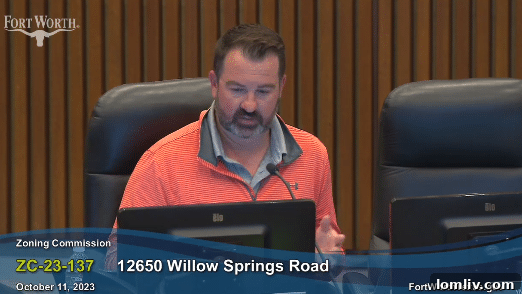
However, Wurman quickly pivoted to emphasize the critical need for proactive measures to address the associated infrastructure challenges. He continued, “We need to mitigate the issues that we’re going to have with the infrastructure on the roadway projects that are four years away from completion.” This statement highlights the core dilemma faced by many growing cities: development often outpaces infrastructure improvements. His concern directly echoes the residents’ worries about traffic congestion, particularly given the long lead time for crucial road widening projects like Avondale Haslet. Wurman’s perspective suggests a desire to balance growth with responsible planning, ensuring that existing communities are not unduly burdened by new developments before adequate infrastructure is in place.
Responding to the commission’s and residents’ concerns, developer Jack Dyer reiterated his commitment to further dialogue. He confirmed that he and Rick Farnoush plan to meet again with the property owners, signaling a willingness to continue negotiations during the 60-day postponement period. Dyer also provided clarification regarding the nature of the development, aiming to alleviate fears about its density and impact. “It is a fully-restricted development,” he asserted, countering the perception of an unregulated, high-density project. He emphasized, “It is not a high-density product on 80 acres,” seeking to assure stakeholders that the design incorporates specific limitations and controls, distinguishing it from more densely packed apartment complexes or less regulated rental properties.
Regarding the critical issue of traffic, Dyer detailed his proposed routing strategies. He explained that “most of the traffic is going to be routed directly from the front section that is adjacent to Willow Springs Road onto Willow Springs Road and not through the neighborhood unless we are required to make a full connection.” This indicates a design intent to minimize cut-through traffic in existing residential areas. Furthermore, he added, “In the rear section, I think at least 50 to 75 percent of the traffic will probably route to the rear, which would be to the east, through Nance Ranch development.” These details suggest a deliberate effort to disperse traffic flow and prevent a single point of congestion, although the effectiveness of these plans would undoubtedly be a key focus of any future traffic study.
Commissioner Wurman concluded his remarks by indicating his intention to consult with District 10 Councilman Alan Blaylock before the build-to-rent zoning proposal is brought back before the commission in December. This consultation underscores the political dimension of zoning decisions and the importance of alignment between the Zoning Commission and the City Council. Wurman offered a preliminary assessment of the development’s layout: “For me, personally, I think the western part of the development seems to be fine. It’s got direct access to Willow Springs Road… We’ve had other cottage-style community cases like this where, if you can get the cottages closer to the main thoroughfares, they are less impactful to the neighborhood.” This suggests that portions of the plan, particularly those with direct arterial access, might be more palatable. However, he expressed greater reservations about the rear section, concluding, “The rear section is a little bit different. I think that’s why we need to have the continuance.” This distinction highlights the ongoing need for detailed planning and potential modifications to ensure the development integrates harmoniously with all adjacent communities.
The 60-day continuance represents a pivotal period for all parties involved. For the developer, it’s an opportunity to refine the proposal, address specific community concerns, and build consensus. For the residents, it’s a chance to further articulate their needs and advocate for solutions that protect their quality of life and investments. And for the City of Fort Worth, it’s a test of its ability to manage rapid urban growth in a manner that is both economically viable and socially responsible, ensuring that new housing solutions do not inadvertently create new problems for existing residents. The outcome of the December hearing will undoubtedly set a precedent for future build-to-rent projects in Fort Worth and shape the ongoing dialogue between developers and communities in this dynamic Texas city.