Harmonizing Eras: Crafting Modern Luxury Within Fort Worth’s Historic Fairmount District
Stepping into a designated historic neighborhood often feels like a journey back in time, a captivating mosaic of architectural heritage and stories etched in brick and mortar. Yet, beneath this charm lies a complex challenge, especially for those envisioning new construction or significant renovations. The delicate balance between preserving the past and embracing the conveniences of the present creates a unique real estate landscape – one ripe with both intricate regulations and unparalleled opportunities.
For discerning homebuyers and urban developers alike, the question often arises: how can contemporary living thrive within the strictures of historical preservation? This article delves into the nuances of this dynamic, using a remarkable property at 1935 Fairmount Avenue in Fort Worth as a prime example of how modern luxury can be seamlessly integrated into a storied setting, respecting its past while catering to the demands of today.
The Delicate Balance: Preservation vs. Practicality
On one hand, the intent behind a historic neighborhood designation is fundamentally noble. These guidelines serve as guardians of architectural integrity, cultural heritage, and the unique character that defines a community. They prevent unchecked development that could erode the very essence of a place, safeguarding classic styles, period materials, and the cohesive aesthetic that makes an area like Fairmount so desirable. Historic districts, by their very nature, resist the intrusion of generic, mass-produced housing styles that might be at home in a suburban development but are anathema to a historically rich urban fabric.
However, the concept of preservation is not without its complexities and controversies. There’s nothing inherently historic or aesthetically pleasing about crumbling, dilapidated homes that have long outlived their useful lifespan. Properties that are structural liabilities, often referred to as “crack houses” or “tinderboxes,” represent not heritage, but urban blight. The cost of rehabilitating such structures frequently far exceeds their intrinsic value or even the cost of a complete tear-down and rebuild. This creates a genuine dilemma: should a community cling to a decaying shell merely for its age, or should it allow for thoughtful, context-sensitive new construction that can breathe fresh life and renewed value into the neighborhood?
Navigating the Maze: The Historic Review Process
Successfully building a new home or undertaking a major renovation within a designated historic district is an endeavor not for the faint of heart. It involves navigating a labyrinthine process, often characterized by intense scrutiny from various municipal bodies. City planning departments, historic preservation commissions, and a multitude of community committees – often populated by passionate, though sometimes overly zealous, residents – demand adherence to stringent architectural and material guidelines. This “brain-numbing process” can be an arduous journey, demanding patience, meticulous planning, and a substantial investment of time and resources.
Developers and homeowners must grapple with specific requirements for everything from roof pitches and window styles to exterior cladding and even the depth of porches, as seen in Fairmount. The use of “proper materials” – often period-appropriate and significantly more expensive than standard contemporary options – adds considerably to project costs. Furthermore, the extended timelines required for multiple rounds of review and approval can inflate budgets and test the resolve of even the most seasoned builders. Achieving a harmonious blend of old and new, therefore, isn’t just about design; it’s a testament to perseverance and a deep understanding of the regulatory landscape.
1935 Fairmount Avenue: A Beacon of Blended Design
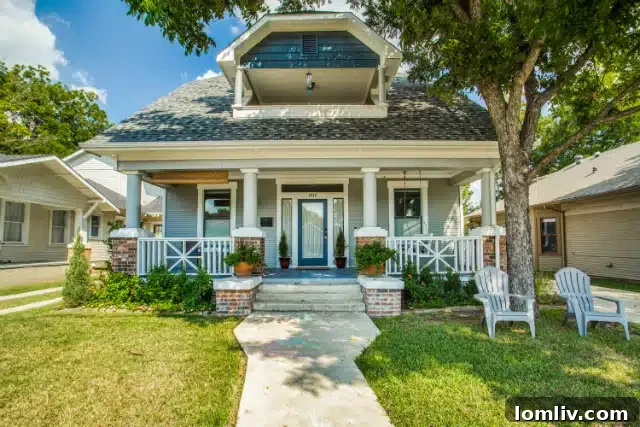
It is precisely because of these formidable challenges that a home like 1935 Fairmount Avenue stands out as a triumph. Nestled in the heart of Fort Worth’s best-known historic neighborhood of Fairmount, this residence, constructed in 2014, defies expectations. Instead of clashing with its venerable surroundings, it seamlessly integrates into the community, embodying a masterful blend of historical aesthetics and modern functionality. The careful attention to design ensures that its look, feel, and even the subtle echoes of its structure create a historic and nostalgic vibe, all while providing the cutting-edge comforts and amenities expected in today’s new homes.
The architectural genius behind 1935 Fairmount Avenue lies in its ability to respect and reflect the visual language of its neighbors. By incorporating elements such as deep, inviting porches – a hallmark of Fairmount’s historic guidelines – and thoughtful massing, the home pays homage to the early 20th-century craftsmanship that defines the area. This meticulous approach to exterior design ensures that while it is a relatively new build, it visually contributes to the cohesive character of the street, proving that modern construction doesn’t have to mean sacrificing period charm.
Reimagining Interior Spaces for Today’s Lifestyle
The original homes of Fairmount, typically built around the turn of the 20th century, often featured interior layouts that reflect the social norms and technologies of their era. These often included small, compartmentalized rooms, limited closet space, shared “community” bathrooms, and kitchens tucked away in a corner of the home. While charming in their own right, these designs frequently fall short of the expectations of today’s discerning buyers who prioritize spaciousness, openness, and functional flow.
1935 Fairmount Avenue decisively breaks from these traditional limitations. With four generously sized bedrooms and three full bathrooms, it offers the expansive living areas that are a staple of modern luxury homes. The open floor plan is a particular highlight, transforming the living experience. Gone are the tiny kitchens squished into a forgotten nook; instead, this home boasts a large, inviting kitchen that serves as the heart of the home. Equipped with ample counter space and abundant cabinetry, it’s designed for both serious cooking and effortless entertaining.
This kitchen seamlessly opens to the dining area and family room, creating a cohesive and interactive living space – a feature rarely found in original historic homes. Today’s buyers demand spacious bathrooms, large walk-in closets, and an abundance of natural light, all of which are expertly incorporated into 1935 Fairmount. This thoughtful design ensures that while the exterior exudes historic charm, the interior provides every modern comfort and convenience, from private en-suites to functional, inviting communal areas.
Beyond Aesthetics: Modern Comforts and Critical Infrastructure
The appeal of 1935 Fairmount Avenue extends far beyond its carefully crafted aesthetics and reimagined interior spaces. This 3,122-square-foot residence incorporates a host of modern amenities and infrastructure upgrades that significantly enhance livability, efficiency, and peace of mind – factors often overlooked when evaluating older properties. These are the elements that transform a house into a truly functional and comfortable home for the 21st century.
Among the notable exterior features designed for contemporary living are an electric privacy gate at the driveway, offering enhanced security and exclusivity. A six-foot fence along the perimeter of the backyard ensures privacy and provides a safe enclosure for families and pets. The inclusion of a sprinkler system simplifies lawn care, maintaining curb appeal with minimal effort. Gutters protect the foundation and landscaping from erosion, a crucial detail for long-term structural integrity. A new deck provides an inviting outdoor living space for relaxation and entertaining, while French drains manage water runoff, preventing potential moisture issues.
Perhaps one of the most significant, yet often underestimated, modern upgrades is the new sewer line extending all the way to the alley. While it might seem as unexciting as new tires on a car, the value of a modern, fully functional sewer system cannot be overstated. Anyone who has faced the daunting and incredibly expensive task of replacing an aging, problematic 1920s-era sewer line will attest to the immense benefit and peace of mind this feature provides. Old sewer systems are notorious for root intrusions, blockages, and collapses, leading to costly and disruptive repairs. A new sewer line is a foundational assurance of modern sanitation and represents a considerable investment in long-term home health, an area where historic neighborhood associations typically offer little practical assistance.
The Smart Investment: Why a Modern-Historic Hybrid Wins
For today’s discerning buyer, a property like 1935 Fairmount Avenue offers an unparalleled value proposition. It effectively resolves the perennial conflict between the desire for historic charm and the demand for modern convenience. Buyers can enjoy all the aesthetic appeal and community character of a historic Fort Worth neighborhood without inheriting the common headaches associated with older homes: constant maintenance, unforeseen structural issues, outdated electrical systems, inefficient plumbing, and high energy costs.
This hybrid approach to real estate represents a smart investment. It delivers a move-in ready luxury home that meets contemporary market demands, offers superior comfort, and boasts enhanced energy efficiency. The reduced need for immediate repairs and renovations, combined with the desirability of its location in a vibrant, historic district, positions 1935 Fairmount Avenue as a prime example of successful urban development and a testament to the fact that new construction can, and should, coexist harmoniously with the past.
Conclusion
The journey of integrating modern luxury homes into historically significant neighborhoods is fraught with challenges, yet homes like 1935 Fairmount Avenue unequivocally demonstrate that such an endeavor can be not only successful but truly exemplary. This stunning 2014 build in Fort Worth’s Fairmount Historic District is a shining example of how thoughtful design, adherence to architectural guidelines, and a commitment to modern living can converge to create a residence that is both respectful of its past and perfectly poised for the future.
It stands as a powerful testament to the idea that preservation doesn’t have to mean stagnation. Instead, it can inspire innovation, leading to homes that offer the best of both worlds: the enduring charm and community spirit of a historic area, combined with the unparalleled comfort, efficiency, and functionality of contemporary construction. As the real estate landscape continues to evolve, properties like 1935 Fairmount Avenue will increasingly serve as models for intelligent urban development, inviting us to rethink what it truly means to live in a place steeped in history.
This stunning 2014 build at 1935 Fairmount Avenue was listed by Amy Chairez of Compass for $537,000.
Seth Fowleris a licensed Real Estate Sales Professional for Williams Trew Real Estate in Fort Worth, TX. Statements and opinions are his and his alone. Seth has been involved with the home sales and real estate industry in the Fort Worth area since 2004. He and his family have lived in the area for over 17 years. Seth also loves bow ties! You can reach Seth at: 817.980.6636 or [email protected]. If you are looking for a Real Estate Sherpa to help you buy or sell … give Seth a call!