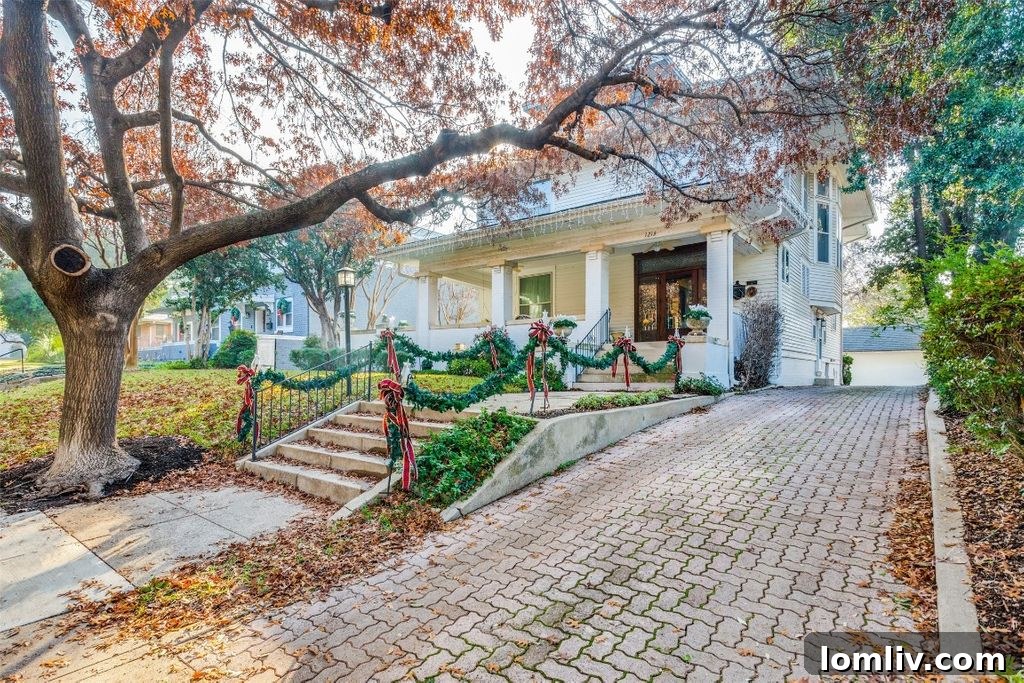
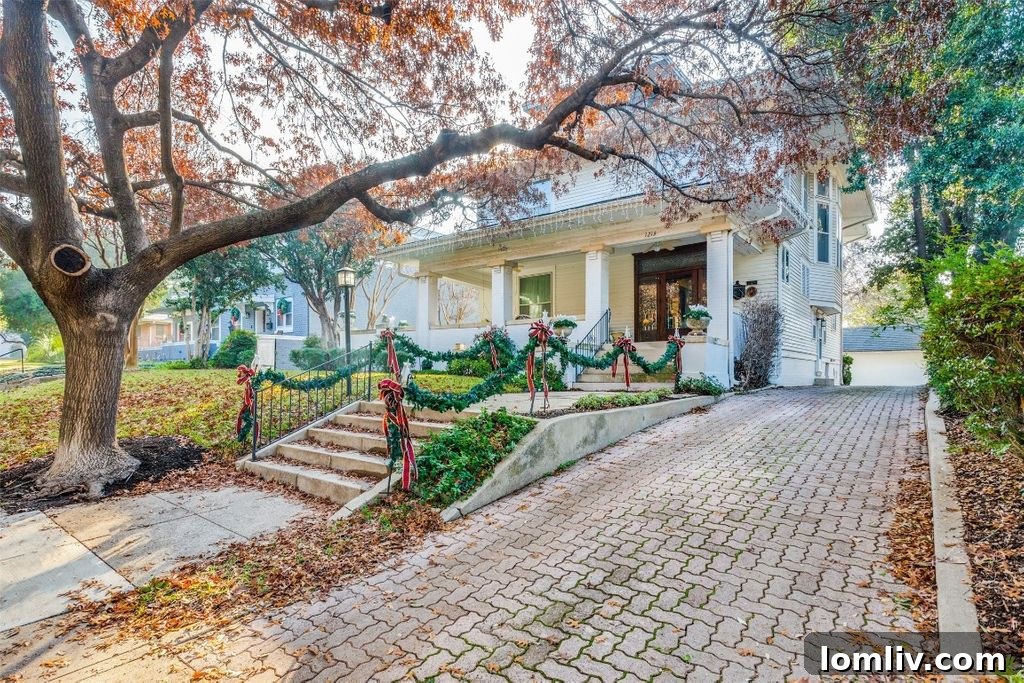
Stepping onto Elizabeth Boulevard, one immediately senses a profound connection to history, an almost palpable tranquility that distinguishes this particular stretch of Fort Worth. Amidst the charming streetscape of the historic Ryan Place neighborhood, there’s a unique property that captivates with its distinct character and storied past. Under a verdant canopy of mature trees, even the scorching North Texas summers seem gentler here, promising a refreshing reprieve and an undeniable vibrancy that makes the grass truly appear greener. Yet, this remarkable residence, standing proudly at 1215 Elizabeth Boulevard, nearly never came to be in its current form, a testament to a fascinating chapter in the area’s development.
The visionary developer, John C. Ryan, held a meticulous standard for the homes within his ambitious new development. He mandated that all structures on Elizabeth Boulevard be constructed with durable masonry or stucco, topped with elegant tile or slate roofs, ensuring a cohesive and upscale architectural aesthetic. Ryan, keen to have his esteemed friend, banker and prominent civic leader John N. Sparks, build within this prestigious community, faced an unexpected request. Sparks, with a clear vision for his future home, desired a wood-frame Craftsman house—a style that diverged significantly from Ryan’s strict material requirements. In a rare display of personal favor and friendship, Ryan granted an exception, making 1215 Elizabeth Boulevard the sole wood-frame house to grace this historic street. This unique origin story instantly elevates the property beyond a mere address, marking it as a singular artifact of Fort Worth’s architectural heritage. While it boasts a distinctive wood-frame exterior, the home gracefully incorporates one of Ryan’s original requirements: a beautiful and enduring slate roof, blending its individuality with the street’s overarching design principles.
“A Life That Far Exceeded Anything I Ever Imagined”

These poignant words encapsulate the remarkable journey of Joan Kline, a revered civic leader whose tireless dedication and selfless contributions left an indelible mark on the community of Fort Worth. Following her passing in late October, her legacy was honored through an outpouring of memorials from no fewer than four local charities, alongside a heartfelt funeral mass at Saint Andrews Catholic Church. Kline’s life was a testament to energetic giving, driven by a profound commitment to her city and its people. Her impact extended far beyond personal connections, shaping the very fabric of Fort Worth’s historic districts.
Joan Kline’s visionary work to preserve and reinvigorate the Near Southside district stands as one of her most significant achievements, a legacy so profound that an annual award is now bestowed in her name to recognize others who embody her spirit of civic stewardship. She was instrumental in the salvation of the magnificent Our Lady of Victory Building, an architectural masterpiece originally designed by the renowned Sanguinet and Staats. Through her fervent efforts, this historic edifice was rescued from potential demolition or decay, and it now thrives as a vibrant arts center, a beacon of creativity and cultural enrichment within the community. Her unwavering commitment ensured that a vital piece of Fort Worth’s architectural heritage would not only survive but flourish, contributing meaningfully to the city’s modern identity.
Indeed, anyone fortunate enough to reside in the cherished Ryan Place neighborhood owes a substantial debt of gratitude to this extraordinary woman. It was Joan Kline’s relentless advocacy and fierce determination that safeguarded the area against various ill-conceived and destructive urban planning schemes that threatened its historic character and charm. Her courageous battles against these proposals were pivotal, marking the true beginning of the neighborhood’s renaissance. Kline’s vision extended beyond simply preventing damage; she championed a future for Ryan Place that celebrated its past while fostering a vibrant, thriving community for generations to come. Her foundational efforts laid the groundwork for the revitalized, highly sought-after historic district we know today, forever linking her name to its enduring appeal and exceptional quality of life.
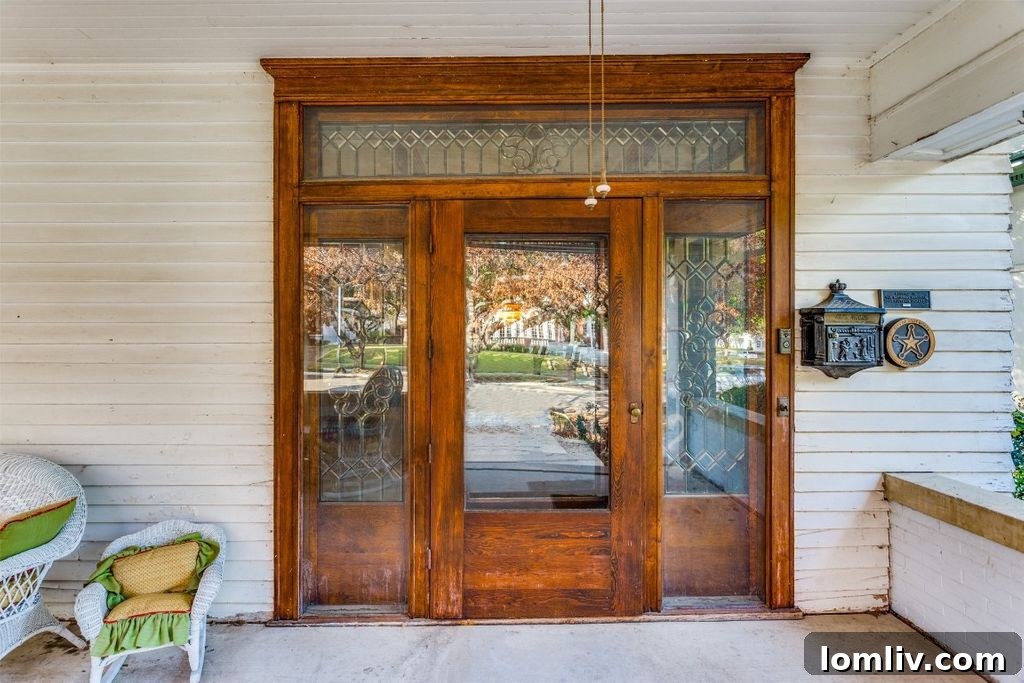
For over a decade, the allure of this particular Craftsman home on Elizabeth Boulevard has captivated my imagination, and after eleven years of anticipation, I finally had the privilege of stepping inside. The experience was everything I had hoped for, and more. This house is not just a structure; it is a perfectly preserved time capsule, offering an authentic glimpse into the architectural and design sensibilities of a bygone era. Every detail speaks to a commitment to quality and craftsmanship that is rarely seen today, making it a truly exceptional example of Fort Worth’s historic homes.
Constructed in 1911, this grand residence stands as the second oldest house on the street, boasting an impressive 113-year history. Spanning 3,164 square feet, it offers generous living spaces that have gracefully withstood the test of time. What truly distinguishes this home is its astonishingly intact interior, where original features have been meticulously maintained. The exceptional honey-colored woodwork, rich in character and warmth, permeates the house, showcasing exquisite craftsmanship. The Queen Anne style glazing, with its intricate patterns and delicate leaded glass, casts enchanting light, adding to the home’s unique charm. Furthermore, numerous built-in cabinets offer both practical storage and elegant design, characteristic of the period. The sole gas fireplace, strategically placed in the expansive foyer, serves not only as a focal point but also transforms this welcoming entry space into a cozy, secondary sitting area, inviting residents and guests to linger and appreciate the home’s timeless beauty.
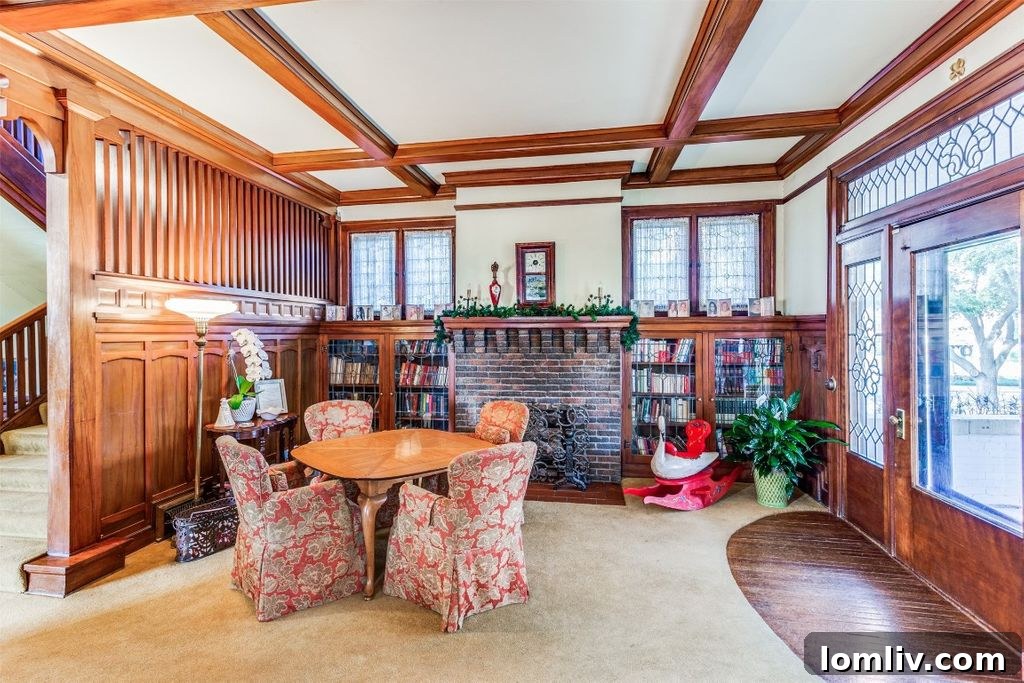
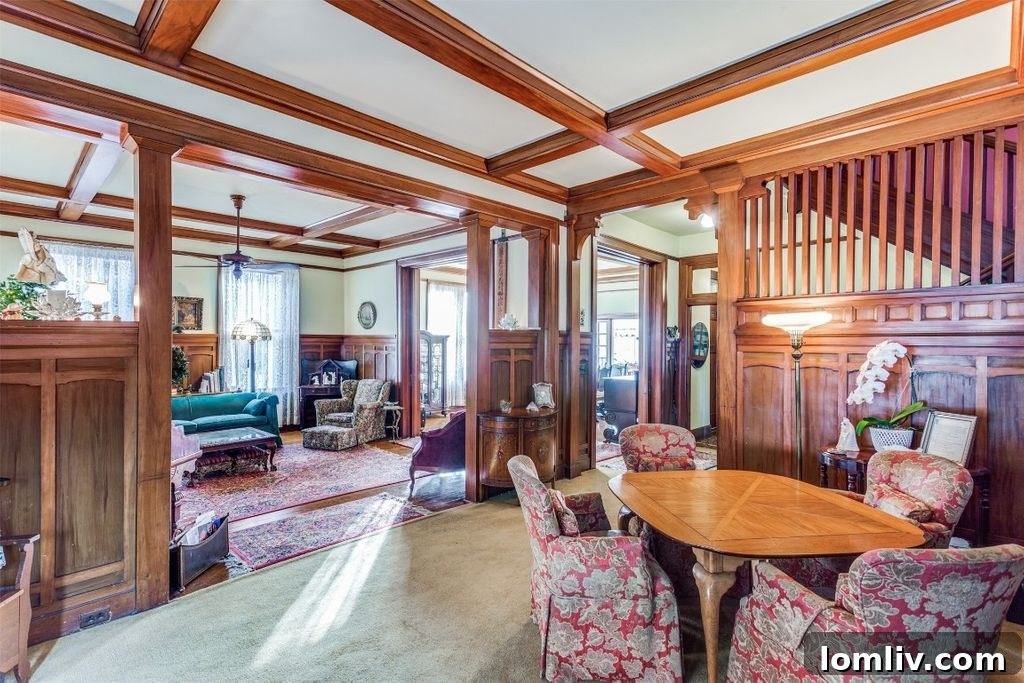
The intricate network of ceiling beams and the meticulously crafted woodwork throughout the home are the masterful handiwork of German-born architect L. B. Weinmann. A prominent figure in Fort Worth’s architectural landscape, Weinmann, in collaboration with A. N. Dawson, was also responsible for the design of the original Fort Worth City Hall, a significant civic structure that, though later demolished and replaced, showcased his enduring talent and vision. His distinctive style, characterized by a blend of European influences and Craftsman principles, is evident in every detailed beam and panel within this Elizabeth Boulevard gem. The extensive system of ceiling beams, combined with the elegantly raised dados, lend a profound sense of definition and architectural force to each space, creating rooms that feel both grand and inviting. This careful attention to structural and decorative elements is a hallmark of the Craftsman era, emphasizing natural materials and expert artistry.
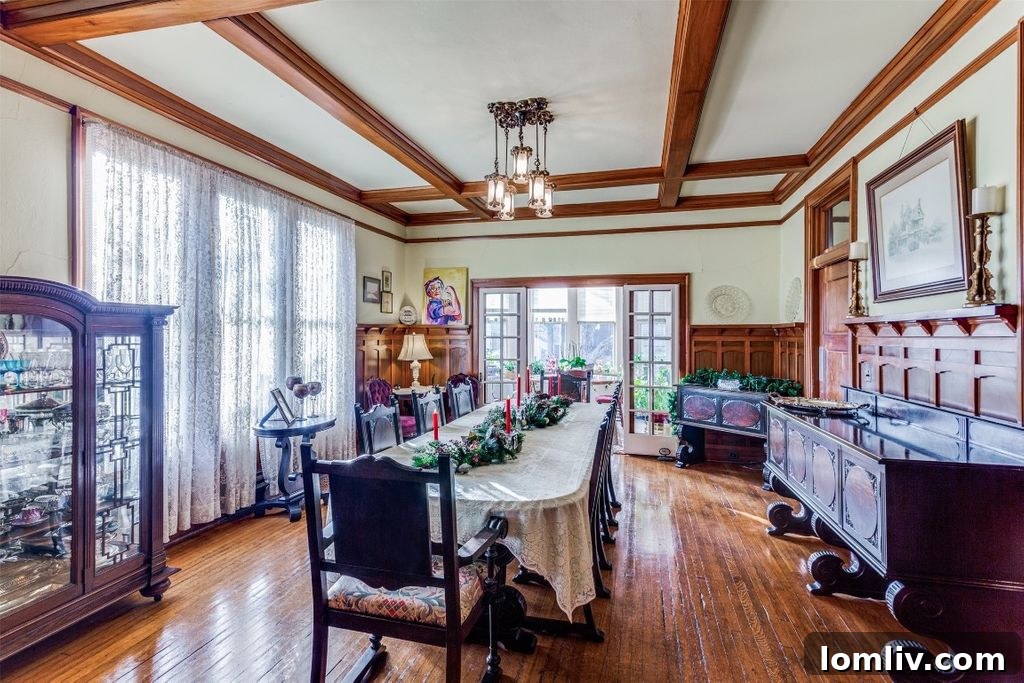
The home’s generous proportions are particularly striking, especially in the long dining room, which must have served as a welcome and necessary convenience for its former occupants. This expansive space was undoubtedly the heart of many gatherings, providing ample room for family and friends. It was within these very walls that Joan and John Kline embarked on the remarkable journey of raising ten children. The home, despite its historical footprint, possesses an incredible sense of spaciousness and adaptability, feeling as though it could comfortably accommodate a full dozen without ever feeling cramped. This speaks volumes about the thoughtful design and inherent livability of Craftsman architecture, proving that beauty and functionality can coexist seamlessly, even when catering to a large and vibrant family.
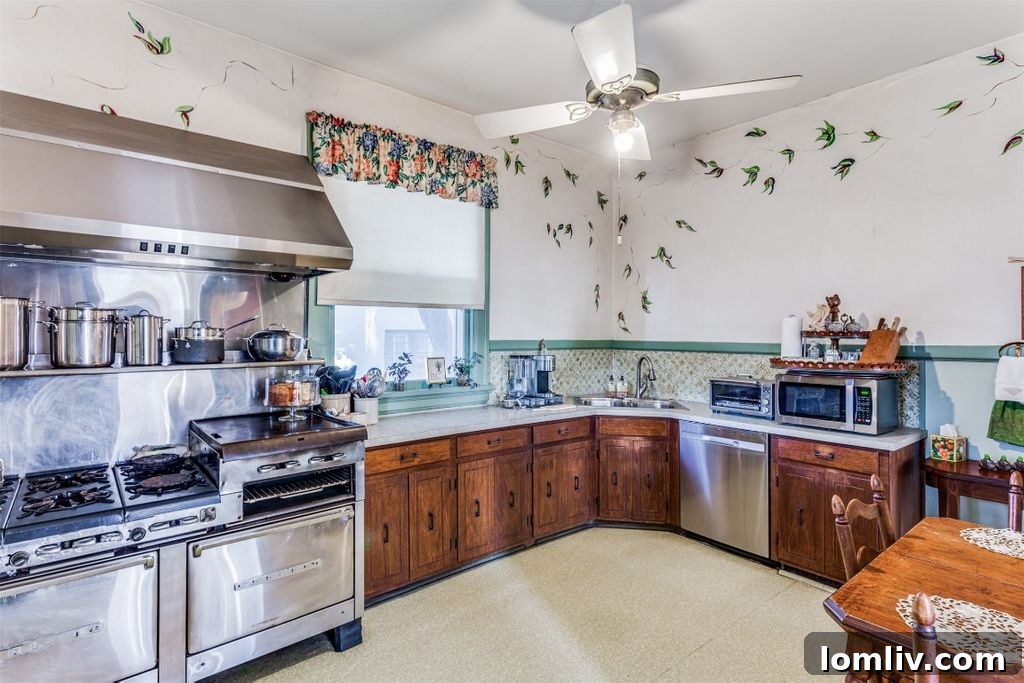
Stepping into the kitchen is another delightful throwback, a testament to the home’s original design and a charming example of a vintage heart. While preserving its historic essence, this space also presents an exciting opportunity for sympathetic modernization. On the undeniable plus side, the kitchen boasts a truly restaurant-grade range, a robust appliance designed for serious culinary endeavors. Equipped with six gas burners, a versatile griddle, a convenient toaster/broiler, and two spacious ovens, it’s a chef’s dream, capable of handling everything from intimate dinners to large family feasts. This professional-quality range is a testament to the original owners’ commitment to quality and functionality, a feature that continues to impress today’s discerning buyers.
However, on the practical side of the ledger, the kitchen’s vintage design results in a noticeable dearth of cabinets, a common characteristic of homes from this era where standalone pantries or hutches often supplemented storage. While a complete tear-out and overhaul of this historic space are certainly not necessary, or even desirable given the home’s charm, a strategic update could significantly enhance its functionality without sacrificing its unique character. Thoughtful improvements, such as the introduction of new surfaces for countertops and backsplashes, the addition of thoughtfully designed upper cabinets to maximize vertical storage, and updated flooring, would address the lion’s share of these issues. Such sensitive renovations would seamlessly blend modern convenience with the home’s original aesthetic, creating a kitchen that is both beautiful and highly efficient for contemporary living.
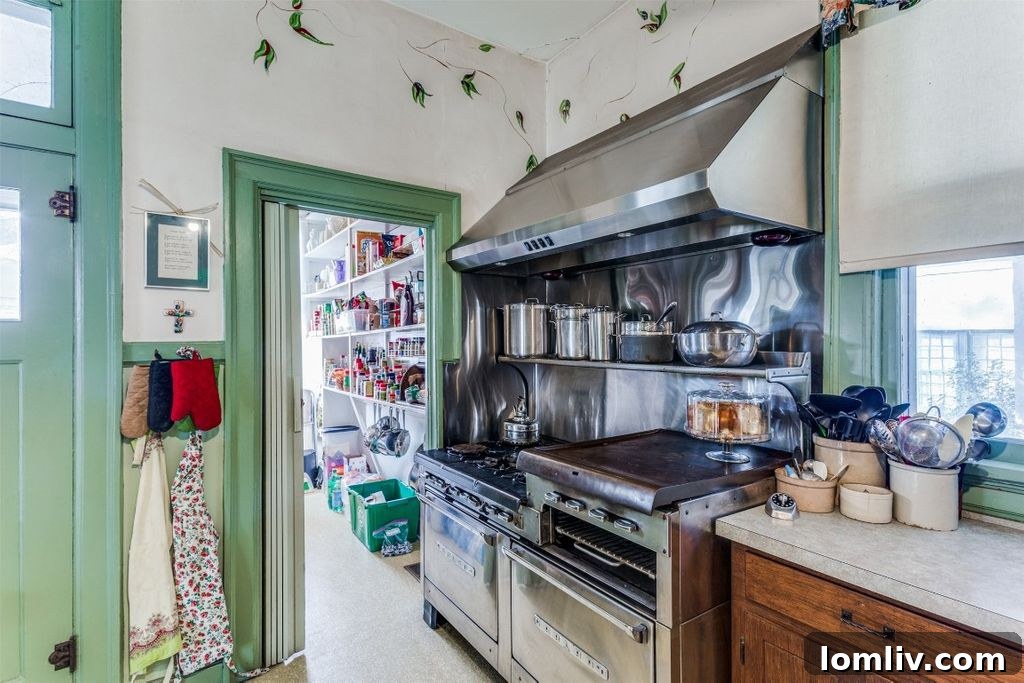
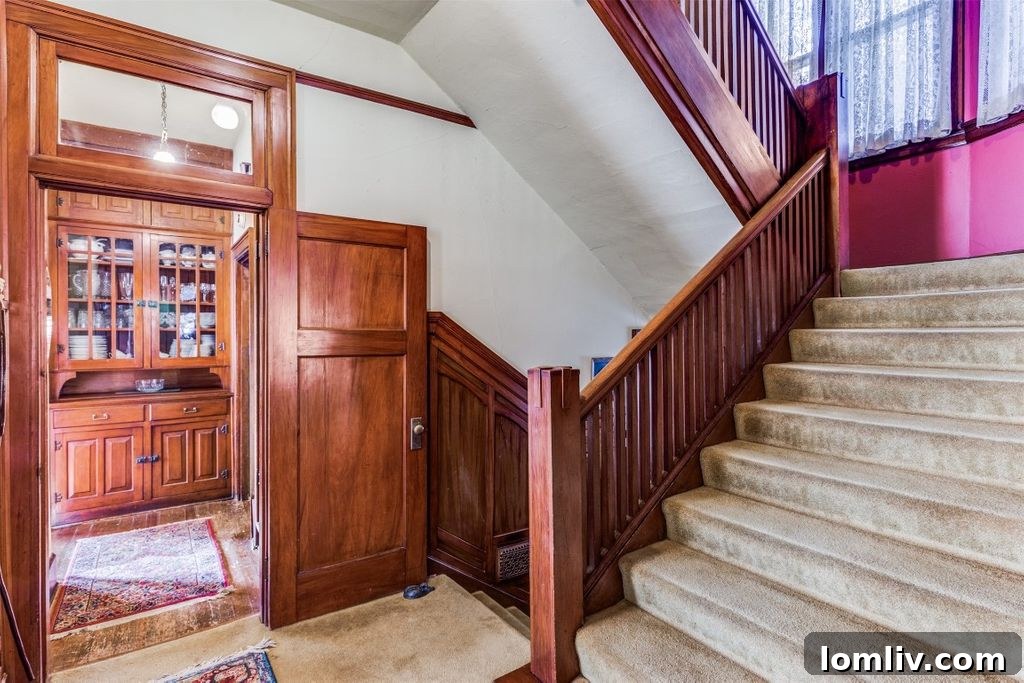
Another exquisite example of the home’s perfect preservation is found in the butler’s pantry, a hallmark of grander residences from the early 20th century. Here, a magnificent built-in china cabinet stands as a testament to the era’s sophisticated entertaining practices and meticulous storage needs. This dedicated space, typically situated between the kitchen and dining room, served as a staging area for meals and a secure, elegant repository for fine dinnerware and serving pieces, ensuring everything was kept in pristine condition. Its enduring presence underscores the home’s commitment to historical authenticity and functional design. From this central area, a wide, inviting staircase gracefully ascends to the upper level, leading to the four spacious bedrooms that offer privacy and comfort. In contrast, narrower, more utilitarian stairs descend to the cellar, hinting at the home’s practical design elements and providing additional storage or potential utility space.
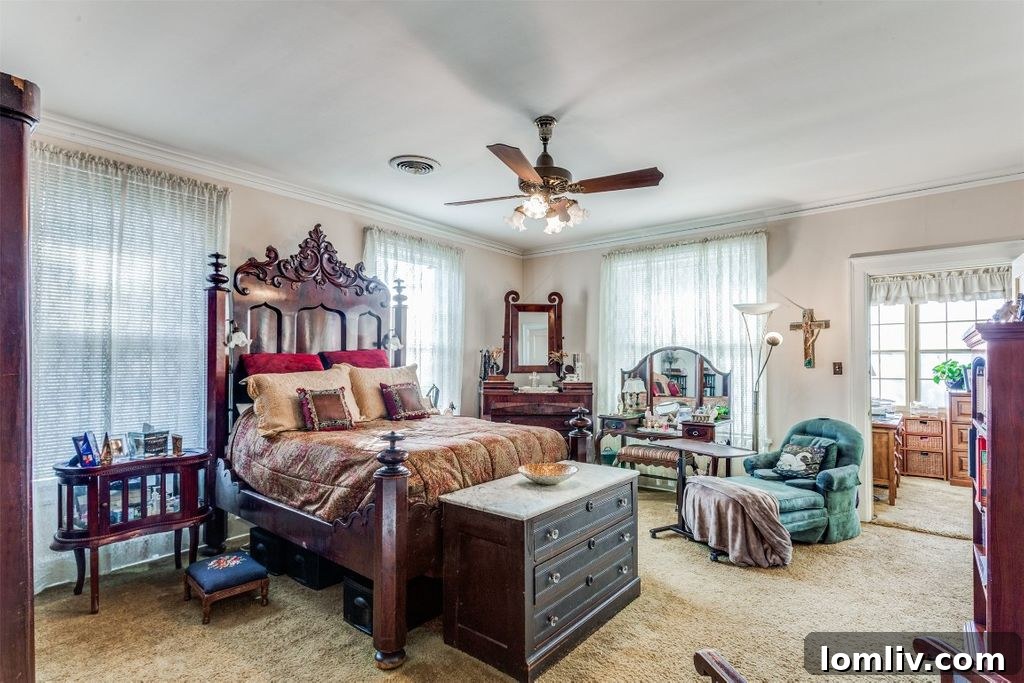
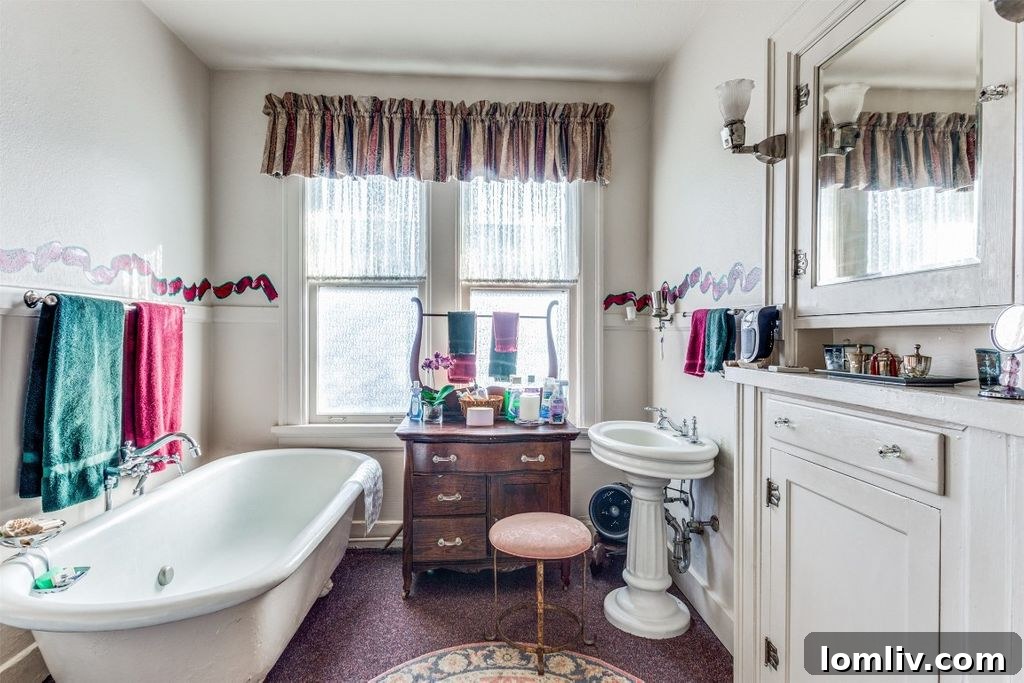
Upstairs, the home continues to impress with its generously sized rooms, each offering comfort and natural light. These four bedrooms provide ample private space, characteristic of the era’s focus on distinct functional areas. A particularly charming feature is the “found space” created by an enclosed sleeping porch. Originally designed for cooler sleeping in pre-air conditioning days, this enclosed area now offers versatile additional square footage, perfect for a sunny reading nook, a quiet home office, or even an additional play area, adding significant utility and charm to the upper level. The main bathroom further enhances the home’s historic appeal by retaining its original claw-foot tub. This classic fixture not only provides a nostalgic touch but also remains a beloved symbol of timeless luxury and comfort, promising relaxing soaks in an authentic period setting.
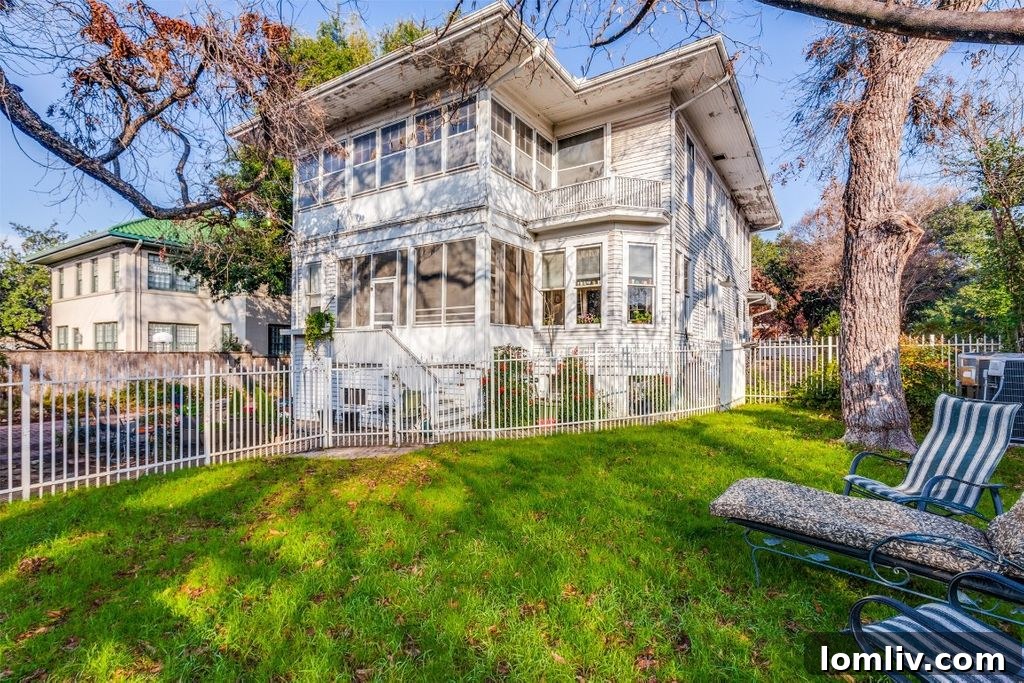
Beyond the main residence, the property offers an equally enchanting outdoor experience. The backyard, thoughtfully fenced for privacy and security, provides a serene urban oasis. It features convenient alley access, a practical amenity that enhances functionality and provides alternative entry points. A significant highlight of the exterior is the detached two-car garage, which also functions as a traditional carriage house. What truly sets this feature apart is the integrated apartment, offering exceptional versatility. This separate living space presents numerous possibilities: it can serve as a private guest suite for visitors, a dedicated home office or studio, or even generate rental income, making this property an even more attractive investment in Fort Worth’s competitive real estate market. The combination of historical charm and modern utility in this backyard area further solidifies 1215 Elizabeth Boulevard as a truly exceptional and adaptable home.
For an impressive sixty years, the Kline family lovingly called 1215 Elizabeth Boulevard home, imbuing every corner with their vibrant spirit and deep connection to the community. This unique property stands not just as a house, but as yet another enduring legacy of Joan Kline, whose remarkable life was dedicated to the betterment of Fort Worth. Her great love for the historic Ryan Place neighborhood, and indeed for this particular home, radiates palpably from every architectural detail and every preserved space. It’s a residence that tells a story, a rare blend of architectural significance and profound human history, waiting for its next chapter. It’s more than just a house for sale; it’s a piece of Fort Worth’s soul, meticulously cared for and ready to inspire new memories.
Will Kelly and Leigh Crates of Compass Real Estate are honored to represent this extraordinary property, having priced 1215 Elizabeth Boulevard at $850,000. For those seeking a truly unique piece of Fort Worth history, combining timeless charm with a compelling story, this iconic Craftsman home presents an unparalleled opportunity.