

For generations, the allure of vibrant urban centers has often overshadowed the quiet charm of the suburbs, especially for younger demographics. The prevailing narrative suggested that Generation Z, often dubbed “Zoomers,” craved the bustling energy, cultural diversity, and spontaneous opportunities that only major cities could offer. Who, after all, would trade the electric pulse of downtown for the serene, tree-lined streets often associated with suburban life, risking a visit from Progressive Insurance’s Dr. Rick, the fictional anti-parenting guru?
However, this long-held perception is undergoing a significant transformation, particularly within the dynamic landscape of the Dallas-Fort Worth (DFW) metroplex. A groundbreaking study by RENTCafé reveals a fascinating counter-trend: Gen Z is not just tolerating, but actively preferring Texas suburbs over larger urban centers for their rental needs. This shift signals a broader re-evaluation of lifestyle priorities and an adaptation to evolving economic realities, challenging traditional assumptions about where the newest generation of renters wants to call home.
The Dallas-Fort Worth Suburbs: A New Frontier for Gen Z Renters
The DFW area stands out as a prime example of this demographic realignment. Based on a comprehensive analysis of rental applications, several DFW suburbs have not only seen substantial increases in Gen Z interest but have also topped statewide lists for their growing appeal. This surge in applications is a strong indicator of a deliberate choice rather than mere happenstance, reflecting a strategic move by young renters seeking a balance of affordability, opportunity, and quality of life.
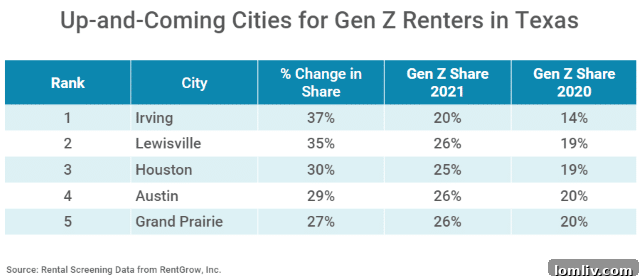
Leading the charge among these burgeoning suburban hotspots are Irving, Lewisville, and Grand Prairie. Irving experienced an impressive 37 percent increase in Gen Z rental applications, followed closely by Lewisville at 35 percent, and Grand Prairie with a notable 27 percent rise. These figures are not just statistics; they represent thousands of young individuals choosing these communities as their entry point into the housing market, drawn by a unique combination of economic opportunity and lifestyle benefits.
Irving: A Tech Hub Redefining Suburban Living
Irving’s magnetic pull on Gen Z is particularly pronounced, with its strategic location and burgeoning economic sectors playing a crucial role. At the heart of its appeal is Las Colinas, a master-planned community within Irving that has rapidly evolved into a significant technology and business hub. This area is home to numerous corporate headquarters, tech companies, and innovation centers, offering a diverse array of entry-level and mid-career job opportunities that are highly attractive to Gen Z, defined as individuals born between 1997 and 2012.
The growth in Irving’s Gen Z rental applications is not a recent phenomenon. The city saw a 17 percent increase over 2021 and an even more substantial 23 percent rise compared to 2020, demonstrating a consistent upward trend. Beyond job prospects, Irving offers a sophisticated urban-suburban blend, featuring cultural attractions like the Toyota Music Factory, extensive green spaces, and a network of canals that add to its unique charm. Its excellent connectivity to downtown Dallas and Fort Worth via major highways and public transit further enhances its desirability, providing suburban tranquility without sacrificing access to metropolitan amenities.
Broader DFW Appeal: Dallas, Richardson, and Arlington
While suburbs like Irving are seeing explosive growth, established cities within the DFW metroplex are also experiencing a healthy uptick in Gen Z interest. Dallas itself recorded a 27 percent rise in Gen Z rental applications, underscoring its enduring appeal as an economic engine and cultural center. Similarly, Richardson, known for its “Telecom Corridor” and vibrant tech scene, saw a 25 percent increase, while Arlington, a city celebrated for its sports and entertainment districts, recorded a 24 percent jump. These figures indicate that Gen Z’s search for a home extends across the entire metroplex, gravitating towards areas that combine job opportunities with a desirable living environment, whether urban or suburban.
National Context: San Francisco and the Tech Boom
To provide a broader perspective, the RENTCafé study also highlighted national trends. San Francisco, a global epicenter of technology and innovation, topped the national list for trending Gen Z cities, showcasing an astounding 101 percent change in rental applications. This meteoric rise is unequivocally linked to the city’s unparalleled tech industry, particularly Silicon Valley, which continues to draw young talent with its high-paying jobs and entrepreneurial ecosystem. While San Francisco’s situation is unique due to its extreme concentration of tech wealth, it reaffirms the critical role of robust job markets in attracting younger generations, a principle that also applies to the growing tech sectors in DFW’s suburbs.
Denton: Texas’s Top College Town for Gen Z Renters
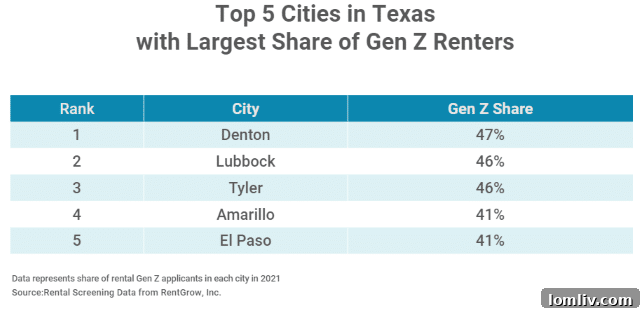
Beyond the trending growth in application numbers, RENTCafé also identified the top Texas cities with the largest existing share of Gen Z renters. Denton, a vibrant city located north of Dallas, proudly claimed the top spot in Texas and ranked an impressive 10th nationally. This strong showing by Denton is largely attributable to its status as a thriving college town, home to two prominent institutions: the University of North Texas and Texas Woman’s University. With a combined enrollment exceeding 55,000 students, these universities create a dynamic environment that naturally attracts and retains a large Gen Z population.
RENTCafé’s study explicitly acknowledges the significant contribution of college towns to the large share of Gen Z renters, recognizing that these communities often serve as vital transition points for students and recent graduates entering the workforce. Denton embodies this perfectly, offering an energetic atmosphere that bridges academic life with emerging career opportunities and a distinctive local culture.
The Blueprint for Attractive College Towns: Expert Insights
Nicholas P. Dempsey, an associate professor of sociology at Eckerd College, provided valuable insights in the RENTCafé report regarding the essential characteristics of a successful college town that attracts young renters. He emphasized the need for a multifaceted environment:
“A college town needs a diverse offering of jobs, particularly good-paying entry-level jobs,” Dempsey stated. This highlights the importance of not just having students, but also providing pathways for them to stay and build careers post-graduation. Denton’s growing local economy, coupled with its proximity to DFW’s major job centers, helps fulfill this requirement, allowing graduates to leverage their degrees locally.
Dempsey further elaborated on the significance of quality of life, noting, “Further, towns with more amenities, which can include anything from access to wilderness parks to diverse options for dining and entertainment, are more attractive to young renters.” Denton excels in this regard, boasting a vibrant live music scene, an eclectic downtown square filled with unique shops and restaurants, and ample outdoor recreational opportunities. Its rich arts and culture scene, combined with its friendly community atmosphere, makes it a highly appealing destination for young adults seeking a balanced and engaging lifestyle.
In essence, Denton perfectly fits this profile, offering a nurturing environment for both academic pursuits and post-collegiate life. It’s a place where young individuals can truly define their independence and future without the looming shadow of becoming their parents, a notion playfully symbolized by the absence of Dr. Rick’s cautionary visits.
Understanding the Shift: Why Gen Z is Opting for Suburbs
The trends observed in DFW and Denton are not isolated incidents but rather reflections of broader economic and societal shifts influencing Gen Z’s housing choices. Several key factors are driving this suburban migration:
- Affordability Crisis: Major urban centers often come with prohibitive living costs, especially for young professionals grappling with student loan debt and entry-level salaries. Suburbs, by contrast, frequently offer more affordable rents and a lower cost of living, allowing Gen Z to achieve greater financial stability and save for future goals.
- Remote and Hybrid Work Models: The COVID-19 pandemic accelerated the adoption of remote and hybrid work arrangements. With less of a daily commute burden, proximity to a downtown office has become less critical. This newfound flexibility allows Gen Z to prioritize factors like living space, amenities, and community over a short commute to a central business district.
- Desire for Space and Quality of Life: Many Gen Z individuals value larger living spaces, access to green areas, and a quieter environment that suburbs often provide. They seek a balance between career aspirations and a high quality of life, including opportunities for outdoor recreation, community engagement, and a less frenetic pace than dense urban cores.
- Access to Amenities and Infrastructure: Modern suburbs are no longer simply bedroom communities. Many, like those in DFW, have developed robust commercial centers, diverse dining options, entertainment venues, and well-maintained public parks. Excellent infrastructure, including well-connected road networks and increasingly accessible public transportation options, ensures that suburban residents can easily access the wider metroplex.
- Community and Connection: While cities offer anonymity, suburbs can foster a stronger sense of community. For a generation that values authenticity and connection, the close-knit feel of many suburban neighborhoods can be a significant draw.
The Future of Renting: A Redefined Landscape
The RENTCafé report, which sourced its rental application data from RentGrow, Inc., providing wholly anonymized and aggregated insights, offers a compelling look into the evolving preferences of Gen Z. It’s more than just a fun review; it’s a crucial indicator of the future trajectory of the rental market and urban development. The findings suggest that the traditional hierarchy of urban desirability is being challenged and redefined by a generation that is pragmatic, adaptable, and values holistic well-being.
This shift has significant implications for urban planners, real estate developers, and policymakers. Understanding Gen Z’s priorities – affordability, job opportunities, quality amenities, and a strong sense of community – will be paramount in shaping future housing strategies. The Dallas-Fort Worth metroplex, with its dynamic suburban growth and thriving college towns, serves as a powerful testament to this new era of renting, where the suburbs are no longer just a stopping point but a destination of choice for the youngest generation of residents. The rabbit hole of these trends is indeed a worthy dive. 🐇