Million-Dollar Allegations: The Shocking Case of Nancy Carroll Spinks and Millennium Title
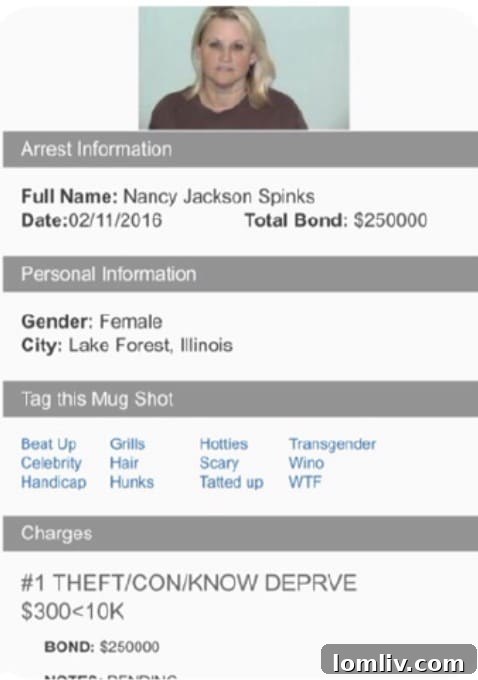
The world of real estate transactions relies heavily on trust, a foundation that was profoundly shaken by the recent allegations surrounding Texas attorney and title company owner, Nancy Jackson Carroll Spinks. Her arrest in Lake Forest, Illinois, on charges of theft, as first reported by KXAS-TV’s Scott Gordon, sent ripples of concern through the Dallas real estate community and beyond. This unfolding saga not only highlights the vulnerabilities within the financial system but also underscores the critical importance of due diligence in all real estate dealings. The story of Nancy Carroll Spinks is more than just a legal battle; it’s a stark reminder of how deeply personal and professional trust can be betrayed, impacting countless individuals and shaking the very bedrock of the real estate industry.
Mrs. Spinks, known for her involvement with Millennium Title Company, suddenly found herself at the center of a high-profile investigation. The initial reports hinted at a complex web of financial malfeasance, with significant sums of money allegedly missing, particularly from vital 1031 Exchange funds. Her apprehension in Lake Forest, an affluent Chicago suburb, raised questions about her life away from Texas and the circumstances leading to her dramatic arrest. As details continue to emerge, the focus remains on understanding the scope of the alleged fraud, the systemic gaps it may expose, and the lessons to be learned by consumers and industry professionals alike.
The Exclusive Enclave of Lake Forest, Illinois: A Striking Contrast

Lake Forest, Illinois, where Nancy Carroll Spinks was apprehended, stands as a picturesque testament to American affluence. Nestled along the serene North Shore of Lake Michigan, it is renowned as one of Chicago’s most prestigious and upscale suburbs. This community is characterized by its sprawling estates, immaculately manicured landscapes, and a vibrant cultural scene. Historically, Lake Forest has been synonymous with luxury and leisure, notably known for its deep connection to the sport of polo.
Literary enthusiasts might recall its mention in F. Scott Fitzgerald’s classic novel, The Great Gatsby. Tom Buchanan, the wealthy and arrogant character, famously had his polo ponies “bred in Lake Forest.” This fictional detail draws a direct line to the town’s real-life history and its association with elite equestrian pursuits. Interestingly, some literary scholars suggest that the character of Daisy Buchanan, Tom’s wife, was partly inspired by Ginevra King, a prominent Lake Forest resident and F. Scott Fitzgerald’s former girlfriend, whose family indeed played a significant role in bringing polo ponies to the area.
Beyond its equestrian heritage and literary fame, Lake Forest is also the home of Lake Forest College, a private four-year liberal arts institution that forms the heart of the town. This collegiate presence adds a unique intellectual and vibrant flavor to the community, making it a desirable location for families and professionals seeking both luxury and intellectual stimulation. For those familiar with Dallas, a fitting comparison might be drawn to Highland Park, known for its exclusive residential properties, combined with the academic ambiance of University Park. The sheer opulence and tranquil beauty of Lake Forest create a stark and almost surreal backdrop for the unfolding legal drama involving Nancy Carroll Spinks, raising questions about how an individual facing such severe allegations could blend into such a distinguished community.
The Arrest and Pending Extradition of Nancy Carroll Spinks

The quiet serenity of Lake Forest was disrupted when Nancy Carroll Spinks, now identified by her married name, was located and arrested in this exclusive suburb. She is currently being held in a Lake County jail, awaiting extradition back to Texas to face the charges leveled against her. Her detention in Lake County, as opposed to the significantly larger and often more challenging Cook County jail system, has been noted by observers as a stroke of comparative fortune, offering a glimpse into the varying dynamics of the Illinois correctional facilities.
The extradition process is a legal procedure by which a person accused or convicted of a crime in one jurisdiction (in this case, Texas) is transferred to another jurisdiction (from Illinois) for trial or punishment. This process can be intricate, involving warrants, hearings, and waivers, and often takes time to complete. While she awaits this transfer, the details surrounding her life in Lake Forest have begun to surface, painting a picture that stands in stark contrast to the financial woes allegedly inflicted upon her clients back in Texas.
A Life of Luxury Amidst Accusations of Theft
Mid-week, prior to her arrest, a critical piece of information came to light through a concerned Lake Forest resident. This individual, having read earlier reports and recognizing Nancy Carroll, reached out with vital details. During a subsequent phone conversation, the source revealed that Carroll Spinks had been living in an expansive Lake Forest home, reportedly paying a substantial $8,500 per month in rent. Furthermore, she was said to have initiated a new business venture in the area. The source’s urgent sentiment, “Someone needs to turn her in,” reflects a strong sense of community vigilance and an unwillingness to let alleged wrongdoing go unaddressed, ultimately leading to contact with local police.
According to the anonymous source, the business Carroll-Spinks was operating in Lake Forest was a moving truck enterprise. This detail, alongside her reported lifestyle, painted a troubling picture when juxtaposed with the allegations of financial distress suffered by those who entrusted their funds to Millennium Title. Adding another layer to this narrative, the source also mentioned that Carroll-Spinks had even rented a house in Italy for the upcoming summer, suggesting plans for an international escape that would now be impossible given her current predicament.
Further insights into her lavish spending came from Scott Gordon’s investigative report on KXAS. Gordon’s findings indicated that not only was Carroll-Spinks renting a luxurious Lake Forest residence, but she was also driving a high-end Mercedes-Benz S63, a vehicle that typically retails for an astounding $143,250. Compounding this image of extravagance, she was reportedly engaged in buying expensive jewelry, a pursuit made all the more convenient by the numerous fabulous jewelry stores dotting the upscale streets of Lake Forest. This lifestyle directly contradicted her earlier communication to Scott Gordon via email, where she had claimed financial hardship, even stating that she had to sell her car to pay her employees. Such conflicting narratives raise serious questions about the authenticity of her professed financial difficulties and the alleged misappropriation of funds.
The Heart of the Matter: Missing Millions and 1031 Exchanges
The core of the legal proceedings against Nancy Carroll Spinks centers on significant financial irregularities and alleged theft from Millennium Title Company. According to the prosecutor interviewed by Scott Gordon, the Texas Department of Insurance (TDI) is actively pursuing a substantial case against her, seeking to recover approximately $1.2 million. More alarmingly, the total amount reportedly missing from Millennium Title Company is estimated to be around $3 million. These figures represent not just abstract sums but potentially the life savings, investment capital, and future plans of numerous individuals and businesses.
A particularly concerning aspect of this case involves money held in 1031 Exchanges. The question “What about the rest of the money in those 1031 Exchanges?” underscores a critical vulnerability in real estate investment. A 1031 Exchange, named after Section 1031 of the U.S. Internal Revenue Code, allows investors to defer capital gains taxes on the sale of investment property if they reinvest the proceeds into a “like-kind” property within a specific timeframe. These transactions typically involve large sums of money, which are held by a qualified intermediary—often a title company—during the exchange period. The integrity and trustworthiness of this intermediary are paramount, as they act as a custodian for these significant funds. The alleged theft from these 1031 Exchange accounts at Millennium Title Company would represent a profound breach of fiduciary duty and a devastating blow to investors who relied on the company’s presumed financial security. Such an act not only causes direct financial harm but also erodes confidence in a crucial mechanism for real estate investment and economic growth.
Exposing Protection Gaps and Rebuilding Trust
This evolving story is undeniably a vital one for the real estate sector, as it may expose critical protection gaps within the system. The incident at Millennium Title serves as a stark warning, highlighting areas where oversight might be insufficient or where vulnerabilities can be exploited. The role of title companies is to ensure clear property ownership and to facilitate secure financial transactions, particularly by holding escrow funds—money entrusted to a neutral third party until specific conditions of a contract are met. When this fundamental trust is shattered, it necessitates a thorough review of existing regulations and safeguards.
The pursuit of justice by the Texas Department of Insurance is a crucial step towards accountability and potentially recovering lost funds. However, the broader implications extend to how consumers and real estate professionals can prevent similar incidents in the future. It emphasizes the need for enhanced due diligence when selecting a title company, recommending checks on their financial stability, reputation, and perhaps even additional layers of insurance or bonding beyond standard requirements. While this case is deeply troubling, it is important to remember that there are indeed many fine, trustworthy title companies operating with integrity throughout North Texas and across the nation.
The ultimate question this case leaves us with resonates deeply: “Because if you cannot trust a title company to hold your funds in escrow, who can you trust?” This query is not rhetorical; it is a call to action for the industry to fortify its defenses, for regulators to refine their oversight, and for consumers to become more informed and vigilant. Ensuring the security of escrow funds is not merely a legal requirement; it is the cornerstone of consumer confidence and the continued health of the real estate market. The resolution of Nancy Carroll Spinks’ case will undoubtedly set precedents and provide valuable insights, shaping the future landscape of trust and security in real estate transactions.