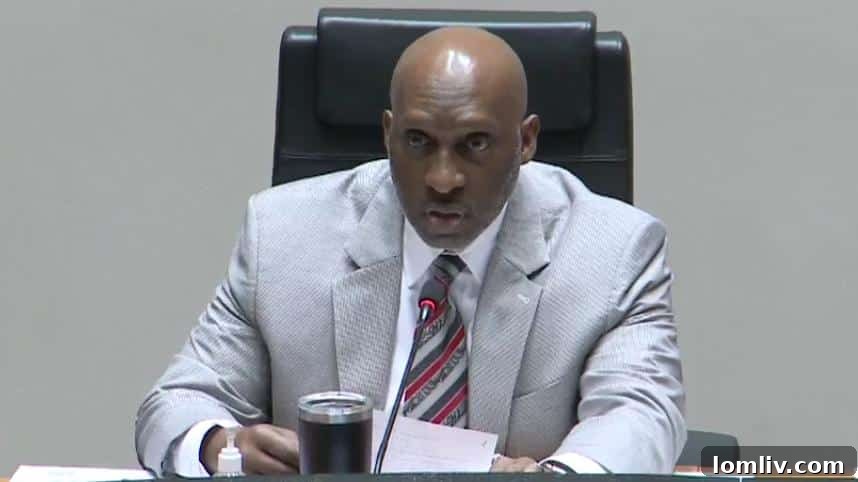
A storm of controversy has engulfed Dallas City Hall, leaving residents and observers alike questioning the stability and transparency of local governance. The recent resignation of City Manager T.C. Broadnax, after a notable seven-year tenure, has unveiled a complex web of political maneuverings, raising critical questions about accountability, leadership, and the adherence to legal statutes governing public meetings.
The Unfolding Drama at Dallas City Hall: Broadnax’s Resignation
The political landscape in Dallas has been simmering for some time, but it reached a boiling point last week with the official announcement of City Manager T.C. Broadnax’s resignation. This departure marks the end of a significant chapter for Dallas, and it comes with substantial financial implications. Broadnax is set to receive a severance package totaling approximately $423,246, equivalent to 12 months of his base salary, augmented by a $700-per-month vehicle allowance. This generous exit package has only fueled public discourse regarding the circumstances surrounding his departure.
Reports indicate that Broadnax’s resignation was not entirely voluntary. It appears he was presented with an ultimatum by a faction of the Dallas City Council – resign or face termination. This group of council members reportedly had secured eight votes, a clear majority, necessary to fire the city manager. What makes this situation particularly contentious is the alleged secrecy surrounding these efforts. Elected officials deliberately kept their plans under wraps, specifically from Mayor Eric Johnson and other council members who, they feared, “might blow it up,” as revealed by one official close to the matter.
The clandestine campaign was reportedly spearheaded by Jaime Resendez, a prominent local attorney and former Dallas school board trustee. According to a report by Jason Whitely of WFAA, Resendez initiated contact with Broadnax and then spent a week methodically identifying and recruiting a majority of council members, one by one. These individual meetings culminated in a collective request for Broadnax to step aside. The rationale behind this covert operation, as council members reportedly told WFAA, was to prevent Mayor Eric Johnson from controlling the narrative and potentially portraying Broadnax’s exit as a firing, rather than a resignation on his own terms.
In a strategic move that granted him the last word, Broadnax preempted the council’s intended action by submitting his resignation. This allowed him to secure a more favorable severance package than he might have received had he been formally terminated. While some observers commend Broadnax’s shrewdness in navigating his exit, the methods employed by the council members have drawn widespread criticism. Residents have expressed concerns, labeling the council’s behavior as “shady at best, and illegal at worst.” Yet, the narrative isn’t entirely one-sided. An appointed Dallas board member candidly told us, “He played us all. T.C. played the council members. He played the mayor. He played us. He is leaving on his terms and still taking his bag of cash with him.” Broadnax’s official last day is scheduled for June 3, leaving a period of transition ahead for Dallas’s top administrative role.
Navigating the Aftermath: Interim Leadership and Crucial Meetings
The immediate fallout from Broadnax’s resignation has necessitated swift action from Dallas City Hall. Deputy Mayor Pro Tem Tennell Atkins promptly called a meeting of the Ad Hoc Committee on Administrative Affairs for Monday, Feb. 26. The committee’s agenda included discussing and recommending a timeline for naming an interim city manager, as well as considering potential candidates for the crucial temporary role.
Further underscoring the urgency of the situation, a special-called council meeting was slated for Tuesday, Feb. 27. This pivotal meeting was intended to address Broadnax’s resignation directly, discuss the potential interim appointment of Deputy City Manager Kimberly Bizor Tolbert, and conduct performance evaluations of other key council appointees, including City Attorney Tammy Palomino, City Secretary Bilierae Johnson, and City Auditor Mark Swann. The comprehensive agenda reflects the deep administrative adjustments required in the wake of such a high-profile departure.
However, even the scheduling of these critical meetings has been mired in political tension. It remains uncertain if a quorum will be present at the Tuesday meeting, primarily because Mayor Johnson announced he would not attend. In a memorandum, Mayor Johnson advocated for the entire process to be handled through the Administrative Affairs Committee, signaling his dissatisfaction with the council’s approach to the city manager’s departure. This absence further highlights the fractured relationships within Dallas City Hall and the challenges in achieving unified governance during a crisis.
Unraveling the ‘Walking Quorum’ Controversy and Open Meetings Act Concerns
The circumstances surrounding T.C. Broadnax’s resignation, particularly the clandestine nature of the council members’ efforts, immediately ignited speculation about potential violations of the Texas Open Meetings Act (TOMA). When Broadnax’s resignation letter became public, many observers began to question whether a “backroom deal” had been brokered and if a forbidden “walking quorum” had occurred.
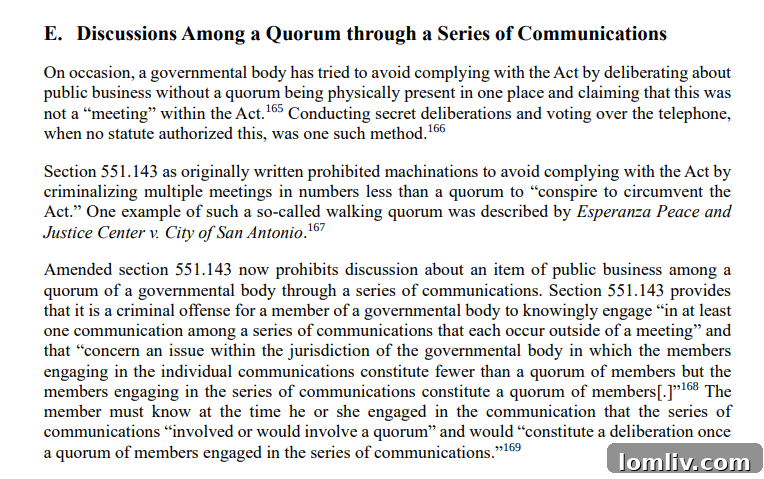
Under Texas law, council members are strictly prohibited from circumventing public meeting requirements by engaging in a “daisy chain” of phone calls or a “walking quorum” – a sequence of communications where one member passes information or opinions to the next, and so forth, until a quorum is formed without ever holding a public meeting. This practice undermines the very essence of transparent governance and public access to decision-making processes.
The Texas Attorney General’s Open Meetings Act handbook 2024 explicitly states that it is a “criminal offense for a member of a governmental body to knowingly engage ‘in at least one communication among a series of communications that each occur outside of a meeting’ and that ‘concern an issue within the jurisdiction of the governmental body in which the members engaging in the individual communications constitute fewer than a quorum of members but the members engaging in the series of communications constitute a quorum of members.’” This legal framework is designed to prevent elected officials from making collective decisions behind closed doors, ensuring that all deliberations impacting public policy are conducted openly and are accessible to the citizens they serve.
A notable precedent for such violations occurred in 2005 when the College Station City Council controversially fired then-City Manager Tom Brymer in the early hours following an unagendized discussion. The council later faced severe legal repercussions, appearing before a judge and threatened with jail time for the offense. The dispute was ultimately resolved when the City Council agreed to reinstate Brymer, allowing him to resign and providing him with a substantial $177,585 severance package. This historical case underscores the seriousness with which TOMA violations are treated.
While the Dallas situation differs in that Broadnax ultimately resigned, allegations persist that a secret meeting or a “walking quorum” might have transpired, signaling to Broadnax that his position was untenable. Former Dallas City Councilman Philip Kingston, a practicing attorney, delved into this history on his “Loserville” podcast, noting that any vote on Broadnax, even in a closed session, would be unlawful without proper public notice on an agenda. Kingston commented, “They’re not supposed to walk around and count noses. They do sometimes. It’s technically an open meeting violation. I think … The way it read to me, just knowing what I know about what procedural history is, it read to me like T.C. has figured it out, that he has counted the noses.” This perspective suggests that while Broadnax’s resignation avoided a direct firing, the precursor actions by council members may still warrant scrutiny under the Texas Open Meetings Act.
Dallas Cothrum, president of the planning and permitting firm Masterplan, offered a blunt assessment, stating that Broadnax’s departure was unsurprising given his perceived communication failures. Cothrum argued, “When he survived last time, he really thumbed his nose, I felt like, at his bosses, the elected officials, in a way no city manager had ever done in the City of Dallas’ history before. And told them he was more important than they were. This resignation is just another example of that. He didn’t work for the council. He worked for himself.” This sentiment encapsulates a broader frustration among some stakeholders regarding Broadnax’s leadership style and his relationship with the elected body.
A Critical Look at T.C. Broadnax’s Tenure and Key Challenges
T.C. Broadnax’s seven years as Dallas City Manager were frequently marked by a tense and often strained relationship with Mayor Eric Johnson and several members of the City Council. This friction was not new; Broadnax notably faced a near-firing in 2022. However, some council members who initially advocated for his removal ultimately reversed course, even approving a raise to his six-figure annual salary. Philip Kingston, recalling this period, noted, “There were always five or six who were completely against him from the time that the botched, silly coup attempt occurred.” This underscores the long-standing divisions regarding his leadership.
Those who regularly attended City Council meetings often observed the palpable tension whenever Broadnax interjected his opinion, sometimes perceived as overstepping the bounds of his administrative role. As the city manager, Broadnax was hired by and reported directly to the 15-member City Council. While a short tenure for a top administrator in a major city is not entirely uncommon, the specific issues that arose during Broadnax’s watch have drawn significant criticism.
Dallas Cothrum enumerated a series of unfortunate situations and systemic failures that occurred under Broadnax’s leadership. These included a persistent and problematic building permit backlog, which caused significant delays and frustration for developers and residents alike, impeding economic growth and property development within the city. The city also grappled with a major 2023 cyberattack that crippled essential services and exposed vulnerabilities in the city’s digital infrastructure. Another pressing issue was the ongoing crisis surrounding the police and fire pension fund deficit, a looming financial challenge with significant implications for public safety and city finances. Furthermore, Broadnax engaged in a highly publicized dispute with the Mayor and Council over bond money allocations for City Hall, highlighting fundamental disagreements on budgetary priorities and capital projects.
Cothrum expressed deep concern over the overall trajectory of the city during Broadnax’s tenure. “I think it’s incumbent on people to leave a job better than they found it and he has absolutely, most certainly not done that,” Cothrum asserted. He cited additional examples, such as the “total disaster” surrounding the departure of former Dallas Police Chief Renee Hall, a situation where Broadnax famously stated, “When she goes, I go,” a promise that ultimately went unfulfilled. Cothrum also pointed to the delayed disclosure of the cyberattack, the recurring issues with garbage collection, and the city’s dire financial standing, ranking 63rd out of 75 comparable cities. Despite unprecedented federal funding from COVID relief and robust local revenue from sales tax and rising property appraisals, Cothrum argued that Broadnax leaves the city in its “worst” financial and operational state in a long time.
The departure of numerous experienced leaders from City Hall under Broadnax’s watch has created a void, necessitating what Cothrum described as a “huge rebuilding effort” that could potentially take years to complete. This highlights the systemic challenges facing Dallas’s administrative capacity. Cothrum emphasized that Broadnax’s departure presents a critical “opportunity for the council to insist on rapid improvement and delivery of services and expectations, and really, customer service.” He criticized a perceived culture under Broadnax where “employees [felt] it was OK to not answer the phone and not treat people like customers because he did it. I always tell people he thought he had a non-speaking role, and yet he’s the lead character in our drama. The level of service is so deplorable at the City of Dallas.” These strong words reflect a sentiment that the city’s operational efficiency and public service ethos have severely eroded, making the search for a new city manager even more crucial.
Dallas’s Path Forward: Addressing Systemic Issues and Rebuilding Trust
The assessment of Dallas’s current state by veteran observers is stark. Dallas Cothrum recalled a former city manager’s assertion from years ago that Dallas was so fundamentally broken it would require two more administrative regimes to truly get back on track. “I believe that. It’s that broken,” Cothrum reiterated, underscoring the deep-seated issues that transcend any single city manager’s tenure. This perspective suggests that the challenges facing Dallas governance are not merely episodic but systemic, demanding a comprehensive and sustained effort to rectify.
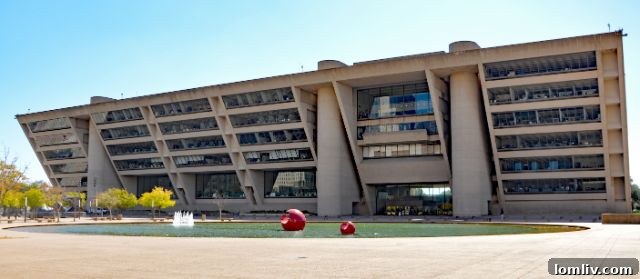
In response to the current leadership vacuum, Mayor Johnson has called for a nationwide search for a new city manager. However, some speculate that Deputy City Manager Kimberly Bizor Tolbert is a strong contender for the permanent role, potentially as the heir apparent. Ultimately, the Dallas City Council holds the authority to decide. Cothrum, however, strongly advocates for a broader search. “I think they have to do a national search,” he stated. “Things aren’t going swimmingly; you say, ‘Things are great and we want more of the same.’ It’s a start-over. T.C. brought in so many people … and most of them turned out to be ineffective.” This highlights the need for fresh perspectives and leadership that can address the deep-rooted problems and reinvigorate the city’s administration.
Despite the current turmoil, Cothrum remains optimistic about Dallas’s inherent potential. He sees an opportunity for significant turnaround, citing Dallas’s status as a desirable region with a robust tax base. “It’s like when the Dallas Cowboys are bad,” he analogized. “They always have every opportunity to turn it around quickly because there’s so many resources and so many people believe in it.” This resilience and wealth of resources provide a strong foundation for recovery and growth. However, achieving this turnaround will require profound changes. Cothrum emphasized the need for someone to “really get under the hood and looking at what doesn’t work, getting rid of some surplus property, doing something with Hensley Field. They’ve got to do something with the pension, too.” These are complex, long-standing issues that demand strategic leadership and decisive action.
Amidst the widespread uncertainty, only one Dallas City Council member, Chad West, offered a public statement regarding Broadnax’s departure to Daltxrealestate.com. Other council members expressed skepticism about the manner of the resignation and preferred to await the outcome of the discussions during the crucial Tuesday meeting. West’s statement, while diplomatic, acknowledged the challenges ahead: “I want to wish Mr. Broadnax well in his future endeavors. During his tenure, he worked with Council to move the ball forward on many matters important to our residents. With his upcoming departure, we must and will keep the city’s momentum going in our housing, economic development, environmental, and parks and trails efforts. Dallas is a city on the move, and I look forward to working with whomever steps up to the plate in the coming weeks.” This sentiment, while forward-looking, still underscores the immense task that lies ahead for Dallas’s leadership to restore public trust, streamline city operations, and ensure a stable and prosperous future for its residents.