

Dallas: A Thriving Hub for Families and Real Estate Growth
As tax season approaches, many families are taking stock of their dependents, especially those under 18. This annual exercise often highlights the vital role families play in shaping communities and local economies. In the vibrant metropolis of Dallas, families are not just a demographic statistic; they are a driving force behind the city’s dynamic growth and its bustling real estate market.
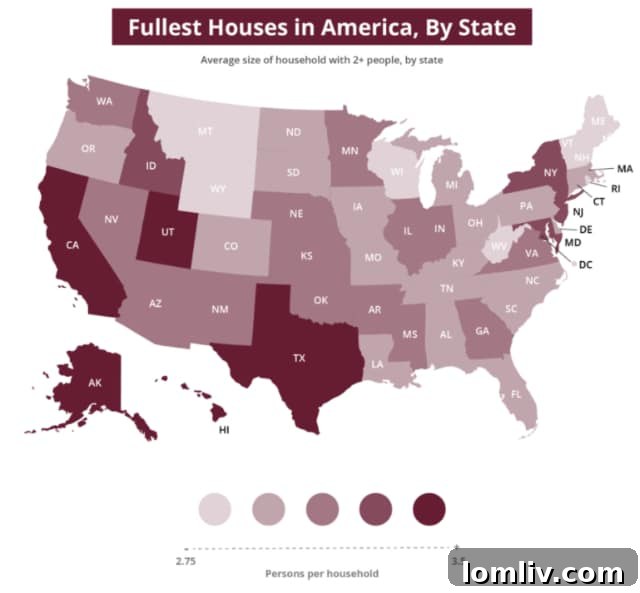
Recent insights underscore Dallas’s significant family presence within the broader U.S. landscape. According to a comprehensive report by Lombardo Homes, a prominent Michigan-based homebuilder, Dallas earned notable rankings among the largest U.S. cities. The report positions Dallas fourth nationally for the share of households with children under 18, accounting for a substantial 32.5 percent. Furthermore, the city ranked eighth for its average number of people per household, standing at 3.28. These figures paint a clear picture of Dallas as a family-centric city, attracting and retaining households with young children.
Lombardo Homes meticulously compiled its rankings by analyzing data from the U.S. Census Bureau, focusing on the nation’s 40 most populous cities. This rigorous methodology ensures that the findings accurately reflect current demographic trends and provide valuable insights into where American families are choosing to establish roots. The report not only highlights Dallas’s unique position but also offers a broader perspective on family demographics across other major Texas cities.
Beyond Dallas, other Texas giants also demonstrated strong family presences. Houston, for instance, secured an impressive second place nationally in the share of households with children under 18, with 33.8 percent, trailing only behind Fresno, California, which led with 35.8 percent. El Paso followed closely in third place at 32.6 percent, while Austin ranked ninth with 29.3 percent. These statistics underscore Texas’s overall appeal to families looking for growth opportunities and community. When considering the average number of residents per household, Houston again featured prominently, taking the fourth spot with 3.3 people. San Antonio ranked 11th with 3.18 people, and Austin, while lower than its counterparts, still maintained a respectable 31st position with 2.91 people per household. These consistent high rankings for Texas cities suggest a regional trend of larger household sizes, likely influenced by cultural factors, economic opportunities, and a comparatively lower cost of living that makes raising families more feasible.
Evolving Family Structures: A National Perspective and Local Resilience
While Texas cities like Dallas are thriving centers for family life, the national landscape reveals a significant shift in household formation. Across the U.S., the traditional image of large, multi-generational families reminiscent of The Waltons is becoming less common. The Lombardo Homes report notes a consistent decline in the number of families in America over the past two decades. “In the last decade alone, the number of households where parents live with children under the age of 18 has declined by more than three million,” the report states. This trend is a critical indicator of societal changes, including delayed marriage, lower birth rates, and evolving economic pressures, all of which influence the demand for housing and urban development.
This national pattern of declining household formation was further supported by a Zillow report published in December. Zillow’s findings indicated that Americans across virtually all age groups and ethnicities have been forming households at a significantly lower rate than observed prior to the Great Recession of 2007-2009. This economic downturn had profound effects on household debt, job opportunities, and general financial stability, leading many individuals and young couples to delay independent living or cohabitate for longer periods. The subsequent recovery, particularly between 2015 and 2017, was unfortunately hindered by a rapid escalation in home prices, further exacerbating the challenges of housing affordability and access for aspiring homeowners. If current demographic groups had formed households at the same rate as they did in 2006, the U.S. would astonishingly have 5.7 million more households today. This substantial deficit highlights a significant untapped demand for housing that has been suppressed by various economic and social factors over the past decade and a half. Despite this negative overarching trend, the Lombardo Homes report interestingly points out a paradox: the custom new construction market has remained robust, suggesting that while the *number* of families might be decreasing nationally, those who *are* forming families are often investing in new homes, particularly in growing markets like Dallas.
Despite the long-term decline in household formation rates, the Zillow report offers a cautiously optimistic outlook for the future of the housing market. The report suggests that once the global pandemic fully recedes and economic recovery gains sustained momentum, the downturn in household “headship” – the rate at which individuals become heads of their own households – might prove to be merely temporary. The prospect of deferred demand is a key element of this positive forecast. Many families and individuals who postponed home-buying decisions or independent living during the pandemic due to uncertainty or financial constraints might re-enter the market. This potential resurgence of demand could see housing activity that was suppressed in one year simply “pushed into next year and beyond,” leading to a significant rebound in sales and construction. However, the report also offers a sobering reminder, emphasizing “how delicate progress can be.” The rapid and unforeseen disruptions caused by the pandemic served as a stark lesson in the fragility of economic and social progress, underscoring the need for resilience and adaptability in the housing sector.
Other Notable Reports Shaping the Dallas Real Estate Landscape
Beyond family demographics and national household formation trends, several other critical reports shed light on the intricate dynamics of the Dallas real estate market, offering insights for both homebuyers and industry professionals.
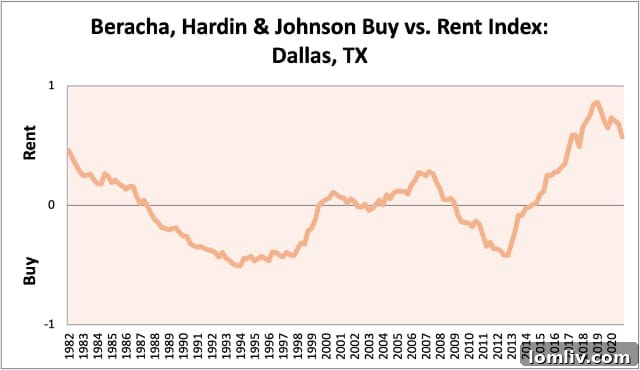
- Beracha, Hardin & Johnson Buy vs. Rent Index: This influential index provides a crucial metric for consumers navigating the housing market. It delves into whether individuals can build wealth more effectively by purchasing a home and accumulating equity, or by renting a similar property and strategically reinvesting the savings. The Beracha, Hardin & Johnson Buy vs. Rent Index meticulously analyzed 23 major metro markets, providing a nuanced perspective on this perennial debate. The index’s scoring system is straightforward: a score nearing 1 strongly indicates that renting and reinvesting is the more financially advantageous path, suggesting a market where property values might be inflated or rental costs relatively low. Conversely, a score approaching negative 1 signifies that owning a home and building equity offers a superior wealth creation opportunity, often indicative of strong appreciation potential or favorable borrowing conditions. A score hovering around 0 suggests a balanced market, where the financial benefits of buying versus renting are roughly equivalent, making it a “tossup” decision. Historically, the Dallas-Fort Worth (D/FW) market crossed into a renting preference in 2014, reflecting a period when rental advantages were more pronounced. However, the report notes a consistent decline in this renting preference since 2019, indicating a shift back towards buying as a more favorable option. This recent trend is largely attributed to persistently low interest rates, which have made home financing more accessible and affordable, thereby enhancing the appeal of homeownership and stimulating a comeback for buyers in the D/FW market. Understanding this index is paramount for anyone making long-term financial plans in the Dallas area. Learn more about the Buy vs. Rent dynamics in Dallas here.
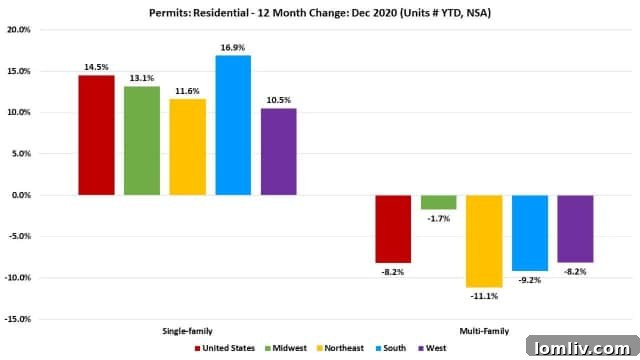
- National Association of Home Builders (NAHB): The NAHB report offers crucial insights into the supply side of the housing market, specifically focusing on single-family home construction permits—a key indicator of future housing inventory. In 2020, the Dallas-Fort Worth metropolitan area demonstrated exceptional vitality in its housing sector, issuing an impressive 43,884 construction permits for single-family homes. This remarkable volume positioned D/FW as the second-highest ranked metro area across the entire U.S. for single-family housing starts. Leading the nation was Houston, which secured the top spot with an even higher count of 48,208 permits. The strong performance of both D/FW and Houston underscores Texas’s dominant role in national homebuilding, driven by continuous population growth, robust job markets, and strong demand for new housing. These figures not only reflect developer confidence in the Texas economy but also highlight the critical importance of these metros in addressing the nation’s housing needs. The high number of permits suggests a strong pipeline of new homes entering the market, which is essential for accommodating the increasing number of families and individuals choosing to relocate to these vibrant urban centers. Explore the latest single-family permit data and trends here.
- Zonda New Home Lot Supply Index: For new home construction, the availability of developed land—or “lots”—is a foundational bottleneck that significantly influences housing supply and affordability. The Zonda New Home Lot Supply Index provides a critical measure of this inventory. The survey revealed a concerning trend: nearly every top market in the U.S. is experiencing an undersupply of ready-to-build lots, presenting a significant challenge for homebuilders aiming to keep pace with demand. Within Texas, Dallas emerged as the state’s most undersupplied market in terms of lots available for new homes. This scarcity means that developers face increased costs for land acquisition and development, which inevitably translates into higher home prices for consumers. Austin and Houston, while not as severely impacted as Dallas, were also noted as being considerably undersupplied, indicating a statewide challenge in land development. The undersupply of lots can stem from various factors, including restrictive zoning regulations, slow permitting processes, increasing costs of infrastructure development, and developers holding back land in anticipation of higher future values. This constraint on supply is a major contributor to the ongoing affordability crisis in many rapidly growing regions, including key Texas metros, and poses a substantial hurdle for the sustained growth of their housing markets. Understand the critical New Home Lot Supply Index and its implications for Dallas.
- Texas Real Estate Research Center: Natural disasters can exert an immediate and profound impact on local real estate markets, as vividly demonstrated by the severe winter storm that gripped Texas. According to a collaborative report from the Texas Real Estate Research Center and North Texas Real Estate Information Systems, the storm significantly disrupted home sales in February. In North Texas, only 6,958 single-family home purchases were completed during that month. This figure represents a considerable dip in sales volume, directly attributable to the widespread power outages, freezing conditions, and logistical challenges that halted normal economic activity. Real estate transactions, which often require in-person viewings, inspections, and smooth administrative processes, were severely hampered. This incident serves as a stark reminder of how external factors, even temporary ones, can abruptly cool a booming market. However, such disruptions often lead to deferred sales rather than lost demand, suggesting a potential surge in transactions in subsequent months as the market recovers and pent-up demand is released. The full extent of the storm’s impact on annual sales figures and how quickly the market rebounded will be a key area of analysis for future reports. Review the detailed report on North Texas home purchases and the impact of the winter storm.