The Dallas City Council recently concluded a rigorous seven-hour briefing, a crucial session where members intensely debated and ultimately approved significant amendments to the city’s impending biennial budget. This pivotal meeting underscored the council’s commitment to fiscal responsibility and responsiveness to resident concerns, particularly regarding property tax burdens. The most impactful of the six amendments passed in a preliminary straw vote was a last-minute submission by District 7 Councilman Adam Bazaldua, which had not been pre-listed in the official council agenda packet, highlighting the dynamic and often unpredictable nature of municipal budgeting processes.
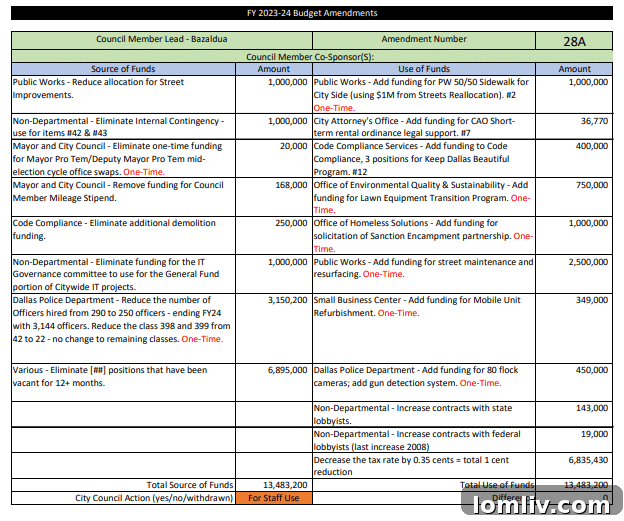
Designated as Amendment 28A, Bazaldua’s proposal represented a substantial $13.4 million in cuts from City Manager T.C. Broadnax’s ambitious $4.63 billion budget recommendation. The core objective behind these reductions, as articulated by Councilman Bazaldua, was to enable a further one-cent decrease in the property tax rate. This move was framed as a strategic compromise, balancing the city’s operational needs with the residents’ desire for tax relief.
“I believe this was a good middle ground in a spirit of compromise,” Bazaldua stated, emphasizing the collaborative effort. “It includes a lot of the use of funds that was desired by what was turned in by the council last Friday. I hope we can get this approved, drop the tax rate, and get started working on this budget.” His comments reflected a broader sentiment within the council to find common ground amidst differing financial philosophies, aiming for a budget that is both prudent and publicly acceptable. Following the Wednesday briefing, city officials reassured the public and council members that a detailed memo summarizing all approved amendments would be distributed by Friday, ensuring full transparency in the finalized budgetary adjustments.
The impetus for a lower property tax rate has been a recurring theme in recent Dallas City Council deliberations. Just last month, Mayor Eric Johnson issued a stark warning, likening the city’s current financial trajectory to the Titanic headed for an iceberg, underscoring the urgency for immediate fiscal course correction. This dramatic analogy highlighted concerns about a potential structural deficit and the long-term sustainability of the city’s financial health, prompting a concerted push from the council for significant budgetary adjustments.
In response to the council’s persistent calls for a reduced tax rate, City Manager Broadnax and Chief Financial Officer Jack Ireland reluctantly presented an alternative budget scenario. This revised plan was predicated on a tax rate that was 5.33 cents lower than Broadnax’s initial recommendation of 73.93 cents per $100 of assessed valuation. This substantial reduction, while not fully embraced by city management, demonstrated their commitment to exploring every avenue for tax relief as requested by the elected body.
Following this, council members diligently submitted their own suggestions for how to further trim Broadnax’s proposed budget, collectively targeting an additional $104.2 million in cuts. Both the alternative “no new revenue” scenario, a concept gaining significant traction, and the detailed list of council-proposed budget amendments were publicly unveiled last week. These proposals formed the bedrock of the intense deliberations during Wednesday’s Dallas City Council budget briefing, a session that ultimately shaped the city’s financial blueprint for the upcoming fiscal years. The culmination of these extensive discussions and amendments is set for September 20, the scheduled date for the official adoption of the budget and the new tax rate.
City Manager’s Stance on Tax Rate Reduction
Despite the council’s fervent push for a lower property tax rate, City Manager T.C. Broadnax maintained a cautious stance, expressing reservations about deeper cuts beyond his initial recommendations. In a detailed September 1 memo to council members, CFO Jack Ireland clarified Broadnax’s position, stating unequivocally that the City Manager “does not recommend lowering the tax rate beyond the 0.65-cent reduction that was incorporated into the recommended budget.”
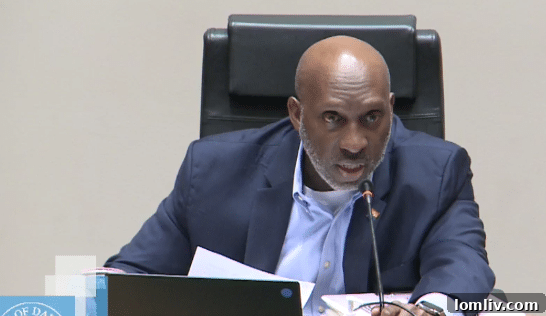
Ireland further articulated management’s concerns, writing, “Further, the City Manager does not recommend reducing the expenses included in the attached alternative [no new revenue] tax rate scenario. This scenario is only provided as requested by City Council members.” This indicated that while the administration was willing to provide alternative scenarios for the council’s consideration, they did not necessarily endorse the deeper cuts, fearing potential impacts on essential city services or long-term financial stability. Their perspective highlighted the delicate balance between satisfying public demand for tax relief and ensuring the city’s operational capacity and future fiscal health.
As Wednesday’s exhaustive meeting concluded around 8:30 p.m., Ireland offered an important clarification regarding the final budget figures. He explained that while the council appeared to have landed on an even larger budget figure of $4.98 billion, this apparent increase was due to certain items being “double counted.” These items temporarily appear in the operating budget as a transfer and subsequently in the capital budget as an appropriation. This accounting nuance means the actual net impact on the budget is different from the gross sum initially presented.
“Some items get double counted as we transfer them between different funds,” Ireland elaborated. “Your action today reduced the tax rate by an additional 0.36 cents, for a total tax rate reduction from the current year of 1.01 cents. We will send out a summary on Friday that summarizes the six amendments that were passed today.” This final clarification underscored the complexity of municipal budgeting and the significant, albeit nuanced, impact of the council’s collective decisions on the city’s financial landscape and its residents.
Key Dallas City Council Budget Amendments
Among the most vocal proponents for aggressive budget cuts was District 12 Councilwoman Cara Mendelsohn, who spearheaded efforts to significantly trim Broadnax’s proposed budget. Her primary motivation was to deliver tangible tax relief to Dallas residents, a demand she repeatedly stated she heard directly from her constituents. Mendelsohn’s philosophy advocates for a leaner, more efficient government that allows citizens to retain more of their income, enabling them to address their own needs and problems more effectively.
“Some people want to continue to tax and grow a very slow and inefficient government,” Mendelsohn argued, drawing a clear distinction. “Other people would like a very efficient and effective government that lets people keep their own money. They can solve a lot of their own problems if they have those resources, but we keep taking them … I hope that when we have our next long budget session we’ll be able to continue cutting.” Her statements reflected a clear ideological stance favoring reduced government spending and increased individual economic freedom.
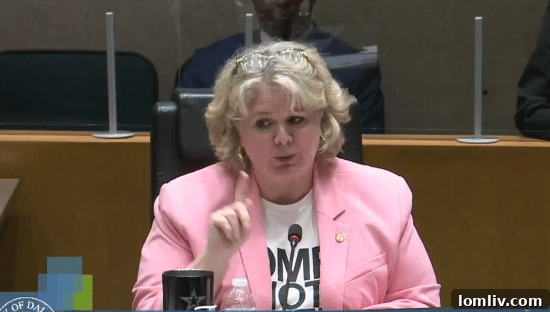
Mendelsohn, supported by several other council members, actively pushed for specific measures to achieve these cuts. These included the strategic removal of budget allocations for full-time employee positions that have remained vacant for extended periods, arguing that these roles were either non-essential or could be filled more efficiently. Additionally, they advocated for “freezing” departmental budgets at their current levels, eschewing any proposed additions and thereby curbing the natural tendency for budget expansion. Here are some of Mendelsohn’s proposals that illustrate her approach to fiscal conservatism:
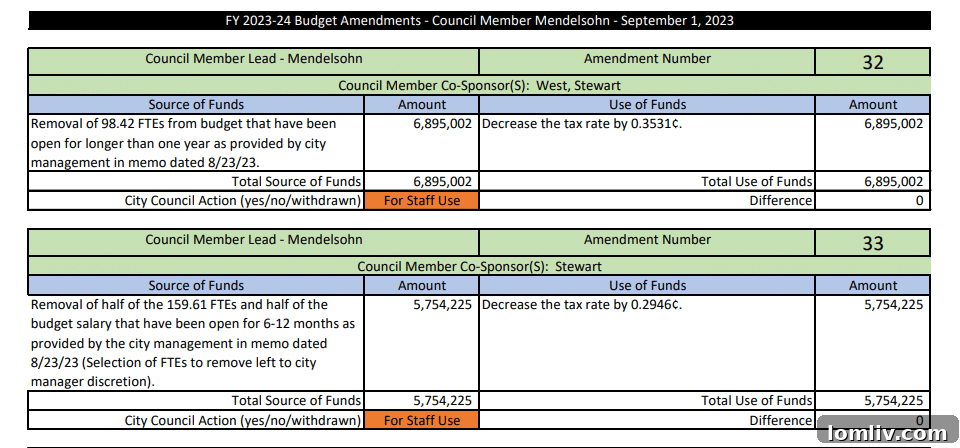
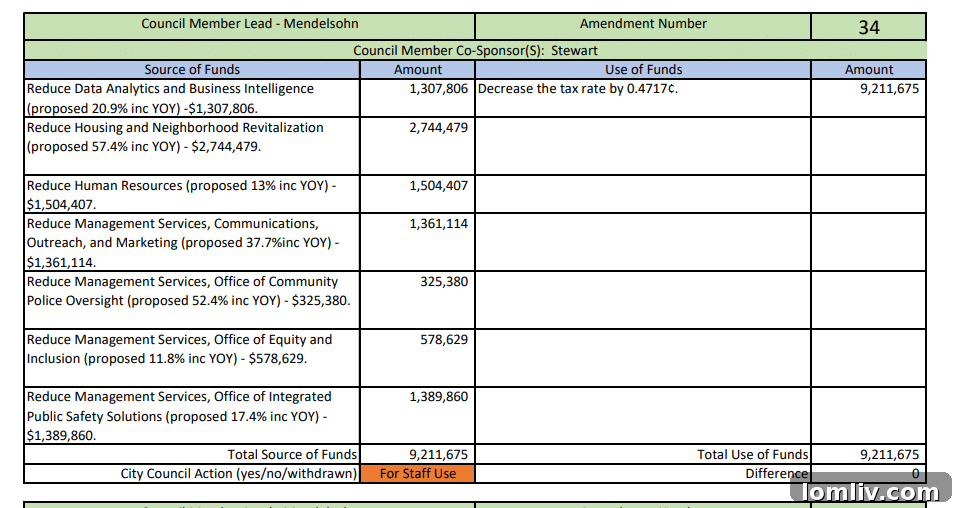
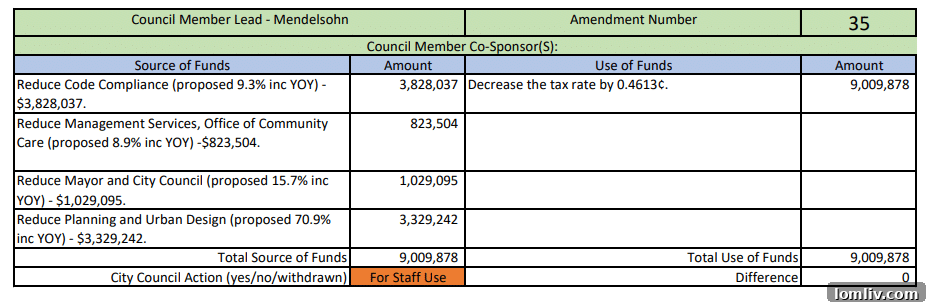
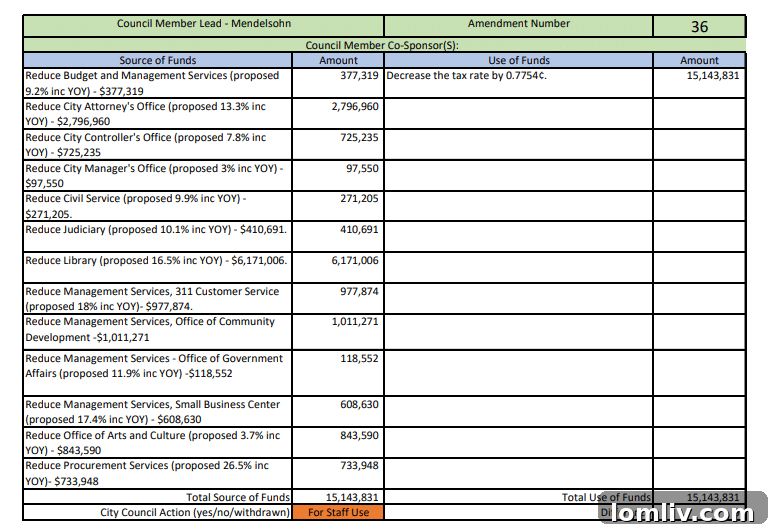
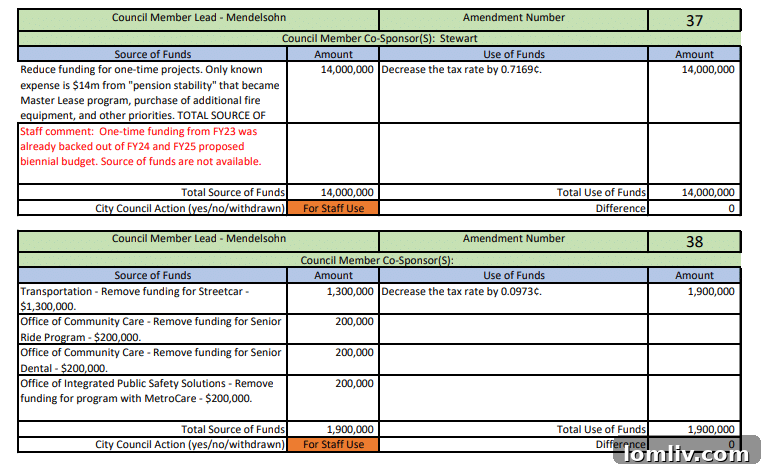
The comprehensive 18-page document outlining the 63 budget amendments proposed by various Dallas City Council members covered a wide array of municipal departments and initiatives. These proposals demonstrate a granular approach to identifying areas for cost savings and reallocations:
- **Reduce allocation of street improvements (Public Works) by $1 million — West, Schultz, Moreno.** District 1 Councilman Chad West confirmed that this initiative passed. Importantly, the saved funds will be strategically reapplied to the 50/50 sidewalk program, effectively doubling the impact of sidewalk construction efforts across the city. This reallocation reflects a prioritization of pedestrian infrastructure.
- **Reduce the Public Works budget for the Real Estate Division by 25 percent ($381,786) in FY 2023-24. Initiate a request for proposals process to a third party to outsource this function in FY 2024-25 — West.** This proposal aims to explore potential cost efficiencies and specialized expertise by outsourcing a specific division of Public Works.
- **Eliminate Dallas Police Department Mounted Program ($310,997) — Ridley.** This amendment targets a specific, high-cost program within the police department, suggesting its operational benefits may not justify the significant expenditure.
- **Eliminate additional demolition funding in Code Compliance ($250,000) — Bazaldua.** Councilman Bazaldua’s proposal sought to reduce additional funding for demolition, potentially redirecting resources to other aspects of code compliance or property maintenance.
- **Reduce the number of Dallas Police Department officers hired from 290 to 250 — ending FY24 with 3,144 officers. Reduce the class 398 and 399 from 42 to 22 — no change to remaining classes ($3.15 million) — Bazaldua.** This significant amendment by Councilman Bazaldua aims to achieve substantial savings by slightly reducing the planned intake of new police officers, while still ensuring a robust police force.
- **Reduce Communications, Outreach, & Marketing budget to FY 22-23 level of funding ($1 million); reduce Data Analytics & Business Intelligence budget to FY 22-23 ($1.3 million); eliminate funding for the IT Governance committee to use for the General Fund portion of Citywide IT projects ($1 million); reduce Human Resources department budget to FY 22-23 level of funding ($1 million) — Willis.** Councilman Willis’s proposals focused on returning several administrative and support departments to previous funding levels, suggesting that these areas could operate efficiently with fewer resources, thus freeing up millions for other priorities or tax relief.
The ‘No New Revenue’ Budget Scenario and Its Impact
The concept of a “no new revenue” budget was first championed by Councilwoman Cara Mendelsohn in mid-August. This initiative quickly gained significant traction, earning the backing of Mayor Johnson and a substantial majority of the council members. The core principle of a “no new revenue” budget is to set the property tax rate so that the city collects the same amount of property tax revenue as the previous year, excluding new construction. This effectively means that homeowners whose property values have increased would see their individual tax rates lowered to compensate, preventing the city from automatically benefiting from rising appraisals without a conscious vote to do so.
The elected panel has been unwavering in its demand that city staff devise strategies to achieve this lower tax rate, reflecting a strong mandate from the public for fiscal restraint. In a notable move demonstrating her commitment to transparency, Mendelsohn sent an email to CFO Ireland on August 25, specifically copying daltxrealestate.com and other local media outlets. Her email requested greater insight into the departmental budget proposals.
“Please provide a link on the city’s financial transparency webpage of the draft budgets submitted by each department this spring that show an 8 percent reduction scenario,” she wrote. “As the budget amendment process begins, it is in the interest of transparency and governance for council members, the public, and the media, to understand which line items departments contemplated for reductions in their budget. Since this information is already available in the budget office software, please work to post it as soon as possible, preferably today, but no later than the close of business Monday.” This direct request underscored the council’s push for a more open and accountable budget development process, allowing all stakeholders to see the granular details of potential cuts.
CFO Ireland promptly responded, assuring Mendelsohn that staff was already in the process of compiling a detailed response to share with the City Council. This response, he noted, would include “departmental budget reduction scenarios prepared earlier in our budget development process.” While this information was not immediately available in the third set of responses distributed that afternoon, Ireland confirmed that it would be provided early the following week in an email also copied to daltxrealestate.com, demonstrating the administration’s willingness to comply with the transparency requests. Ultimately, Ireland’s comprehensive memo, which included the much-anticipated alternative scenario structured around Mendelsohn’s “no new revenue budget” request, was officially posted on September 1, providing the public and the council with the detailed information they had sought.
The Dallas City Council’s recent budget deliberations reflect a significant shift towards greater fiscal conservatism and a heightened focus on taxpayer relief. The combined efforts of council members like Adam Bazaldua and Cara Mendelsohn, backed by Mayor Eric Johnson, have successfully driven down the proposed property tax rate beyond what city management initially recommended. While these cuts, totaling over $13 million and leading to a 1.01-cent overall tax rate reduction, represent a win for residents seeking relief, they also pose challenges for city departments needing to adapt to leaner budgets. As the budget moves towards final adoption on September 20, the decisions made underscore a pivotal moment for Dallas, shaping its financial future and the delivery of public services for years to come.