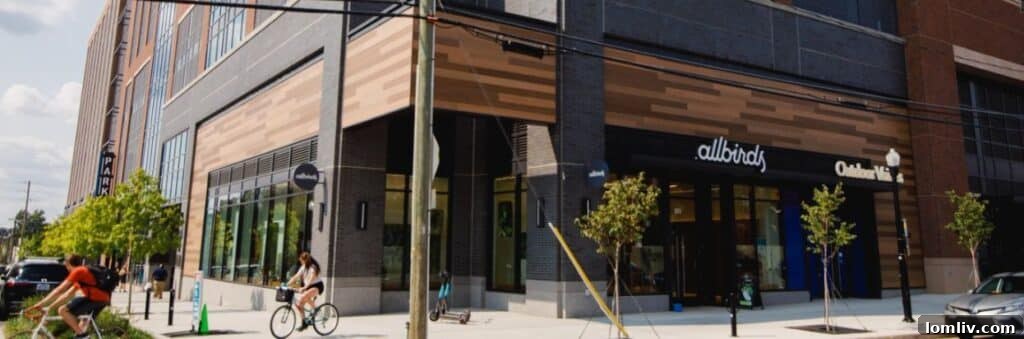
Dallas, a city continuously evolving, is poised for a significant transformation near its Walnut Hill DART Station. In a move that signals a commitment to sustainable urban growth and diverse housing options, the Dallas City Plan Commission recently gave its strong recommendation to a visionary mixed-income housing development proposed by Asana Partners. This landmark project, situated strategically within immediate walking distance of the Walnut Hill DART Station, is set to inject new life into a vital Dallas corridor, promising a vibrant, connected, and inclusive community.
The ambitious proposal from North Carolina-based Asana Partners envisions up to 1,740 modern apartments, alongside a comprehensive redevelopment of a 19-acre tract that has long been ripe for revitalization. This initiative is more than just a housing project; it’s a strategic effort to convert an underutilized suburban shopping center into a dynamic urban mixed-use environment, aligning perfectly with the principles of Transit-Oriented Development (TOD). The Dallas City Plan Commission’s decision, made during its pivotal August 3rd meeting, marks a crucial step forward for a development that is expected to set a new benchmark for urban planning in North Dallas.
Redefining Urban Living: The Vision for Walnut Hill
At the heart of this development lies a profound commitment to Transit-Oriented Development (TOD) principles. TOD is an urban planning strategy that maximizes the amount of residential, business, and leisure space within walking distance of public transport. It champions sustainability, walkability, reduced reliance on cars, and the creation of vibrant, integrated communities. The 19-acre site, strategically positioned along the north line of Walnut Hill Lane between North Central Expressway and Manderville Lane, makes it an ideal canvas for such a transformation, leveraging its direct adjacency to the Walnut Hill DART Station.
The necessity for rezoning the area underscored the project’s transformative scope. According to the detailed staff report submitted to the Commission, the rezoning was vital “to allow modified development standards primarily related to permitted uses, setbacks, floor area ratio (FAR), height, lot coverage, density, parking, signs, urban design, and mixed-income housing.” These adjustments are crucial to facilitate the continuation and enhancement of existing retail and restaurant uses while simultaneously enabling the introduction of a robust mixed-use component, including a substantial number of multifamily residential units. This meticulous planning ensures that the new development will seamlessly integrate with its surroundings, fostering both economic vitality and community well-being.
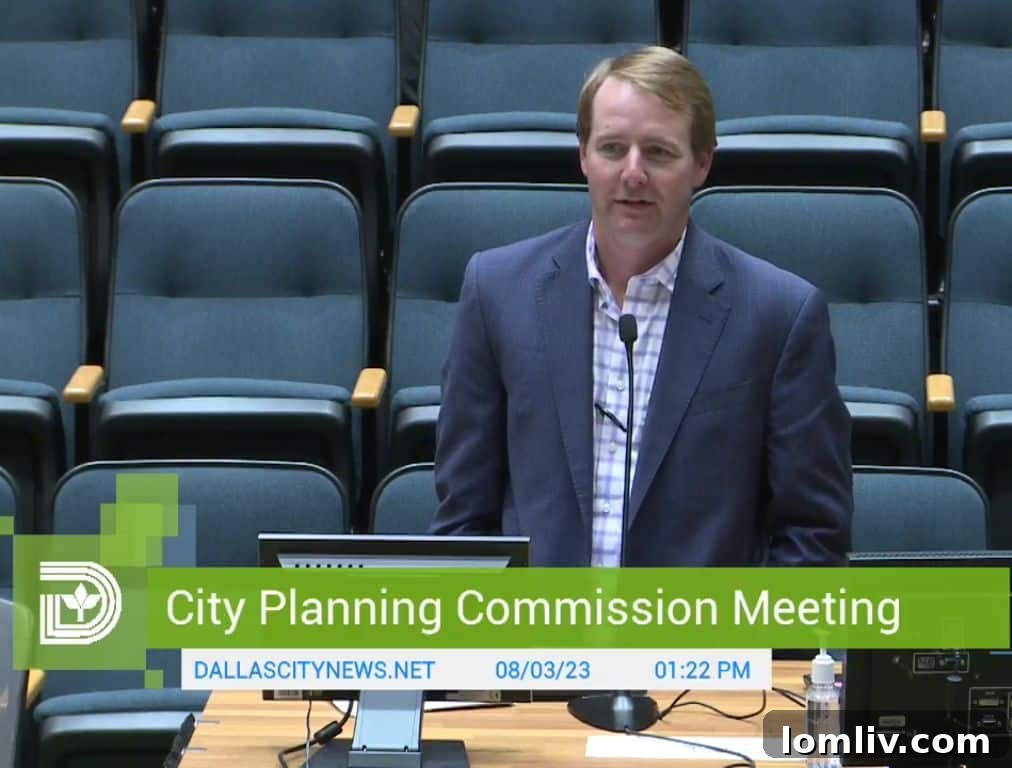
Welch Liles, managing partner at Asana, articulated the developer’s vision during his appearance before the CPC, stating, “I feel like what we are presenting is a strong plan to improve the neighborhood. It allows us to meet the goal of creating an inclusive 18-hour destination and converting what is now a suburban, surface-park shopping center into an urban mixed-use environment.” This concept of an “18-hour destination” is pivotal, signifying a place where residents and visitors can live, work, shop, dine, and socialize from morning till late evening, fostering a constant hum of activity and community engagement.
Asana Partners is renowned for its expertise in managing and curating distinctive neighborhood and retail experiences. Liles further elaborated on their specific intentions for “The Hill” – the existing shopping center. “At The Hill specifically, the intention is to maintain the existing restaurants and retail while adding density over time that would allow for more depth, merchandising mix, and create a live-work environment.” This approach ensures that the cherished local businesses are preserved, becoming integral parts of the new, more vibrant ecosystem, enhanced by increased foot traffic and a diverse residential base.
Phased Development and Community Integration
The comprehensive project is structured into carefully planned phases, each designed to incrementally enhance the area’s functionality and appeal. Key focuses include strengthening DART connectivity, significantly improving pedestrian access, and creating expansive, contiguous open spaces. These elements are not merely add-ons but foundational components intended to cultivate a truly walkable and enjoyable urban experience. Enhanced pedestrian pathways will encourage walking and cycling, reducing reliance on private vehicles and promoting healthier lifestyles, while integrated open spaces will provide much-needed green areas for recreation and community gathering.
Leading the development of the initial housing phase will be Mill Creek Residential, a company with a strong track record in creating high-quality residential communities. Their involvement signals the serious commitment to delivering top-tier living spaces that will attract a diverse array of residents, from young professionals to families, all seeking the conveniences of urban living with direct transit access.
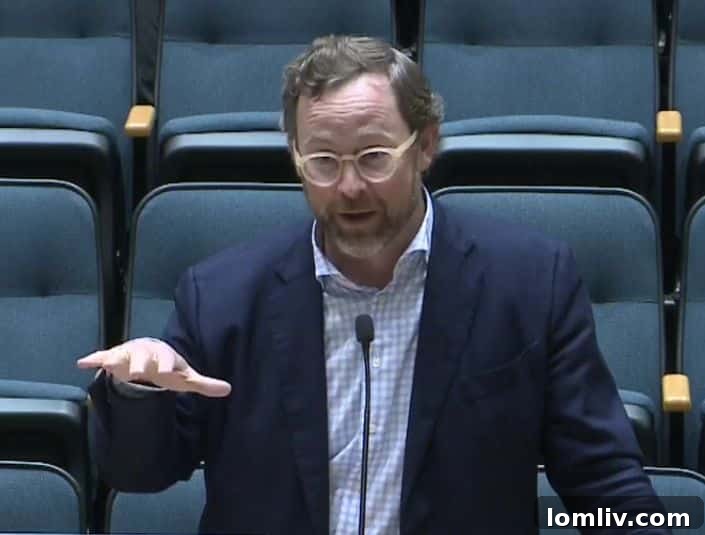
The proposed development garnered significant support from various community stakeholders, including several enthusiastic members of the advocacy group Dallas Neighbors for Housing. Their vocal backing at the CPC meeting highlighted the broad community desire for more housing options, particularly those that are transit-accessible and contribute to a more equitable urban fabric. This robust support from advocacy groups, coupled with the detailed planning by Asana Partners, underscores the project’s potential to serve as a model for future urban revitalization efforts across Dallas.
Now, with the City Plan Commission’s recommendation secured, the proposal, which falls within Dallas City Council District 13, awaits its final review and approval from the Dallas City Council. This last stage is crucial for translating the vision into reality, paving the way for construction to commence on this highly anticipated mixed-income, mixed-use development.
City Plan Commission’s Endorsement and Detailed Stipulations
The City Plan Commission’s deliberation culminated in a resounding motion to recommend approval to the City Council. District 13 Plan Commissioner Claire Stanard, a fervent proponent of the project, spearheaded this motion. Her comprehensive proposal included several crucial stipulations designed to ensure the development meets the highest standards of urban planning and community benefit. These conditions encompassed a conceptual plan, a detailed development plan, a robust tree preservation plan, an extensive pedestrian improvement plan, and numerous other specific requirements. All related documentation, showcasing the meticulous detail involved in this project, is publicly available and accessible here, providing transparency and insight into the rigorous planning process.
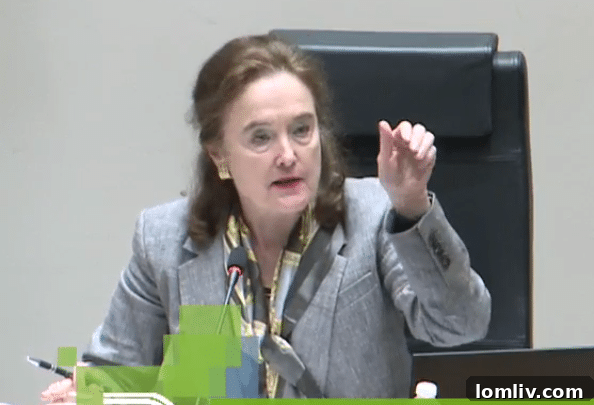
Commissioner Stanard eloquently described the development as a “dream-come-true project,” capturing the sentiment of many who envision a more walkable, connected Dallas. Her enthusiasm stemmed from the project’s embodiment of long-theorized urban planning concepts. “I’ve heard the planners here talk about ‘live where you work,’ transit, all these theoretical concepts about housing, mixed-income, reduced parking, walkability, environmentally friendly,” Stanard remarked. “All of a sudden we’ve got something that is going to be what has been envisioned in urban planning. A lot of times we haven’t looked at Dallas in this way. I feel proud to have been a part of this.” Her statement highlights the project’s potential to transcend theoretical discussions and become a tangible example of forward-thinking urban development in Dallas.
However, Stanard’s extensive motion, which delved into highly technical criteria, did draw some opposition. District 10 Commissioner Tipton Housewright expressed reservations, arguing that certain stipulations fell outside the traditional scope and expertise of the City Plan Commission. While generally supportive of the development’s overarching goals, Housewright couldn’t endorse a motion that dictated minute details such as landscaping technicalities, granted the transportation director authority over lighting schemes, or even specified the color of a roof. He contended that such details are typically governed by existing building codes and established best practices, urging the commission to “stay in our lane” on such specific technicalities.
“Our building code will already direct us in that direction as well as best practices,” Housewright noted, particularly regarding roof color and other construction specifics. His concerns, while not undermining the project’s overall merit, underscored a perennial debate in urban planning: where does broad policy stop and highly specialized technical execution begin? This discussion, though a point of contention, reflects a healthy democratic process and a commitment to maintaining appropriate oversight within each commission’s mandate.
Residential Density: A Key to Dallas’s Future
Another critical aspect of the discussion revolved around residential density, a topic that has generated significant local policy debate in Dallas in recent months. District 9 Commissioner Michael Jung provided a thoughtful perspective, emphasizing the nuanced approach required for increasing density within the city. He highlighted the Walnut Hill site as an exemplary location for such an increase.

“In the eight years I’ve been on the commission in recent history, every multifamily applicant that I’ve talked to has told me we need greater residential density in Dallas,” Jung stated. “My response has always been the same: yes, we need greater residential density in Dallas where it is appropriate, and we need to not have greater residential density in Dallas where it is inappropriate. I think this site is a poster child for a site where greater residential density is appropriate.” He elaborated on the reasons: its robust service by the existing street system, its immediate adjacency to a DART station, and crucially, its location. “An additional very positive factor is that this is not adjacent to — and therefore not capable of disrupting — any surrounding low-density residential neighborhoods.” This assessment underscores the careful balance Dallas planners seek to achieve, ensuring that increased density enhances urban areas without negatively impacting established single-family neighborhoods.
The concept of “appropriate” residential density is a cornerstone of modern urban planning. It ensures that housing growth is directed to areas best equipped to handle it – those with existing infrastructure, public transit, and commercial amenities. By concentrating density around transit hubs like the Walnut Hill DART Station, Dallas can reduce traffic congestion, promote economic activity, and create more affordable and accessible housing options. This approach helps the city accommodate its growing population while preserving the character of its diverse neighborhoods.
As the Dallas City Council prepares to review this vital project, the anticipation among developers, planners, and community members is palpable. While the exact date for its consideration by the Council was not immediately clear at the time of publication, the strong recommendation from the City Plan Commission suggests a positive outlook. This development at Walnut Hill DART Station is more than just a collection of apartments; it represents a tangible commitment to Dallas’s future as a dynamic, inclusive, and sustainable metropolis.
Commissioner Stanard’s hopeful remark encapsulates the widespread optimism surrounding the project: “I think it’s going to be vibrant. I look forward to a future there.” Indeed, this Asana Partners development promises to be a catalyst for change, fostering a lively urban ecosystem that will serve as a model for transit-oriented growth and community building in Dallas for years to come.