A home is much more than just a shelter; it’s a significant investment and the cornerstone of family life. Built to withstand the myriad challenges posed by the external environment, from fierce storms to scorching sun, the structural integrity of a house is continuously tested. Over years, seemingly subtle shifts in environmental conditions can accumulate, placing immense stress on its framework. Factors such as fluctuating temperatures, varying humidity levels, and even the subtle movement of underlying soil can gradually compromise a home’s stability, leading to unsightly damage and, in severe cases, structural failures that are costly to repair.
In the constant battle against these natural forces, innovative and often simple engineering solutions play a pivotal role. Among the most effective strategies for fortifying a home and preserving its long-term strength is the strategic integration of an expansion joint. This ingenious, yet often understated, component acts as a flexible buffer, enabling a home’s various materials to accommodate environmental changes gracefully, without sacrificing their structural integrity. Understanding how these elements work, and how they interact with other environmental factors, is key to ensuring a home remains robust, resilient, and safe for generations to come.
Each environmental force – be it the relentless sun, the biting cold, or the changing seasons of rain and drought – exerts its own unique pressure on a home. Recognizing these impacts and implementing appropriate preventative measures, such as expansion joints, is fundamental to maintaining a property’s enduring strength, resilience, and overall safety for a significantly extended lifespan. This proactive approach helps safeguard not just the physical structure but also the peace of mind of its occupants.
The Indispensable Role of an Expansion Joint in Home Stability
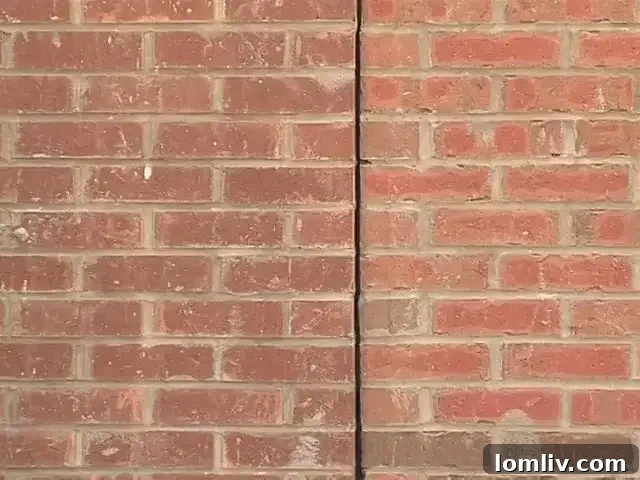
At its core, an expansion joint is a deliberately engineered gap or a specific material installed between two structural elements, designed to facilitate movement. This critical allowance for movement becomes essential as materials naturally respond to changes in temperature or when the underlying foundation shifts. Its primary application is found in structures incorporating materials like concrete, wood, and various metals, all of which are inherently prone to expanding when heated and contracting when cooled. This phenomenon, known as thermal expansion and contraction, is a fundamental property of most building materials.
The absence of these vital joints can lead to severe consequences. Without the necessary space to accommodate these natural movements, building materials are forced to bend, buckle, or crack under immense internal stress. Such damage can escalate rapidly, leading to expensive repairs or, in worst-case scenarios, significant structural failures that compromise the entire building’s safety. Expansion joints act as pressure relief valves, absorbing these stresses and preventing the formation of unsightly gaps, severe cracks, or structural deformation that would otherwise occur.
Consider a typical scenario: an unseasonably hot summer followed by a harsh, dry winter. The temperature differential between these seasons can be substantial, resulting in considerable expansion and contraction of building materials. For instance, an expansion joint strategically placed in a concrete slab floor allows the material to expand freely during the summer heat, preventing it from pushing against adjacent structures or itself. Conversely, in the cold winter months, as the concrete cools and contracts, the joint ensures this movement occurs without creating tension that leads to cracks or warping. This intelligent design is a testament to how simple engineering can enable home structures to remain intact, robust, and aesthetically pleasing despite the relentless forces of environmental change acting upon them over decades.
Beyond concrete, expansion joints are crucial for elements like brickwork, where temperature fluctuations can cause individual bricks to expand and contract, potentially leading to spalling or cracking in mortar joints. They are also integral to exterior cladding systems and roofing, ensuring that large panels of material can move without compromising seals or fasteners. In essence, expansion joints are silent guardians, working tirelessly to protect the structural integrity and longevity of a home by managing the inherent physical responses of its constituent materials to environmental shifts.
Temperature Variations: A Constant Challenge for Your Home’s Structure
The daily and seasonal fluctuations in temperature are among the most persistent sources of stress on any house structure. Almost all construction materials, from robust concrete and sturdy brick to versatile wood and various structural metals, react predictably to heat and cold. When exposed to heat, these materials absorb thermal energy, causing their molecules to vibrate more intensely and spread out, leading to expansion. Conversely, as temperatures drop, the materials cool, their molecules slow down and draw closer together, resulting in contraction. This natural, cyclical movement, often subtle individually but significant cumulatively, exerts immense pressure on a structure over time.
In regions experiencing extreme temperature differences – where summers can be intensely hot and winters severely cold – the scale of expansion and contraction is amplified. Without adequate provisions to accommodate these constant shifts, a home’s structural components are put under severe duress. This can manifest in a variety of damaging ways: hairline cracks can appear on walls, gradually widening into more significant fissures; gaps can form between flooring elements or where walls meet ceilings; and structural components might even begin to warp or buckle. These problems often affect critical areas such as walls, flooring, and, most critically, the foundation of your house, undermining its fundamental stability.
This is precisely where the ingenious simplicity of an expansion joint comes into play. It provides the essential, deliberate space required for these building materials to move freely without creating destructive internal stresses. Imagine a long concrete driveway without expansion joints; in hot weather, it would push against the garage or house foundation, potentially causing cracks in both. In cold weather, it would pull apart, creating wide, unsightly gaps. An expansion joint prevents this by allowing the concrete to expand and contract within its designated space.
The strategic placement of expansion joints is crucial, especially in areas prone to high stress such as large concrete slabs, exterior walls, and transitions between different building materials. By creating these intentional breaks, expansion joints effectively mitigate the risk of severe damage in vulnerable areas like doorways, window frames, floors, and walls. They are the unsung heroes that allow your home to maintain its strength, structural integrity, and aesthetic appeal through countless cycles of heating and cooling, ensuring it remains a safe and secure haven regardless of the external climate.
The long-term benefits extend beyond preventing visible cracks. Expansion joints help preserve the integrity of waterproofing membranes, prevent roof components from buckling, and ensure that exterior finishes remain smooth and intact. By intelligently managing the inherent physical properties of building materials, expansion joints contribute significantly to the enduring resilience and longevity of any residential structure, safeguarding it against the relentless forces of nature’s thermal cycles.
Moisture: A Silent Force Shaping Your Home’s Stability
Beyond temperature, another powerful environmental factor with significant implications for your home’s long-term stability is moisture. The presence and fluctuation of water, particularly in the soil moisture around the foundation and the general atmospheric humidity, can profoundly impact a home’s structural integrity. This is especially true for homes built on expansive clay soils, which are notorious for their drastic volume changes based on moisture content.
During periods of excessive rainfall, heavy irrigation, or high humidity, the soil surrounding a home’s foundation absorbs water, causing it to swell and expand. This expansion exerts considerable hydrostatic pressure on the foundation walls, pushing inward and upward. Over time, this constant pressure can lead to cracks in the foundation, bowing of walls, or even an upward movement known as “heave.” Conversely, during prolonged dry seasons or droughts, the soil loses its moisture content, causing it to shrink and contract dramatically. This contraction pulls away from the foundation, leading to a lack of support and potentially causing the foundation to settle unevenly, creating voids and increasing the risk of structural compromise.
These dynamic movements in the ground upon which your house rests can initiate a cascade of problems. Uneven settlement of the foundation is a common consequence, often manifesting as visible cracks appearing first in the interior and exterior walls, then extending to floors, and eventually impacting the foundation itself. These cracks are not merely cosmetic; they can indicate serious underlying structural stress. Moreover, persistent moisture can lead to other issues such as wood rot, pest infestations, and the growth of mold and mildew, all of which further degrade structural components and compromise indoor air quality.
To counteract these complications, the strategic incorporation of expansion joints within the foundation and surrounding concrete elements of your house is highly advisable. While expansion joints directly address movement caused by thermal expansion, they also play an indirect yet crucial role in mitigating the effects of soil movement. By providing controlled points of separation, they allow large concrete slabs or foundation elements to move slightly without transferring destructive forces to the main structure. For instance, in driveways or patios adjacent to the house, expansion joints prevent the swelling or shrinking concrete from pushing against or pulling away from the foundation, thereby isolating the movements. Combined with proper drainage solutions, such as effective grading, gutters, and downspouts that direct water away from the foundation, expansion joints form a comprehensive defense against moisture-related structural damage.
Long-Term Solutions for Enduring Home Stability
While a robust initial construction is paramount, maintaining your home’s structural integrity against the relentless onslaught of environmental changes requires a continuous, proactive approach. An expansion joint is undoubtedly a foundational component in this strategy, allowing your house to gracefully absorb variations caused by temperature and moisture. However, its effectiveness is maximized when complemented by consistent and periodic inspections and diligent maintenance, ensuring the house remains in optimal shape for many decades.
It is crucial to schedule regular professional inspections, ideally annually, to meticulously examine the entire structure of your home. These inspections should focus on identifying early warning signs such as fine cracks in walls, floors, or the foundation, signs of uneven settling, or any visible warping of structural elements. Even seemingly minor issues, if left unaddressed, can escalate into significant and costly problems. Prompt investigation and repair are key to preventing widespread damage and preserving your home’s value and safety. A professional home inspector can often spot subtle signs that a homeowner might miss, providing expert guidance on necessary interventions.
Investing in the expertise of a qualified professional for the installation and maintenance of expansion joints is also critical. Ensure that an expert assesses your home’s specific needs and incorporates expansion joints in all critical areas. This includes not only the foundation and large concrete slabs like driveways and patios but also interior flooring where different materials meet, and even within masonry walls. Well-designed and properly installed expansion joints will significantly enhance your house’s resilience, enabling it to withstand the dynamic forces of environmental changes without succumbing to structural stress.
Beyond installing expansion joints, consider a holistic approach to home stability. This includes maintaining proper drainage around your foundation by ensuring gutters are clean and downspouts direct water several feet away from the house. Landscaping should also be carefully planned, avoiding trees and shrubs with invasive root systems too close to the foundation. Regularly check and re-seal any existing expansion joints, as the filler material can degrade over time, losing its flexibility and protective qualities. Proactive measures like these are not merely maintenance tasks; they are strategic investments in the long-term health and stability of your property.
In summary, environmental forces represent a significant and ongoing challenge to the stability of homes over time. Variable temperature and moisture levels, coupled with the natural shifting of underlying soil, can collectively impose immense stress on a building’s structure. Expansion joints emerge as an elegantly simple yet profoundly essential addition, empowering the house to absorb these variations without suffering irreparable damage. They are the unsung heroes that protect a home’s investment, allowing it to remain strong, stable, and resilient against all environmental challenges for countless years, ensuring a secure and comfortable living space for its occupants.
By understanding the critical role of expansion joints and adopting a comprehensive maintenance strategy, homeowners can significantly enhance their property’s longevity, mitigate the risk of costly repairs, and ensure their home stands firm against the tests of time and nature.