
Many commercial property owners often associate cost reduction with extensive renovation projects. Grand-scale system overhauls, major retrofits, and significant equipment upgrades frequently dominate discussions around lowering operational expenses. While these initiatives certainly have their place, a substantial portion of cost inefficiencies in commercial buildings often originates from less obvious areas. These hidden drains can include unscrutinized utility bills, outdated operational routines, and management decisions that no longer align with the building’s current usage patterns or tenant demands.
This dynamic is particularly critical for property owners in Texas, where operational costs can fluctuate rapidly. The state’s hot climate leads to dramatic spikes in air conditioning bills during the prolonged summer months, and the associated service and maintenance costs only add to the financial strain. Insurance premiums and routine upkeep rarely become cheaper, often trending upwards. When these various expenses begin to escalate concurrently, even a meticulously managed commercial property can become significantly more expensive to operate than initially projected, impacting profitability and overall asset value.
Unearthing Hidden Costs: Scrutinize Routine Expenses You’ve Stopped Questioning

One of the most common oversights in property management is the passive acceptance of recurring costs. There’s a natural tendency to assume that bills which arrive consistently month after month are inherently correct, simply because they are familiar. A utility bill is paid without a deep dive into its components, a service contract automatically renews, and a maintenance schedule remains unchanged, often because no one has recently challenged its necessity or efficiency. Over time, these routine financial commitments can start to feel like immutable fixed costs, even when substantial savings opportunities might lie just beneath the surface.
Many property owners diligently track key performance indicators such as rent collection, vacancy rates, and significant repair expenses. However, the intricacies of power costs are frequently relegated to background noise, viewed as an unavoidable and largely unmanageable expense. This perspective is a significant mistake, as numerous low-cost adjustments and strategic reviews can dramatically reduce energy consumption long before any major capital improvement projects become necessary. Understanding your property’s energy profile, including demand charges, peak usage times, and consumption patterns, can unlock substantial savings.
For commercial properties in Texas, a state with a deregulated electricity market, this oversight represents a massive missed opportunity. Simply comparing commercial electricity plans in Texas can reveal significant discrepancies in rate structures, contract terms, and peak demand charges. A thorough review of these elements, going beyond a cursory glance at the total bill amount, can uncover cost efficiencies that would otherwise remain hidden within what appears to be a perfectly normal monthly invoice. Engaging with energy brokers or specialists can help property managers navigate the complexities of different plans, ensuring they secure terms best suited to their building’s specific operational needs and usage patterns.
Optimize Operations: Revisit Your Building’s Schedule Before Investing in New Equipment
A common pitfall for property owners facing rising costs is the immediate inclination to seek hardware-based solutions. The first instinct is often to consider costly replacements, significant upgrades, or major new installations. While new equipment is sometimes essential for modernization and efficiency, it’s crucial to recognize that outdated operating routines can silently inflate costs, irrespective of the machinery in place. This is especially true when building systems, such as HVAC and lighting, are not intelligently scheduled to operate only when and where needed.
Before committing to capital expenditures, a comprehensive review of your building’s operational schedule can uncover surprising areas of waste. Simple adjustments to timing and duration can lead to significant energy savings and reduced wear and tear on existing equipment. Such a review can help identify inefficiencies in critical areas, including:
- Unnecessary Lighting Hours: Lights in common areas, hallways, and parking lots often remain on longer than necessary, particularly during off-peak hours or when natural light is abundant. Implementing smart lighting controls or simply adjusting timer settings can yield immediate savings.
- Premature Cooling and Heating Schedules: HVAC systems might be programmed to activate hours before the first occupants arrive or maintain peak temperatures long after the last person has left. Optimizing these schedules to align precisely with occupancy times can drastically cut energy consumption.
- Systems Running Beyond Occupancy Requirements: Equipment and ventilation systems may continue to run at full capacity in areas that are only partially occupied or have fluctuating usage patterns. Integrating occupancy sensors or zone-based controls can ensure energy is only expended when truly required.
- Outdated Routines in Low-Traffic Zones: Areas with infrequent use, such as storage rooms, mechanical spaces, or specific meeting rooms, often follow the same operational schedules as high-traffic zones. Tailoring their schedules to actual usage can prevent wasted energy.
- Operating Patterns Mismatched with Tenant Use: As tenant needs evolve or building occupancy changes, original operational patterns can become misaligned. Regularly reviewing and adapting schedules to reflect current tenant demands ensures resources are used efficiently and effectively.
These adjustments often require minimal investment but deliver substantial and sustained cost reductions, proving that smarter operation can often outperform expensive new installations.
Contractual Vigilance: How Small Details Can Lead to Major Cost Overruns
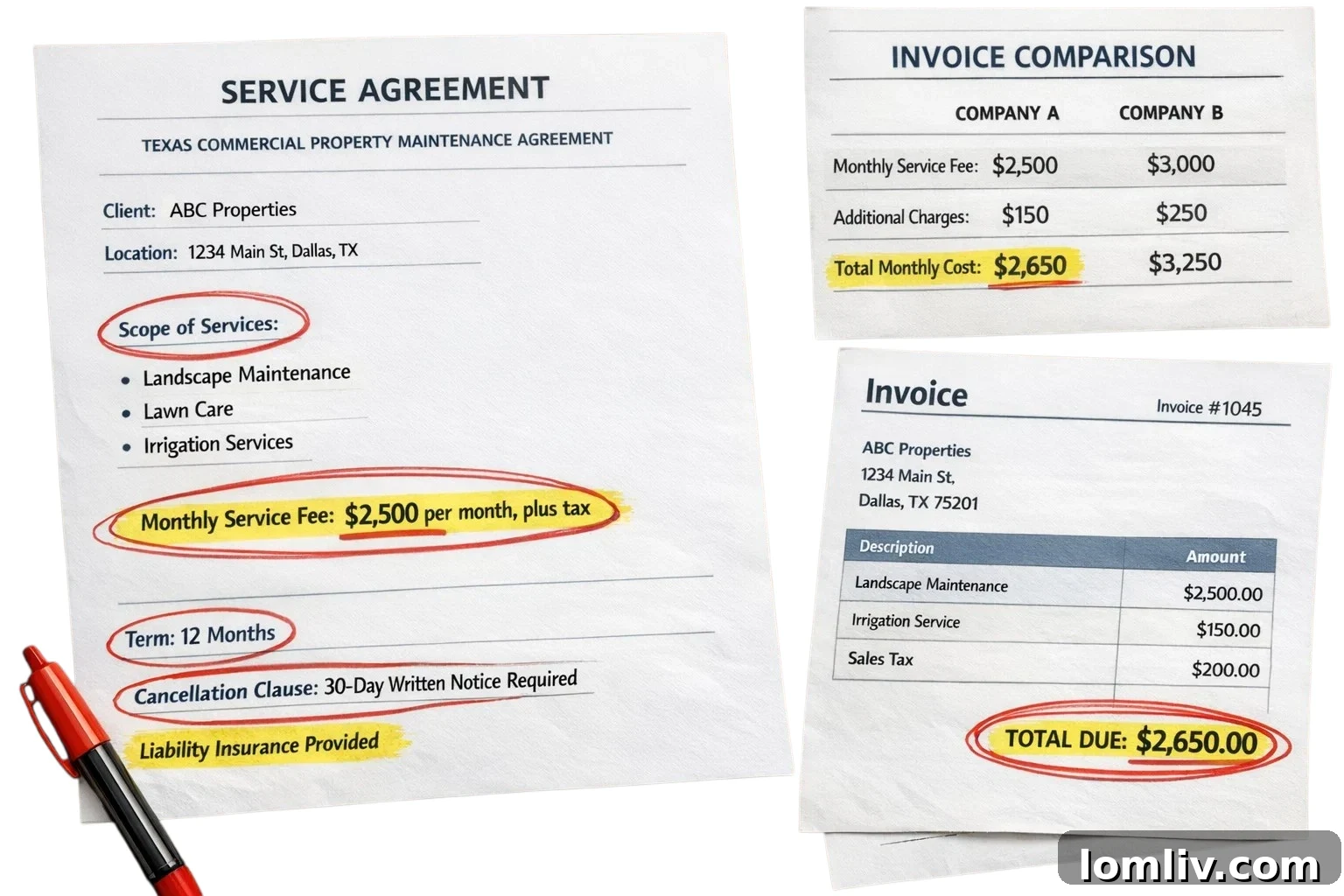
Not all cost issues within a commercial property stem directly from the physical building or its systems. A significant portion can originate from contractual agreements that, while appearing reasonable at the time of signing, now contribute to unnecessary financial strain. A wide array of agreements – including utility terms, cleaning contracts, waste removal services, pest control, security services, and various maintenance arrangements – can gradually drift out of alignment with the property’s actual requirements. Escalation clauses, automatic renewals, and bundled services can lead to increased expenditures without a corresponding increase in value or necessity.
The solution doesn’t always necessitate finding brand-new vendors. Often, property owners simply need to conduct a thorough and critical review of what they are currently paying for and why. A service contract that was perfectly suited for a bustling, fully occupied building might become excessive and costly for a property experiencing lower occupancy or changed tenant demographics. Similarly, a service level that once felt absolutely necessary might now be considered extravagant, especially if the building’s operational demands have shifted. These seemingly minor mismatches in service levels or contract terms can cause building operating costs to remain artificially high, often without drawing adequate attention from management.
Key areas to scrutinize during a contract review include: termination clauses, automatic renewal provisions, defined scope of work versus actual delivery, cost escalation mechanisms, and the flexibility to adjust service levels. Regular competitive bidding, even if you decide to stick with your current providers, can provide valuable leverage and ensure that your property is receiving the most competitive rates and appropriate service for its current needs. Proactive contract management is a powerful tool for controlling expenses and preventing hidden cost creep.
Strategic Energy Planning: A Foundation for Long-Term Cost Control
Energy planning often sounds like a highly technical subject, something best left to engineers, until the financial implications become impossible for property owners to ignore. In practice, however, energy planning extends far beyond the mere mechanics of systems and consumption metrics; it’s fundamentally about gaining control over one of the most volatile and significant operational expenses. A commercial property that possesses a clear understanding of how and when it consumes power is inherently easier to budget for, more efficient to operate, and significantly simpler to manage through the inevitable seasonal demand fluctuations.
This strategic approach is particularly vital in Texas, where energy costs can exhibit extreme volatility, especially during periods of peak demand. Understanding the nuances of energy tariffs, including demand charges, time-of-use rates, and real-time pricing, allows property owners to implement strategies like peak shaving or load shifting, which can dramatically reduce overall costs. A property characterized by stable, year-round energy use might thrive with one type of energy plan or system setup, while a building with pronounced summer demand peaks, irregular occupancy patterns, or specific equipment needs may require an entirely different, more tailored strategy.
When an existing energy plan no longer aligns with the building’s current usage profile or the broader market’s pricing dynamics, property owners can inadvertently pay a premium without fully comprehending the source of the additional costs. Effective energy planning involves regular energy audits, understanding historical consumption data, exploring renewable energy options where feasible, and staying informed about changes in energy regulations and market offerings. It empowers owners to make informed decisions, optimize procurement strategies, and implement demand-side management tactics, transforming energy from an uncontrolled expense into a strategically managed resource.
Proactive vs. Reactive: The Economic Advantage of Preventive Maintenance
Another crucial area where property owners can significantly reduce overall operating costs, without resorting to major capital upgrades, lies in optimizing their approach to maintenance. The temptation to delay minor maintenance tasks often feels harmless in the short term. A small plumbing issue can seemingly wait another month, a routine HVAC inspection can be pushed back, or a system that appears to be functioning adequately is left untouched, especially when budget constraints loom large. This ‘wait and see’ mentality, however, is a classic example of penny-wise and pound-foolish thinking.
The fundamental truth is that reactive spending almost invariably costs more than proactive, preventive measures. What begins as a minor issue – perhaps a flickering light, a subtle leak, or an unusual sound from an HVAC unit – can quickly escalate into a larger, more complex, and significantly more expensive repair. Furthermore, a system operating under increased strain due to neglected maintenance will work harder, consume more energy, and experience accelerated wear and tear, often failing precisely during peak operational periods when it’s most critical. When a reactive service call becomes unavoidable, it often occurs at the worst possible time, limiting the opportunity to compare multiple vendor quotes, negotiate favorable terms, or schedule the work efficiently and cost-effectively.
Preventive maintenance, while not always glamorous or immediately visible, is a cornerstone of predictable cost control. It involves scheduled inspections, routine servicing, and proactive replacement of worn components before they fail. This approach not only helps to keep operational costs more stable and predictable but also dramatically reduces the risk of unexpected disruptions for tenants. A building that consistently functions without sudden breakdowns fosters a sense of reliability and professionalism, significantly contributing to tenant satisfaction and retention. Commercial properties rarely become expensive overnight; more often, their operational costs spiral upwards through a cumulative series of postponed decisions and deferred maintenance that seemed inconsequential at the time they were made.
Tenant Comfort and Cost Control: A Synergistic Relationship

A common concern among property owners is the fear that efforts to reduce building operating costs will inevitably compromise the property’s reliability or tenant comfort. While poorly executed cost-cutting measures can certainly have negative consequences, truly effective cost control is not about degrading the building’s performance or amenities. Rather, it’s about intelligently identifying and eliminating waste—those expenditures that add little to no value for tenants or the property’s overall operation. When implemented thoughtfully, cost management can actually enhance the tenant experience.
In fact, in many commercial settings, tenant comfort and satisfaction tend to improve when building operations become smarter and more efficient. Implementing more consistent scheduling for HVAC and lighting, ensuring better-timed and proactive maintenance, and conducting closer, data-driven reviews of building systems can often reduce tenant complaints rather than create them. For instance, consistent indoor temperatures, reliable equipment, and well-maintained common areas contribute directly to a positive environment. While occupants may not always see the intricate planning and operational adjustments happening behind the scenes, they undeniably notice when the property consistently runs smoothly and efficiently.
This synergy is especially vital in commercial environments, where the perception of comfort, reliability, and functionality significantly influences how professional and desirable a space feels. A building that operates seamlessly and efficiently not only supports higher tenant retention rates but also enhances the property’s reputation in the market and simplifies day-to-day management tasks for the property team. Thoughtful cost control, focused on eliminating inefficiencies and optimizing resource allocation, should therefore serve to strengthen these critical aspects of commercial property ownership, rather than undermine them. It transforms the property into a more attractive, sustainable, and profitable asset for the long term.
The Bottom Line: Smart Operations Drive Sustainable Savings
Commercial property owners in Texas face a multifaceted array of pressures, and building operating costs rarely move in a single, predictable direction. This inherent volatility is precisely why smaller, seemingly incremental operational decisions carry such immense weight and impact. The properties that excel at controlling costs are often not those making the most significant and immediate capital upgrades. Instead, they are the ones meticulously paying closer attention to the familiar, recurring expenses that have, over time, become so routine they are rarely questioned.
Embracing better long-term planning, conducting sharper and more frequent contract reviews, and exercising more precise control over energy usage are all powerful strategies that can significantly alleviate financial pressure without necessitating a major, disruptive overhaul. In a competitive market where every operational dollar directly impacts the bottom line and overall profitability, these less obvious, yet highly practical, fixes are frequently the ones that yield the most substantial and sustainable differences. Proactive management and continuous scrutiny of operational details are the keys to unlocking enduring cost efficiencies and enhancing the value of commercial real estate assets.