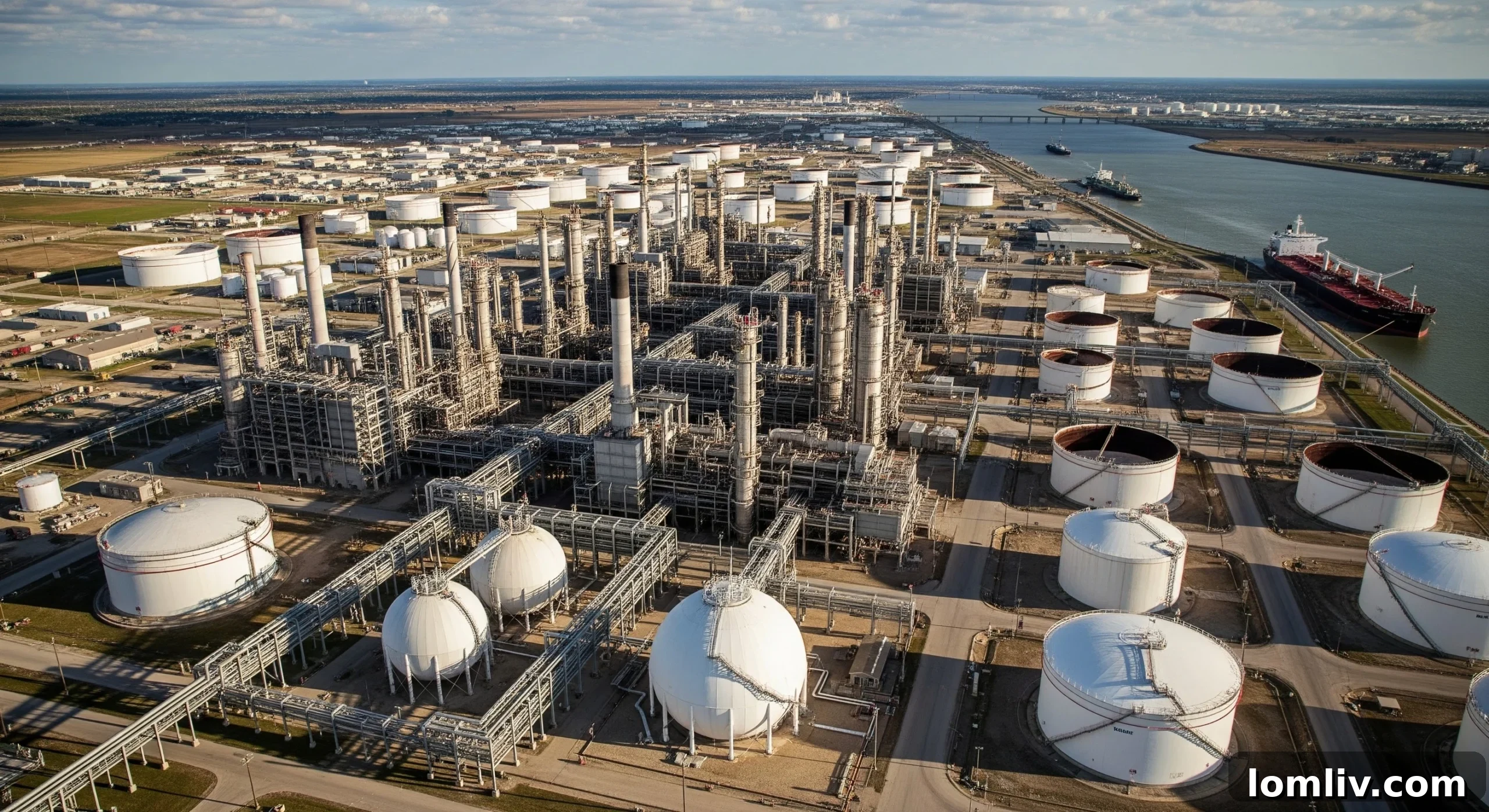
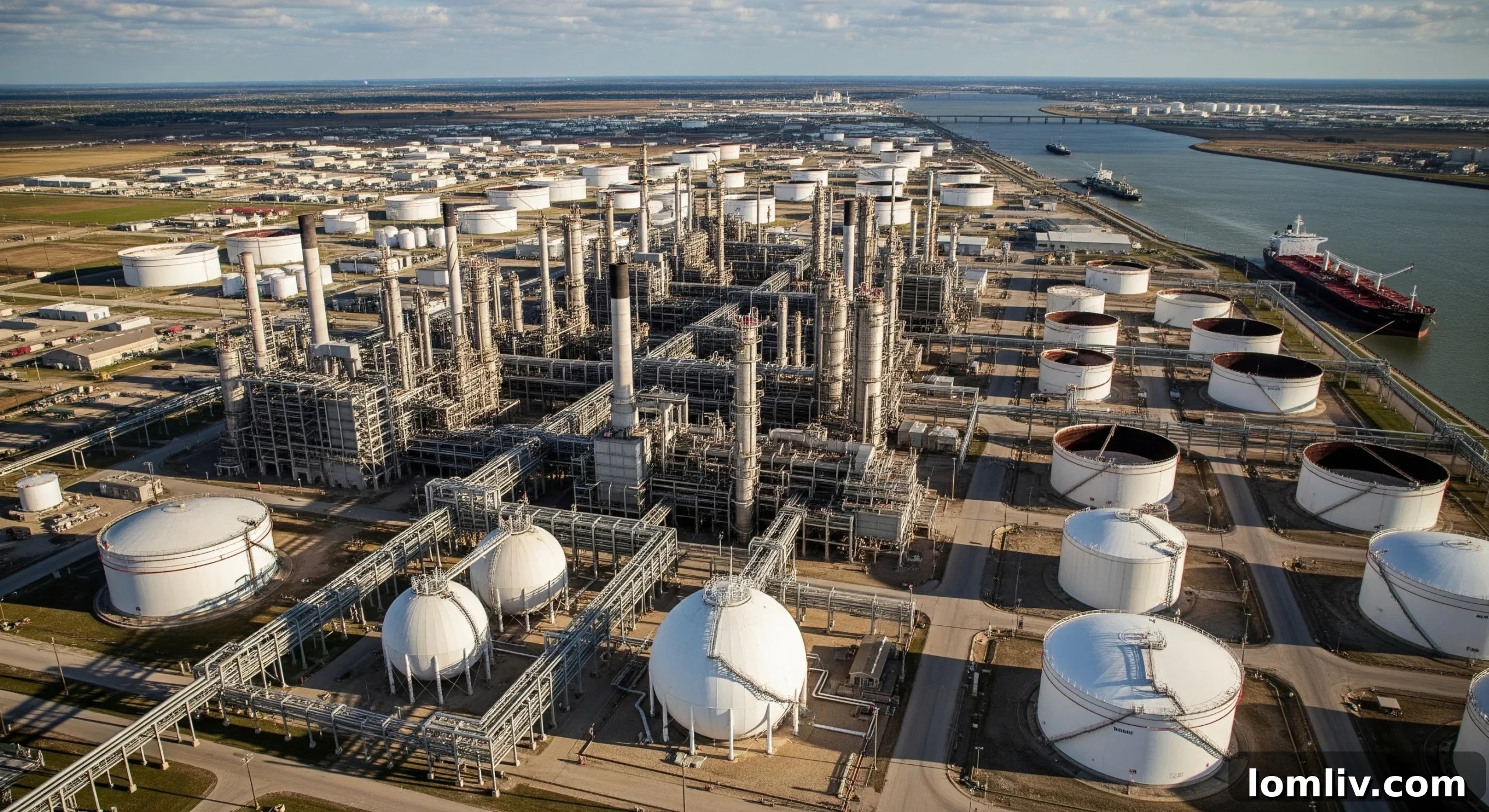
Texas stands as the undeniable heart of the United States energy sector, a colossal hub for the nation’s crucial oil and gas production. Its strategic geographical position, particularly its extensive Gulf Coastline, makes it an unparalleled location for some of the largest and most sophisticated industrial complexes in the world. These vast facilities are not merely points on a map; they are the engines that transform raw crude oil into the countless fuels and essential products that power homes, transport goods, and drive daily life across America and beyond.
The sheer scale and sophistication of the refining industry in the Lone Star State are truly monumental, setting it apart as a global leader. From the bustling ports of Houston and Corpus Christi to the sprawling industrial corridors of Beaumont and Port Arthur, the skyline is dramatically shaped by an intricate network of distillation towers, storage tanks, and interconnected processing units. This extraordinary concentration of energy infrastructure has not only profoundly shaped the region’s economy but has also positioned Texas at the forefront of global energy supply for over a century, fostering a legacy of innovation, technological advancement, and economic resilience.
Delving into the history of this remarkable growth reveals a captivating story of relentless innovation and strategic investment. Texas is home to some of the most advanced energy hubs on the planet, including the biggest refinery in Texas, which serves as a benchmark for operational efficiency and technological prowess worldwide. These state-of-the-art facilities underscore Texas’s unwavering commitment to maintaining its leadership role in the energy sector, constantly evolving to meet both national and international demands with unparalleled capacity and expertise.
Strategic Geographic and Infrastructure Advantages
The cornerstone of Texas’s dominance in oil refining is undoubtedly its exceptional geographic access to abundant raw materials and direct connections to global markets. The state is strategically situated at the critical intersection of vast oil-producing regions, most notably the prolific Permian Basin, and the vital shipping lanes of the Gulf of Mexico. This prime location facilitates the seamless and cost-effective transport of crude oil from West Texas directly to the massive processing gates along the coast, creating an incredibly efficient supply chain that is difficult for any other region to match.
This unparalleled access is further amplified by a world-class energy infrastructure. Thousands of miles of advanced pipelines crisscross the state, forming an intricate circulatory system that ensures a continuous, reliable flow of crude oil to refineries and, subsequently, finished petroleum products to consumers. This extensive network significantly reduces transportation costs and enhances the operational reliability of the entire refining process, benefiting every company involved in the complex journey from wellhead to consumer. Moreover, Texas’s proximity to major deep-water ports provides an invaluable advantage for exporting refined products to international buyers, firmly cementing its status as a pivotal player in the global energy trade. Tankers can be loaded swiftly and efficiently, making Texas a critical link in the global supply chain and providing a robust foundation for the continuous expansion and economic prosperity of its refining industry.
A Century of Refining: Historical Growth and Evolution
The genesis of Texas’s refining might can be traced back to the early 20th century with the legendary Spindletop oil discovery in 1901. This monumental event sparked an oil boom that fundamentally transformed the state, leading to rapid industrialization and the establishment of the first rudimentary refineries. Over the decades, fueled by surging demand during two World Wars and the post-war economic expansion, the Texan refining sector experienced exponential growth and technological advancement. Early facilities evolved from simple processing units into highly complex integrated complexes, continuously expanding their capacity and refining capabilities.
The mid-20th century saw significant investment in petrochemical production, often co-located with refineries, further diversifying the industry’s output beyond just fuels. This period established Texas as a global leader not only in crude oil processing but also in the manufacturing of essential chemical building blocks. Through periods of both boom and bust, the industry demonstrated remarkable resilience and adaptability, consistently investing in upgrades, modernizing processes, and adopting cutting-edge technologies. This enduring commitment to innovation, coupled with strategic geographic advantages, has allowed Texas to maintain and even strengthen its position as the undisputed leader in U.S. oil refining, shaping its economic landscape for generations.
Unrivaled Scale of Operations and Skilled Workforce
Operating a modern oil refinery in Texas is an undertaking of epic proportions, demanding an exceptionally skilled workforce numbering in the thousands. These sprawling facilities function around the clock, 24 hours a day, 365 days a year, ensuring a constant and uninterrupted supply of vital energy products. The sheer scale of the equipment is awe-inspiring, from colossal distillation towers stretching hundreds of feet into the sky to vast networks of interconnected processing units, storage tanks, and pipelines, all working in concert to transform crude oil into myriad valuable products.
The specialized workforce is the lifeblood of these operations, comprising a diverse array of professionals including highly trained chemical engineers, meticulous process operators, expert maintenance technicians, rigorous safety personnel, and dedicated environmental specialists. Every individual on-site plays an integral role in maintaining the integrity of complex processes, ensuring peak operational efficiency, and upholding stringent quality and safety standards. Consequently, continuous training and professional development are not merely encouraged but are constant, non-negotiable requirements, ensuring that the workforce remains at the forefront of industry best practices and technological advancements. The economic ripple effect of this massive industry extends far beyond the refinery fence lines, generating countless secondary jobs across communities. From specialized equipment suppliers and construction companies to local service providers and educational institutions, the energy sector is a primary, indispensable driver of prosperity and employment, deeply integrating into the fabric of local and regional economies.
Navigating Industrial Risks and Prioritizing Safety
The colossal scale and inherent nature of refining operations, involving the processing of highly volatile chemicals at extreme temperatures and pressures, inherently involve a significant level of industrial risk. Safeguarding the lives of workers, protecting surrounding communities, and preserving the environment demand a constant state of vigilance and an unyielding commitment to the most rigorous safety standards. Any momentary lapse in focus, mechanical malfunction, or procedural deviation can potentially lead to severe or even catastrophic consequences for all involved.
While industrial incidents are statistically rare, they remain a paramount concern for the highly trained professionals and robust management teams overseeing these sites. To mitigate potential hazards, Texas refineries invest hundreds of millions of dollars annually in advanced monitoring systems, state-of-the-art safety technologies, highly trained emergency response teams, and comprehensive preventative maintenance programs. Cultivating and maintaining an unwavering culture of safety, where every employee is empowered to identify and address risks, is a non-negotiable prerequisite for operating a large-scale refinery in the modern era. Furthermore, environmental protection is an equally critical component of responsible operations. Companies are continuously striving to minimize their environmental footprint through significant investments in reducing emissions, implementing advanced wastewater treatment technologies to protect water supplies, and engaging in land remediation efforts. Balancing the imperative of energy production with stringent safety protocols and responsible environmental stewardship remains a complex, ongoing, and vital task that defines the industry’s commitment to sustainable operations.
Technological Advancements and Future Outlook
The Texas refining industry is not stagnant; it is a dynamic sector constantly evolving through technological advancements and strategic innovation. Refineries are continually investing in research and development to improve process efficiency, reduce energy consumption, and minimize environmental impact. This includes the development of cleaner burning fuels, such as ultra-low sulfur diesel and advanced gasoline formulations, as well as exploring carbon capture, utilization, and storage (CCUS) technologies to mitigate greenhouse gas emissions. Many facilities are also integrating more closely with the broader petrochemical sector, utilizing refinery byproducts as feedstocks for a vast array of plastics, chemicals, and advanced materials, thereby creating additional value and fostering a more circular economy.
Looking ahead, Texas refineries are actively adapting to the global energy transition. This involves exploring the production of renewable fuels from biomass or waste, investing in hydrogen production for industrial use and transportation, and optimizing operations to be more resilient to fluctuating market demands and evolving regulatory landscapes. While the world shifts towards cleaner energy sources, traditional refining will continue to play a crucial role in meeting demand for essential liquid fuels and petrochemicals for decades to come. Texas is uniquely positioned, with its robust infrastructure, skilled workforce, and innovative spirit, to lead this transition, ensuring its energy sector remains vital and adaptable in a changing global energy paradigm.
Conclusion: The Enduring Legacy of Texas Refining
In summary, Texas’s unparalleled dominance in the global refining industry is a powerful testament to a unique confluence of strategic geography, a rich history of industrial growth, and an unwavering commitment to industrial scale and innovation. The state’s distinct advantages, including its direct access to abundant crude oil resources, an expansive network of infrastructure, and a direct link to international shipping lanes, have collectively created an environment where the refining industry has not only thrived but continues to grow and adapt. This remarkable success story is built upon a foundation of relentless hard work, continuous investment, and a steadfast dedication to meeting the complex energy needs of both the nation and the world.
By effectively leveraging its proximity to critical energy resources and consistently investing in a highly skilled and adaptive workforce, Texas has firmly cemented its position as an undisputed global leader in energy production and refining. The immense industrial complexes that prominently dot the Gulf Coastline are not just engineering marvels; they are potent symbols of economic strength, technological prowess, and national energy security. Protecting and enhancing this vital legacy demands a sustained and intensive focus on continuous innovation, the highest standards of safety, and proactive environmental stewardship, all of which are crucial for ensuring the long-term prosperity of the state, its vibrant communities, and its dedicated people.
Ultimately, the refining industry in Texas will continue its dynamic evolution, constantly adapting to shifting global energy markets, emerging technological advancements, and changing regulatory landscapes. The state’s proven ability to maintain and strengthen its pivotal position in the face of such global changes is a powerful testament to its inherent resilience, strategic foresight, and unparalleled adaptability. Every barrel of crude oil processed within its borders serves as a profound reminder of how central and indispensable the refining sector remains to the economic vitality, security, and future trajectory of the great state of Texas.