Preston Tower: A Dallas Icon’s 50-Year Legacy on the Pink Wall
For five remarkable decades, Preston Tower has been a defining landmark of Dallas’s illustrious “Pink Wall.” Erected in 1966, this modernist high-rise began welcoming its first residents in the same year the iconic Star Trek series premiered – a curious synchronicity that speaks to its forward-thinking design. While slightly predating its immediate neighbor, The Athena, Preston Tower rose majestically amidst the already vibrant two-story walk-ups that characterized the burgeoning Pink Wall neighborhood. Standing at an impressive 29 stories, it’s a reasonable conjecture that in 1966, it held the distinction of being the tallest structure between Dallas and Oklahoma City, a testament to its ambitious scale.
To truly understand the heart of Preston Tower, one must hear from its long-term residents. I recently had the privilege of speaking with Robert Emery, a Dallas fixture who has called Preston Tower home for nearly 30 years. Like many contented high-rise dwellers, Emery has experienced various perspectives within the building, eventually settling into one of its coveted penthouses. Our meeting coincided with a dramatic shift in weather – a deluge of rain and fierce winds – yet I can confidently report that during my comprehensive tour, there was not a single leak to be found, a testament to the building’s enduring quality and upkeep.
The Genesis of a Dallas Landmark: Preston Tower’s Architectural Roots
The construction of Preston Tower was overseen by Hal Anderson, and its distinctive design was the brainchild of architect Jacob Anderson. Today, this imposing structure houses 362 residential units. Originally, the building comprised a few more, but over time, some owners have opted to combine units, a common practice in high-rise living where expanding outward isn’t an option. This creative approach allows residents to customize and enlarge their living spaces, truly making them their own.
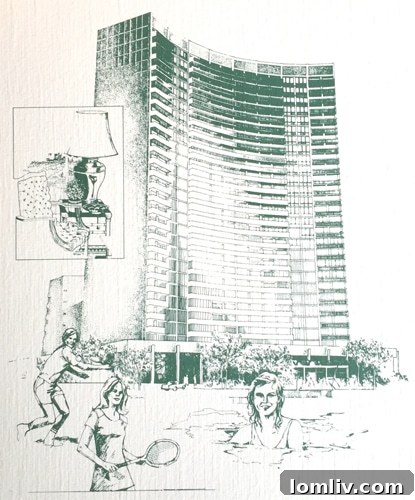
A persistent rumor circulates that Hal Anderson utilized lessons learned from Preston Tower to refine the design and construction of The Athena. While the Dallas Central Appraisal District (DCAD) records both buildings as having been built in the same year, historical evidence suggests otherwise. A compelling photograph from The Dallas Morning News from that era clearly depicts Preston Tower nearing completion, with The Athena still merely a construction site. This visual proof strongly indicates that their online dates must have differed, making the theory of The Athena benefiting from Preston Tower’s earlier construction entirely plausible.
An intriguing tidbit from its early days is that Preston Tower was initially conceived as “The Park Tower.” This might suggest that the 1964 Park Towers, located on Fairmount and the Katy Trail, had not yet been named when plans for Preston Tower were being drafted. Further supporting this timeline, a 1963 article in the Dallas Morning News specifically references “Preston Tower,” even though at that point, it lacked its planned second “tower-ette.” This early naming evolution underscores the dynamic nature of urban development in mid-century Dallas.
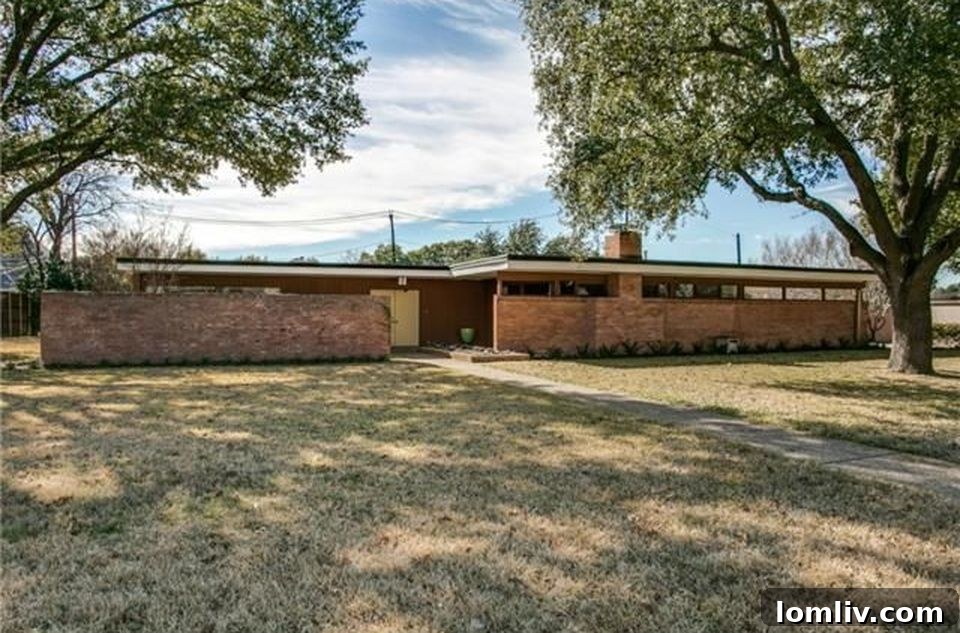
Jacob E. Anderson, born in 1914, was a prominent modernist architect who left a significant mark on Dallas’s landscape. His portfolio includes the distinguished Decorative Center in the Design District, situated at the intersection of Oak Lawn and Hi Line Drive. This building offers a glimpse into the architectural elements that would later define Preston Tower, particularly its grand modernist colonnade. Anderson’s influence extended beyond commercial projects; in 1953, he also designed a stunning 2,729-square-foot single-family residence on Waggoner Drive in Preston Hollow. While it changed hands in 2015, those interested can still explore its interior here.
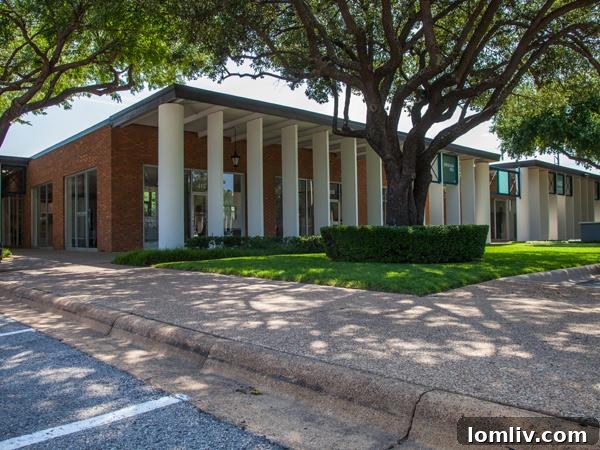
Preston Tower’s Unique Retail Legacy and Evolving Community
Preston Tower has always been an anomaly in the Dallas high-rise scene, primarily due to the unique design of its first two floors. These levels were originally conceived and developed as a vibrant retail mall, a concept that largely persists today. In its heyday, this space buzzed with activity, hosting sophisticated clothing boutiques, bustling hairdressers, a cozy coffee shop, a convenient travel agency, a grocery store, and even a restaurant and club. For many years, a 7-Eleven convenience store anchored the western corner, while the eastern end boasted Chez Arthur, a renowned upscale dining establishment. Today, the commercial spaces have evolved, now housing professional offices for lawyers, accountants, and various independent businesses. However, the tradition of personal services endures, with several hair and nail salons catering to a loyal, built-in clientele. Interestingly, two of these commercial spaces are currently owned by the Immigration and Customs Enforcement agency, a division of the Department of Homeland Security, highlighting the diverse functions this building serves.
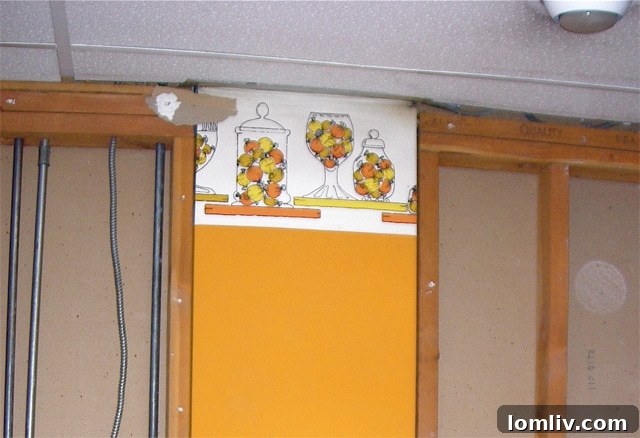
Robert Emery, my long-term resident guide, actually owns a portion of the former 7-Eleven space. During renovations, he uncovered some of its original wallpaper, whose distinctive motif harks back to an era far removed from the modern 7-Eleven experience of Slurpees and endlessly rotating hot dogs. One can imagine the neighborhood’s eager anticipation for the return of a similar convenience or grocery-type store, a sentiment that speaks to the enduring community need for such amenities within a residential high-rise.
Preston Tower was not initially envisioned as a bastion of luxury accommodation. In the mid-1960s, Northwest Highway was, in many respects, considered the periphery of Dallas’s prime real estate. Architect Hal Anderson likely assessed that the area might not sustain the opulent, high-end high-rise developments that were then flourishing in more established upscale neighborhoods like Turtle Creek (home to prestigious addresses such as 3525 Turtle Creek and Gold Crest). This strategic decision influenced the initial unit sizes and overall positioning of Preston Tower in the market.
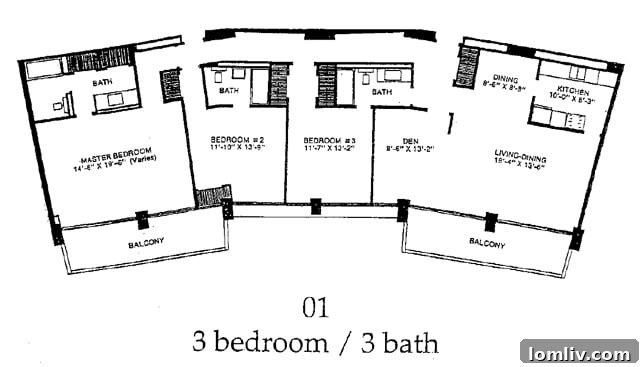
The largest “natural” floor plan in Preston Tower, designated as the “01” units, measures 1,673 square feet, while the smallest, the “03” unit, is a more modest 585 square feet. This contrasts with buildings like 3525 Turtle Creek, where units typically range from 1,193 to 2,497 square feet, underscoring Preston Tower’s initial positioning for a broader market segment rather than ultra-luxury.
However, Anderson’s perspective on the market’s capacity for more luxurious high-rise residences appears to have evolved after Preston Tower’s completion. The Athena, his subsequent project, notably features larger, more upscale floor plans: a 1,543-square-foot, two-bedroom, two-bathroom unit, and a more expansive three-bedroom, three-bathroom unit covering 1,899 square feet. This shift suggests a learning curve and an adaptation to the growing demand for more premium urban living spaces in Dallas.
It’s important to note that, like many buildings of its era, Preston Tower was originally constructed as an apartment complex, not a condominium. The legal framework for condominium ownership was still relatively new and evolving. Consequently, in the 1970s, Preston Tower underwent a condo conversion, a common transition for many Dallas high-rise apartment buildings of that period, allowing individual units to be purchased and owned outright.
An amusing anecdote from Preston Tower’s original design concerns the sheer abundance of doors. The building seemed to have made one particular door manufacturer exceptionally happy! Doors separated kitchens, lined hallways, defined living areas, and sectioned off virtually every space. This design philosophy, reminiscent of older British homes where every room has its own door, was partly driven by the banking practices of the time. Room counts were crucial for construction loan valuations; even a tiny, enclosed four-by-four entryway could be counted as an additional “room,” boosting the perceived value of the property.
The Future of an Icon: Preston Tower’s Enduring Appeal in Dallas
Having celebrated its 50th anniversary, Preston Tower has journeyed through various phases: its initial “sexy” period, a subsequent “tired” phase, and even a period of denying its 1960s modernist roots – much like its contemporary, Star Trek. Today, with mid-century modern design firmly re-ensconced in the public consciousness, Preston Tower is no longer seen as merely old or outdated. Instead, it has ascended to iconic status within Dallas’s architectural landscape. This newfound hipness has brought with it an embrace of its original design and a growing appeal to a more affluent demographic eager to renovate and reside in a classic piece of Dallas history.
Robert Emery estimates that today’s average Preston Tower owner is in their mid-40s. A closer look at DCAD data for owners claiming a homestead exemption reveals that 23% are under 65 years old, while 25% are over. This leaves a significant 53% of owners not claiming a homestead exemption, suggesting a considerable number of units are either second homes or, more frequently, investment rental properties. For many years, Preston Tower units were relatively inexpensive, making them attractive to small investors seeking rental opportunities. This influx of rental units contributes to a diverse and dynamic resident population.
The prevalence of rental units is neither inherently good nor bad; it simply represents a market reality. However, it likely means a younger demographic resides within many of these leased units. Similarly, owner age, in itself, is not a positive or negative factor, provided it doesn’t impede sound long-term planning for the building’s future. Just like a person reaching middle age, a building over 50 years old will require diligent maintenance, occasional significant overhauls, and the financial foresight to fund them. Speaking of design inspiration, it’s fascinating to learn that Preston Tower draws cues from the North Park Shopping Center. The two share a similar age (though not the same architect) and a complementary color palette of materials. When exterior stairs on the building’s western side were recently reconstructed, the team even visited North Park to photograph its brick and capstone stairs for inspiration, ensuring a cohesive and historically respectful renovation.
As a 50-year-old structure, Preston Tower is continually adapting to incorporate newer technologies. For instance, while single-pane windows were the standard in 1966 – notorious for noise and significant heat transfer, especially for south-facing units – many individual owners have upgraded to double-pane windows. Emery confirms that the building itself does not have immediate plans for a full-scale official window replacement program, similar to what 3883 Turtle Creek undertook. However, when individual owners make this upgrade, the building assumes responsibility for future window maintenance costs. This policy is mutually beneficial, as the building realizes substantial savings on overall energy costs, and any future window failures or breakage expenses become a minor consideration in the grand scheme.
Like many high-rises across Dallas, Preston Tower has attracted the attention of telecommunications giants. AT&T, for example, has been actively vying to rewire the building for its U-verse television, internet, and phone services, offering the upgrade at no cost to the building. An incredible perk for residents: because both Time Warner and AT&T maintain antennas on the building’s roof, Preston Tower residents enjoy cable television service completely free of charge. This isn’t merely bundled into HOA dues; it’s genuinely zero cost. This remains a significant advantage for a building that, five decades later, proudly stands as the tallest residential structure for miles around.
Finally, passersby might have noticed the addition of new multi-color LED floodlights that dramatically illuminate the tower’s sides at night. While some observers have likened the display to a “Vegas” aesthetic, I view them as an architectural expression of renewed vitality – a sophisticated “showing a little leg” by a venerable Dallas dame, ensuring she continues to capture the attention of all who pass by, rather than fading into the background.
Happy 50th Birthday, Preston Tower (and Star Trek)! Here’s to another extraordinary half-century of prominence and prestige.
Remember: High-rises, HOAs, and renovation projects are my specialized beat. I also have a deep appreciation for modern and historical architecture, always considering it in balance with the YIMBY (Yes In My Backyard) movement. If you’re interested in hosting a Candysdirt.com Staff Meeting event, I’m your contact. In 2016, my writing was honored with Bronze and Silver awards from the National Association of Real Estate Editors. Do you have a compelling story to share, or perhaps even a marriage proposal to make? Don’t hesitate to reach out via email at [email protected].