Dallas Prepares for 2024 Bond Election: Prioritizing Critical Infrastructure and Community Needs
As Dallas looks ahead to its pivotal 2024 bond election, city officials have underscored a clear priority: the city’s extensive network of streets and transportation infrastructure. This focus was highlighted during a recent briefing, where the initial framework for the upcoming bond package was unveiled. The stakes are high, with the city forecasting a $1 billion bond election, yet identified needs across various sectors soaring to an estimated $14 billion. This significant disparity necessitates meticulous planning, strategic prioritization, and robust community engagement to ensure the bond addresses the most pressing challenges facing Dallas residents and businesses.
Jennifer Nicewander, interim director of Bond and Construction Management, presented the daunting scope of the city’s infrastructure requirements, emphasizing the critical task ahead for the Dallas City Council. Guided by recommendations from a dedicated task force and numerous subcommittees, the council is charged with the complex responsibility of allocating funds and prioritizing projects from the vast list of identified needs. This collaborative process aims to strike a balance between urgent repairs and long-term investments, shaping the future landscape of Dallas.
Streets and Transportation: The Forefront of Dallas’s 2024 Bond Package
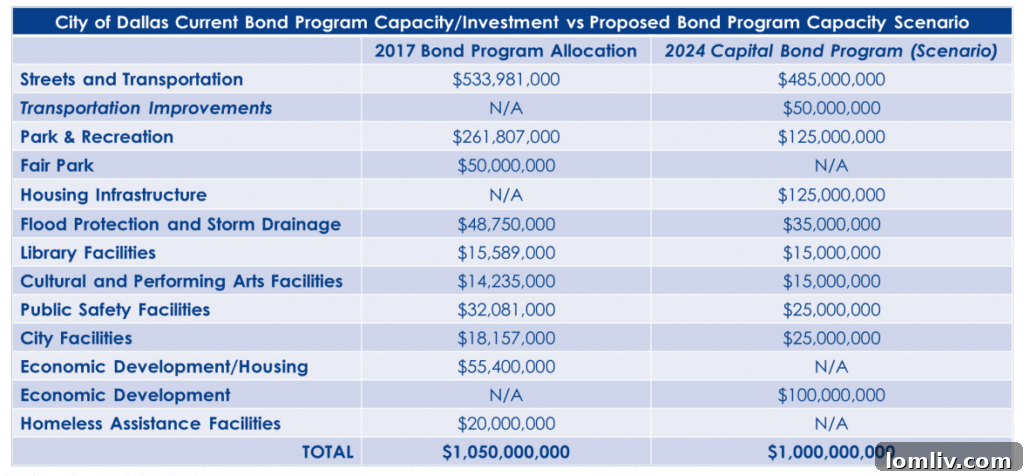
The preliminary proposal from last week’s presentation tentatively earmarks a substantial $485 million for streets and transportation improvements, signaling a strong commitment to enhancing mobility and addressing persistent infrastructure issues throughout Dallas. City Manager T.C. Broadnax articulated that this is merely the foundational stage of a comprehensive process. A Community Bond Task Force and its specialized subcommittees are slated for appointment later this month, tasked with refining these initial allocations and ensuring they align with public sentiment and critical city-wide objectives.
“When you look at this list, obviously the most weighted is streets because that’s what we hear a lot about,” Broadnax explained during the March 1 briefing. He elaborated on a key procedural change for this election cycle: “One thing we did a little differently this year is we broke out streets from transportation improvements.” This distinction allows for a more granular approach to funding, ensuring both direct road repairs and broader mobility enhancements receive appropriate attention. Broadnax also acknowledged the tough choices involved, particularly concerning other vital areas such as housing. “The reality is that we started with $1 billion, similar to last time. If I’m putting in a whole new infusion of housing at $125 million, something is not going to get done at the level it historically has been,” he noted, highlighting the challenging trade-offs inherent in a limited bond package when needs are so extensive. For residents and stakeholders keen to delve deeper into the proposals, all presentations, memoranda, and the project request form for the 2024 bond are readily available online, fostering transparency and public engagement in this crucial civic process.
Strategic Project Scoring: Ensuring Equitable and Impactful Investments
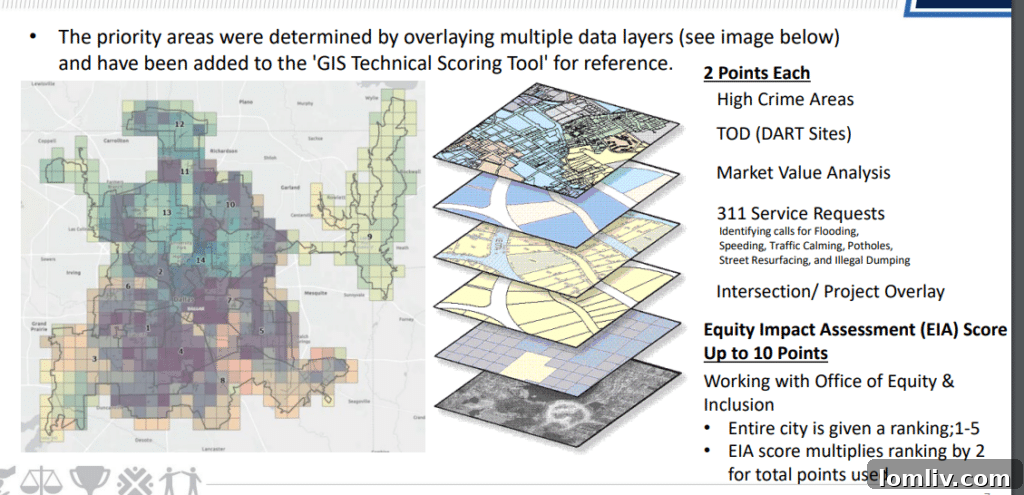
A crucial element of the 2024 Dallas bond package is its meticulously designed project scoring system, aimed at ensuring that funding is allocated equitably and where it will yield the greatest impact. Jennifer Nicewander outlined how priority areas are identified, detailing specific criteria that contribute to a project’s score. For instance, projects located in high-crime areas receive additional points, reflecting a commitment to leveraging infrastructure improvements as a tool for community safety and revitalization. City officials further explained that recurring 311 calls related to infrastructure challenges, such as chronic flooding and persistent sidewalk disrepair, have been meticulously mapped. This data-driven approach allows for a precise understanding of problem areas, ensuring that the bond addresses issues that directly impact residents’ daily lives. Council members have consistently emphasized the significant weight given to these particular areas, ensuring that the bond serves the needs of all Dallas communities.
District 1 Councilman Chad West underscored the profound importance of this transparent and structured approach to project selection. “It’s important to understand the scoring,” West stated, highlighting its long-term implications for the city’s infrastructure. “This is how stuff is going to get repaired over the next 10 years in the city.” This perspective reinforces that the bond package is not just about immediate fixes but about establishing a strategic roadmap for Dallas’s future development and resilience. By clearly defining how projects are evaluated and prioritized, the city aims to build trust with its constituents and ensure that bond funds are invested wisely and effectively, addressing both visible wear-and-tear and underlying systemic issues.
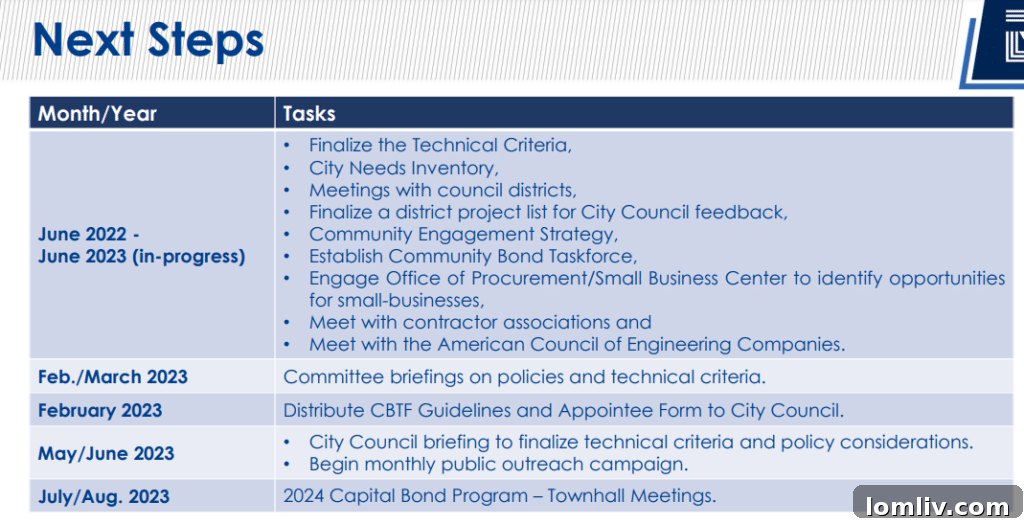
The decision-making architecture for the 2024 bond program is designed to be comprehensive and representative. Nicewander explained that the central Community Bond Task Force, comprising a chair appointed by the mayor and 14 council-appointed members representing each district, will play a pivotal role. This diverse group is expected to recommend the finalized 2024 bond program in January or February of the upcoming year, following extensive review and community input. Ultimately, the Dallas City Council will cast the final votes on the selected projects and their respective financial allocations, a decision that will shape the city’s future for years to come.
While the focus on infrastructure is paramount, some council members voiced concerns about balancing these necessities with broader community and social development goals. District 7 Councilman Adam Bazaldua articulated a powerful sentiment regarding the bond’s potential impact beyond traditional infrastructure. “I look at a bond not as an extension to our general fund but actually making a real impact,” Bazaldua asserted. He questioned the singular emphasis on road repairs, arguing, “If we’re going to continue to invest the lion’s share of these opportunities in our potholes, that’s not going to give grocery stores to my constituents. That’s not going to help the affordable housing opportunities for our most vulnerable. That’s not closing the gap of the haves and have-nots.” His comments reflect a desire for a bond package that not only fixes roads but also strategically addresses socioeconomic disparities and promotes holistic community development, emphasizing the importance of diverse investments that enhance the quality of life for all Dallas residents.
Main Task Force — The Community Bond Task Force will assist the City Manager and the Mayor and City Council in reviewing and selecting projects for the 2024 Capital Bond Program. The Subcommittees will assist the Citizens Bond Program Task Force and staff to identify citywide and district specific projects for each proposition.
Streets — Review and recommend projects that improve streets and mobility such as thoroughfare improvements, street resurfacing, local street improvements, sidewalks, alleys, bridges and traffic signals.
Parks and Trails — Review and recommend projects to improve and enhance park facilities including neighborhood community parks, signature parks, recreation centers, athletic fields, aquatics and trails.
Critical Facilities — Review and recommend projects to improve and enhance critical facilities that serve the public including police, fire, libraries, cultural buildings, and essential City service centers.
Flood Protection and Storm Drainage — Review and recommend projects to improve the City’s overall flood protection and storm drainage system such as pump stations, bridges, levees, channels and erosion control projects .
Economic Development and Housing — Review and recommend a funding strategy to target and foster City-wide redevelopment of commercial areas, transit oriented development projects, permanent supportive housing initiatives, mixed income housing developments and neighborhood revitalization efforts.
Council Members Advocate for Diverse Needs and Long-Term Vision
The preliminary allocations for the 2024 Dallas bond package have sparked a lively discussion among city council members, each advocating for the unique needs and long-term vision for their respective districts and the city as a whole. These discussions highlight the intricate balance required when distributing limited funds across a city with vast and varied requirements, from basic infrastructure to cultural investments and environmental sustainability.
District 12 Councilwoman and Mayor Pro Tem Carolyn King Arnold, for instance, articulated a compelling argument for prioritizing maintenance and repair over what she termed “shiny, new, and ‘sexy'” projects. While new developments often capture public attention and appeal to voters, Councilwoman Arnold underscored the critical importance of sustaining existing infrastructure. Investing in the upkeep and repair of current assets ensures their longevity, prevents costly future failures, and provides continuous, reliable service to residents, reflecting a fiscally responsible and pragmatic approach to urban development.
Meanwhile, District 14 Councilman Paul Ridley brought attention to another vital sector: the local arts community. He noted the presence of over 20 residents representing Dallas’s vibrant arts and cultural institutions at the March 1 briefing, reflecting their concern. Ridley expressed apprehension regarding the tentative allocation of only $15 million for arts and culture in the current bond scenario, especially when their identified total needs amount to almost $90 million. His advocacy highlights the invaluable contribution of the arts to Dallas’s identity, economy, and quality of life, emphasizing that cultural investments are crucial for a well-rounded and thriving metropolis.
Adding another layer to the discussion, District 9 Councilwoman Paula Blackmon raised a pertinent question regarding the initial framework’s apparent omission of dedicated environmental projects. She suggested that perhaps environmental considerations should be viewed “more of a guiding principle than, ‘We’re building a wind farm,’” advocating for their integration into all bond projects. Councilwoman Blackmon stressed the importance of ensuring that Dallas actively complies with its Comprehensive Environmental and Climate Action Plan and sustainability measures. “We’re trying to create projects that have a shelf life and carry us through versus just getting us a short-term fix,” she asserted, advocating for investments that offer lasting environmental benefits and contribute to Dallas’s long-term resilience against climate change impacts.
City Manager Broadnax, in response to these diverse concerns and questions, provided reassurance that the process is still in its early stages and designed to be highly inclusive. He emphasized that council members would have ample opportunity to advocate for their individual districts and priority projects throughout the extensive community engagement process. “When you start to think about why the way this looks today and whether the council is going to have input, we’ve got a whole year and a whole community engagement process,” he stated. Broadnax highlighted that stakeholders would not only review the city’s needs inventories and scoring criteria but would also actively participate in community tours to witness these projects firsthand. “While the scoring will matter at a technical level, many of the decisions they will recommend will be what they see in certain communities and what they don’t see,” he concluded, underscoring the blend of data-driven analysis with on-the-ground community insights that will ultimately shape the 2024 Dallas bond package. This comprehensive and iterative approach is designed to ensure that the final bond program truly reflects the diverse needs and aspirations of Dallas residents, paving the way for a more resilient, equitable, and prosperous future.