Unearthing the Eerie: Where Realty Data Meets the Supernatural in America’s Most Haunted Homes
Every old house has its quirks – the groaning floorboards, the mysterious creaks in the dead of night, the drafts that seem to come from nowhere. We often dismiss these phenomena as the natural settling of an aged structure, the whim of the wind, or simply our imagination playing tricks on us. Yet, what if the persistent ‘thump, thump, thump’ echoing from the attic or the chilling whisper felt on the nape of your neck points to something more profound? What if these aren’t just benign atmospheric conditions, but rather the lingering presence of an unseen resident? The enduring fascination with the paranormal leads many to wonder if certain locations, certain neighborhoods, or even specific homes are more prone to harboring an unexpected, spectral guest.
This intriguing question isn’t just fodder for campfire stories or horror films; it’s a topic that has even caught the attention of real estate analytics firms. Delving beyond mere property values and market trends, some have sought to identify a tangible link between statistical data and the realm of the supernatural. This pursuit leads to a fascinating intersection where the cold, hard facts of property records collide with the spine-tingling possibilities of the afterlife.
The Data Behind the Haunts: RealtyTrac’s Unique Methodology
In a groundbreaking endeavor to quantify the intangible, RealtyTrac, a leading provider of housing market data, embarked on a unique investigation. Their mission: to pinpoint the U.S. Zip codes boasting the highest density of homes most likely to be haunted. But how does one apply empirical data to something as elusive as a ghost? RealtyTrac’s approach was surprisingly pragmatic, focusing on two key indicators:
- Vacant Homes: Properties that are currently unoccupied, potentially allowing for an undisturbed energy or presence to manifest. The stillness of an empty dwelling, devoid of human activity, is often believed to be a conducive environment for paranormal phenomena to become more noticeable.
- Deceased Homeowner: Properties where the previous owner passed away while still owning the home. The theory here, often cited in paranormal lore, suggests that spirits may linger in places they held dear, where their life concluded unexpectedly, or where they feel an unresolved attachment.
By analyzing properties that met both criteria – a home standing vacant with a deceased owner – RealtyTrac theorized they could identify locations statistically more prone to supernatural activity. This methodology, while unconventional from a traditional paranormal investigation standpoint, offers a compelling data-driven lens through which to view the prevalence of potential hauntings. It proposes that the emotional energy tied to a life’s end, coupled with the stillness of an empty dwelling, creates an environment ripe for spectral phenomena. This innovative approach moves beyond anecdotal evidence, attempting to map the unseen world using the very fabric of our real estate infrastructure.
The results of their extensive analysis revealed some startling trends across the nation. While various cities and regions showed significant concentrations, one area prominently topped their list: Mobile County, Alabama, where a staggering one in 89 homes met RealtyTrac’s criteria for being ‘likely haunted.’ This placed Mobile County firmly on the map as a potential epicenter for unexplained occurrences. However, the study also cast a spectral spotlight on other major metropolitan areas, including two prominent Texas cities known for their rich history and vibrant communities: Dallas and Fort Worth. These urban hubs, it turned out, harbored several Zip codes with surprisingly high ratios of these ‘haunted’ properties, prompting a closer look into their eerie underbellies.
Dallas’s Haunting Hotspots: Unveiling Zip Code 75216
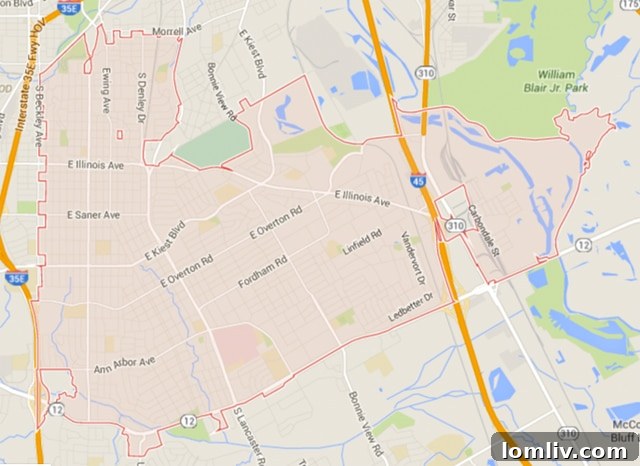
For those residing in or near Dallas, Texas, the data pointed to a particularly chilling concentration of potential paranormal activity within the 75216 Zip code. This area, encompassing a significant portion of South Dallas, is home to approximately 49,342 residents. Amidst this bustling community, RealtyTrac’s analysis uncovered a remarkable 36 vacant homes where the previous owner had passed away. This translates to an intriguing statistic: roughly 1 in every 537 homes within 75216 is considered likely to be haunted.
South Dallas, a district rich in history and culture, has undergone significant transformations over the decades. Its aging infrastructure, diverse architectural styles – from charming bungalows to more stately historic homes – and evolving demographics contribute to a complex urban tapestry. The prevalence of vacant homes with deceased owners in this particular Zip code might be attributed to several factors. These could include an aging population, where properties are left unoccupied after residents pass on, sometimes without immediate heirs or quick sales processes. Economic shifts and urban development patterns can also play a role, leading to periods where certain properties remain dormant and become ripe for the ‘haunted’ designation.
The idea that nearly 1 in 500 homes in this vibrant part of Dallas might harbor a restless spirit adds a layer of mystery to daily life. Imagine purchasing a property in this area, drawn by its character and affordability, only to find yourself sharing it with an unexpected, non-corporeal tenant. Whether it’s the gentle creak of a rocking chair in an empty room, the faint scent of an old perfume, or the inexplicable feeling of being watched, the statistics from RealtyTrac invite residents and prospective homeowners in 75216 to consider the unspoken history that might be woven into the very foundations of their homes.
Fort Worth’s Otherworldly Address: Zip Code 76104
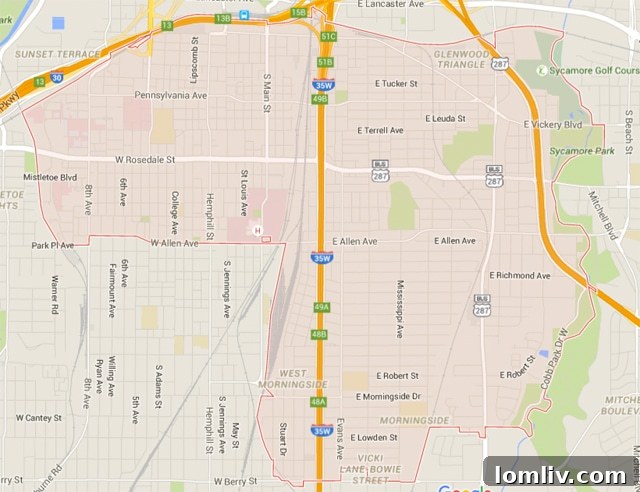
Crossing over to Fort Worth, another compelling cluster of potentially haunted properties emerges in the 76104 Zip code. This area, less densely populated than Dallas’s 75216 with approximately 16,020 residents, encompasses the historic Near Southeast, Hillside, and Morningside neighborhoods. Here, RealtyTrac’s data is even more striking: 27 homes were identified as vacant with a deceased owner, leading to an astonishing 1 in 262 chance of acquiring a home likely to be haunted.
The neighborhoods within 76104 are steeped in Fort Worth’s rich heritage, characterized by their diverse community fabric and a mix of historical and more modern residences. Areas like Hillside and Morningside have witnessed generations of families, significant social changes, and countless personal stories unfold within their boundaries. The higher concentration of ‘haunted’ properties here, compared to Dallas’s mentioned Zip code, suggests a particularly poignant demographic trend or historical legacy. Perhaps these older, established communities, with homes passed down through families, are more likely to see properties become vacant upon the original owner’s passing, especially if heirs are distant or unable to manage the estate immediately, leading to a prolonged vacancy.
For potential homebuyers in Fort Worth’s 76104, this statistic presents a truly unique consideration. The prospect of a 1 in 262 chance of purchasing a home with a lingering past is undeniably captivating. It invites curiosity about the lives lived within those walls and the energies left behind. Whether you’re a skeptic or a firm believer in the spectral realm, the data from RealtyTrac transforms the seemingly mundane act of home buying into a potentially thrilling encounter with the unknown. It urges us to look beyond the number of bedrooms and bathrooms, and ponder the deeper, perhaps otherworldly, history each property holds.
Beyond the Numbers: The Enduring Allure of the Haunted Home
Whether the hairs on the back of your neck are standing up or you remain a steadfast skeptic, the data presented by RealtyTrac offers a fascinating lens through which to explore the intersection of the tangible world of real estate and the intangible realm of the paranormal. While their methodology provides a statistical probability rather than definitive proof of a haunting, it undeniably taps into a universal human curiosity about what lies beyond our immediate perception.
The concept of a ‘haunted home’ carries a unique allure, captivating thrill-seekers, paranormal investigators, and even casual observers. These properties often become subjects of local lore, sparking stories and legends that are passed down through generations. For some, the idea of living in a haunted house is a terrifying prospect; for others, it’s an exhilarating adventure, a chance to connect with history in a truly unique way. This dual appeal speaks volumes about our complex relationship with the unknown and our desire to find meaning and mystery even in the most ordinary of places.
Ultimately, RealtyTrac’s study doesn’t just list Zip codes; it ignites a conversation. It challenges us to consider the hidden stories within our neighborhoods, the legacies left behind by previous inhabitants, and the possibility that some homes truly hold more than just memories. So, the next time you hear an unexplained noise in your home, or consider purchasing a property with a vacant history, remember the intriguing statistics from Dallas and Fort Worth. You might just be moving into a place where the past isn’t quite ready to let go, adding a thrilling, if spooky, chapter to your own life story.