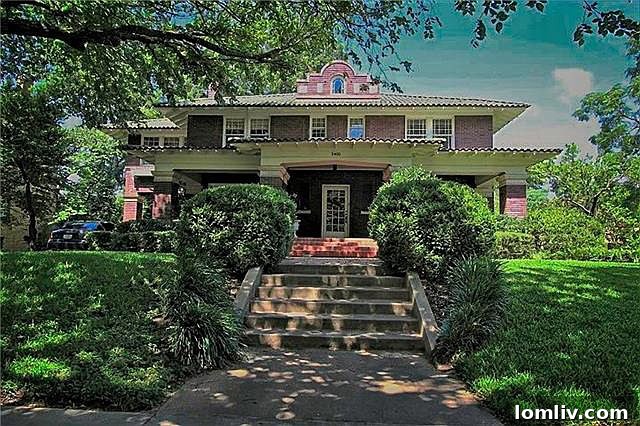
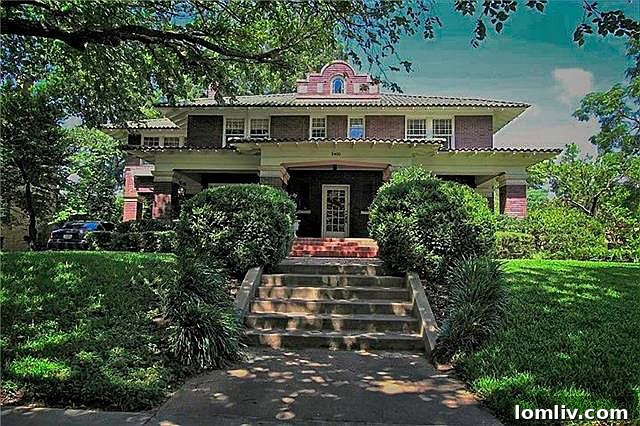
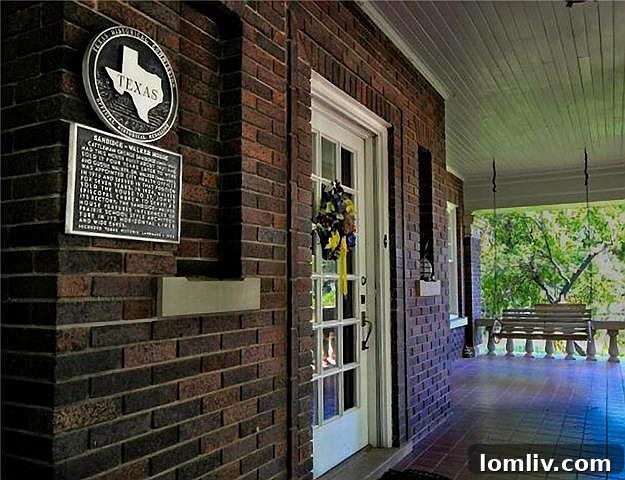
Nestled in the heart of Fort Worth’s prestigious Ryan Place neighborhood, the Sandidge-Walker House at 2420 College Avenue stands as a magnificent testament to early 20th-century architectural grandeur and a vibrant piece of Texas history. Built by the prominent cattleman George Sandidge, this distinguished residence has witnessed over a century of stories, from hosting legendary figures to undergoing meticulous restoration, cementing its status as a Recorded Texas Historic Landmark since 1986.
George Sandidge, a figure of considerable influence in the burgeoning Fort Worth cattle industry, commissioned the house with a vision of enduring elegance, though he resided there for only four short years. Despite his brief tenure, the home quickly became a social hub, famously welcoming Will Rogers, the beloved humorist and cowboy philosopher, as a frequent guest. This connection underscores the house’s early prominence and its role in the social fabric of Fort Worth. Following Sandidge’s ownership, the property passed into the hands of Dr. Gussie Walker, a trailblazing woman who served as Fort Worth’s City Health Officer. Her ownership further distinguished the house, associating it with civic leadership and progressive spirit. In 1954, the house began a new chapter, serving as the rectory for the nearby St. John’s Episcopal Church, a period that, while preserving the structure, left its mark on the interior in ways that required future attention. The current owners acquired this historic gem from the church, embarking on a remarkable journey of preservation and revitalization.
“It wasn’t in great shape when we bought it,” owner Judy Robinson candidly shared, recalling the state of the property. “Repairs and electrical work weren’t professionally done. Work was mostly done by church volunteers.” This observation highlights the common challenges faced by stewards of historic properties, particularly those with a long institutional history where maintenance often prioritizes function over professional restoration standards. Recognizing the deep historical value and structural needs of the home, owners Steve and Judy Robinson undertook a comprehensive and crucial restoration. In 1996, they meticulously rewired the entire 3,800-square-foot structure, a monumental task that not only brought the house up to modern safety standards but also preserved its integrity for future generations. This extensive electrical overhaul was more than just a repair; it was an investment in the longevity and safety of a historic landmark, a testament to their dedication to its preservation.
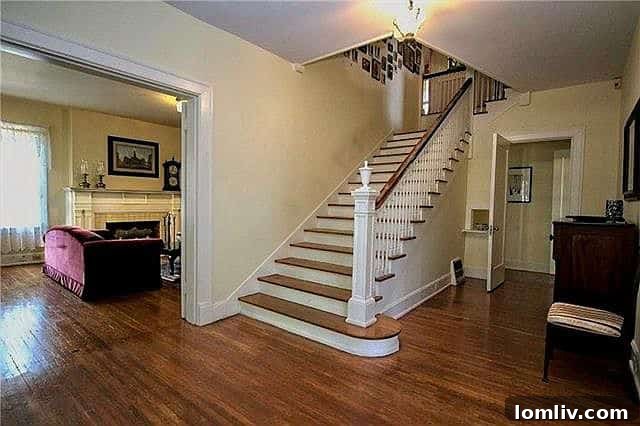
Stepping into the Sandidge-Walker House, one is immediately enveloped by a sense of history and spaciousness. Adjectives like ample, airy, spacious, and sun-drenched spontaneously come to mind, perfectly describing the atmosphere that greets visitors. The architectural style, a harmonious blend of Eclectic, Prairie Style, and Revivalist influences, speaks volumes about the early 20th-century American aesthetic. The Prairie Style, known for its emphasis on horizontal lines, open floor plans, and integration with the landscape, provides a sense of calm and expansiveness, while Revivalist elements introduce classical dignity and intricate detailing. This unique fusion creates a home that feels both grand and inviting, an architectural marvel of its time. A shallow vestibule upon entry ingeniously allows the visitor to immediately take in the vastness and elegant flow of the 3,800-square-foot house, offering a captivating glimpse into its well-proportioned layout.
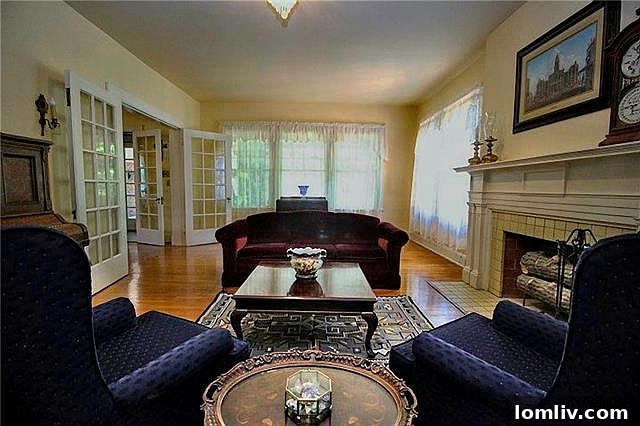
To the foyer’s left, the deep living room unfolds, a testament to formal entertaining and gracious living. Its generous dimensions offer ample space for various seating arrangements, perfect for hosting gatherings or enjoying quiet evenings. Behind this stately room lies a cozier sitting room, often functioning as a library, where the current owners confess to spending most of their time. This more intimate space provides a warm, personal retreat, contrasting beautifully with the expansive living area and offering versatility in how the home is enjoyed.
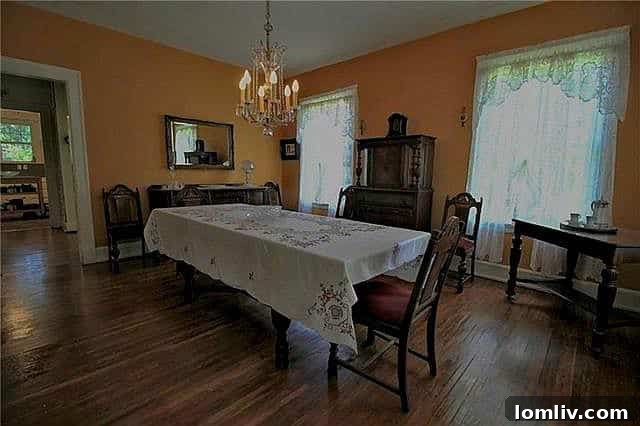
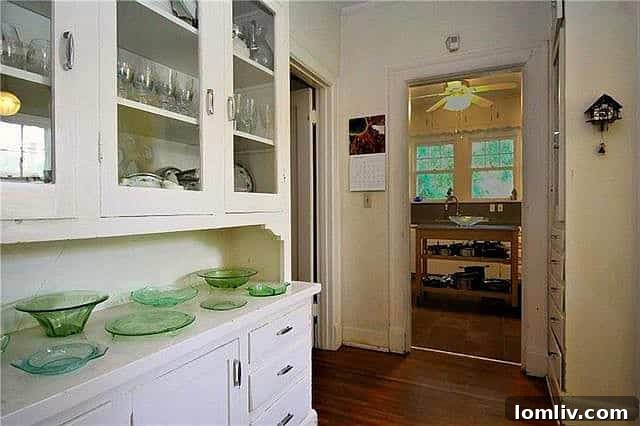
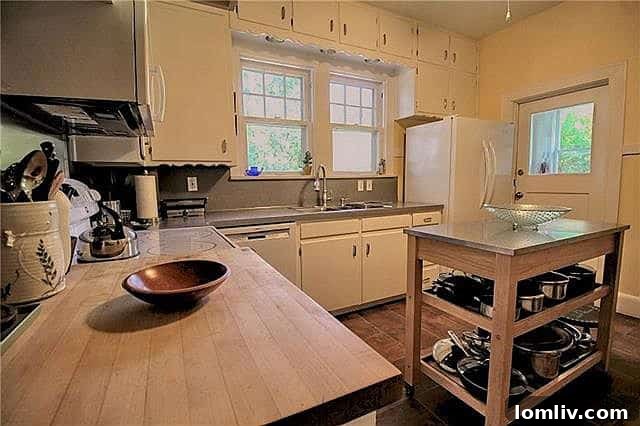
Continuing the journey through the ground floor, a vintage butler’s pantry, a hallmark of homes built for elegant entertaining, connects seamlessly to a charming breakfast room on the right, which then leads into the main kitchen area. This sequence of spaces reflects a historical approach to household functionality and service. While some modern remodelers might be tempted to merge these distinct areas into a single, vast mega-kitchen, such an approach often sacrifices the unique character and historical integrity that define homes like the Sandidge-Walker House. Indeed, many contemporary renovations tend to create kitchens far larger than truly necessary, sometimes at the expense of other functional spaces. Here, the vintage cabinets offer immense potential; with a fresh coat of a “jazzy” color—perhaps a bold emerald green or a sophisticated navy blue—they could be revitalized to complement modern tastes while preserving their original charm. Admittedly, the existing surfaces and appliances could benefit from an update to match the home’s overall grandeur and the expectations of a discerning buyer, presenting an exciting opportunity for personalization and modernization that respects the past.
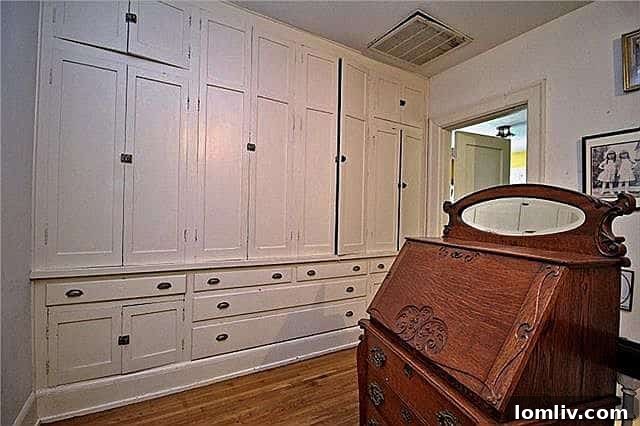
Ascending the stately staircase reveals yet another original detail that underscores the home’s thoughtful design: an impressive, expansive linen cabinet. This built-in masterpiece stretches the entire length of the longest wall, offering abundant storage and serving as a striking architectural feature in itself, a testament to the craftsmanship prevalent during the home’s construction. The house was designed by the acclaimed Wiley G. Clarkson, a name that looms large in the architectural history of both Ryan Place and Fort Worth generally. Clarkson’s distinctive style, characterized by a blend of traditional elegance and modern practicality, shaped many of Fort Worth’s most iconic buildings and residences. His involvement in the Sandidge-Walker House imbues it with an additional layer of historical significance and architectural pedigree, making it a valuable piece of his enduring legacy.
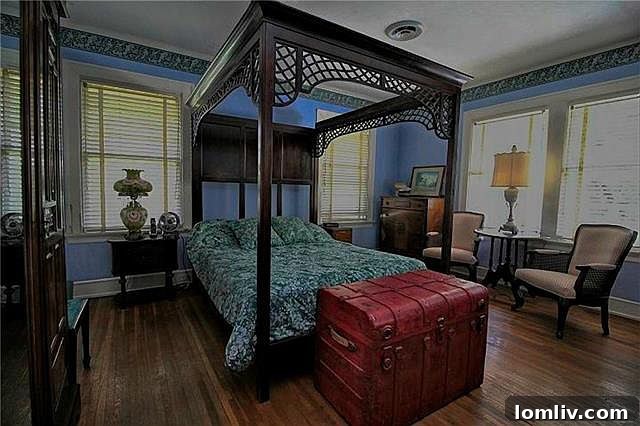
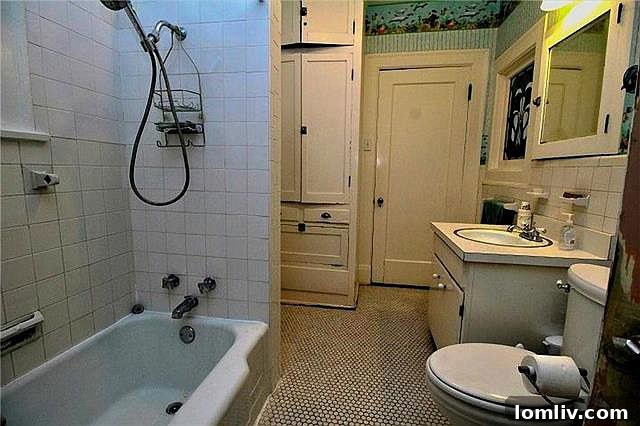
The upper floor adheres to a classic “four-square” layout, a popular design scheme of the era, meaning it features four bedrooms of approximately equal size, each situated at a corner of the house. This layout maximizes natural light and provides a sense of symmetrical balance and individual privacy, ideal for family living. Complementing these generous sleeping quarters are two full bathrooms on the second floor, alongside a convenient powder room on the ground floor. Like the kitchen, these bathrooms, while functional, present an exciting opportunity for a discerning buyer to infuse modern luxury while respecting the home’s historic charm. Imagine updates incorporating period-appropriate tile work, elegant fixtures, and spa-like amenities that blend seamlessly with the home’s original character, transforming them into sanctuaries of comfort and style.
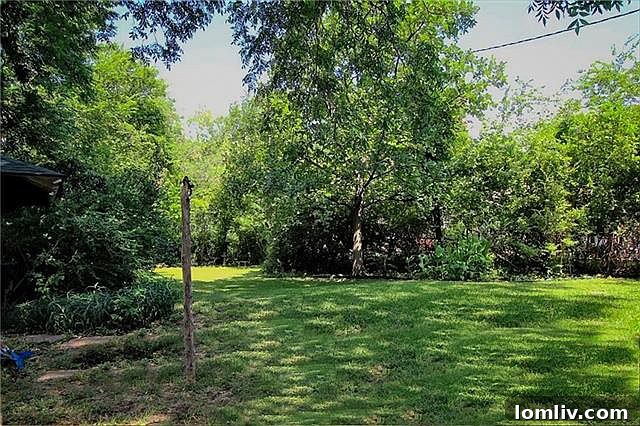
Beyond its magnificent interiors, the property at 2420 College Avenue offers an equally impressive exterior. Lots on College Avenue are celebrated for being among the deepest in Ryan Place, providing expansive grounds and numerous opportunities for the avid gardener or those seeking a private outdoor sanctuary. The rear of the property unveils a hidden garden within a garden, a delightful secret space complete with a charming little pond, evoking a sense of tranquility and an ideal setting for relaxation or intimate gatherings. This lush, verdant retreat is a rare find in an urban setting, offering both beauty and privacy. Another significant and recent enhancement that adds immense value to this historic home is the installation of a new, state-of-the-art Ludowici tile roof. This isn’t just any roof; the $200,000 investment in Ludowici tiles, renowned for their unparalleled durability, aesthetic beauty, and historical accuracy, ensures decades of protection and authentic appeal. A Ludowici roof is a hallmark of luxury and enduring quality, a testament to the commitment to preserving the home’s integrity and value.
This exceptional property, a blend of historical grandeur and potential for personalized modern luxury, is currently being offered by Sharyn Marrone of Keller Williams. For those seeking to own a significant piece of Fort Worth’s architectural heritage and reside in one of its most desirable neighborhoods, 2420 College Avenue represents an unparalleled opportunity at $699,500.
About Ryan Place: A Community Unrivaled in Fort Worth
Having called Ryan Place home for many years, I often reflect on what makes this neighborhood truly special. It’s more than just historic homes and tree-lined streets; it’s the tangible sense of community, a unique blend of neighborly care and collective responsibility. This year, my decision to move my parents into the neighborhood was made with utmost confidence, knowing they would be safe and genuinely looked after. Ryan Place isn’t just a collection of houses; it’s a tightly knit community, often characterized by what I affectionately call “benevolent busy-bodies” – residents who genuinely look out for one another. True to form, within weeks of their impending arrival in October, it seemed every immediate neighbor already knew about my parents, a testament to the powerful local grapevine and inclusive spirit.
For over four decades, Ryan Place has been fortified by an exceptionally strong neighborhood association, the Ryan Place Improvement Association (RPIA). This formidable organization, currently led with remarkable capability by Tim Keith, has played a pivotal role in maintaining the neighborhood’s charm, safety, and vibrant community life. The RPIA’s efficacy was recently highlighted on a national stage, following an incident that profoundly impacted the community. On May 19, in an unusually brazen and terrifying attack, an 8-year-old girl was snatched from her mother in the 2900 block of 6th Avenue. The brave mother, attempting to free her daughter, was tragically thrown from the kidnapper’s car. The sheer speed and effectiveness of the Ryan Place community’s response that day underscored its extraordinary cohesion and resourcefulness. Within mere minutes, residents began sharing crucial tips and information on The Ryan Place Facebook Page, activating an immediate, organic search network. Home video surveillance footage quickly yielded the suspect’s license plate, a critical piece of evidence. Neighbors mobilized, diligently searching the area until the car was located. Remarkably, the girl was found and freed in approximately eight hours, a testament to the collective power of an engaged community.
Recalling the events, Tim Keith shared, “A reporter asked if I was surprised she was found so quickly. No, I said not here in Ryan Place.” This statement perfectly encapsulates the spirit of the neighborhood – an expectation of mutual support and swift action. However, the incident also brought to light significant shortcomings in the official City of Fort Worth’s Amber Alert system, which proved cumbersome, outdated, and flawed, potentially delaying crucial recovery efforts. In response to this grave concern, a high-profile special neighborhood association meeting was convened to review the events of May 19. Attended by the chief of police and local press, this meeting served as a powerful platform for community advocacy. A positive and essential outcome of this very disturbing event is the city’s pledge to streamline and modernize its notification and alert execution systems, ensuring that such delays do not hinder future emergency responses. Kudos to my neighborhood, Ryan Place, for its unwavering spirit, its powerful sense of community, and its tireless efforts to ensure the safety and well-being of all its residents.
Eric Prokesh is an interior designer whose transformative work has graced the screens of HGTV and been featured in prestigious books and publications including D Home, Southern Accents, House Beautiful, and House and Garden. In January 2005, HGTV recognized Eric as one of the 50 tastemakers in America, a testament to his innovative vision and enduring influence. D Home has consistently included him as one of Dallas’ Best Designers for an impressive 10 years, further solidifying his reputation in the design world. Having lived most of his life in Dallas, he now proudly calls Fort Worth home and is one of our trusted experts on the beautiful Fort Worth Dirt. His own residence on historic Elizabeth Boulevard has been prominently featured in 360 West, showcasing his impeccable taste and deep appreciation for architectural beauty.