Navigating Property Taxes: A Tale of Two Cities – Hawaii’s Flexibility vs. Dallas’s Rigidity
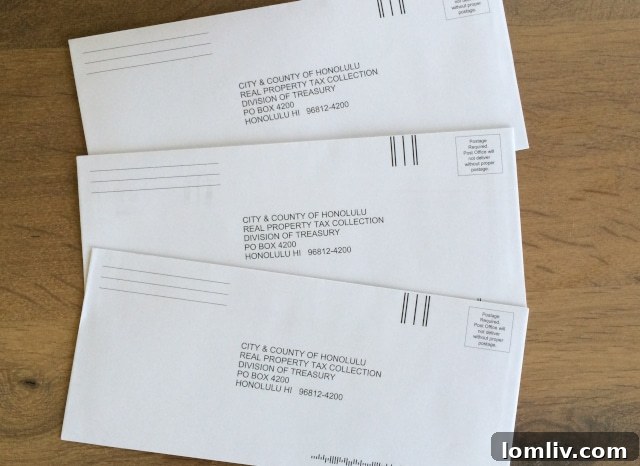
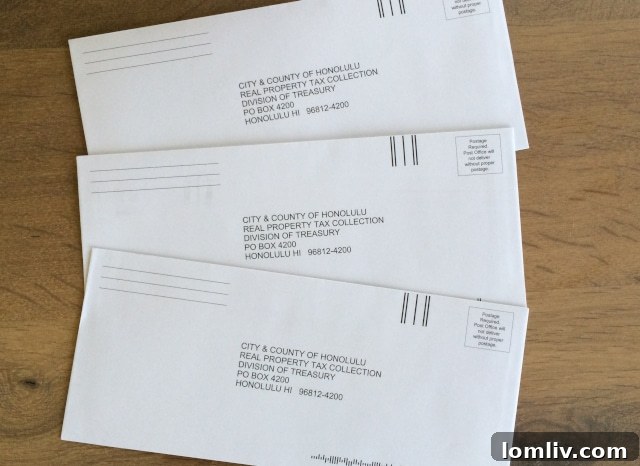
The annual arrival of property tax bills is rarely a welcome sight, often triggering a sense of dread for homeowners. For those with second homes or investment properties, the burden can feel even more pronounced. Recently, I encountered a striking contrast in property tax administration that brought this issue into sharp focus. The bill for my second home in Hawaii arrived, and its unusual thickness immediately caught my attention. Expecting a simple statement, I was surprised to find not just a sheaf of papers, but four separate envelopes spilling out. Initially, I dismissed it as a mechanical error in the mailroom – perhaps a stuffing machine hiccup. However, as I soon discovered, this was no accident; it was a deliberate and thoughtfully designed system aimed at providing greater financial flexibility to property owners.
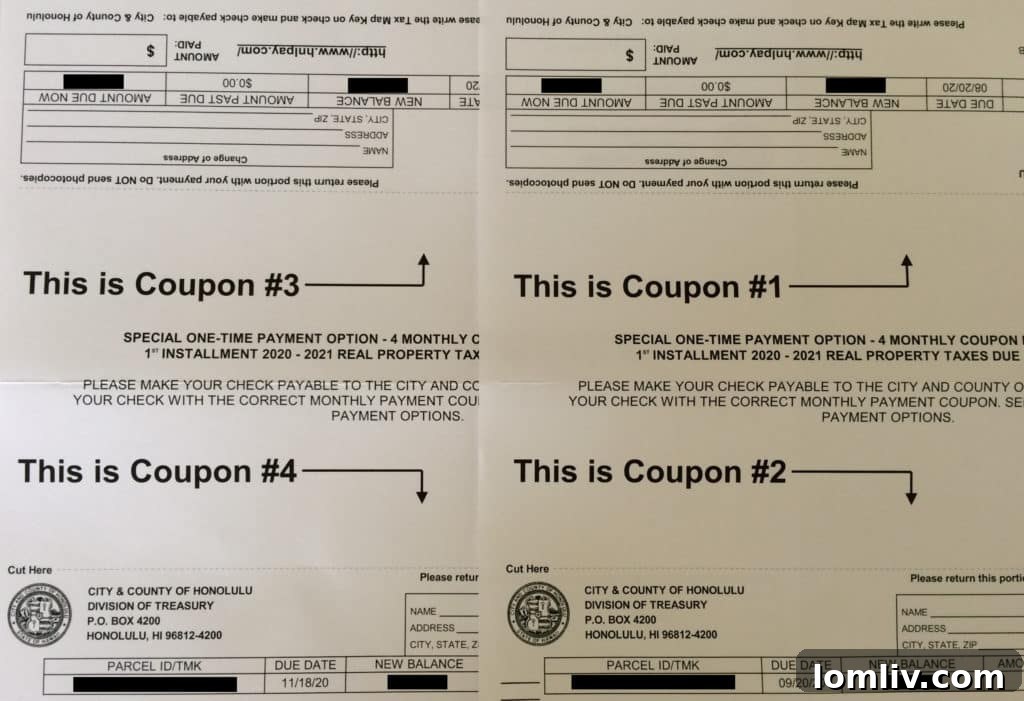
Hawaii is renowned for many things, and among them are its remarkably low property tax rates. To illustrate this point, my Honolulu tax bill reflected a payment amount equivalent to a mere $2.78 per square foot. This stands in stark contrast to Dallas, where a comparable property would incur a rate of $7.72 per square foot. It’s worth noting that the overall market values of these two properties are within $100,000 of each other, with the Dallas property holding the lower valuation. Despite these comparatively modest tax obligations, Honolulu County has implemented a progressive system that offers property owners the option to divide their payments into more manageable installments. Unlike Dallas, where a single annual payment is the norm (with a semi-annual option for a specific subset of taxpayers), Hawaii already breaks its payments into two halves – one due in August and the other in February. The four envelopes included in my bill were designed to further subdivide each half of the annual payment into four smaller, more digestible chunks. If this system continues into subsequent billing periods, it would effectively allow property owners to make eight equal payments for a full year’s property taxes. This innovative approach demonstrates that Honolulu isn’t sacrificing a dime in revenue; rather, it’s empowering owners to make smaller payments, especially crucial during times when incomes might be reduced or severely constrained. This proactive scheme could be instrumental in helping more residents remain in their homes, preventing financial distress and foreclosures.
The question naturally arises: Why doesn’t a major metropolitan area like Dallas offer similar flexibility? The answer, as we shall explore, reveals some fascinating insights into tax collection policies and local governance. Some more cynical observers might interpret Hawaii’s move as a shrewd strategy by the county to secure some funds upfront before widespread personal financial difficulties potentially escalate – a pragmatic “something is better than nothing” approach. Regardless of the underlying motivations, this system undeniably provides homeowners with essential breathing room when they need it most, all without imposing any additional financial cost on the county beyond the administrative patience required to manage multiple payments.
The Dallas Property Tax Landscape: Understanding Current Options
To understand why Dallas operates differently, I reached out to John Ames, the Dallas County Tax Assessor. It’s important to clarify that while Mr. Ames holds the title of Assessor, his primary role is that of a collector, as he doesn’t set tax rates or assess property values. He explained that Dallas County does offer a few options for homeowners grappling with substantial bills, particularly when funds are low. However, these options often come with specific conditions or are available only to certain demographics.
Firstly, property tax bills in Dallas are typically mailed out in October and are due by January 31st of the following year. While this period spans roughly four months, homeowners are not restricted to making a single lump-sum payment on the due date. Mr. Ames confirmed that taxpayers are welcome to make multiple, partial payments during these four months. This informal payment plan can be particularly beneficial for those who prefer to spread out the financial impact rather than face a large single payment. For example, if you know you might be tempted to overspend during the holiday season, you could make an early payment towards your taxes in November. Similarly, if you anticipate receiving a bonus, a significant commission, or an irregular payment from the government, you have the flexibility to apply these funds towards your property taxes as they become available. This proactive approach can help mitigate the stress of the January 31st deadline and ensure that funds are allocated appropriately before other expenses arise.
What happens if you can’t pay your entire tax bill by January 31st? It’s crucial to understand that interest accrues only on the unpaid portion of your tax bill. Therefore, even if you can only manage to pay a fraction of the total amount, doing so will significantly reduce the interest penalties you might incur on the remaining balance. Every dollar paid helps to minimize the financial repercussions of delinquency. It’s also vital for homeowners to be aware that delinquent accounts for residential property taxes are formally turned over to the county’s attorney on July 1st, initiating a more severe collection process that can lead to legal action and further penalties.

The Homestead Payment Agreement: A Limited Lifeline
For homeowners facing genuine financial hardship, Dallas County offers a program known as the Homestead Payment Agreement. This option allows eligible homeowners, once every three years, to request monthly installment payments without incurring penalties. However, there’s a significant catch: according to House Bill 1597, this agreement is exclusively applicable to delinquent taxes. This means that homeowners who foresee a problem and wish to proactively set up a payment plan *before* their taxes become overdue are, unfortunately, not eligible for this specific agreement. This reactive nature of the program often puts homeowners in a precarious position, forcing them to become delinquent before they can access a structured payment plan.
The practical advice for those needing to utilize this agreement would be to ensure you are on the assessor’s doorstep on February 1st – the day after the payment deadline – to minimize any non-payment penalties that would otherwise accrue until the installment agreement is officially established. These payment plans can range from 12 to 36 months, with each installment being an equal amount. While this provides a much-needed reprieve, it comes with a strict condition: missing even a single payment can lead to severe consequences. Penalties, which can accumulate up to 35 percent of the total outstanding balance, will be added, potentially exacerbating the financial burden the homeowner was trying to alleviate in the first place. This emphasizes the need for meticulous financial planning and commitment once such an agreement is in place.
Tailored Options for Senior Citizens in Dallas
Older Dallasites, specifically those aged 65 and above, benefit from a broader range of property tax relief options, acknowledging their often fixed incomes and unique financial circumstances. Senior homeowners can split their homestead property tax bill into four quarterly payments without incurring any penalty or interest. This provides a significant advantage, allowing for easier budgeting throughout the year compared to the single-payment requirement for younger taxpayers. Furthermore, the local government has the authority to permit eligible homesteaders to “perform service” for the government in lieu of paying taxes, as outlined in Tax Code Section 31.035. While less common, this innovative program offers a non-monetary pathway for seniors to meet their tax obligations, fostering community engagement and providing valuable services to the city. The types of services typically involve administrative tasks, community outreach, or support roles within various governmental departments, depending on the needs of the city and the skills of the volunteer.
Perhaps the most comprehensive option available to seniors is the ability to defer their property taxes completely. After reaching the age of 65, homeowners can cease paying property taxes altogether, with the understanding that these accumulated taxes (plus interest) will be settled out of their estate upon their passing or when the home is eventually sold. This deferral provides immense relief, allowing seniors to enjoy their golden years without the constant specter of annual property tax bills. However, this convenience does come with a cost: a five percent interest rate accrues annually on the unpaid balance. While beneficial for immediate cash flow, this rate can accumulate significantly over many years, impacting the ultimate value of the estate. For comparison, friends in Vancouver, Canada, report that their similar tax deferral system charges a much lower rate, often around 1 percent. This discrepancy highlights a potential area for policy review in Texas, where a lower interest rate could make the deferral option even more attractive and equitable for seniors.
Support for Disabled Individuals and Veterans
Recognizing the sacrifices and challenges faced by specific groups, Dallas County also extends special property tax provisions to disabled individuals and disabled veterans (including their unmarried surviving spouses). These eligible taxpayers can apply for a payment plan, similar in principle to the Homestead Payment Agreement, but with a crucial distinction: they can request a payment plan with their first non-delinquent payment, ideally pre-February 1st. This proactive eligibility allows them to avoid the delinquency trap that general homeowners face when seeking installment options. Like seniors, these same groups are also afforded the important flexibility to defer their property tax payments, providing essential financial stability and peace of mind during potentially challenging circumstances.
Exploring Uncommon Avenues for Tax Relief
Beyond the more conventional payment plans and deferral options, Texas Tax Code also outlines some truly unique and lesser-known pathways for property tax relief, particularly involving community service. In addition to seniors being able to volunteer services in lieu of taxes, school districts possess the authority to allow qualified volunteers to “teach their way out of taxes” on their homestead property. Under Tax Code Section 31.036, an individual might be able to offer their skills and time as an educator at a junior high or high school district, effectively offsetting their property tax liability. This program could benefit retired educators or professionals with valuable expertise who wish to contribute to their local schools while simultaneously managing their tax burden. Even more unconventionally, Tax Code Section 31.037 permits an employer to volunteer their employees’ services to the school district as a means of offsetting business property taxes. This intriguing provision could foster unique partnerships between local businesses and educational institutions, providing valuable resources and support to schools while offering a novel form of tax relief for companies.

The Case for Bi-Annual Split Payments in Dallas: A No-Brainer?
As this discussion began with the example of Hawaii’s progressive payment options, it’s imperative to revisit the fundamental question: Why doesn’t Dallas offer at least bi-annual split payments for all taxpayers, a system that demonstrably eases the financial strain? Texas is notorious for its frighteningly high property tax bills, yet Dallas continues to demand a single lump-sum payment, often coinciding precisely with the demanding holiday season – a truly “Ho-Ho-Ho” moment for taxpayers, albeit usually one filled with more dread than cheer. This scheduling can exacerbate financial stress during a period already marked by increased spending, making it incredibly challenging for many households to budget effectively.
The good news is that the framework for offering greater flexibility already exists within state law. According to Texas Tax Code Section 31.03, the governing body of a taxing unit that collects its own taxes is permitted to allow a person to pay one-half of their taxes by November 30th and the remaining one-half by June 30th, without incurring any penalty or interest. This state-level provision clearly opens the door for local entities to adopt a more taxpayer-friendly approach. So, if the state allows it, what’s preventing Dallas from implementing such a common-sense solution?
Mr. Ames clarified that while the state allows split payments, this flexibility must be actively enabled by the local taxing body. In Dallas’s case, this would require a consensus among several key entities: the Dallas County Commissioners Court, the City Council, the Dallas Independent School District (DISD), the Hospital District, and potentially every other local entity that receives a portion of property tax revenue. Each of these bodies would need to agree to enable split payments. This multi-layered approval process, while ensuring comprehensive buy-in, can also be a significant hurdle to implementing change.
However, advocating for this change seems like an absolute no-brainer, particularly in the current economic climate, where financial stability for families is more critical than ever. Implementing bi-annual payments would provide immense relief to countless homeowners struggling with large tax bills. It would smooth out cash flow for families, reduce the likelihood of delinquency, and foster greater goodwill between residents and their local government. The administrative burden, while present, is surely manageable, especially when weighed against the significant benefits to the community. How about it, City Hall? If the City Council were to pass a resolution endorsing split payments, it is highly probable that the other taxing entities would follow suit, if only to avoid negative public perception and demonstrate their commitment to taxpayer welfare.
This is a fundamental convenience that directly benefits taxpayers without costing the local government a single dime in revenue – it’s merely a change in the timing of revenue collection. What’s not to love about a policy that improves financial stability for residents and potentially reduces delinquency rates? If the thought of facing a massive property tax bill every January fills you with dread, now is the time to act. Reach out to your city council member, your county commissioner, and the representatives of your school and hospital districts. Advocate for this sensible change. It’s truly perplexing that a major city like Dallas continues to lag behind in offering such a basic, yet impactful, form of financial flexibility to its hardworking citizens.