Reimagining North Oak Cliff: The Vision for Tyler and Polk Streets’ Two-Way Conversion
North Oak Cliff, a vibrant and historic neighborhood in Dallas, stands at a pivotal moment in its urban development. The city, in collaboration with its residents, embarked on an ambitious project to transform Tyler and Polk Streets. For decades, these thoroughfares have functioned as a pair of one-way streets, shaping the flow of traffic and pedestrian experience in distinct ways. However, a significant conversation began to unfold concerning their potential conversion back to a two-way system—a move that promises to revitalize the area and enhance its livability. This discussion isn’t isolated; similar considerations are being made for other key Dallas arteries like McKinney and Cole, signaling a broader commitment to progressive urban planning.
The proposed redesign for Tyler and Polk Streets represents a profound shift in urban philosophy, moving from car-centric efficiency to a more balanced approach that prioritizes community, safety, and economic vitality. This initiative provides an invaluable opportunity for residents, local businesses, and visitors to shape the future of North Oak Cliff. Whether you live, work, or simply enjoy the unique charm of this neighborhood, your input is crucial. While past meetings saw speakers often qualifying their opinions with their address and tenure, the city encourages all stakeholders to participate. Submitting a comment card or, even more conveniently, sending an email to Councilman Scott Griggs at [email protected] provides a direct channel for your voice to be heard. This level of community engagement is fundamental to creating truly inclusive and effective urban solutions.
What You Need to Know: Driving the Transformation in North Oak Cliff
The movement towards converting one-way streets to two-way systems is a global trend in urban planning, driven by a desire to create more human-scaled environments. As a representative from South Bend, Indiana, articulated when discussing a similar road conversion project, these revitalized two-way streets will ultimately:
“function as part of a safer, more comprehensible, less intimidating network, one that promotes multiple forms of transportation and better serves economic development.”
This sentiment perfectly encapsulates the core objectives driving the Tyler and Polk Streets redesign in Dallas.
The primary objectives underpinning this transformative project are clear and multifaceted, designed to address key areas of urban improvement:
- Enhanced Economic Development Opportunities: The redesign aims to stimulate local commerce by creating a more accessible and attractive environment for existing businesses and future developments along these vital corridors. Slower traffic, improved visibility for storefronts, and increased pedestrian activity are expected to directly translate into greater economic prosperity.
- Increasing Safety for All Modes of Transportation: A paramount goal is to significantly improve safety for pedestrians, cyclists, and bus transit users. One-way streets can often encourage higher speeds and create confusing intersections, posing risks to vulnerable road users. Converting to two-way, with dedicated infrastructure, will foster a safer and more predictable environment for everyone.
- Improve Pedestrian Experience and Community Connection: By strategically slowing car speeds, the project seeks to cultivate a more enjoyable and walkable urban experience. This not only makes the streets safer but also encourages people to linger, explore, and interact with their surroundings, thereby strengthening the community fabric and supporting local retail. These objectives are inherently interconnected, with improvements in one area often leading to positive impacts in others.
The inspiration for this ambitious undertaking traces back to the very first Better Block event held at Tyler & 7th in April 2010. That pioneering initiative demonstrated the immense potential of reimagining urban spaces, highlighting how temporary interventions could foster vibrant street life and boost local businesses. That spirit of creating a more dynamic and engaging streetscape is central to the Tyler and Polk redesign. While the current project won’t involve changing sidewalk widths or adding outdoor cafe seating—elements of the original Better Block—it captures the essence of promoting more pedestrian activity and fostering a lively atmosphere that ultimately benefits commerce and community.
Overview of Redesign Options and Their Impact
The proposed redesign offers three distinct pathways forward, each with its own set of implications for traffic flow, safety, and urban character. City staff meticulously evaluated these options, seeking the optimal balance for North Oak Cliff’s future.
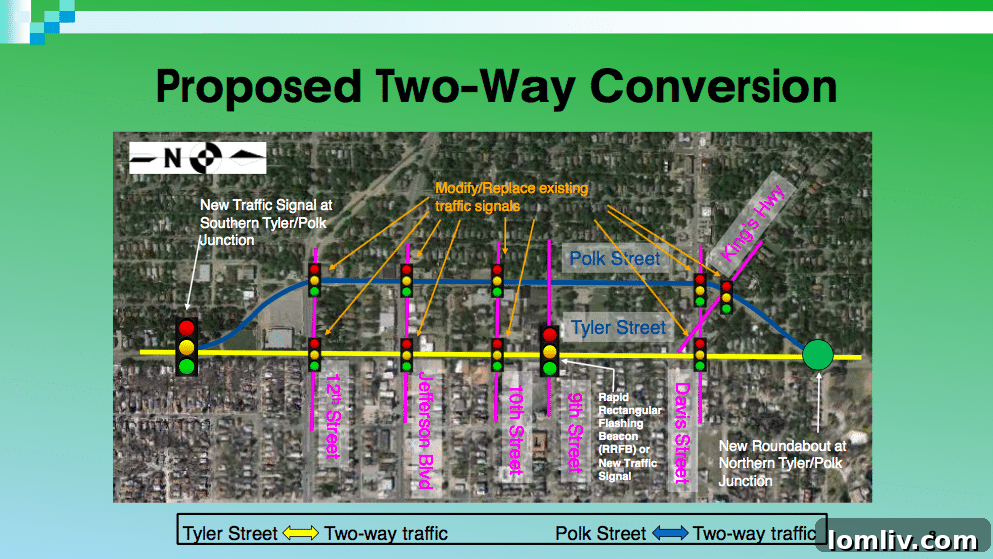
As presented by the city staff, the community has three primary options:
- Option A: The Staff and Cyclist Recommendation. This option represents a balanced approach, prioritizing multimodal transportation and enhanced safety without unduly impeding traffic flow. It is the preferred choice for its forward-thinking integration of various street users, aligning with modern urban planning principles.
- Option B: Maintain Current Traffic Flow. This alternative focuses on preserving the current rate of vehicular movement, essentially minimizing changes to traffic capacity. While it might appeal to those prioritizing car speed, it does so by potentially foregoing critical improvements for cyclists and pedestrians, maintaining a car-centric focus.
- Option C: Do Nothing. This option suggests leaving the streets as they are, based on the premise of “if it ain’t broke, don’t fix it.” However, this overlooks the evolving needs of the community and the documented benefits of urban revitalization. Choosing to do nothing effectively means missing opportunities for economic growth, improved safety, and enhanced livability.
If your inclination leans towards Option C, it’s worth reflecting on the traditional engineering perspective when it comes to “improving street safety.” Often, this has historically meant optimizing for vehicle throughput, sometimes at the expense of other users. The rationale of an engineer explaining street safety improvements, particularly around the 1:45 mark of the linked video, offers a humorous yet insightful look into this mindset, contrasting it with a more holistic vision for urban spaces.
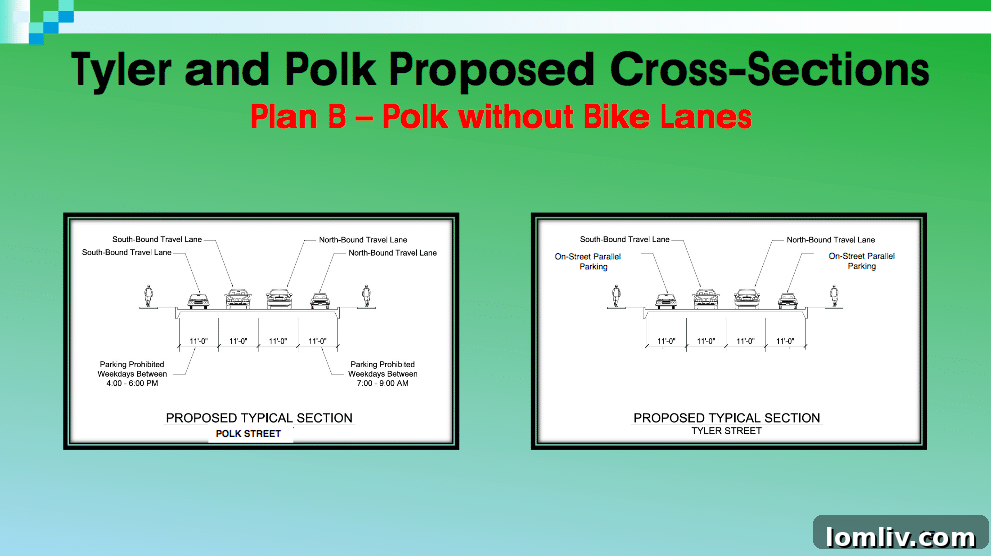
Summary of Proposed Lane Conversions and Their Benefits
To fully grasp the scope of this transformation, it’s essential to understand the specific changes planned for Tyler and Polk Streets. The proposed reconfigurations aim to optimize space for diverse users while enhancing the overall functionality and appeal of the corridors.
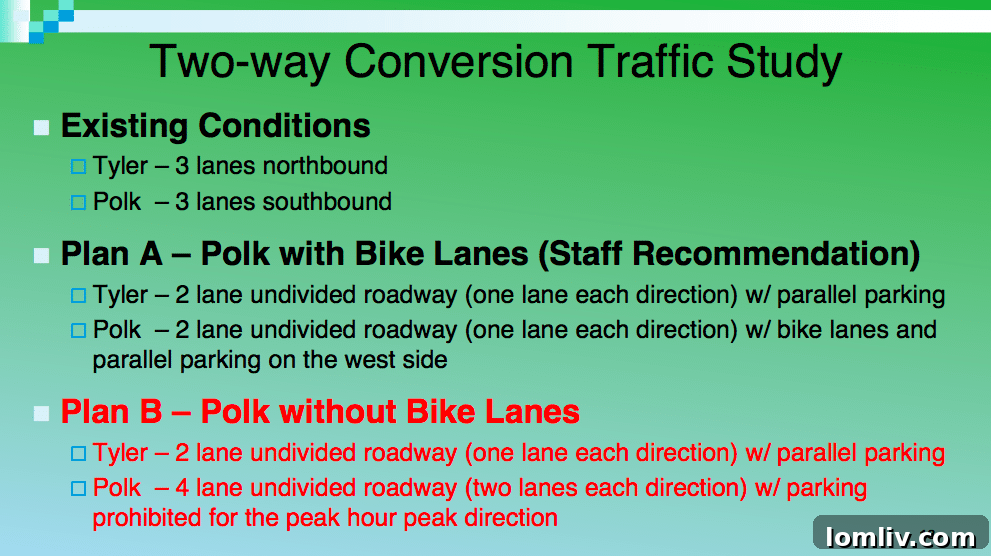
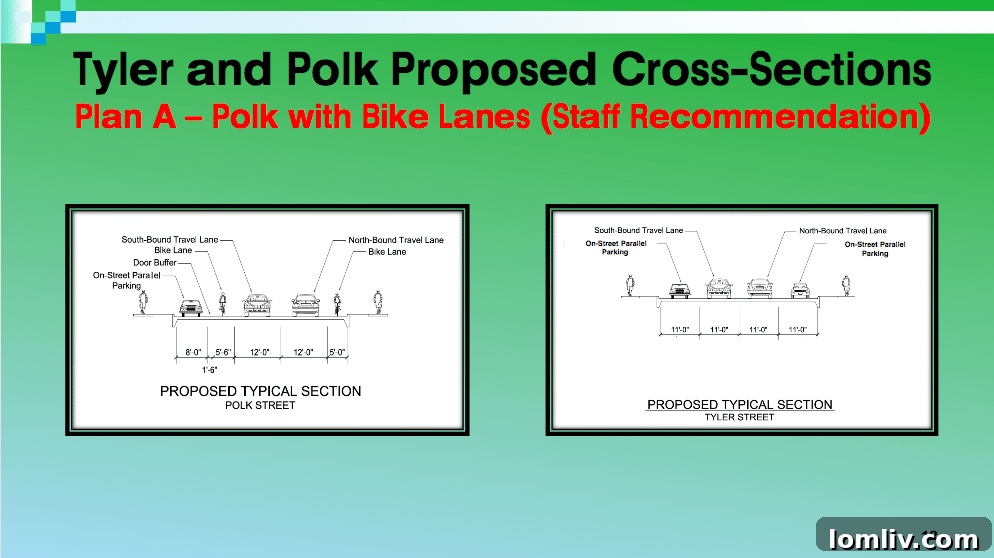
Essentially, the changes break down as follows:
Tyler Street: Currently, Tyler Street operates as a three-lane northbound thoroughfare, complemented by one parking lane (which often sees unenforced peak hour restrictions). Under the proposed conversion, Tyler Street would become a two-lane, two-way street. This significant change would also include the addition of two dedicated parking lanes (again, with existing unenforced peak hour restrictions). This reconfiguration fosters easier access for local businesses, simplifies navigation for drivers, and promotes a calmer street environment.
Polk Street: Polk Street presently functions with three southbound lanes. The redesign presents two main possibilities for Polk:
- Option 1: A two-lane, two-way configuration, enhanced with two dedicated bike lanes and one parking lane (with unenforced peak hour restrictions). This option strongly supports active transportation and pedestrian safety, aligning with the “Complete Streets” philosophy.
- Option 2: A four-lane, two-way configuration, accompanied by one parking lane (with unenforced peak hour restrictions). This option prioritizes greater vehicular capacity while still converting to two-way traffic.
For those eager to delve deeper into the data and comprehensive plans, the full presentation materials from the public meetings are available. You can preview the rest of the presentation before future discussions or simply to gather the full details and underlying data. Transparency and public access to information are vital for informed community engagement.
Community Meetings: Your Opportunity to Contribute
The success of urban transformation projects hinges on robust community input. Residents and stakeholders had several opportunities to voice their opinions, ask questions, and engage directly with city planners. These meetings were critical forums for dialogue and debate, shaping the final recommendations for Tyler and Polk Streets.
Two key public meetings were held:
Tuesday, June 21, 2016, 6 to 7:30 p.m.
Cliff Temple Baptist Church (In the main sanctuary via the corner of Tenth and Zang)
125 Sunset Avenue
Dallas, TX 75208
Tuesday, July 12, 2016, 6 to 7:30 p.m.
Elmwood, El Buen Samaritano United Methodist Church, in the Fellowship Hall
1315 Berkley Avenue
Dallas, TX 75224
These sessions provided platforms for residents to advocate for their vision of North Oak Cliff, emphasizing the core principle that urban design should serve its people first. As neighbor Rob Shearer eloquently articulated, these projects embody a philosophy of:
“prioritizing people over pavement and community over cars.”
This powerful statement encapsulates the human-centered approach guiding the redesign efforts.
The Introduction of a Roundabout: Enhancing Efficiency and Safety
Adding to the comprehensive redesign of Tyler and Polk Streets is an exciting development: the planned introduction of a roundabout at the north juncture. The rumors circulating within the community are indeed true, marking a significant step towards modernizing traffic management in Dallas.
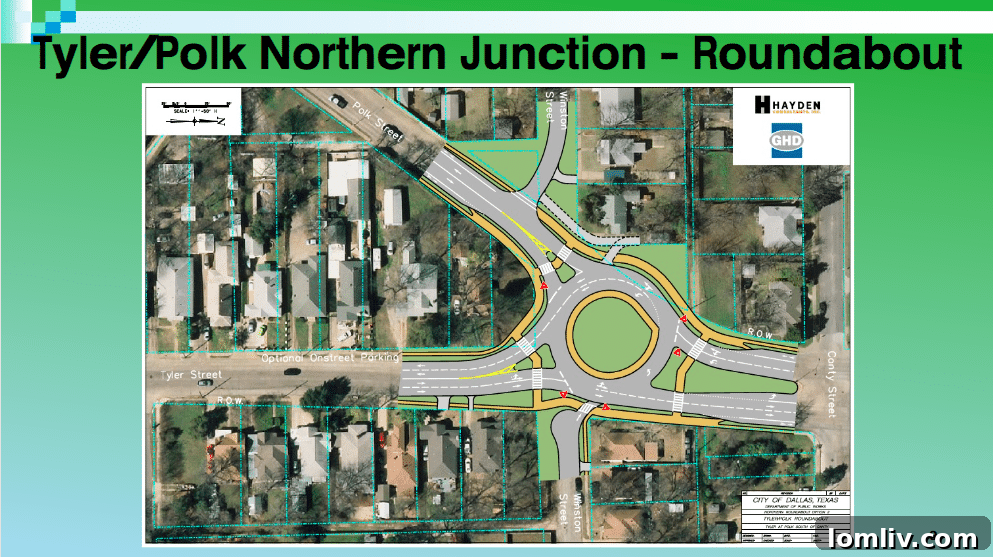
For those unfamiliar with the benefits, it’s worth noting that roundabouts have consistently proven to be more efficient and safer than traditional four-way stops. A classic illustration of this effectiveness comes from the popular show Mythbusters, which famously put the 4-way stop and the roundabout to the test, confirming roundabouts’ superior performance in managing traffic flow and reducing delays. Beyond efficiency, roundabouts significantly improve safety by reducing points of conflict and forcing slower speeds, leading to fewer severe collisions.
Dallas, in this aspect, has lagged behind its neighbor, Fort Worth, which has successfully integrated numerous neighborhood roundabouts. The positive impact of such installations is undeniable; for instance, Fort Worth witnessed an immediate improvement in property values along Elizabeth Boulevard following their installation. This local success story serves as a compelling precedent, suggesting that the Tyler and Polk roundabout could similarly contribute to both traffic improvements and economic uplift in North Oak Cliff.
Embracing Complete Streets: A New Standard for Dallas
The initiatives for two-way conversions and roundabouts are not isolated projects but integral components of a much larger, forward-thinking urban design trend known as “Complete Streets.” This comprehensive approach aims to create streets that are safe, comfortable, and accessible for all users, regardless of age, ability, or mode of transportation.
Dallas officially solidified its commitment to this philosophy by approving its Complete Streets manual in January 2016. This landmark decision marked a significant turning point for the city’s urban planning. Since then, city staff have been diligently reviewing existing plans and drawings, revising them to align with these progressive new standards. There is no doubt that the Tyler and Polk Streets project is at the forefront of this movement, embodying the new priorities for fostering more livable, community-centered streets across Dallas. This paradigm shift signifies a long-term investment in urban infrastructure that supports sustainable growth, enhances public health, and improves the overall quality of life for residents.
Fostering Community and Economic Vibrancy in North Oak Cliff
North Oak Cliff distinguishes itself as a neighborhood with a unique magnetism, largely attributed to its people and the abundant opportunities for communal gathering. As neighbor Rob Shearer eloquently puts it, while the area boasts natural beauty—including Dallas’s only hills and a beautiful tree canopy complementing its great streets—it’s the human element that truly defines it.
“Sure we’ve got the only hills in the city and a beautiful canopy of trees that compliment great streets running through great neighborhoods. But if you took out the people and the times we gather together on a warm June night for the Symphony at Kidd Springs Park, or the ‘I Bike Rosemont’ ride that ends with root beer floats in front of Eno’s, or our Mardi Gras parade, or Bastille Day celebration or drinks on your porch with neighbors or any of the other thousand reasons we’ve come up with to justify us spending time with each other… well I don’t think Oak Cliff would have the same magnetic draw that it has today.”
– Rob Shearer
This deep sense of community is precisely what the Tyler and Polk Streets redesign aims to cultivate and strengthen. The most significant economic development benefit anticipated from this project is the creation of calmer traffic, leading to a far more pedestrian-friendly environment. This improved atmosphere is directly conducive to boosting retail sales, particularly for the charming little storefronts located directly along Tyler Street. A safer, more inviting streetscape will undoubtedly make this corner of North Oak Cliff significantly more welcoming to residents eager to patronize these local businesses. Moreover, it will create a much more pleasant setting for simply hanging out, enjoying the neighborhood, and fostering connections among neighbors.
While the redesign may slightly impede the swift flow of cars compared to the current one-way system, slowing traffic is a deliberate and crucial objective. This strategic reduction in speed is foundational to creating a truly livable neighborhood—a place where residents find more reasons to walk, cycle, and spend time outdoors, making their daily lives just a little more pleasant when they step out of their cars. It’s an investment in a future where streets serve as vibrant public spaces, not just conduits for vehicles.
Of course, a single project, however impactful, cannot instantly transform an ingrained car culture or solve all urban challenges overnight. Just as one stretch of a mile-long bike lane won’t immediately convert everyone into a cyclist, the Tyler and Polk Streets redesign is a vital initial step in a much longer and broader journey. It represents a foundational commitment to creating a more balanced, sustainable, and people-centric urban environment for North Oak Cliff and indeed, for Dallas as a whole. This transformation is about building a legacy of community, economic vibrancy, and an enhanced quality of life that will resonate for generations to come.