Dallas City Council Pushes to Modernize Antiquated Parking Code
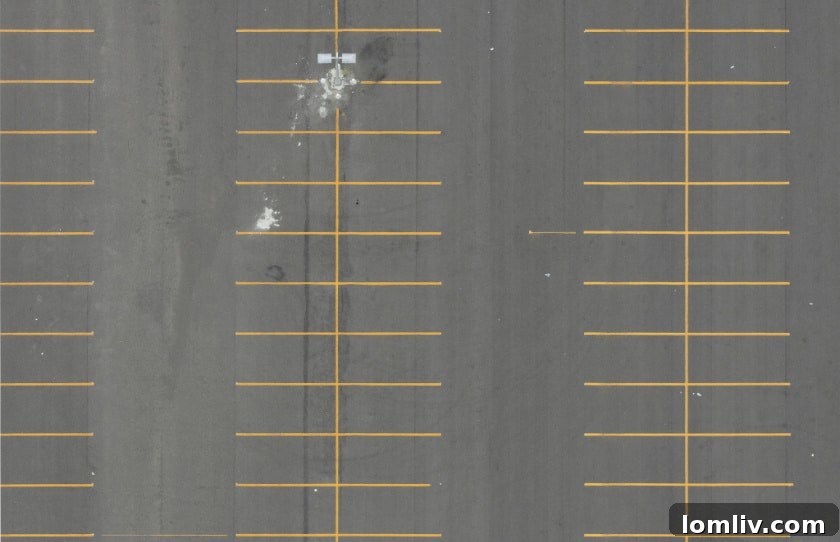
Dallas is on the brink of a transformative shift in its urban landscape. Five proactive Dallas City Council members formally requested on August 3 for the City Plan Commission to actively “reopen and modernize” the city’s long-standing, and increasingly criticized, parking code. This crucial initiative aims to dismantle decades-old regulations that many believe hinder the city’s progress, stifle economic growth, and exacerbate pressing issues like affordable housing and urban sprawl.
The conversation around reforming Dallas’s parking regulations has been a protracted one. District 1 Councilman Chad West first brought the issue to the forefront nearly four years ago. The significant delay in addressing this vital urban planning matter, West explained to daltxrealestate.com, can largely be attributed to a persistent “car-centric mentality of Dallas” coupled with the inherent complexity involved in revising such deeply entrenched municipal codes.
“This work is incredibly important for the future of our city,” West emphasized. He further highlighted the immense inefficiency caused by the current regulations, stating, “Staff has acknowledged publicly many times that 70 to 80 percent of the man-hours spent at the permit office can be attributed to working through complicated parking scenarios to try to make development work. This represents a massive drain on city resources that could be better allocated.”
A United Front for Parking Reform
The recent memo underscores a growing consensus among city leaders regarding the urgency of parking reform. Council members Jaime Resendez, Adam Bazaldua, Jaynie Schultz, and Gay Donnell Willis joined Councilman West in signing the pivotal document, signaling a broad desire for change within the city’s legislative body. The momentum behind this initiative is already evident, with the issue officially listed on the agenda for the August 15 meeting of the Zoning Ordinance Advisory Committee.
Councilman Adam Bazaldua articulated a key benefit of parking reform, stating that current parking restrictions are a quintessential example of a regulatory hurdle that significantly impedes the city’s capacity to address the critical need for affordable housing. By mandating excessive parking spaces, developers are forced to allocate valuable land and resources to car storage rather than housing units, driving up costs and limiting supply.
Bazaldua further emphasized the broader urban planning implications. “It also perpetuates building a city based on the need for a car instead of improving the quality of life for our residents and making it more walkable and pedestrian-friendly,” he asserted. This perspective highlights a desire to shift Dallas away from its historical reliance on automobiles, envisioning a future where residents can safely and conveniently walk, bike, or utilize public transit.
While the movement gains traction, some council members remain unavailable for comment on this complex issue. Schultz declined an interview request, and Resendez and Willis did not respond to inquiries at the time of reporting. Nevertheless, the City’s Planning and Urban Design Department is already actively engaged in reviewing and revising the existing development code. Notably, these revisions include proposals to eliminate minimum parking requirements, signifying a proactive administrative effort to align with the council’s reform agenda. Two public input sessions held earlier this month provided residents an opportunity to voice their perspectives on these upcoming changes.
Navigating Opposition: Concerns from Far North Dallas
Despite the growing support, the initiative is not without its critics. District 12 Councilwoman Cara Mendelsohn has voiced significant concerns, bringing the issue to the attention of her constituents in a recent newsletter. Her perspective underscores the diverse needs of Dallas’s sprawling geography and the potential for a one-size-fits-all approach to have unintended consequences.

“This is very important to Far North Dallas because we have different challenges than some other parts of the city,” Mendelsohn stated. She explained that her office frequently receives complaints about insufficient parking at apartment complexes, leading to problematic spillover into adjacent residential neighborhoods. The proposed ordinance, which could potentially reduce or remove parking requirements, raises fears that these existing issues could worsen. “The ordinance being considered will not require even the same amount that is present today, meaning parking could be removed,” she cautioned, highlighting a tangible concern for her district’s residents.
Mendelsohn acknowledged the city staff’s dual objectives: addressing the problem of expansive, often empty, parking lots while also promoting a shift from car dependency towards public transportation. However, she believes a nuanced approach is essential. “It may be appropriate for the central business district or entertainment areas to have different minimum parking than residentially-focused areas,” she suggested, advocating for context-sensitive zoning that recognizes the unique characteristics and needs of different urban zones.
The council members who signed the memo, however, clarified that their intention is not to impose a government mandate to eliminate existing parking spaces. Instead, their proposal seeks to empower businesses and builders with the flexibility to determine the appropriate amount of space to dedicate to parking. This approach, they argue, fosters market-driven solutions rather than prescriptive mandates.
Councilman West elaborated on this philosophy: “I expect places in walkable neighborhoods or near public transportation will choose to build less parking than places with a more suburban feel.” He shared firsthand accounts illustrating the current code’s impact: “I represent a part of Dallas that is fairly walkable and I have had small business owners come to me for help because the current city parking minimums are too onerous and costly. They stifle economic development and entrepreneurship in our city.” This perspective underscores how outdated regulations can inadvertently suppress local economies and innovation.
Expert Perspectives: Debunking the Myths of Parking Mandates
The debate around parking reform is heavily informed by urban planning experts who challenge the conventional wisdom behind mandatory minimum parking requirements. Nathaniel Barrett, founder and CEO of Barrett Urban Development, shared his insights with daltxrealestate.com, tracing the historical origins of these mandates.

Barrett explained that mandatory minimum off-street parking requirements were originally conceived in the mid-20th century as a response to the rapid adoption of the automobile. The intent was to prevent the overcrowding of public streets. However, he argues that this approach has proven to be counterproductive and inefficient. “Unfortunately, parking requirements are one of the worst ways to address the issue,” he stated bluntly.
He continued, “It imposes a very blunt, expensive, and unscientific process to address a problem that could be fixed at far less cost and difficulty than using parking permits, meters, and no-parking zones.” In an insightful essay on parking reform, Barrett elaborates on how these requirements, often arbitrarily chosen, fail to reflect the dynamic economic realities of businesses and residents. This rigidity prevents communities from adapting flexibly to their actual needs, leading to suboptimal land use and inflated development costs.
Barrett also critiques the insidious “self-reinforcing cycle” created by excessive parking mandates. He notes, “Worse, they presuppose the mode of travel people will use, thus becoming a self-reinforcing cycle: the city requires parking, so everything is farther apart, which necessitates auto travel, so people need parking.” This perpetuates car dependency, making it harder for cities to foster sustainable transportation options.
Instead, Barrett advocates for more sophisticated and responsive parking management tools. “We have the excellent tools of parking permits, meters, and no-parking zones to address nuisances of a badly-managed curb.” He cites Lower Greenville as an excellent local example, where resident-only parking passes effectively manage curb space and prevent excessive parking. Looking ahead, he suggests an even more innovative solution: “Even better would be parking meters that paid out money to the neighborhood for sidewalk improvements, improved lighting, and other services, which the city is working on.” This revenue-sharing model could transform parking from a liability into a direct funding source for neighborhood enhancements.
Fostering Community Engagement with Park(ing) Day Dallas
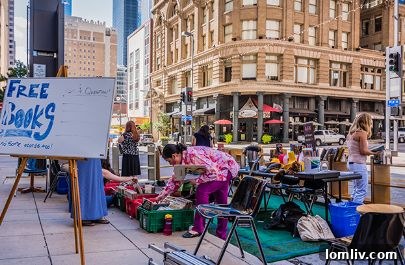
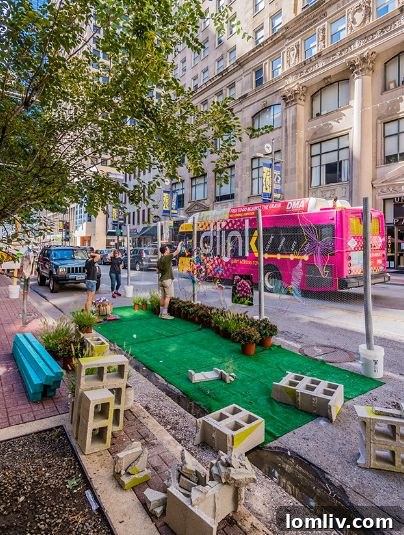
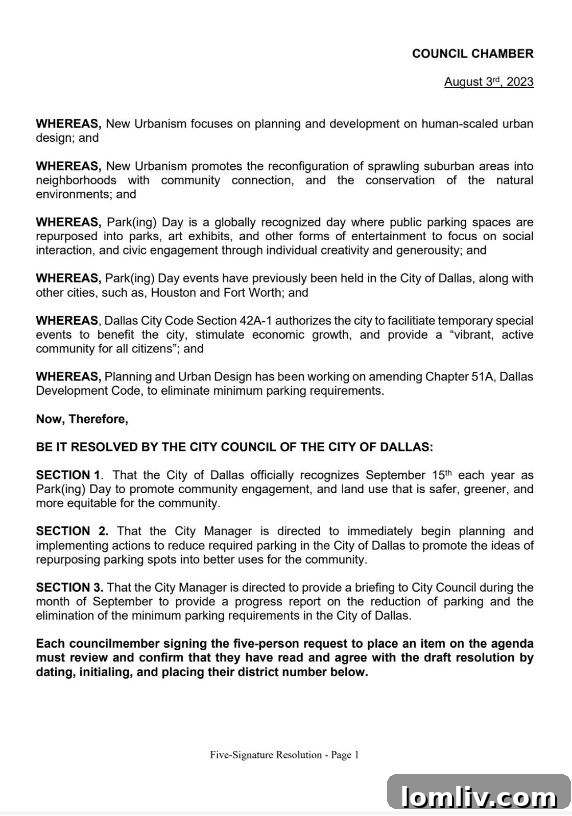
Integral to the proposed reform is a commitment to community engagement and fostering a new vision for urban spaces. A resolution included in the five-signature memo calls for designating September 15 as “Park(ing) Day” to actively promote public involvement and showcase the potential of repurposed parking areas. On this designated day, communities would be encouraged to transform mundane parking spots into vibrant mini-parks, pop-up vendor booths, and spaces for entertainment activities, demonstrating alternative uses for public parking infrastructure.
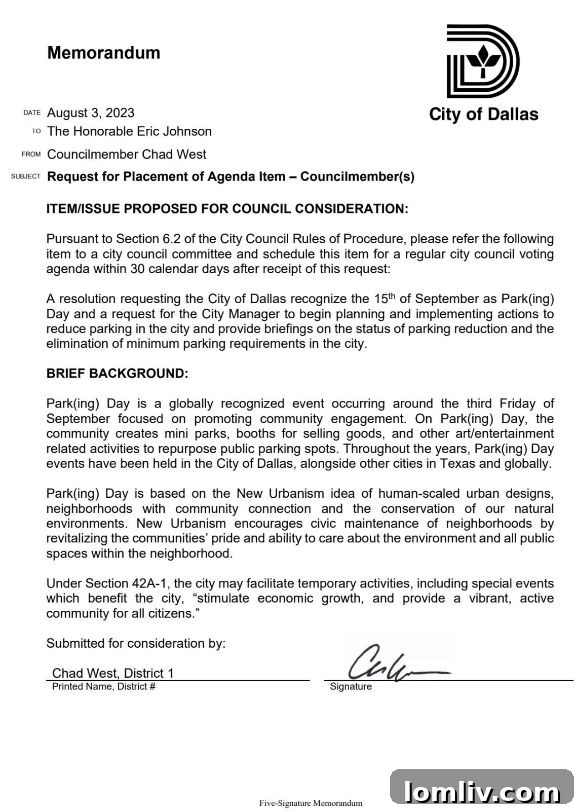
While Park(ing) Day Dallas has been held in previous years, local archives indicate that events haven’t been widely organized more recently than 2016. Revitalizing this initiative aims to reignite public imagination and illustrate the tangible benefits of a less car-centric urban environment.
The council memo highlights the philosophical underpinnings of Park(ing) Day, connecting it to the principles of New Urbanism. This urban design movement champions human-scaled urban designs, fostering neighborhoods with strong community connections, and emphasizing the conservation of natural environments. “New Urbanism encourages civic maintenance of neighborhoods by revitalizing the communities’ pride and ability to care about the environment and all public spaces within the neighborhood,” the memo states. By engaging residents in transforming public spaces, Park(ing) Day serves as a powerful tool to foster civic pride and demonstrate the potential for a more vibrant, community-oriented Dallas.
The Path Forward: Implementing Comprehensive Parking Reform
The council memo is not merely a statement of intent; it provides clear directives for immediate action. It explicitly instructs City Manager T.C. Broadnax to “immediately begin planning and implementing actions to reduce required parking in the City of Dallas to promote the ideas of repurposing parking spots into better uses for the community.” This mandate signifies a serious commitment to moving beyond discussion and into tangible policy changes.
Furthermore, the memo requests that Broadnax provide a comprehensive briefing in September. This report will detail the progress made on reducing parking requirements and eliminating minimum parking standards, ensuring accountability and transparency in the reform process.
Councilman West reiterated the delicate balance required in urban governance. “The city government always needs to strike an appropriate balance in how we interact with developers and builders,” he told daltxrealestate.com. He highlighted a common grievance from the development community: “I’ve heard from many of them that municipal parking minimums increase how much land they must purchase to construct new concepts. Those costs get passed on to tenants and customers, and unlike safety regulations or environmental standards, parking minimums aren’t for societal good. They don’t serve a purpose other than letting the city government stifle neighborhood needs.”
This reform effort is not being undertaken in isolation. The council members who spearheaded the memo have made it clear that they are actively seeking and incorporating input from leading experts. Collaborations with organizations such as the American Institute of Architects (AIA) Dallas and The Real Estate Council (TREC) ensure that the proposed changes are informed by best practices in urban design, architecture, and economic development. By leveraging expert knowledge and fostering public discourse, Dallas aims to pave the way for a more sustainable, equitable, and economically vibrant future, moving beyond its car-centric past to embrace a new era of urban innovation.