
Texas Homeowners: Crucial Property Tax Relief Available After Winter Storm Uri
Thousands of Texas homeowners faced unprecedented challenges and devastating property damage during February’s historic Winter Storm Uri. In response, the state legislature has enacted a vital relief measure, offering a temporary property tax exemption to those whose homes sustained significant damage. This guide details everything you need to know to claim your rightful relief.

Understanding the Temporary Property Tax Exemption
The severe winter weather event of February 2021, dubbed Winter Storm Uri, left an indelible mark across Texas, causing widespread power outages, burst pipes, and structural damage to countless homes. Recognizing the immense financial burden placed on property owners, the Texas Legislature swiftly passed a law to provide much-needed support.
Legal Basis: Texas Tax Code Section 11.35
This critical legislation allows property owners to apply for a temporary property tax exemption once the Governor of Texas issues a disaster declaration. Governor Greg Abbott officially declared a disaster on February 12, 2021, immediately activating the provisions of Texas Tax Code Section 11.35. This declaration made the exemption available to qualifying property owners in all 254 Texas counties affected by the storm.
The core purpose of this tax code section is to offer financial respite during the arduous recovery process following a natural disaster. It acknowledges that property values can significantly diminish due to damage, and taxing homeowners based on pre-disaster appraised values would be an undue hardship. The temporary exemption aims to adjust the taxable value of damaged property, thereby reducing the property owner’s tax liability for the year.
Eligibility Criteria: What Qualifies?
For a property to qualify for this temporary tax exemption, it must meet specific criteria outlined in the law:
- Disaster Declaration: The damage must have occurred as a direct result of a disaster for which the Governor has issued an official declaration. Winter Storm Uri falls under this category.
- Property Type: The exemption typically applies to residential homesteads, but can also extend to certain commercial properties and other types of real estate, provided they meet the damage threshold.
- Significant Damage Threshold: This is a crucial aspect. The tax code mandates that a qualified property must have sustained at least 15 percent damage to its appraised value due to the disaster.
Glenn Goodrich, an expert with Property Tax.io, emphasizes the severity of damage required: “The exemption is meant to cover cases where the damage is more than just some ruined carpet and small damages to surfaces.” This means minor cosmetic issues or easily repairable damages might not meet the 15% threshold. Property owners should consider significant structural damage, extensive water damage requiring major remediation, roof replacement, or extensive plumbing repairs as potential qualifiers.
How the Exemption Works: Reducing Your Tax Burden
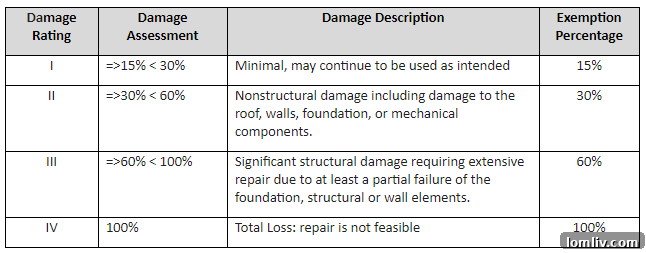
Once approved, the temporary exemption reduces a portion of the property’s appraised value for the tax year in which the disaster occurred. This means that instead of being taxed on the full pre-storm appraised value, homeowners would pay taxes on a lower, adjusted value reflecting the damage. The extent of the exemption is tiered based on the severity of the damage, as categorized by the appraisal district:
- Category 1 (Minimum 15% Damage): Requisite for any exemption.
- Category 2 (15% to 29% Damage): May qualify for a specific percentage reduction.
- Category 3 (30% to 59% Damage): Higher percentage reduction.
- Category 4 (60% to 79% Damage): Significant reduction.
- Category 5 (80% to 100% Damage or Total Loss): Highest reduction, potentially down to a nominal value if the property is rendered uninhabitable or destroyed.
The exact percentage of the appraised value that can be exempted will depend on the appraisal district’s assessment of the damage category your property falls into. This direct reduction in taxable value can translate into substantial savings on your 2021 property tax bill, providing much-needed financial relief during a period of recovery and rebuilding.
Application Process and Crucial Deadlines
It is paramount for property owners to understand that this temporary property tax exemption is not automatic. You must proactively apply for it. Missing the deadline could mean forfeiting your chance to receive this valuable financial relief.
The Application Deadline: Act Now!
The absolute deadline for submitting your application for the Winter Storm Uri property tax exemption is May 28, 2021. This date marks 105 days after Governor Abbott’s disaster declaration on February 12, 2021. Given the time-sensitive nature, property owners are strongly encouraged to gather all necessary documentation and submit their applications well in advance of this cutoff.
Where to Find Application Forms
Application forms for the temporary exemption are typically available through your county’s appraisal district office. Many districts provide downloadable forms on their official websites. Below are links to some of the major appraisal districts in Texas:
- Dallas County Appraisal District (DCAD)
- Collin Central Appraisal District (CAD)
- Tarrant Appraisal District (TAD)
- Denton Central Appraisal District (DCAD)
- Rockwall Central Appraisal District (RCAD)
- Ellis County Appraisal District (ECAD)
If your county is not listed, a quick search for “[Your County Name] Appraisal District” should lead you to the correct website where you can find the application form, often titled “Application for Temporary Exemption for Damaged Property” or similar.
Steps to Apply for the Exemption
- Assess Damage: Document all damages with photographs and videos. Obtain repair estimates from licensed contractors. Keep records of all expenses related to repairs.
- Download Form: Visit your local appraisal district’s website and download the specific application form for disaster damage exemption.
- Complete Form Accurately: Fill out the application form completely and accurately. Provide all requested information about your property and the extent of the damage.
- Gather Documentation: Attach all supporting documentation, including photographs, contractor estimates, insurance claims (if applicable), and any other evidence of damage.
- Submit Application: Submit the completed form and all supporting documents to your appraisal district office before the May 28, 2021, deadline. Submission methods often include mail, email, or in-person delivery. Confirm preferred method with your specific district.
- Follow Up: Keep copies of everything you submit. The appraisal district may contact you for further information or to schedule an inspection of your property.
Thorough documentation is key to a successful application. The more evidence you can provide regarding the extent and nature of the damage caused by Winter Storm Uri, the stronger your case for receiving the exemption.
NBC 5 Responds: Property Tax Exemption Available After Winter Disaster | https://t.co/vIVy6GEOPv pic.twitter.com/Ab2Djnb3GE
— NBC DFW (@NBCDFW) February 26, 2021
Beyond Property Taxes: IRS Announces Additional Relief
In addition to the state-level property tax exemption, the Internal Revenue Service (IRS) has also extended significant tax relief to individuals and businesses affected by the devastating winter storms in Texas. This federal relief aims to alleviate the burden of meeting various tax obligations during the recovery period.
Extended Federal Tax Deadlines
The IRS announced that victims of winter storms that began on February 11, 2021, have until June 15, 2021, to file various individual and business tax returns and make tax payments. This extension covers a wide range of tax-related deadlines that would typically fall within the affected period.
This includes:
- Individual income tax returns and payments.
- Various business tax returns, including corporate and partnership returns.
- Estimated tax payments.
- Quarterly payroll and excise tax returns.
- Certain nonprofit organization returns.
The automatic extension applies to individuals and households who reside or have a business in all 254 Texas counties. This means you do not need to apply for this federal extension; it is automatically granted by the IRS for those within the declared disaster areas. However, it is always wise to confirm details on the official IRS website for any specific circumstances or further updates.
This broad tax relief measure from the IRS is a crucial component of the overall support package for Texans, allowing individuals and businesses to prioritize recovery efforts without the immediate pressure of looming tax deadlines. For comprehensive information and specific details, property owners are encouraged to visit the official IRS newsroom announcement: IRS Announces Tax Relief for Texas Severe Winter Storm Victims.
Important Tips for Texas Homeowners
Navigating disaster relief programs can be complex. Here are some essential tips to help you through the process:
- Document Everything: From the moment damage occurs, take photos and videos. Keep a detailed log of all repairs, expenses, and communications with contractors, insurance adjusters, and appraisal district officials.
- Seek Professional Assessments: If you’re unsure if your damage meets the 15% threshold, consider getting an assessment from a qualified contractor or public adjuster. Their reports can serve as valuable evidence.
- Understand Your Appraisal District: Each appraisal district may have slightly different procedures or specific forms. Familiarize yourself with your local district’s requirements.
- Don’t Delay: The May 28th deadline for the property tax exemption is firm. Procrastination could lead to missing out on significant savings.
- Stay Informed: Continue to monitor official announcements from the state, your local appraisal district, and the IRS for any further updates or relief programs.
- Appeal if Necessary: If your application for exemption is denied or you believe the assessed damage category is incorrect, you generally have the right to appeal the decision.