In a world often divided by political ideologies, former President George W. Bush effortlessly transcended partisan lines during a captivating Tate Lecture Series presentation in Dallas. His appearance was a welcome breath of fresh air, leaving the audience in stitches and reminding many of the joy of unadulterated laughter, a commodity that has felt particularly scarce since the onset of the global pandemic. The atmosphere was electric, filled with genuine amusement and a profound sense of shared experience, marking a memorable evening that highlighted the enduring appeal of a leader capable of connecting with people on a deeply human level.
The evening was punctuated by anecdotes that showcased the former President’s legendary wit and self-deprecating humor. He recounted a dinner with Lorne Michaels, the creator of Saturday Night Live, and his wife Laura in Dallas. Their conversation reportedly delved into the unique linguistic stylings famously dubbed “Bushisms,” and a playful debate ensued over who might have “misunderestimated” a situation. This particular exchange brought to mind insights from commentators like Jacob Weisberg, who famously argued that it’s challenging to genuinely dislike someone who, with earnest sincerity, expresses regret that “too many OB/GYNs aren’t able to practice their love with women all across the country” due to rising malpractice insurance costs. Such moments reveal a charming vulnerability and an ability to articulate thoughts in a way that, while sometimes unconventional, is undeniably authentic and endearing.
A significant part of President Bush’s enduring charm lies in his readiness to be in on the joke, a trait he shares with cultural icons like Yogi Berra. This quality was evident early in his presidency, particularly at his first White House Correspondents’ Dinner in March 2001. During this event, the new president humorously read from an early collection of Bushisms, which he likened to Mao’s “little red book,” albeit “not in Chinese.” With a twinkle in his eye, he declared, “Now ladies and gentlemen, you have to admit that in my sentences I go where no man has gone before.” In a moment of classic Bush humor, he then playfully stumbled over his words, claiming he had invented the term misunderstanding, before quickly correcting himself to the more famous “misunderestimated.” This rare capacity for self-effacing humor and the ability to laugh at one’s own linguistic quirks is a truly exceptional quality in a national leader, setting him apart and illustrating a distinctive leadership style that many found refreshing, a contrast to the approach of some of his predecessors, such as Bill Clinton.
His humor often came with a dose of relatable honesty. He shared a moment where, after declaring to the press, “we’ll get Bin Laden dead or alive,” his wife Laura gently reminded him that such a statement would be heard by people globally, including in sophisticated cities like Paris. His quick-witted response—”That’s okay, so will the people in Midland”—underscored his unwavering connection to his Texas roots and his ability to ground even the most intense global pronouncements in a down-to-earth perspective that resonated with many Americans. This simple exchange perfectly encapsulated the essence of his public persona: direct, unpretentious, and always connected to the values he held dear.
The intimate setting of the lecture, where attendees were respectfully requested to refrain from using cell phones for photos, recordings, or note-taking—a directive the author interpreted as a moratorium on tweets—further enhanced the sense of a genuine, unfiltered conversation. This absence of immediate social media scrutiny allowed for a more profound engagement with President Bush’s insights. He drew a compelling parallel between the social unrest of 1968, the year he graduated from college amidst race riots and campus firebombs, and the challenges facing the nation today. While acknowledging the severity of past crises, he highlighted a critical distinction: the absence of social media in 1968. He posited that today’s digital landscape allows for misinformation to be whipped up and disseminated with unprecedented speed and effectiveness, posing a unique and formidable threat to national cohesion and informed public discourse. This observation offered a powerful reflection on the evolving nature of societal challenges in the digital age.
As the evening unfolded, the profound gratitude for experiencing such an event in Dallas was palpable. It served as a powerful reminder of the enduring presence and active engagement of this remarkable couple, George W. and Laura Bush, who have navigated and led through decades of headline-making, history-defining American life. Their continued involvement in public life, particularly within Dallas and Texas, is a source of immense pride and comfort for many, symbolizing resilience and commitment to service. The President kicked off his speech with a classic quip: SMU called, asking if he believed in free speech. “Why of course I do,” he replied. “Great,” they said, “then will you give us a free speech?” This lighthearted exchange immediately set the tone for an evening filled with humor and insightful commentary.
While President Bush maintained that publicly criticizing his successors was inappropriate, he skillfully wove subtle yet pointed observations into his talk. He emphasized the invaluable attribute of humility in a president, stressing the importance of surrounding oneself with the most intelligent individuals available and, crucially, listening intently to their counsel. This philosophy subtly contrasted with recent political approaches. He also did not shy away from expressing his strong disapproval of the manner in which the United States exited Afghanistan, unequivocally describing it as “abysmal” and asserting that one simply does not negotiate with the Taliban. These pronouncements, delivered with conviction, underscored his deeply held beliefs on effective leadership and foreign policy strategy, offering a nuanced perspective from a former Commander-in-Chief.
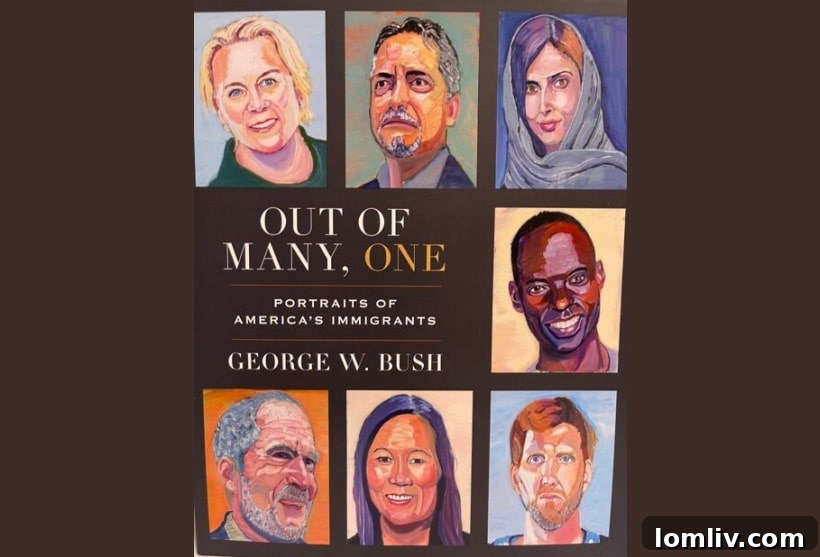
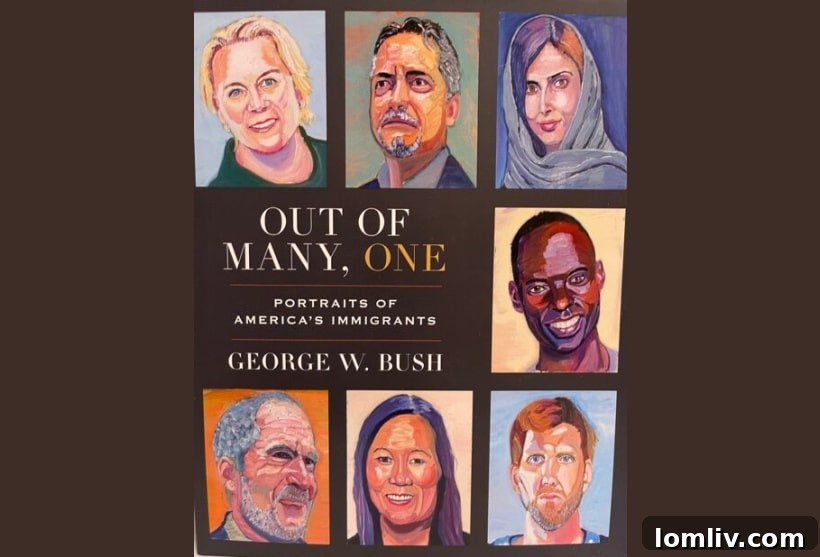
The program also served to promote his latest book, a significant work focused on immigration, which was generously provided gratis to every Tate season holder, courtesy of President Bush himself. During his address, he passionately advocated for a fundamental overhaul of the nation’s immigration laws, making a forceful plea to cease the “villainizing” of immigrants. His stance reflected a profound humanitarian perspective, urging empathy and practical solutions to a complex issue that continues to challenge the country. This strong advocacy underscored his ongoing commitment to shaping policy and public opinion on matters of critical importance, drawing upon his years of experience and his personal convictions regarding human dignity and opportunity.
A Mind as Sharp as a Tack: Insights on Global Affairs
President Bush’s intellectual acuity and quick wit were immediately apparent throughout the lecture. He recalled dates and years with remarkable precision, showing no hesitation or struggle to retrieve facts, save for his characteristic “word jumbling” when his excitement peaked. This passion was particularly evident when he spoke about Afghanistan, where he nearly leaped from his chair as he asserted that if Americans had truly understood the mission in Afghanistan to be about saving women and girls, their perception and support for the intervention might have been vastly different. This highlights his enduring belief in the moral imperative behind certain foreign policy decisions and his frustration when such narratives are, in his view, misunderstood or miscommunicated.
His assessments of global adversaries were notably blunt and uncompromising. He branded the Taliban as “awful, terrible people,” a clear indication of his stance on their oppressive regime. Moving to North Korea, he highlighted the horrific human rights violations occurring within its borders, stating emphatically that there are more such abuses there than anywhere else in the world. He shared a poignant story from his book, profiling an immigrant who miraculously escaped a North Korean concentration camp, eventually finding refuge in China, where a network of underground religious havens apparently offered solace and safety. These narratives brought a chilling human face to the geopolitical challenges he discussed.
Regarding Vladimir Putin and Russia, President Bush offered a prescient warning about Europe’s strategic misstep in becoming overly reliant on Russia for natural gas. He stated with conviction that this dependence had given Putin immense leverage, effectively allowing him to hold “Europe by the neck,” a geopolitical assessment that has proven increasingly accurate in recent years. This observation underscored his keen understanding of international power dynamics and the long-term consequences of energy dependency.
A particularly memorable anecdote shed light on the personal dynamics between world leaders. He recounted Putin’s visit to the White House and his encounter with the First Dog, Barney. President Bush described how Putin “dissed him,” completely ignoring the beloved Scottish Terrier. Barney, known for his discerning nature, apparently reciprocated the sentiment, clearly reading Putin’s unwelcoming body language. This seemingly trivial incident gained deeper significance a few years later when President and Mrs. Bush visited Putin’s home in Russia. Putin, eager to make a point, asked if they wanted to meet his dog. Into the room bounded a massive, muscular Bulgarian Karakachan shepherd dog. The sight instantly brought back the memory of the Barney incident, serving as a vivid reminder of Putin’s underlying competitiveness.
The Soviet leader, with a clear note of pride and challenge, remarked, “See how much bigger and stronger he is than your Barney?” President Bush shared that this comment spoke volumes about Putin’s character, revealing a “huge chip” on his shoulder. He recounted his eagerness to relay this revealing incident to Condoleezza Rice, recognizing it as a profound insight into Putin’s personality and leadership style. With a chuckle, President Bush concluded that while Putin’s pup may have been physically larger and stronger, “Barney was light years smarter than Putin’s pup,” offering a final, witty jab that perfectly encapsulated the enduring charm and astute observational skills of the former President.