By Cody Neathery
Special Contributor
The Battle for Beloved Dive Bars: Dallas’s Historic Haunts Face an Uncertain Future
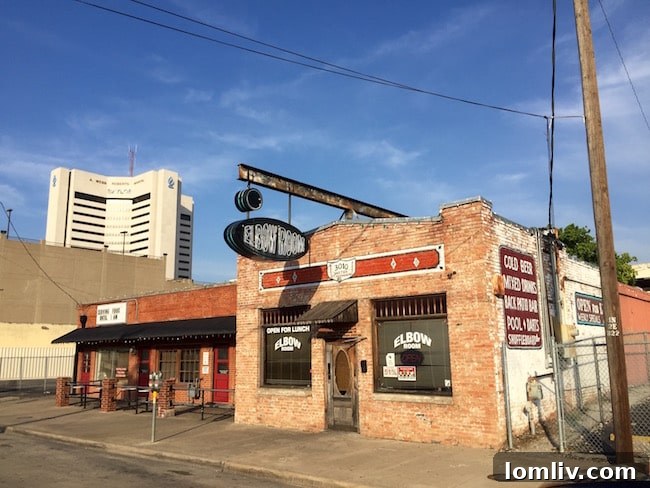
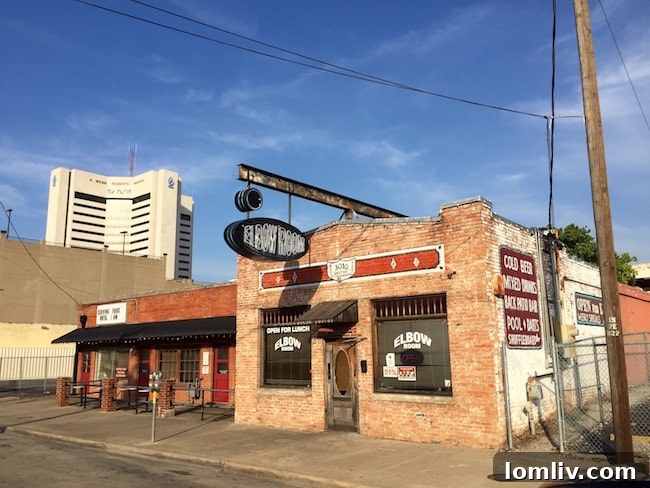
Dallas, a city known for its rapid development and burgeoning skyline, is also home to a collection of historic buildings and establishments that whisper tales of its past. Among these cherished relics are the city’s iconic dive bars, gathering places that have served generations and become integral to the local cultural fabric. However, the relentless march of progress often puts these beloved institutions on the brink of extinction. One such East Dallas favorite, The Elbow Room, currently finds itself at the heart of a contentious battle, threatened by the very forces reshaping the city’s landscape.
Situated in an historic East Dallas building, The Elbow Room is facing the imminent threat of a bulldozer, slated to clear space for a new dental school project spearheaded by Texas A&M University (TAMU). This isn’t the first time this resilient establishment has stared down adversity. According to Rosalie Nagy, the current owner who, along with her husband Joe, stepped in to save the bar, it had previously shuttered three years prior due to tax issues under its former ownership. Edward Sigmond, the previous owner, was compelled to close but managed to retain the building under a different entity. It was then that the Nagys, long-time patrons who cherished the bar’s unique character, swooped in, determined to preserve one of the last true historic dive bars Dallas has to offer.
Legal Labyrinth: The Elbow Room’s Fight Against Eminent Domain
The current situation, however, is far more complex, resembling an intricate puzzle of legal challenges and property rights disputes. Approximately a year ago, a prospective buyer approached Sigmond about purchasing an adjacent parking lot. Sigmond, in turn, initiated a lawsuit against the Nagys, an apparent maneuver to compel them to vacate the building. This action, however, directly violated the existing lease agreement between the two parties, leading to the swift dismissal of the lawsuit.
The plot thickened when Texas A&M University (TAMU) subsequently approached Sigmond with an offer to acquire both the parking lot and the building housing The Elbow Room. With price negotiations reaching a stalemate, TAMU has now escalated its approach, issuing a direct threat of eminent domain. This powerful legal tool means the university plans to acquire the property regardless of whether an agreed-upon sale price can be reached with Sigmond. Rosalie Nagy notes, “As the case goes before the State for division, the city of Dallas will likely stay out of this, as taxing a multi-million dollar dental school is more profitable than taxing a century-old building.”
Under the provisions surrounding eminent domain, the purchasing entity typically bears the responsibility of assisting the affected business with relocation. However, a critical flaw in the lease agreement between the Nagys and Sigmond has created a significant hurdle. “Due to the incorrect wording of our lease with Sigmond, TAMU won’t assist in bar relocation or outstanding debts,” Nagy explains. She further elaborates on the university’s unresponsiveness: “They sent an email stating our 20-year lease ends August 31st, then another saying it may be a few more months. Either way, they’ve been very, very difficult and will not respond to us.” This lack of communication and support leaves the Nagys in a precarious position, fighting to save not just their business, but a piece of Dallas history.
Texas A&M’s Perspective: Progress for Public Health
In response to inquiries regarding the acquisition, Laylan Copelin, Vice Chancellor of Marketing and Communications at The Texas A&M University System, provided a statement from Holly Shive, Public Relations Director for Government and Public Affairs. The statement outlines the university’s justification for the eminent domain proceedings:
“On April 27, 2016, The Texas A&M University System Board of Regents authorized initiation of eminent domain proceedings, if needed, to acquire two contiguous parcels of improved property in the City of Dallas totaling less than one-fourth acre. Since that time, the A&M System has been negotiating with the property owner in an attempt to acquire the property. If the property cannot be acquired by mutual agreement, eminent domain proceedings will be initiated. The acquisition of this property will allow for construction of a new clinical education building to address the state’s need for additional health care professionals — enabling a 25 percent increase in dental school enrollment—and to expand dental services to the community. The Texas A&M University College of Dentistry is the largest oral health care provider in the region, already serving 100,000 patient visits per year, with an additional 40,000 able to be served in this new facility.”
While TAMU frames the acquisition as a vital step for public health and educational expansion, this narrative often overlooks the tangible and intangible losses incurred by the community. Rosalie Nagy emphasizes the significance of The Elbow Room, stating, “We have worked hard to preserve the original feel of this well-known dive bar with success.” She highlights its deep roots: “It is my understanding the building is over 94 years old [the painted logo reads EST. 1910] and the bar itself has been around for over 30 to 50-plus years, depending who you ask.” If these estimations hold true, The Elbow Room could rightfully claim its place as one of the oldest, if not the oldest, bars in Dallas, a testament to its enduring legacy. Yet, with Sigmond still owning the building, the Nagys feel powerless: “TAMU is gunning for the property, and since Sigmond still owns the building, there’s nothing we can do to keep this iconic bar open.”
A Troubling Trend: Dallas’s Vanishing Dive Bar Heritage
The potential closure of The Elbow Room is not an isolated incident but rather part of a disheartening pattern that has seen numerous historic Dallas establishments fall victim to urban development. The city has already bid farewell to several iconic watering holes, each closure eroding a piece of its unique identity and collective memory. In 2014, Dallas lost part of its boozy history with the demolition of Club Schmitz, a beloved beer and burger joint that had served the community since 1946, making way for a modern gas station.
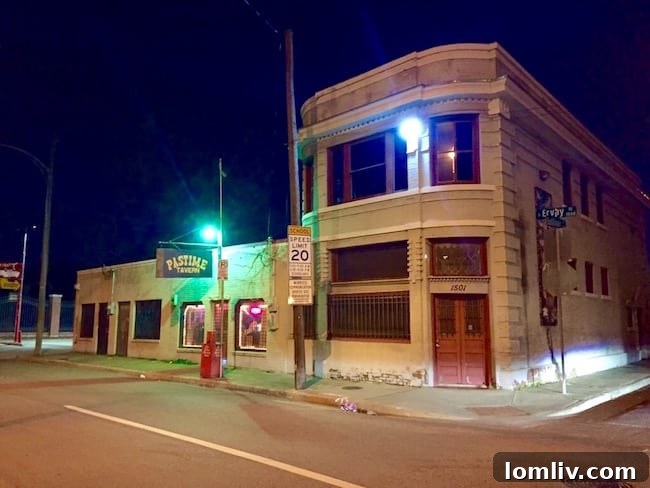
Even more poignant was the quiet closure of Pastime Tavern, Dallas’s oldest continuously operating bar, which had been serving patrons since 1937, just four years after the end of Prohibition. After one last New Year’s Eve hurrah, loyal customers and newcomers alike swarmed Pastime to pay their final respects, collectively breathing in the remnants of an era that was undeniably slipping away. Harry Hall, who owned Pastime Tavern for over three decades, expressed the profound loss: “I have a lot of memories I’ll never get back.” He explained the difficult decision: “It came to finances, and when MAC owner Claude Albritton bought this property he said, ‘You can stay here, but you won’t be able to afford it.’ Once we close, a bar will never be open here again because of the close proximity to the school. We were grandfathered in.” On Pastime’s final evening, Hall paused, a solemn look on his face, reflecting on the life he had poured into his business. “Only once were guns pulled against a would-be robber. Never had any other issues while I was here,” he remarked, highlighting the unique, untroubled character of a place that truly was “the epitome of old,” daring not to step foot into the 21st century.
The Neighborhood vs. Nightlife: The Saga of Ships Lounge
The fate of Lower Greenville’s nautical-themed dive, Ships Lounge, which first opened its doors in 1947, provided another high-profile example of the struggles facing historic bars. In 2015, its future resembled a year-long ping-pong match. Former owner Charlie “Red” Hunt initially locked the doors with a promise to reopen under new ownership. However, the prospect of Ships returning as a bar open until 2 a.m., as it had been for decades, was not well-received by the neighborhood.
The Lower Greenville Neighborhood Association (LGNA) led a fierce charge against Ships Lounge and its late-night operating hours, transforming the situation into a messy, public dispute. A December Dallas Morning Newsstory revealed the intensity of the conflict:
… longtime plan commissioner Neil Emmons, who represents that corner of Lower Greenville, told the commission that the LGNA was “prepared to spill blood” had (Zoning consultant Audra) Buckley not pulled the application.
“The ship has sailed,” said Emmons, referring to previous owner Charlie Hunt. Ships has a new owner, said Emmons, “let’s see how bright he is.”
This raises a crucial question: why should neighborhood associations have the final say over a business that has occupied the same spot for more than 60 years, long before developers began gentrifying the area? Fortunately, a new future emerged for Ships Lounge, with the bar announcing its reopening on July 13. As DMagazinereports, the dive’s new owners, Matt Pikar (owner of Nora and co-owner of Dallas Beer Kitchen) and his business partner Naser Nayeb, are committed to preserving its essence. However, the new incarnation of Ships will close at midnight, a compromise that ensures its survival but alters a long-standing aspect of its original character.
Protecting Dallas’s Past: Progress and Preservation
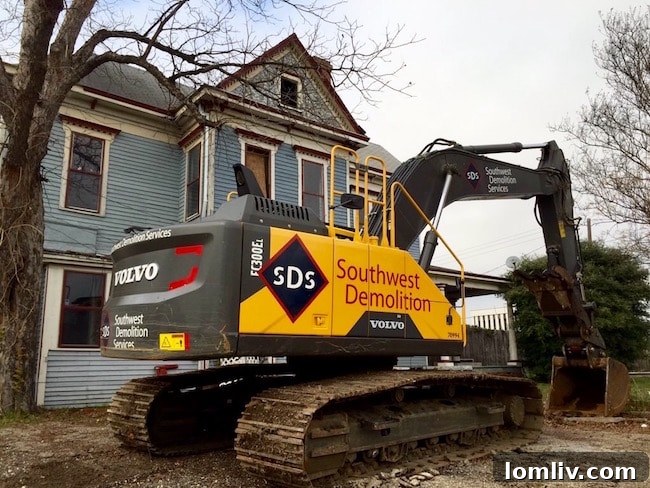
The challenges faced by individual establishments highlight a broader struggle for historic preservation across Dallas. In September 2014, when developer Tim Headington razed several historic downtown buildings, the public outcry was significant. This uproar prompted Mayor Mike Rawlings and David Preziosi, executive director of Preservation Dallas, to form a task force. This initiative focused on creating a “most endangered list” for the city’s historic infrastructure and led to the enactment of new rules guaranteeing a 10-day demolition delay for buildings exceeding 50 years old. While a seemingly small measure, this delay offers a critical window for preservationists to intervene and explore alternatives.
This new rule proved instrumental in saving an 1885 Victorian home in the Cedars neighborhood. The house was on the verge of demolition, with a bulldozer parked outside, when Cedars resident and former neighborhood president Michael Przekwas uncovered its impending fate. Time Warner Cable (TWC) intended to demolish the home to construct a parking lot, claiming it would enable them to expand and provide faster internet service. During a City Hall meeting in February, the argument of “No house = superior Internet” was presented. Ultimately, preservationists agreed to forfeit the historic designation label after TWC promised to relocate the home elsewhere in the neighborhood. This outcome, though a compromise, signifies a small victory for preservation in a city constantly grappling with growth.
Dallas is slowly making progress in preserving its historic neighborhoods, homes, and buildings. However, these structures remain vulnerable, particularly when situated outside established historically designated districts. With each closure intrinsically linked to new development, expanding these historic districts becomes paramount. Even areas as historically significant as Deep Ellum, once the anchor of the African American community, are not fully protected. As long as the ambiguous term “progress” is invoked to justify development, the concerns of those who cherish Dallas’s yesteryear often go unheard by city officials—those tasked with safeguarding the city’s unique framework. While many of these closings are owner-initiated, if the city cannot adopt a more proactive stance on preservation, how can we truly expect our cherished historic dive bars to be saved?
The Irreplaceable Value of Community Memory
The question lingers: What is the true cost of losing these nostalgic institutions that form the fragile historical fabric of our city? It is more than just the architectural character, which is often irreplaceable. It is also about the employees, who are as intertwined in our history as the businesses themselves. These establishments are repositories of countless untold stories. We may never know the specific business deals brokered or turned sour within their walls, or how many relationships began or ended in a tattered booth in a dark corner. We can only imagine how many musicians penned their next hit song over chain-smoked cigarettes, or the reasons behind brawls that spilled into the street after too much whiskey. How many soldiers found solace, safely perched on a bar stool, reliving the dangers of overseas tours? How many of these bars offered comfort in times of sorrow, yet helped us celebrate in times of success?
These aren’t merely distant memories from forgotten places; these memories define us all, contributing to our collective identity and the very soul of Dallas. And what good are memories if there is no place for them to call home, no physical space to evoke their rich history and continued relevance? Preserving these historic dive bars is not just about holding onto old buildings; it’s about safeguarding the living history, the shared experiences, and the enduring spirit that makes Dallas unique.