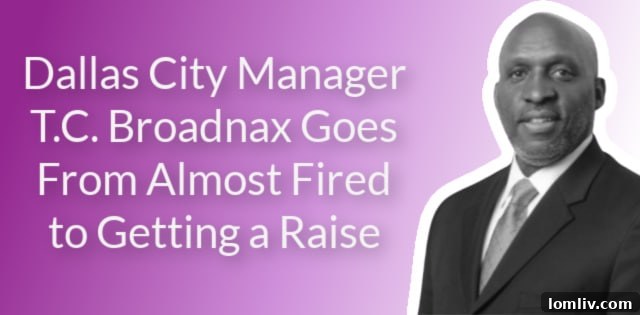
Dallas City Manager T.C. Broadnax Receives Salary Increase Amidst Performance Review and Public Scrutiny
In a significant decision that has drawn both affirmation and dissent, Dallas City Manager T.C. Broadnax recently saw his performance affirmed by the Dallas City Council during his annual evaluation. This positive assessment culminated in a 3 percent raise to his substantial $410,919 salary, increasing his annual earnings to over $423,000, effective with the new budget year in October. This outcome arrives merely a couple of months after Broadnax’s tenure appeared to hang in the balance, following intense scrutiny over various city operational challenges.
The vote, however, was far from unanimous, highlighting underlying divisions within the city’s leadership. Dallas Mayor Eric Johnson, along with council members Paula Blackmon (District 9), Adam McGough (District 10), Gay Donnell Willis (District 11), and Cara Mendelson (District 12), notably cast their votes against the city manager’s proposed salary hike. Their dissenting stance underscores ongoing concerns regarding leadership accountability and the efficiency of key city services.
Annual Evaluations Extend to Key Dallas City Appointees
The annual evaluation process wasn’t limited to the Dallas City Manager. Other critical city appointees also underwent performance reviews and subsequently received similar compensation adjustments. City Secretary Bilirae Johnson and City Auditor Mark Swann were among those evaluated, each granted a 3 percent salary increase. The evaluation for City Attorney Chris Caso, initially scheduled alongside his peers, was deferred and is now slated for January, allowing for a focused review of his office’s performance and contributions to Dallas city government.
Broadnax’s Journey from Scrutiny to Salary Bump
The approval of Broadnax’s raise is particularly noteworthy given the tumultuous period preceding it. Just two months prior, a group of council members initiated a formal request for a comprehensive review of the city manager’s performance, an action that carried the potential for severe consequences, including termination. This internal challenge brought Broadnax’s leadership directly into the spotlight, questioning his effectiveness in managing the city’s vast operations.
Intrigue further deepened when three of the five council members who initially filed the memo later retracted their support, claiming the document was submitted without their full consent. This unprecedented turn of events led to the request being rescheduled and subsequently removed from consideration entirely. The sudden withdrawal of the memo shifted the focus back to routine annual evaluations for all council appointees, including Broadnax’s contract, which was deliberated over two days.
Addressing Pressing Issues: Permitting, Police Files, and Record-Keeping
At the core of the earlier scrutiny were several high-profile issues that had plagued Dallas city operations. Broadnax, who is responsible for overseeing Dallas’s expansive workforce of 13,000 employees, faced intense criticism for his role in the city’s deeply problematic and “money-wasting building permit debacle.” This systemic failure had caused significant delays and financial losses for builders and residents alike, raising questions about efficiency and accountability within the city’s development services. The city had even formally asked builders for feedback on the issue ahead of a critical council briefing, underscoring the severity of the crisis, as reported in May.
Beyond the permit issues, Broadnax also came under fire for the deletion of millions of police files, a serious lapse that sparked concerns over data integrity and transparency within the Dallas Police Department. Furthermore, antiquated record-keeping processes across various city departments were identified as contributors to excessive red tape, hindering efficient government functionality and frustrating residents and businesses interacting with the city.
The 100-Day Plan: A Commitment to Corrective Measures
In response to the mounting pressure and public demand for action, T.C. Broadnax proactively committed to implementing comprehensive corrective measures. On July 19, he issued a detailed 100-day plan. This strategic roadmap outlined specific steps and timelines for addressing the systemic issues that had drawn widespread criticism. The plan aimed to streamline the permitting process, enhance data management practices within the police department, and modernize record-keeping to reduce bureaucratic hurdles. It represented a tangible effort to restore public trust and improve operational efficiency across Dallas city government.
Moreover, Broadnax has also incorporated solutions to these challenges into the proposed city budget, signaling a commitment to allocate resources effectively to address historical inefficiencies. This forward-looking approach seeks to ensure that corrective actions are not merely temporary fixes but are sustained through adequate funding and strategic planning. The focus on resolving these issues within the budget demonstrates a deeper integration of the “100-day plan” objectives into the city’s long-term financial strategy.
Dallas Budget and Property Tax Rate: A Debate Over Relief
While the city manager has focused on internal improvements, residents of Dallas have shifted their attention to the proposed city budget and its implications for their financial well-being. A key point of contention is Broadnax’s proposed property tax rate decrease of 2.75 cents. Many Dallas residents and homeowners are concerned that this reduction is insufficient to provide any meaningful or real relief, especially in a period of rising property valuations and general economic inflation. They argue that a more substantial reduction is necessary to truly alleviate the financial burden on property owners.
In response to these concerns, the city manager has stated that the proposed tax rate of 74.58 cents per $100 assessed valuation is appropriate and fiscally responsible. This rate is a central component of the city’s ambitious $4.51 billion proposed budget. The Dallas City Council is scheduled to formally adopt both the tax rate and the comprehensive budget on September 21, a decision that will significantly shape the city’s financial landscape and service delivery for the upcoming fiscal year.
During an August 9 council meeting, Broadnax articulated the rationale behind the budget and tax rate, emphasizing the critical balance between revenue generation and addressing long-standing city needs. “Our expenses are growing at an alarming level, and the decades of disinvestment, as well as deferred maintenance, are things we’ll continue to talk about,” Broadnax stated. “I wanted to make sure we at least had the revenue to get at those things year over year.” This statement highlights the complex challenge of managing increasing operational costs while simultaneously tackling historical underfunding in infrastructure and services. The city manager’s strategy aims to secure stable revenue streams to address these foundational issues, rather than offering short-term, potentially unsustainable tax cuts.
Looking Ahead: The Impact of Leadership and Financial Decisions
The decision to grant Dallas City Manager T.C. Broadnax a raise, despite the recent period of intense scrutiny and the split vote among council members, sends a clear signal about the council’s overall confidence in his ability to lead the city. His increased salary, now exceeding $423,000 annually, comes into effect in October, aligning with the start of the new budget year. This period will be crucial for Broadnax to demonstrate tangible progress on his 100-day plan and to effectively manage the city’s $4.51 billion budget while navigating public expectations for tax relief.
The ongoing debates surrounding the property tax rate and the broader financial health of Dallas will continue to be a central focus for both city leadership and its residents. The actions and performance of T.C. Broadnax in the coming months will be closely watched as he endeavors to steer Dallas through its current challenges, address historical issues of disinvestment and deferred maintenance, and ensure the efficient delivery of essential city services. His ability to unify the council, appease public concerns, and implement lasting improvements will define his legacy and the future trajectory of Dallas.