Unlocking Your Ideal Retirement: Navigating the Best Places to Settle Down
The journey into retirement marks a significant life transition, offering new freedoms, opportunities, and the chance to redefine your lifestyle. A crucial decision in this phase is choosing the right location – a place that aligns with your financial goals, lifestyle preferences, and healthcare needs. While countless lists and studies aim to simplify this complex choice, the truth is that the “best place to retire” is ultimately a deeply personal one.
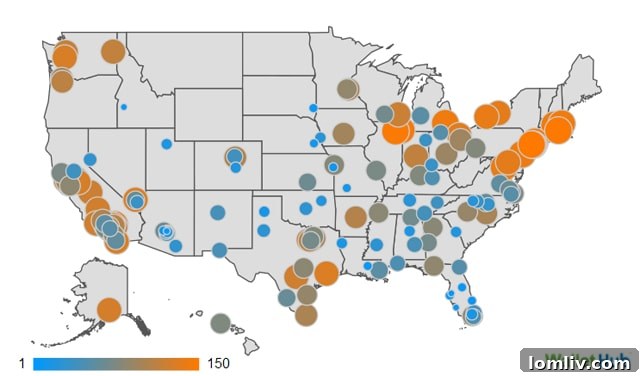
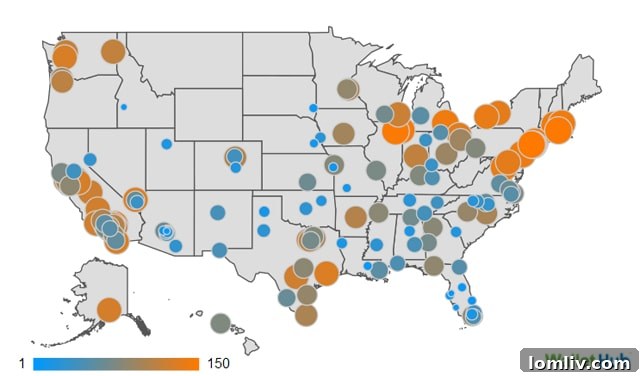
In 2015, WalletHub released a comprehensive study identifying the best and worst places to retire across 150 of the largest U.S. cities. This analysis, based on 23 diverse metrics, provides a valuable starting point for prospective retirees. Unsurprisingly, states renowned for their senior-friendly environments, like Florida and Arizona, dominated the top ten, thanks to factors such as no state income taxes and a long-standing infrastructure catering to retirees. For Texas, the results were a mixed bag, with Amarillo making a notable appearance at #14 overall, a ranking we’ll delve into further. Such reports, while insightful, are best utilized as guides rather than definitive answers, prompting individuals to critically evaluate what truly matters for their golden years.
Deconstructing Retirement Metrics: Beyond the Surface
WalletHub’s methodology categorized its 23 metrics into four main buckets: “affordability,” “activities,” “quality of life,” and “healthcare.” Each of these broader categories was further subdivided, aiming to provide a granular view of what makes a city retirement-friendly. For instance, the “activities” bucket considered factors like the number of senior centers, opportunities for fishing, hiking, and golf, adult volunteer activities, and a general “recreation” score that included parks and overall climate. While these metrics offer a quantifiable approach, their inherent subjectivity often requires a more nuanced interpretation.
Take, for example, the emphasis on activities like fishing, hiking, and golf. For many, these may indeed be cherished pastimes, but for others, they hold little appeal. Furthermore, a city’s geography heavily influences its ranking in such categories. Coastal cities naturally excel in fishing opportunities, while mountainous regions top the charts for hiking. Flat cities, like many in Texas, might see their residents’ “hiking” reduced to casual walks, unfairly penalizing them in a generalized ranking. This highlights a critical point: a list cannot capture the unique interests and daily routines of every individual. What truly matters is whether the activities *you* value are readily available, regardless of how they are weighted in a broad study.
The assumption that retirees universally desire to live exclusively among their peers is another subjective factor often embedded in such analyses. While there’s undeniable comfort in sharing experiences with those of a similar age and life stage, a growing number of retirees seek more vibrant, intergenerational communities. Living in an area rich with diverse ideas, cultural events, and dynamic change can offer a stimulating environment, contrasting sharply with what some might perceive as a “seniors-centric bubble” of early dinners, discount coupons, and golf cart parades. Understanding your own social preferences and desired level of community engagement is paramount when evaluating potential retirement locations.
The Paradox of Climate Rankings: When Data Doesn’t Align with Reality
One of the most perplexing aspects of aggregated data can be seen in climate rankings, where logic sometimes takes a backseat to algorithms. Consider the WalletHub climate scores: Dallas ranked #72 out of 100, while its neighbors Arlington and Fort Worth scored significantly higher at #36 and #32, respectively. Geographically, these cities are mere miles apart, experiencing virtually identical weather patterns. How could their climates differ so dramatically in a statistical analysis? The discrepancies continue with Boise, ID, a city known for its cold winters, ranking #26, while Scottsdale, AZ, famous for its intense summer heat, is #3. Even more bizarre, Honolulu, Hawaii, a city globally celebrated for its idyllic climate, landed at #43, lower than many cities experiencing extreme temperatures. These inconsistencies underscore the need to scrutinize the underlying methodologies and remember that data points, when taken out of context, can paint a misleading picture. Your personal definition of “good climate” – whether it’s year-round warmth, distinct seasons, or low humidity – should always take precedence over a generalized ranking.
Texas Metroplex Performance: Beyond the Averages
Despite some methodological quirks, WalletHub’s study offers valuable insights into specific aspects of retirement planning. For example, Plano and Grand Prairie in Texas stood out for having the highest percentage of employed people over 65, ranking #2 and #3 nationally, respectively. This statistic is particularly significant for individuals whose retirement savings may not be sufficient, or for those who simply wish to remain active and engaged through part-time work. It suggests that these areas not only offer job opportunities for older adults but also foster an environment where seniors are able and willing to contribute to the workforce. Conversely, Brownsville, TX, ranked #146 in this category, indicating a different economic landscape for seniors seeking employment.
When it comes to in-home healthcare costs, a critical consideration for many as they age, Texas border towns like Brownsville (#1) and El Paso (#5) emerged as the most affordable. This affordability could be attributed to various factors, including the cost of labor and a competitive market for services in these regions. In stark contrast, California cities dominated the most expensive categories, underscoring the significant financial disparities in healthcare across the nation. For those prioritizing lower out-of-pocket costs for essential services, these regional differences are crucial.
The adjusted cost of living further highlighted Texas’s affordability, with Laredo taking the #1 spot and Amarillo #4 nationally among the least expensive cities. Predictably, high-cost-of-living areas such as California cities, New York City, and Honolulu occupied the most expensive slots. These figures are powerful indicators for retirees looking to maximize the longevity of their savings.
The Looming Shadow of Debt: A Barrier to Retirement Readiness
One of the most sobering findings from the WalletHub report, corroborated by the Employee Benefit Research Institute’s 2015 Retirement Confidence Survey, was the alarming statistic that only about 11 percent of workers were financially prepared to retire at age 65, despite 23 percent expecting to do so. The primary culprit? Debt. A staggering 31 percent of workers reach retirement age burdened by enough debt to force them to continue working, delaying their dreams of leisure and relaxation.
Addressing debt becomes paramount for financial freedom in retirement. Generally, there are four primary strategies to tackle this challenge:
1. Windfall: This category includes unexpected financial boons like inheritances, lottery winnings, or significant investment returns. While certainly a desirable outcome, relying on a windfall is an unpredictable and generally unreliable strategy for robust retirement planning.
2. Bankruptcy: For some, bankruptcy might appear as a last resort to clear overwhelming debt. However, it’s crucial to understand its limitations, particularly concerning student loan debt. Due to lobbying efforts in 2005, student loans became largely non-dischargeable in bankruptcy. This is a growing concern, as 17 percent of all student loan debt in 2014—totaling $204 billion—was held by borrowers over 50 years old. Even more concerning, balances for those over 60 have surged nine-fold since 2004, often due to co-signing for children or grandchildren, or individuals returning to school later in life. Beyond bankruptcy’s inability to clear these debts, Social Security payments can even be garnished to repay outstanding student loans, further compounding financial hardship in retirement.
3. Earning More: While a seemingly straightforward solution, increasing income later in life can be challenging. Older workers may face ageism in the job market, or their skills may not align with current industry demands. Finding well-paying, flexible work that complements retirement goals rather than detracting from them requires careful planning and often additional training.
4. Spending Less: This is arguably the most controllable and effective strategy for increasing savings and reducing debt. One of the most impactful ways to spend less is by relocating to an area with a lower cost of living, especially if that area also offers desirable retirement amenities. This strategic move can significantly stretch retirement funds and accelerate debt repayment, providing a dual benefit for financial stability.
Affordability: The Cornerstone of a Secure Retirement in Texas
When the objective is to spend less and build financial security, “affordability” becomes the paramount consideration. This crucial metric is typically broken down into three core components: the overall cost of living, local and state taxes, and the cost of in-home services. For residents considering retirement in Texas, understanding the state’s unique tax structure is essential. Texas notably ranks #47 among the 50 states in real estate taxes and #38 in sales tax, indicating relatively higher burdens in these areas. However, it also boasts a significant advantage: Texas is tied for #1 in state income taxes because it has none. This absence of state income tax can be a substantial financial boon for retirees, particularly those with significant pension or investment income. Given the focus on retirement, the cost of in-home services, such as healthcare and assistance, is an equally important factor, as these expenses can significantly impact a senior’s budget.
Based on these affordability criteria, the WalletHub study presented a clear picture of how Texas cities stacked up for those looking to reduce debt, save for retirement, and potentially live long-term in the Lone Star State. The following list, derived from the Top 150 cities in the United States, highlights the affordability rankings for various Texas urban centers:
Laredo #5
Amarillo #10
Lubbock #17
El Paso #19
Corpus Christi #25
Brownsville #31
San Antonio #38
Dallas #44
Houston #59
Irving #66
Grand Prairie #66
Garland #66
Ft Worth #81
Arlington #81
Austin #84
Plano #85
This ranking clearly illustrates the significant variation in living costs even within a single state. To a great extent, the most affordable places to live often correlate with areas where fewer people actively *desire* to live, reflecting fundamental principles of supply and demand. The majority of Texas cities, when measured against the study’s metrics, fall into the lower half of overall affordability, with many, including Dallas, landing in the lower third. This trend might also offer a cross-reference to other findings: perhaps the relatively high cost of living in Plano, ranked #85 in affordability, contributes to the observed high percentage of employed senior citizens there, who may need to work longer to sustain their lifestyle.
Amarillo’s Unique Appeal: A Case Study in Prioritization
Amarillo’s #14 overall ranking in WalletHub’s study, despite its relatively lower scores in certain categories, serves as an excellent illustration of how different metrics contribute to a composite score and how individual priorities can shape the “ideal” retirement spot. Amarillo achieved its high overall placement largely due to its exceptional affordability, securing the #10 spot in that specific metric and #4 nationally for lowest adjusted cost of living. While it performed commendably in “quality of life” at #44, its rankings in “healthcare” (#100) and “activities” (#91) were considerably lower. This breakdown reveals that if one’s primary goal is to maximize savings, minimize debt, and live cheaply, and if access to extensive healthcare facilities or a wide array of recreational activities like fishing, hiking, and golf are not top priorities, then Amarillo could indeed be an excellent choice for retirement.
Ultimately, lists and calculators, no matter how comprehensive, are merely tools. Their true value lies not in providing definitive, one-size-fits-all answers, but in prompting deeper reflection and critical questions. They force individuals to consider their own unique circumstances, desires, and financial realities. The journey to a fulfilling retirement begins with self-assessment, personal research, and perhaps, consultation with financial advisors and local experts. Armed with this personalized understanding, the “best place to retire” transforms from an abstract ranking into a concrete, achievable vision tailored precisely to you. Your ideal retirement location isn’t found on a list; it’s discovered through your own informed decisions and priorities.
As you plan your retirement, remember to prioritize what truly matters to you. Whether it’s proximity to family, specific climate preferences, access to cultural activities, or simply the peace of mind that comes with financial stability, making an informed choice is key to enjoying your golden years to the fullest.