

Selling a house is one of the most significant financial and emotional decisions many individuals and families will ever make. Beyond the sentimental value and the effort involved in preparing a home for sale, understanding the financial implications, especially real estate commissions and other associated costs, is crucial. For most sellers, the ultimate goal is to maximize their net proceeds at closing, and how effectively these costs are managed directly impacts that outcome.
This comprehensive guide delves into the various expenses homeowners can expect when selling their property through traditional means. We’ll also explore alternative approaches, such as the streamlined cash home selling process, for those aiming to achieve a swift and hassle-free transaction, often bypassing many of the conventional costs associated with agent-led sales.
Understanding Real Estate Commissions: What the Average Seller Pays
In the United States, the traditional method of selling a home almost invariably involves engaging real estate agents, which means paying commissions. These commissions represent one of the largest single expenses for a seller, typically ranging from 5% to 6% of the final sale price. This percentage is usually split between two agents: the listing agent (or seller’s agent) who represents you, and the buyer’s agent who represents the purchaser.
Let’s illustrate with an example: if your home sells for $400,000, a 6% commission would amount to a substantial $24,000. This significant sum is deducted directly from your sale proceeds at the time of closing. This fee compensates agents for their extensive services, which include marketing your property, conducting showings, negotiating offers, and guiding both parties through the complex sales process.
While this 5-6% figure is a national average, it’s important to note that commission rates can vary slightly by region, market conditions, and individual agent agreements. It’s also a common misconception that this percentage is fixed; in reality, commissions are often negotiable, though agents typically have a standard rate they prefer.
Beyond Commissions: Other Essential Seller Expenses
In addition to real estate agent commissions, sellers face several other categories of expenses that can significantly impact their net proceeds. Being aware of these upfront is vital for accurate financial planning:
- Closing Costs. These are administrative and legal fees paid at the close of the transaction. They cover various services provided by third parties, such as the title company, escrow services, and legal professionals. Typical closing costs for sellers in Texas, for instance, often range from 2% to 4% of the sale price. These can include:
- Title Insurance: Protects against claims to ownership of the property.
- Escrow Fees: Paid to the escrow holder (often the title company) for managing the transaction’s funds and documents.
- Attorney Fees: If an attorney is involved in reviewing documents or representing the seller.
- Recording Fees: For officially registering the sale with the local government.
- Prorated Property Taxes: The seller is responsible for property taxes up to the closing date.
The exact amount depends heavily on the property’s value, the specific title company chosen, and the intricacies of the transaction.
- Preparing the House for Sale. To attract buyers and secure the best possible offer, sellers often need to invest in their property. This can range from minor cosmetic updates to more substantial repairs:
- Repairs: Fixing leaky faucets, patching holes in walls, repairing damaged flooring, or addressing minor electrical issues.
- Cosmetic Updates: A fresh coat of paint, updated light fixtures, new landscaping, or modernizing outdated hardware can significantly enhance curb appeal and interior aesthetics.
- Home Staging: Arranging furniture and decor to make the home appear more attractive and spacious to potential buyers, either through professional stagers or DIY efforts.
- Professional Cleaning: Ensuring the home is spotless for showings and open houses.
While these investments can yield a higher sale price, they represent upfront costs that eat into the seller’s budget before the sale even occurs.
- Taxes and Fees. Depending on the state and local municipality, there may be additional costs:
- Transfer Taxes: Also known as deed stamps or documentary stamps, these are taxes imposed by state or local governments on the transfer of real property. (Note: Texas does not have state-level transfer taxes, but other states do.)
- Prorated Property Taxes: As mentioned under closing costs, sellers are responsible for their share of annual property taxes up to the closing date.
- HOA Fees: If the property is part of a homeowners’ association, prorated HOA dues might also be part of the closing statement.
When these various expenses are tallied, many homeowners quickly realize that a traditional sale involving a real estate agent can consume a substantial portion of their potential profit. This realization often leads them to explore alternative selling strategies.
Why Sellers Are Looking for Faster, More Convenient Options

The traditional process of selling a house with a real estate agent is a time-consuming endeavor. It typically involves weeks, if not months, of market exposure, waiting for potential buyers, enduring numerous showings, navigating complex negotiations, and undergoing potentially stressful home inspections. If the buyer relies on mortgage financing, the transaction timeline can stretch even further, as appraisals and loan approvals introduce additional variables and delays.
However, life often throws curveballs that demand a much quicker resolution. In such urgent situations, the leisurely pace of a traditional sale becomes an insurmountable hurdle. Sellers often find themselves in circumstances where speed and certainty of sale outweigh the goal of achieving the absolute top market price. These pressing situations include:
- Threat of Bankruptcy or Foreclosure Risk. When facing severe financial distress, a quick home sale can be a critical lifeline to avoid bankruptcy or the devastating impact of foreclosure, preserving credit and providing necessary liquidity.
- Job Relocation. An unexpected job offer in a new city or state often necessitates a rapid move. Carrying two mortgages or dealing with the logistics of selling a home from a distance can be financially and emotionally draining.
- Inherited Property That’s Hard to Maintain. Inheriting a property can be a mixed blessing. It often comes with the burden of maintenance, property taxes, and emotional ties, especially if the house is older, needs significant repairs, or is located far from the new owner’s residence. A quick sale can alleviate these responsibilities.
- Immediate Need to Access Cash. Whether it’s to cover unexpected medical bills, invest in a new business venture, or settle a divorce, some situations require immediate access to significant capital. Waiting months for a traditional sale is simply not an option.
- Dealing with Difficult Tenants or Problematic Properties. Landlords who are tired of managing troublesome tenants or owners of properties that require extensive, costly renovations might seek a rapid exit strategy.
- Avoiding Extensive Repairs and Renovations. For properties in disrepair, the cost and effort of bringing them up to market standards can be daunting. A fast sale avoids these burdens entirely.
In such scenarios, homeowners actively seek alternative selling methods where the commission structure is minimal or entirely absent, and the transaction speed is prioritized above all else. These alternatives offer a pathway to quickly liquidate an asset and move forward with their lives.
Selling for Cash: The Expedited Solution
For those prioritizing speed and convenience, selling to specialized companies or private investors who buy real estate for cash has emerged as a popular option. These entities are commonly known as “we buy houses cash companies” or cash home buyers. The primary advantage of this route is unparalleled speed. Cash buyers can often close a transaction in as little as 7 to 14 days, a stark contrast to the months-long process of a traditional sale, depending on the property’s specifics and the efficiency of title paperwork.
One of the most appealing aspects of cash buyers is their willingness to purchase houses in virtually any condition. This eliminates the need for the seller to invest in costly repairs, cosmetic updates, or staging. It also means no open houses, no constant showings, and no worries about buyers pulling out due to inspection findings. Furthermore, these companies frequently cover most, if not all, of the closing costs, providing an additional financial relief to the seller.
The Trade-Off: While the benefits of speed and convenience are significant, it’s crucial to understand the main compromise: the offer price will typically be lower than what the property might fetch on the open market. This is because cash investors factor in a margin for their expenses, which include potential renovation costs, holding costs (taxes, insurance, utilities during renovation), and their profit margin for reselling or renting the property. For sellers whose primary concern is time, convenience, or avoiding the headaches of repairs, this trade-off can make perfect financial and practical sense, despite a lower final sale price.

Selling Without an Agent (FSBO): Taking Control
Another alternative to traditional real estate sales is the “For Sale By Owner” (FSBO) approach. FSBO means the homeowner takes on the full responsibility of selling their property themselves, from marketing and conducting showings to negotiating offers and managing legal paperwork. The most attractive aspect of an FSBO sale is the potential to save on the listing agent’s commission, which typically accounts for half of the total 5-6% commission (i.e., 2.5-3%).
However, while FSBO can reduce costs, it comes with its own set of challenges and demands a significant investment of time and effort. Sellers must be prepared to handle:
- Pricing the Home Accurately: Without an agent’s expertise, overpricing or underpricing is a common pitfall.
- Marketing and Exposure: Effectively reaching potential buyers, which often means using online listings, social media, and yard signs, sometimes with limited access to the Multiple Listing Service (MLS) without a flat-fee service.
- Handling Inquiries and Showings: Responding to buyer questions, scheduling viewings, and personally conducting tours.
- Negotiation: Skillfully negotiating offers, counter-offers, and contingencies with buyers or their agents.
- Legal and Organizational Complications: Drafting or reviewing purchase agreements, understanding disclosure requirements, coordinating inspections, and navigating the closing process can be complex and intimidating without professional guidance.
It’s also important to note that while FSBO sellers save on their own agent’s commission, most buyers work with an agent. To attract these buyers, FSBO sellers often still need to offer a commission (typically 2.5-3%) to the buyer’s agent. While this is negotiable, not offering it can significantly limit the pool of interested buyers.
The Streamlined Cash Sale Procedure: What to Expect
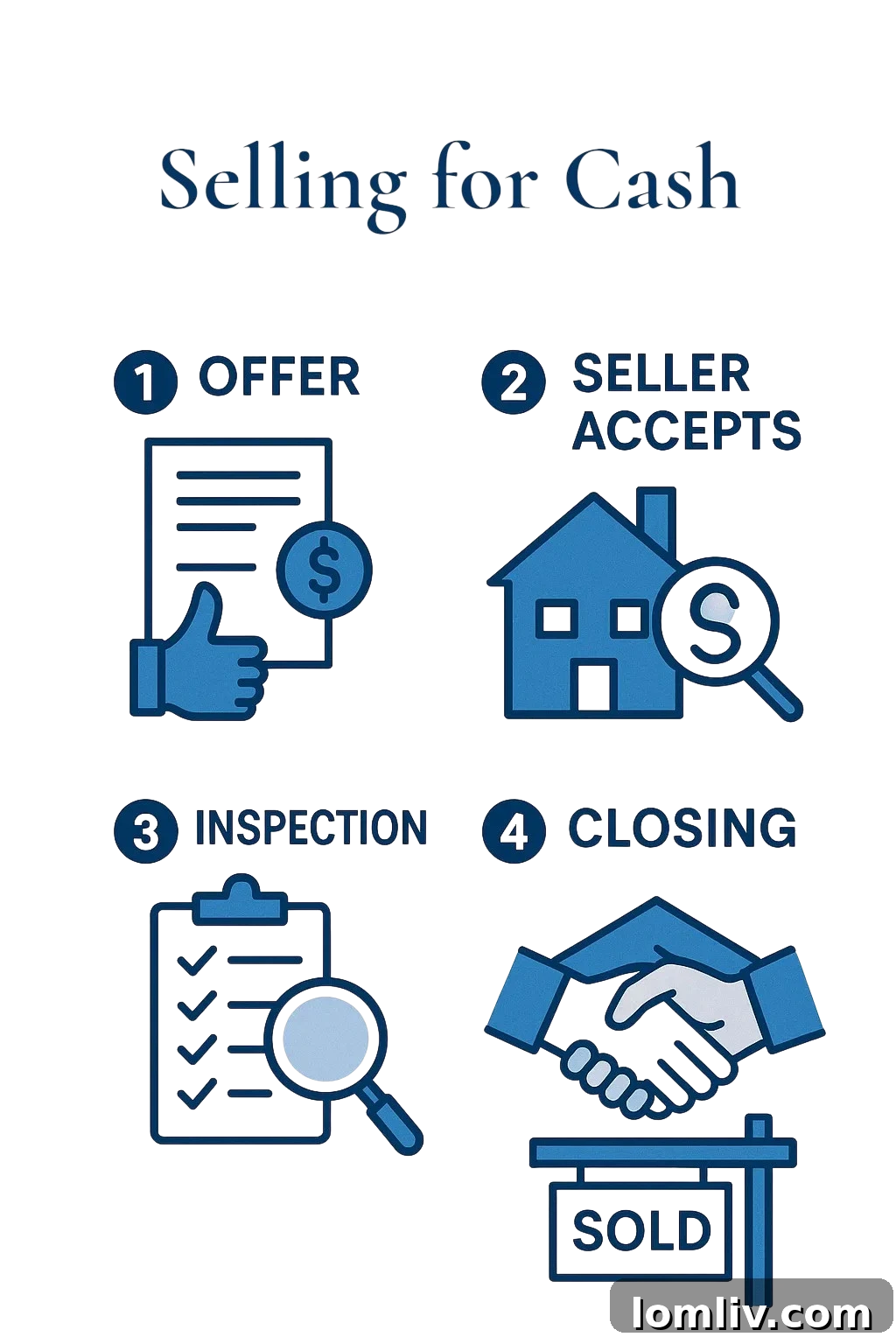
The process of selling a house for cash to an investor or a “we buy houses” company is remarkably straightforward and designed for efficiency. It typically follows these concise steps:
- Initial Offer Request & Property Evaluation. The process begins when the seller contacts a cash buyer, usually through an online form or a phone call, providing basic details about their property. The company or investor then conducts a preliminary evaluation, often using publicly available data, photographs, and sometimes a quick on-site visit to assess the property’s condition and market value. This assessment is usually informal and swift, not a lengthy appraisal or inspection.
- Presentation of a Fair Cash Offer. Based on their evaluation, the cash buyer will present a no-obligation cash offer to the seller. This offer takes into account the property’s current condition, necessary repairs, and the investor’s projected resale or rental value. The seller is then free to accept or reject this offer without any pressure or obligation.
- Signing the Purchase Agreement. If the terms of the cash offer are acceptable to the seller, a straightforward purchase and sale agreement is drafted and signed. Unlike traditional contracts, these agreements typically have fewer contingencies (such as financing or appraisal contingencies), making the deal more certain.
- Expedited Closing Process. Once the contract is signed, the transaction moves quickly to the closing phase, usually managed by a reputable local title company or attorney’s office. The title company performs a title search to ensure there are no liens or encumbrances on the property. Since there’s no lender involved, there’s no waiting for mortgage approvals or extensive underwriting processes.
- Seller Receives Funds. After the title search is complete and all necessary documents are signed at the closing table, the seller receives their money, typically via wire transfer, often within hours or a few days.
The entire process, from initial contact to receiving funds, can take anywhere from a few days to a couple of weeks. This speed and lack of traditional hurdles—like financing contingencies, repairs, and agent negotiations—are what truly distinguish a cash sale from the lengthy conventional selling method.
Choosing Your Path: Profit Maximization Versus Speed and Convenience

The decision of how to sell your home ultimately boils down to a fundamental choice between two primary objectives: maximizing your financial profit or prioritizing speed, convenience, and a hassle-free experience. There is no single “right” answer, as the best path depends entirely on your personal circumstances, financial goals, and tolerance for the complexities of a real estate transaction.
If your overarching goal is to obtain the absolute maximum amount from the sale of your property, then the traditional sale through a seasoned real estate agent remains the most advisable route. This method, while requiring patience and investment, positions your home to reach the widest possible audience of qualified buyers, potentially leading to competitive bidding and a higher final sale price. However, this strategy necessitates accepting the significant costs of real estate commissions, closing expenses, and the time commitment involved in preparing your home, marketing it, and navigating a potentially lengthy closing process.
Conversely, if liquidity, speed, and the elimination of stress are more paramount to your current situation, then considering direct sales to an investor or specialized “we buy houses” companies offers a compelling alternative. While the final sale amount may be lower than a traditional market sale, this approach grants you the distinct advantages of:
- Avoiding all real estate commissions.
- Eliminating the need for costly repairs or renovations.
- Bypassing home showings and open houses.
- Securing a guaranteed, fast closing, often within days.
- Minimizing closing costs, as many cash buyers cover them.
- Gaining certainty and peace of mind.
This path allows you to bypass hidden costs, significant out-of-pocket expenses for repairs, and the often-anxious long waits associated with traditional sales. It’s particularly beneficial for properties in disrepair, inherited homes, or situations demanding immediate financial relief.
Before making a decision, it is wise to explore all your options. Get a traditional market appraisal, request cash offers from reputable investors, and compare the net proceeds, timelines, and levels of effort required for each scenario. This comprehensive comparison will empower you to make an informed choice that best aligns with your individual needs and priorities.
Conclusion
Selling a home is a complex endeavor, and understanding the financial landscape is paramount. Real estate commissions, alongside various closing costs and preparation expenses, can amount to tens of thousands of dollars, significantly impacting a seller’s final net profit. For many homeowners, especially in dynamic markets like Texas, these considerable costs can be a deterrent, prompting them to seek more efficient and cost-effective alternatives.
The market now offers several viable options beyond the conventional agent-led sale. Selling directly to an investor or a “we buy houses cash company” provides an expedited process, eliminating commissions, repairs, and prolonged waiting periods, albeit typically at a lower sale price. For Sale By Owner (FSBO) offers potential savings on listing agent fees but demands significant time, effort, and expertise from the seller. Each of these methods—traditional sale, cash transaction, or FSBO—comes with its unique set of pros and cons.
Ultimately, the optimal choice for selling your home hinges on your specific priorities. Are you aiming for the maximum possible price, willing to invest time and money into the process, and comfortable with market fluctuations? Or is your immediate need focused on speed, convenience, and a guaranteed, hassle-free transaction, even if it means accepting a slightly lower offer? By carefully evaluating your personal circumstances and financial objectives, you can confidently choose the selling strategy that best aligns with your goals and leads to a successful home sale.