In a dynamic urban landscape like Dallas, the topic of housing affordability and availability remains at the forefront of civic discourse. Recently, a planned presentation on the comprehensive Dallas Housing Policy 2033, initially set for late August, was unexpectedly postponed. While this delay might suggest a shift in priorities, elected officials are quick to reassure the public that their commitment to addressing Dallas’s pressing housing needs remains unwavering. This postponement, they affirm, does not diminish the critical importance of crafting sustainable housing solutions for the city’s growing population.
The highly anticipated presentation, which outlines the strategic implementation of Dallas Housing Policy 2033 (DHP 2033), is now expected to be heard in the near future. It will likely take center stage at a meeting of the Housing and Homeless Solutions Committee, an influential body chaired by District 2 Councilman Jesse Moreno. This committee plays a pivotal role in shaping the city’s approach to housing, making it the appropriate forum for discussing such a crucial policy document.
Adding another layer of complexity to the policy’s trajectory is the recently announced resignation of Housing and Neighborhood Revitalization Director David Noguera. Noguera has been a central figure in the development and refinement of DHP 2033, and his departure raises questions about potential impacts on the policy’s continuity and leadership during its critical implementation phase. The city now faces the challenge of ensuring a seamless transition and maintaining the momentum he helped build.
As Dallas navigates a busy period dominated by budget hearings and town halls for the impending 2024 bond referendum, there’s a risk that crucial initiatives like DHP 2033 might get overshadowed. To prevent this vital policy from being lost in the shuffle of competing municipal priorities, we delve deeper into its latest iteration, its foundational principles, and the challenges that lie ahead. Understanding the intricacies of this policy is essential for all stakeholders, from city officials and developers to current and prospective Dallas residents, as it will profoundly shape the city’s future residential landscape.
Dallas Housing Policy 2033: Origins, Evolution, and Public Debate
The journey of Dallas Housing Policy 2033 has been anything but straightforward. When initially proposed in mid-2022, the policy encountered significant hurdles and criticism. David Noguera, then at the helm of Housing and Neighborhood Revitalization, candidly identified mistakes in the initial draft, acknowledging the necessity for a comprehensive overhaul. This commitment to self-correction signaled a dedication to developing a robust and effective policy that truly addresses Dallas’s unique housing challenges.
In a proactive move to support the policy’s objectives and provide clarity, Noguera’s team also spearheaded the creation of a detailed resource catalog. This invaluable document compiles all available housing programs and grant funds offered across Dallas, serving as a vital tool for residents, non-profits, and developers seeking to navigate the complex landscape of housing assistance and development incentives. It underscored the administration’s commitment to transparency and accessibility in its housing initiatives.
Following extensive revisions and deliberations, the updated policy finally gained approval, adopted by a 12-2 vote in April. However, this vote was not unanimous, highlighting the deep-seated disagreements within the City Council regarding the policy’s approach. District 12 Councilwoman Cara Mendelsohn and then-District 10 Councilman Adam McGough cast the dissenting votes, signaling their reservations about certain aspects of the plan.
While there is a general consensus among elected officials on the urgent need for greater housing affordability and availability in Dallas, the specifics of how to achieve these goals remain contentious. Debates often revolve around the desired aesthetic of new developments, the most appropriate geographical areas for housing interventions, and the most effective mechanisms for policy implementation. These differences underscore the complex nature of urban planning and the challenge of balancing diverse community needs and visions.
Councilwoman Mendelsohn, in particular, voiced strong objections during the pivotal April council meeting. Her core arguments centered on two key concerns: a perceived lack of meaningful public engagement during the policy’s formulation and what she viewed as an undue prioritization of apartment complexes over other housing types. Mendelsohn contended that the policy, in its current form, might inadvertently neglect broader strategies for fostering homeownership and diversifying housing options.
“When we look at the racial disparity of homeownership, this is a symptom of poverty,” she asserted during the debate. “The focus of this council has not been on addressing poverty issues; it’s solely on exacerbating racial issues, in my opinion. What I’m not hearing is that robust conversation that says, ‘How are we going to make housing more affordable by changing, perhaps, how we develop it, including lot size and home size?’ Not everyone wants to live in multifamily.” Her comments highlighted a fundamental philosophical divide within the council concerning the root causes of housing inequality and the most appropriate governmental responses, advocating for a more holistic approach that considers various housing forms and ownership models.
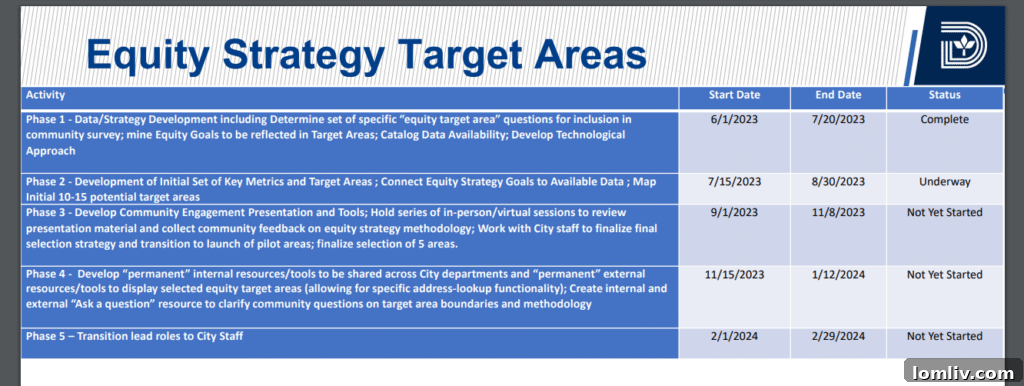
To facilitate the complex implementation phase and ensure comprehensive community involvement, Dallas entered into a contract with TDA Consulting in May. This partnership is crucial for several key components of the DHP 2033 rollout. TDA Consulting is tasked with spearheading community engagement efforts, establishing and facilitating a dedicated housing task force, identifying specific equity strategy target areas, developing cooperative agreements with various city departments, formulating compliance policies and procedures, and ultimately orchestrating the program’s full launch. This extensive scope of work underscores the city’s recognition that successful policy implementation requires expert guidance and robust, multifaceted support.
Navigating Competing Priorities and Innovating Housing Solutions
The immediate future of Dallas City Council’s agenda appears heavily weighted towards critical financial matters. It is widely anticipated that much of September will be dedicated to meticulous reviews of budget amendments and the crucial task of determining the new property tax rate, decisions that will directly impact residents and city services as the new fiscal year commences on October 1st. These fiscal responsibilities naturally demand significant attention and resources from city leadership.
Beyond the annual budget, another monumental undertaking looms: the formidable $1 billion 2024 bond issue. This substantial investment initiative, along with a comprehensive rewrite of the city’s land use plan slated for adoption early next year, further competes for the council’s time, focus, and public discourse. These are all high-stakes issues that require careful deliberation and broad public input, creating a crowded policy landscape where the Dallas Housing Policy 2033 must vie for sustained attention.
Despite these pressing and competing priorities, city council members are demonstrably not complacent when it comes to advancing housing policy. Many remain acutely aware of the ongoing housing crisis and are actively seeking innovative ways to push DHP 2033 forward. Their commitment reflects a deeper understanding that robust housing solutions are not merely an ancillary concern but a fundamental pillar of Dallas’s long-term economic vitality and social equity.
Councilman Chad West, an active and vocal member of the housing committee, articulated his cautious optimism in an email to District 1 residents. He expressed hope that concrete policy strategies and measurable targets for developing and retaining affordable housing will emerge once the foundational work, meticulously outlined in the DHP 2033 implementation schedule, is fully completed. His sentiment highlights the critical distinction between foundational planning and tangible action, underscoring the need for the policy to transition from conceptual frameworks to practical, impactful initiatives.
West, however, also shared a candid observation from his housing policy advisers: “My housing policy advisers have warned me that it includes lots of processes but little in the way of specific strategies and targets to develop and retain affordable housing.” This feedback is crucial, suggesting that while the policy establishes necessary procedural frameworks, it may need further refinement to embed clear, actionable strategies and quantifiable goals for increasing affordable housing stock. This gap points to a potential area for future enhancement, ensuring the policy translates into real-world outcomes for residents.
In a proactive effort to tackle what he identifies as a pervasive “Not in My Backyard” (NIMBY) mentality within Dallas, Councilman West recently put forth a compelling suggestion. He advocated for the adoption of an Affordability Impact Statement, a tool successfully utilized by the Austin City Council when evaluating zoning and policy matters. Such a statement would require proposals to articulate their potential effects on housing affordability, thereby introducing a critical lens through which development decisions are made. This mechanism could empower council members and the public to weigh the broader societal implications of land use changes, fostering a more informed and equitable decision-making process.
“I have asked Dallas city staff to explore this tool and plan to either set it for an agenda at the [Government Performance and Financial Management] Committee or ask another committee chair to host this briefing,” West confirmed. His initiative reflects a strategic push to equip city leaders with better tools to counteract NIMBY pressures. “We do need more tools to give council members the confidence that it’s OK to fight through the NIMBY that permeates City Hall frequently,” he added. This statement powerfully underscores the challenge posed by localized opposition to new housing developments and the urgent need for systemic mechanisms to support city-wide housing goals, ensuring that essential projects are not unduly derailed by parochial interests.
The Path Forward: Key Implementation Steps and Sustained Engagement
Despite the recent postponement of the presentation and the complexities of competing city priorities, significant progress is already being made on several fronts concerning DHP 2033. According to TDA Consulting, the firm engaged to assist with implementation, many of the outlined objectives are currently underway. This proactive approach demonstrates a commitment to moving the policy forward, even as broader administrative and financial discussions continue.
The detailed implementation schedule, as outlined in an August 22 presentation (which was publicly posted among city documents but has not yet been formally delivered at a committee or council meeting), sets forth a clear roadmap for the immediate future. These crucial next steps are designed to build upon the foundational work and translate the policy’s vision into tangible, impactful actions across Dallas:
- Continued Implementation of Dallas Housing Policy 2033: This overarching objective emphasizes the ongoing commitment to executing the policy’s various components, ensuring that efforts are sustained and integrated across different city functions. It signifies a long-term dedication rather than a one-off initiative.
- In-Person Meetings with Department Directors and Key City Staff: Direct engagement with department heads and vital city personnel is critical for fostering inter-departmental collaboration and ensuring that all relevant city departments are aligned with and actively contributing to the housing policy’s goals. This ensures a coordinated, city-wide effort.
- Identification of Potential Target Areas: This crucial step involves pinpointing specific neighborhoods or geographical zones within Dallas where housing interventions are most needed and where the policy’s equity strategies can have the greatest impact. Data-driven analysis and community input will guide these selections.
- Community Feedback on Potential Target Areas: Recognizing the importance of resident involvement, the policy mandates soliciting and incorporating community feedback on these identified target areas. This ensures that interventions are sensitive to local contexts and meet the genuine needs of the residents they aim to serve, fostering buy-in and success.
- Finalization of Design for the Inclusive Housing Task Force: The establishment of a dedicated task force is central to the policy’s implementation. This step involves meticulously designing its structure, defining its mandate, selecting its members, and outlining its operational procedures to ensure it is effective and representative in addressing housing challenges.
- Ongoing Reports to City Council: Regular updates to the City Council are essential for accountability, transparency, and continuous oversight. These reports will provide council members with insights into implementation progress, highlight challenges, and inform any necessary adjustments to the policy’s trajectory.
The journey of Dallas Housing Policy 2033 is an ongoing testament to the city’s commitment to creating a more equitable and affordable living environment for all its residents. While challenges such as leadership transitions, competing fiscal priorities, and inherent community debates are inevitable, the structured approach to implementation, coupled with the commitment of key council members, suggests a determined path forward. The success of this policy hinges not just on its well-crafted objectives but on the sustained engagement of city officials, community leaders, and residents alike. Stay tuned to daltxrealestate.com for the very latest updates and in-depth analyses on the evolving landscape of Dallas Housing Policy 2033, as the city strives to build a more inclusive and prosperous future for everyone.