
Uncover Hidden Riches: How New Floridians Can Find Unclaimed Money From Past States
The Sunshine State calls to millions, drawing new residents with its vibrant culture, stunning beaches, and a promise of a relaxed lifestyle. Whether you’re moving to Florida for its perpetual summer, a career change, retirement dreams, or to establish a second home as a snowbird, the excitement of a new beginning often overshadows a crucial detail: money you might have inadvertently left behind in your previous state.
Relocating is a whirlwind of tasks, from redirecting mail and setting up new utilities to packing countless boxes and remembering where you stored your essential items. Amidst this organized chaos, it’s remarkably easy for small financial loose ends – a forgotten bank account balance, a final paycheck, a rental deposit, or a medical overpayment – to slip through the cracks. These seemingly minor oversights can accumulate, turning into a significant sum of unclaimed money waiting to be rediscovered.

This isn’t an isolated phenomenon. Each year, millions of Americans relocate, creating countless opportunities for funds to become separated from their rightful owners. In fact, official statistics show a substantial number of individuals move across state lines annually, leading to a vast pool of unclaimed assets held by states. This comprehensive guide will illuminate why moving often leads to forgotten funds, detail the most common types of unclaimed money you might possess, and provide a streamlined, practical approach to finding it without dedicating extensive time or effort.
The Relocation Riddle: Why Moving Often Means Leaving Money Behind
Think of moving as a comprehensive dismantling and reassembly of your life. Even the most meticulously organized individuals find themselves overwhelmed by the sheer volume of details. It’s during this complex transition that financial accounts, credits, and refunds can easily become detached from your new address and attention. This phenomenon is so widespread because it’s a perfect storm of changing addresses, expiring accounts, and busy schedules.
Here are the most common scenarios where money can be left behind during a move:
- Unrefunded Utility Deposits: When you close utility accounts (electricity, gas, water, internet), a deposit you made years ago might not be automatically refunded, especially if your forwarding address wasn’t updated or the final check was lost in transit.
- Forgotten Final Paychecks or Payouts: After leaving a job, a final paycheck, unused vacation time payout, or severance package might be mailed to your old address, particularly if there was a delay in processing after you’d already moved.
- Dormant Bank Account Balances: Small checking or savings accounts that you intended to close “later” often fall by the wayside. Over time, these accounts become dormant and their balances are eventually transferred to the state as unclaimed property.
- Insurance Premium Refunds: Cancelling or switching auto, home, or health insurance policies frequently results in a prorated refund check. If this check is mailed to your old address, it can easily go unnoticed.
- Security Deposits and Overpayments: Rental security deposits, overpayments to an HOA (Homeowners Association), or escrow overages from a home sale are common sources of forgotten funds, often held by property management companies or escrow agents.
- Medical Billing Overpayments: It’s common to overpay a medical bill or receive a refund from an insurance company for a service you didn’t receive or was covered differently. These small checks, if sent to an old address, are easily missed.
Many new Florida residents have lived in multiple cities or states over their adult lives. The more addresses you’ve had, the higher the probability that a refund check, forgotten deposit, or small account balance was mailed to the wrong place. Companies are generally not equipped to proactively track down individuals who have moved, especially if mail forwarding expires or is not set up correctly. If a refund check is returned as undeliverable, the funds often enter a “dormancy period.” After this period, which typically ranges from one to five years depending on state laws, the money is legally classified as unclaimed property and transferred to the state’s treasury or unclaimed property division.
Decoding Escheatment: How States End Up With Your Unclaimed Money
Understanding how your money ends up in a state’s unclaimed property system is key to knowing where and how to look for it. This process is called “escheatment.” When a company or financial institution holds funds for an owner whom they cannot locate, and the funds remain inactive for a specified dormancy period (dictated by state law, usually 1-5 years), they are required by law to transfer these funds to the state’s unclaimed property division. This isn’t a punitive measure; rather, it’s a consumer protection law designed to ensure that money is eventually returned to its rightful owners, instead of being absorbed by the holding entity.
Once escheated, the state becomes the custodian of these funds in perpetuity. This means there’s no statute of limitations on claiming your money; it remains available for you to retrieve whenever you discover it. The state invests these funds, and the interest often supports public services, but the principal amount is always accessible to the owner. This system is crucial because without it, billions of dollars would simply disappear into corporate coffers, rather than remaining available for the public to reclaim. Each state maintains its own database of unclaimed property, making a multi-state search essential for anyone who has lived in several locations.
Common Categories of Unclaimed Money from Your Former State
As a new Florida resident, familiarizing yourself with these top categories will significantly enhance your chances of tracking down any forgotten funds:
Utility Deposits and Final Credits
These are frequently overlooked. When you cancel services like electricity, gas, water, trash, cable, or internet, several types of funds might be due back to you:
- Security Deposit Refunds: Many utility companies require a deposit upon establishing service. Upon cancellation, this deposit should be refunded, but often gets mailed to an old address or simply forgotten.
- Final Bill Credits: After your last month of service, you might have a credit due to prorated charges or an overpayment.
- Promotional Credits: Sometimes, signing up for new services comes with promotional credits that are applied over time. If you cancel early, a portion might be due back.
Employment-Related Payments
Job changes are a prime opportunity for money to be left behind, especially if your move coincided with a career transition:
- Uncashed Final Paychecks: Perhaps it was mailed after you moved, or you simply misplaced it during the move.
- Unused Vacation or Sick Leave Payouts: Many companies pay out accumulated vacation or sick leave upon termination.
- Bonus or Commission Checks: These can be delayed and issued weeks or months after your last day.
- Expense Reimbursements: Pending expense claims that were processed after you left.
Housing-Related Refunds
The myriad transactions associated with renting or selling a home create numerous small financial loose ends:
- Security Deposits: The most common item here, often subject to disputes or delays that leave checks uncollected.
- Last Month’s Rent Refunds: If you paid a “last month’s rent” deposit that wasn’t fully applied.
- HOA Overpayments: Overpaid dues or special assessments from a previous homeowners’ association.
- Escrow Overage Refunds: After selling a home, your mortgage escrow account might have had a surplus that was refunded by the lender.
Financial Accounts
These can be small, yet quickly add up, and are easily forgotten:
- Dormant Checking or Savings Accounts: Small balances in accounts you stopped using, which eventually become inactive.
- Matured Certificates of Deposit (CDs): CDs that reached maturity and the funds were never withdrawn or reinvested.
- Investment Dividends or Stock Certificates: Uncashed dividend checks or forgotten shares of stock where correspondence went to an outdated address.
Insurance and Service Refunds
Refunds are common after policy cancellations or changes:
- Auto Insurance Refunds: Often issued when you cancel or switch carriers mid-policy.
- Property Insurance Refunds: Similar to auto, pro-rated refunds for home insurance.
- Life Insurance Proceeds: In rare cases, proceeds where beneficiaries were difficult to locate.
Retail and Subscription Credits
While often smaller, these items can accumulate:
- Store Credits or Gift Card Balances: Unused credits from defunct stores or forgotten gift cards.
- Gym Membership Refunds: Prorated refunds after canceling a gym or club membership.
- Subscription Refunds: Unused portions of annual subscriptions for magazines, software, or streaming services.
Even if each individual item is only $20, $60, or $150, discovering three or four of them can quickly turn into a substantial amount of real money. More importantly, it is your money, rightfully yours to reclaim.
Your Comprehensive Guide: How to Search for Money in Your Former State
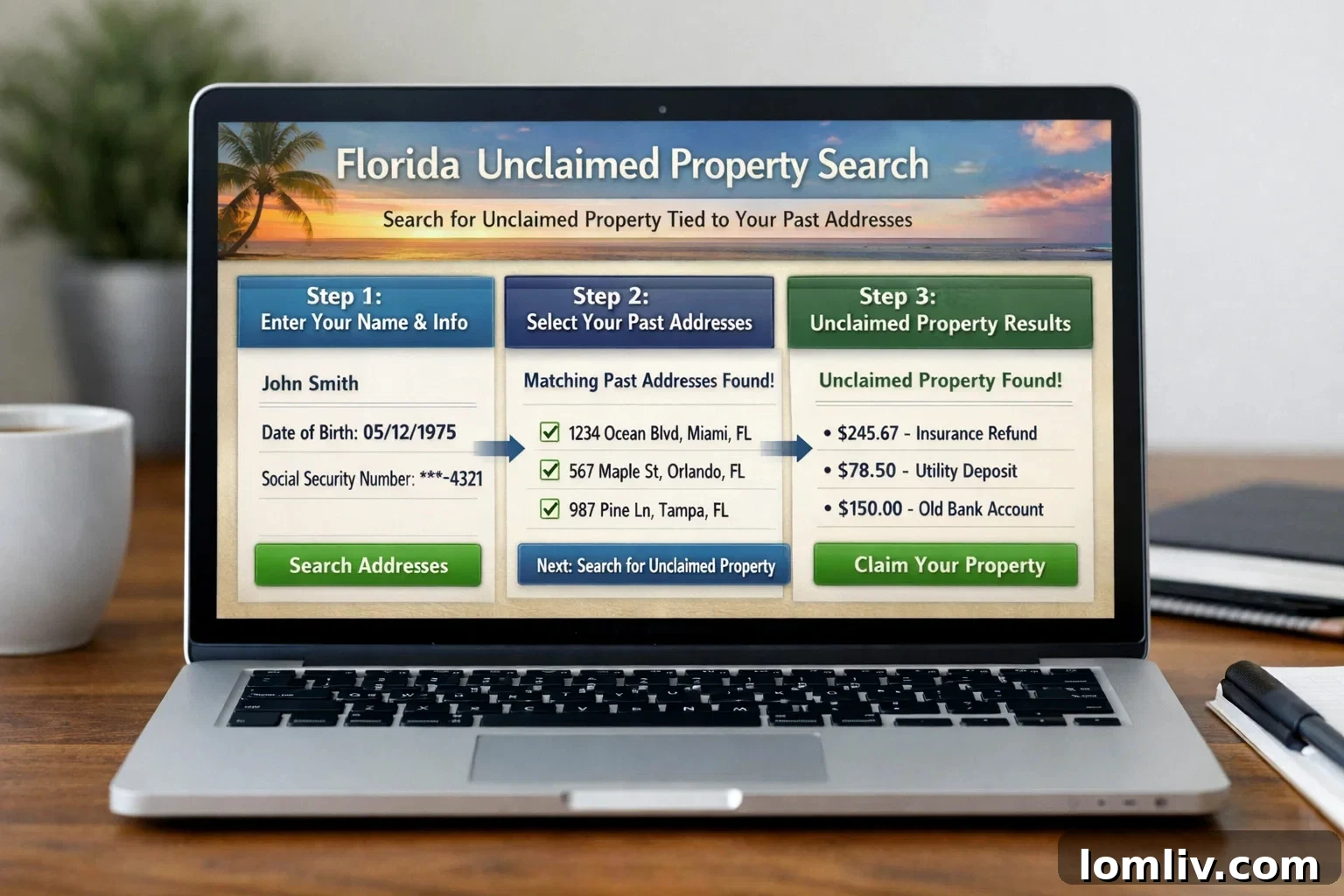
If you’ve lived in more than one state, a systematic and repeatable process is your best strategy. This method is designed for efficiency and comprehensiveness, making it the easiest approach for most new Florida residents.
Step 1: Create a Detailed List of Every State You’ve Lived In
Don’t just think of the major states where you spent years. Include any temporary stopovers, even if you only lived there for a few months or a year. This includes states where you attended college, worked a summer job, had a seasonal rental, or even military postings. Small refunds and forgotten accounts often hide in these unexpected locations. Make sure to list all previous addresses within each state as well, as some search portals benefit from more specific location data.
Step 2: Gather Your Personal and Financial Details
Before you begin your multi-state search, compile a comprehensive list of information. Having these details readily available will streamline the search process and increase your chances of a successful match:
- All Previous Addresses: Including apartment numbers, street names, cities, and zip codes for every place you’ve ever resided.
- All Names You’ve Used: Maiden names, previous married names, or any legally changed names. Unclaimed property is often linked to the name used at the time the funds became dormant.
- Former Employers’ Names: The full legal names of companies you’ve worked for, as final paychecks are common sources of unclaimed funds.
- Older Phone Numbers: Sometimes, accounts are linked to contact numbers that are no longer active but were once associated with you.
- Social Security Number (SSN): While you typically won’t input your full SSN directly into search fields for security reasons, having it handy for the official claim process is essential.
Step 3: Utilize a Multi-State Unclaimed Property Search Platform
Instead of the tedious process of searching each state’s individual unclaimed property website – which can be time-consuming and prone to omissions – leverage a centralized platform. Services like Reclaim Org allow you to search multiple states simultaneously. This significantly simplifies the process for new Florida residents, enabling you to track down money from every state you’ve previously called home, all from one convenient interface. These platforms typically aggregate data from official state sources, providing a more efficient search experience.
Step 4: Implement Advanced Search Tips for Maximum Success
- Search Under Every Name Variant: Don’t just search your current legal name. Include all maiden names, previous married names, or any variations you might have used on old accounts or documents.
- Include Close Family Members: If appropriate and with their permission, search for unclaimed funds under the names of your spouse, children, or even parents, as funds might be held jointly or in trust.
- Check for Deceased Relatives: If you are a legal heir, search for unclaimed property under the names of deceased family members. Often, life insurance proceeds, forgotten bank accounts, or trust funds remain unclaimed.
- Perform Periodic Searches: Unclaimed property databases are constantly updated as companies escheat new funds to the state. Make it a habit to search once or twice a year to catch any newly added assets.
- Think Creatively: Consider any organization you had a financial relationship with – old schools, clubs, professional associations, even obscure service providers.
Step 5: Prioritize and Protect Your Personal Information
While searching for unclaimed money, exercise caution. Only share sensitive information (like your Social Security Number or banking details) when you are absolutely certain you are on a legitimate government website or a reputable, verified unclaimed property search platform during the official claim process. Always double-check website URLs for authenticity. Use strong, unique passwords for any accounts you create, and be wary of unsolicited emails or calls claiming to help you find money for a fee. Legitimate unclaimed property services will never ask for payment upfront. For more general advice on safeguarding your personal data online, resources like Experian offer practical guides: How to Protect Your Personal Information Online.
Special Considerations for Snowbirds: Doubling Your Chances of Unclaimed Funds
For individuals who embrace the “snowbird” lifestyle, splitting their time between Florida and another northern state, the likelihood of having unclaimed money floating around is inherently higher. Managing two residences, often with seasonal service changes and mail forwarding adjustments, creates additional opportunities for financial oversights.
Common snowbird scenarios that lead to unclaimed money include:
- Property Insurance Refunds: When closing down a northern home for the season, insurance policies might be adjusted, leading to small prorated refunds.
- Seasonal Utility Credits: Utility companies in your northern state might issue credits for dormant accounts or seasonal disconnections that are mailed when you’re already in Florida.
- Investment Dividends or Bank Statements: If you changed your mailing address but didn’t update every single financial institution, investment dividends, or mature CD notices could be sent to an old or unattended address.
- Refund Checks Mailed Out-of-State: Any type of refund – medical, retail, or service-related – that gets mailed while you’re at your other residence.
The key takeaway for snowbirds is simple yet critical: you must diligently search *both* states where you maintain residences, as well as any other states you’ve lived in, even if only for a brief period. The complexities of maintaining multiple addresses and switching mail forwarding often result in missed communications that lead directly to unclaimed funds. Snowbird life is fantastic, but when it comes to paperwork and financial administration, it often operates on “hard mode,” necessitating extra vigilance in your search for forgotten assets.
What Happens After You Discover Unclaimed Money: The Claim Process
Once you’ve successfully located unclaimed money associated with your name or a family member, the claim process is generally straightforward and primarily focused on verifying your identity and connection to the funds. States are committed to returning property to its rightful owner, but they also have a responsibility to prevent fraud.
You will typically need to provide the following documentation to support your claim:
- Proof of Identity: This usually includes a copy of a valid government-issued ID, such as a driver’s license or passport.
- Proof of Previous Address: Documents like old utility bills, bank statements, tax returns, or a lease agreement showing your name and a previous address linked to the unclaimed property. This verifies your connection to the funds.
- Social Security Number (SSN): You may be asked to provide your SSN for verification purposes, but typically only during the secure, official claim submission.
- Proof of Relationship (if applicable): If claiming for a deceased relative, you’ll need documents like a death certificate, will, or letters of administration to prove you are a legal heir.
After submitting your claim and all required documentation, there will be a waiting period while the state reviews and processes your request. This period can vary depending on the state and the complexity of the claim, ranging from a few weeks to several months. The fundamental principle, however, remains consistent: the money is rightfully yours, and you should never have to pay a fee to claim it directly from the state. Be wary of any third-party services that demand upfront payment for finding or claiming your money, as you can perform these searches and claims yourself for free.
Conclusion: Claim Your Hidden Riches in the Sunshine State
Moving to Florida is an exciting chapter, filled with new opportunities and experiences. It shouldn’t, however, come with an unwitting “hidden lost money tax” from your previous state. Billions of dollars sit in state treasuries across the country, waiting for their rightful owners to come forward. For new Floridians, the chaotic nature of relocation makes you particularly susceptible to leaving money behind.
Taking a proactive approach to finding your unclaimed property is a smart financial move. With multi-state search platforms available, you can perform a thorough check across all your previous residences in just a few minutes. Before you even finish unpacking your last box, dedicate 10-15 minutes to search for the money you inadvertently left behind. Share this valuable information with other new Floridians; their former states may also be holding their forgotten funds. It’s your money, and it’s absolutely worth checking.