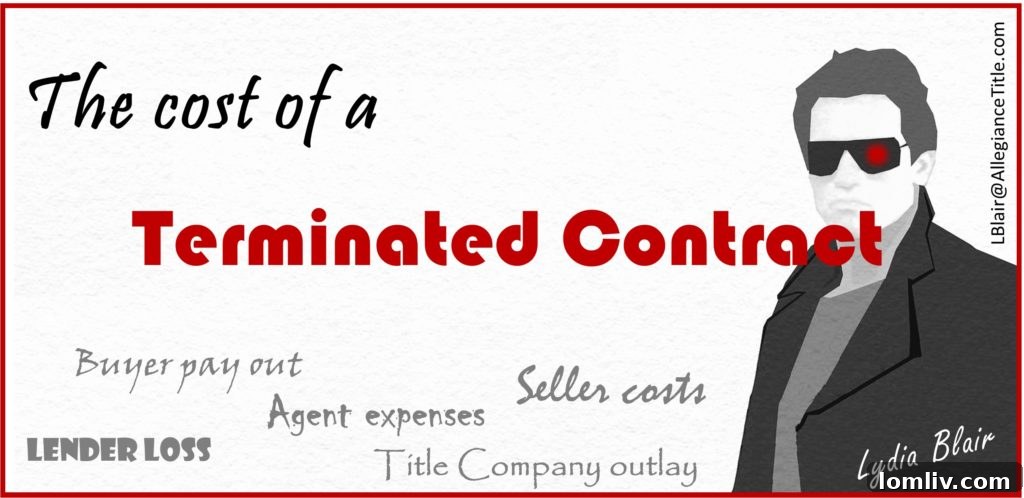
In the dynamic landscape of business transactions and real estate deals, the termination of a contract is an unfortunate yet sometimes unavoidable reality. While the motivations behind such cancellations are as diverse as the agreements themselves, the repercussions often extend far beyond the immediate parties, leading to significant financial, temporal, and emotional costs. Before any party considers withdrawing from an agreement, it is paramount to grasp the comprehensive implications and potential expenses that can impact everyone involved. This article offers an in-depth exploration of the multi-faceted costs and crucial legal considerations associated with contract termination, aiming to illuminate the true stakes for all stakeholders.
The Far-Reaching Impact of Contract Termination: Understanding the Costs
A contract termination is rarely a simple, clean break. Instead, it often initiates a complex chain of events, resulting in both tangible financial losses and intangible impacts like squandered opportunities, eroded trust, and damaged reputations. A thorough understanding of these diverse costs is essential for prudent decision-making and effective risk mitigation in any contractual arrangement.
Significant Financial Burdens on Prospective Buyers
For individuals or entities looking to acquire property or services, particularly in real estate, a terminated contract can mean the irretrievable loss of substantial out-of-pocket expenses. These costs can accrue rapidly as the transaction progresses, long before any deal is formally concluded.
- Non-Refundable Option Fees: An option fee is typically paid directly to the seller, granting the buyer the exclusive right to purchase the property within a stipulated period. This fee compensates the seller for removing the property from the market and is almost universally non-refundable, regardless of whether the buyer ultimately proceeds with the purchase. The loss of this fee can represent a considerable initial setback for the buyer.
- Property Inspection Costs: Buyers routinely invest in a variety of inspections to thoroughly assess a property’s condition. These can include general home inspections, pest and termite inspections, structural engineering evaluations, HVAC system checks, and specialized assessments for roofs, foundations, or environmental concerns. The fees for these professional services, which often range from hundreds to well over a thousand dollars, are paid directly to the inspectors and are almost always non-recoverable if the contract terminates.
- Appraisal and Loan Application Fees: To secure the necessary financing, buyers incur costs related to both loan applications and property appraisals. The appraisal serves to ensure that the property’s value aligns with the proposed loan amount, thereby protecting the lender’s investment. Loan application fees cover the administrative processing and underwriting of the mortgage. Both types of fees are typically paid upfront and are frequently non-refundable, resulting in a direct financial loss for the buyer if the transaction collapses.
- Earnest Money Deposits: One of the most significant financial commitments made by a buyer is the earnest money deposit. This sum, held in escrow by a title company or escrow agent, serves as a good-faith gesture demonstrating the buyer’s serious intent to purchase. While the earnest money *can* sometimes be returned to the buyer, depending on the specific terms of the contract and the reason for termination (e.g., failure of a financing or inspection contingency), disputes over its release are common and can lead to costly and protracted legal battles.
- Ancillary Buyer Expenses: Beyond these core expenditures, buyers might also face additional costs such as legal review fees for contract documents, travel expenses incurred while viewing properties or meeting with professionals, and even expenses related to temporary housing or storage if they had anticipated an immediate relocation.
The Seller’s Hidden and Tangible Losses
While a buyer’s losses often manifest as direct monetary outlays, the costs incurred by a seller when a contract terminates can be more intricate and, at times, more challenging to quantify. These losses encompass both explicit expenses and significant missed opportunities that can profoundly affect their financial position and future plans.
- Lost Market Opportunity and Momentum: Perhaps the most elusive yet potentially substantial cost for a seller is the lost market opportunity. When a property goes under contract, it is typically withdrawn from active listings, preventing other potential buyers from making competing offers. In a surging market, a seller might miss out on higher bids or a quicker sale. Conversely, if market conditions soften or decline during the contract period, they could be forced to accept a lower price or endure an extended period to find a new buyer. A property that repeatedly falls out of contract can also develop a “stigma,” making subsequent sales efforts more difficult and potentially requiring price reductions.
- Re-listing and Renewed Marketing Expenses: A terminated contract necessitates re-engaging with the market. This often means the seller’s agent must refresh or entirely restart marketing efforts, potentially incurring new expenses if the initial campaign has expired or needs significant updates. The agent’s additional unpaid time for re-marketing indirectly impacts the seller through the overall efficiency and cost structure of the selling process.
- Homeowners’ Association (HOA) Documents and Disclosures: Sellers are frequently mandated to provide extensive HOA documents, which can involve direct costs to procure. These comprehensive packages include bylaws, Covenants, Conditions, and Restrictions (CC&Rs), financial statements, and meeting minutes. If a new buyer eventually emerges, these documents may need to be re-ordered or updated, leading to redundant expenses.
- Property Repairs and Improvements: Any repairs, upgrades, or specific improvements undertaken solely to satisfy the demands or inspection requests of the initial buyer become a direct financial loss if that contract terminates. While some improvements might universally benefit future sales, others may have been tailored to specific buyer preferences and thus represent a wasted investment.
- Disrupted Moving and Relocation Preparations: Sellers often initiate preparations for their move well in advance of a confirmed closing. This can include extensive packing, hiring professional moving companies, purchasing packing materials, arranging for utility transfers or disconnections, and even placing deposits on new residences or temporary accommodations. A contract termination can throw these meticulous plans into disarray, leading to cancellation fees, forfeiture of deposits, and immense logistical and emotional stress.
- Continued Property Holding Costs: As the property remains on the market awaiting a new buyer, the seller continues to bear the ongoing costs of ownership. These typically include mortgage payments, property taxes, homeowner’s insurance premiums, utility bills, and routine maintenance expenses. These accumulating holding costs can significantly erode the seller’s equity and increase their overall financial burden.
The Real Estate Agent’s Substantial Unseen Investment
Real estate agents are integral facilitators in property transactions, dedicating significant time, effort, and financial resources long before any commission is earned. A terminated contract often means their substantial investment yields no financial return, affecting their business and potentially their reputation.
- Extensive Uncompensated Time and Expertise: The agent’s most considerable loss is frequently their unpaid time. This encompasses countless hours spent on initial client consultations, detailed property evaluations, comprehensive market analyses, providing staging advice, coordinating showings, negotiating offers, drafting contracts, and continuous communication with all parties involved. Each of these tasks demands considerable professional expertise and time, which remains uncompensated if a deal collapses.
- Upfront Marketing and Listing Development: Even before a property is officially listed, agents invest resources in professional photography and videography, creating virtual tours, meticulously measuring rooms for accurate floor plans, crafting compelling property descriptions, and inputting all necessary data into the Multiple Listing Service (MLS). They also manage property staging to ensure the home is presented in its most attractive light. These represent significant upfront financial and time investments.
- Out-of-Pocket Marketing Expenses: Agents frequently absorb direct marketing costs from their own funds. These can include paid advertisements on various online portals, social media promotions, professional printing of brochures and flyers, costs associated with open houses (e.g., signage, refreshments), and premium website listings. These expenses are typically non-recoverable upon contract termination.
- Reputational and Opportunity Costs: While not directly financial, a pattern of terminated contracts can negatively impact an agent’s professional reputation, potentially leading to perceptions of inefficiency or underlying issues with the properties they represent. This can diminish client trust and affect future business opportunities.
Title Company’s Unreimbursed Due Diligence Costs
The title company, crucial for ensuring clear ownership and facilitating a smooth closing, also incurs expenses from the moment a contract is received. As their fees are typically paid at closing, a terminated contract often means they go uncompensated for their completed, vital work.
- Comprehensive Record Searches: Title companies conduct exhaustive searches of various public records to meticulously establish the property’s chain of title and identify any potential encumbrances. This involves reviewing property deeds, tax records, plats (survey maps), judgments, liens (including mortgage, mechanic’s, and tax liens), and bankruptcy filings. This labor-intensive process is foundational to a secure and legal transaction.
- Processing and Administrative Overhead: These fees cover the administrative costs associated with opening an escrow file, managing and organizing voluminous documents, coordinating communication among all involved parties, and preparing the extensive paperwork required for closing.
- External Fees for Specialized Services: Title companies frequently pay for outsourced services to complete their thorough due diligence. This includes obtaining certified tax certificates, ordering property surveys (to confirm boundaries and identify easements), coordinating with legal professionals for document preparation (e.g., drafting specific deed language or trust documents), and acquiring payoff amounts from existing lenders to clear current mortgages.
- Extensive Research Hours: Significant time is dedicated to researching and resolving complex issues such as obscure easements, restrictive covenants, historical liens, unpaid taxes, and special assessments. Resolving potential title defects requires specialized expertise and substantial research, all of which represent uncompensated work if the contract is ultimately terminated.
Lender’s Unreimbursed Efforts in Loan Processing
The financial institution providing the loan to the potential buyer also expends considerable resources in processing a mortgage application. When a contract terminates prematurely, the lender typically absorbs many of these costs, which may or may not be recoverable from the client, depending on their agreement.
- Credit Report Acquisition Costs: Lenders bear the expense of pulling comprehensive credit reports for prospective borrowers to meticulously assess their creditworthiness, financial history, and overall risk profile.
- Flood Zone Determination Fees: A mandatory check is performed to determine if the property is situated within a designated flood zone, which dictates whether federal flood insurance coverage is required. This essential service incurs a specific fee.
- Appraisal Fees (Lender’s Perspective): While often paid by the buyer, the appraisal primarily serves to protect the lender by independently verifying the property’s market value. If the loan process is halted prematurely, the lender may have already absorbed or initiated this cost, which then becomes an internal loss.
- Underwriting and Processing Staff Time: The lender’s staff dedicates numerous person-hours to verifying income and employment, scrutinizing assets and liabilities, performing risk assessments, and meticulously preparing loan disclosures and commitment letters. This extensive underwriting process represents a substantial internal operational cost.
- Automated Valuation Model (AVM) Fees: Some lenders utilize Automated Valuation Models for preliminary property valuations, incurring fees for these services that are lost if the deal does not proceed to full underwriting.
Termination Fees: Contractual Penalties for Early Withdrawal
Beyond the direct costs associated with a failed transaction, many contracts explicitly incorporate specific termination or cancellation fees. These are designed to contractually compensate one party for the early cessation of an agreement, serving as a predetermined mechanism to address the financial impact of a breach or early exit.
- Fee Structure and Calculation: Termination fees can vary significantly in their structure. They may be stipulated as a flat fee, a predetermined percentage of the remaining contract value, or prorated based on the unfulfilled term of the agreement. The precise method of calculation is always explicitly detailed within the contract’s terms. These fees often function as a form of liquidated damages, representing an agreed-upon amount payable in the event of a breach, thereby bypassing the complex and often contentious process of proving actual damages in court.
- Tax Implications: It is important to note that the amount billed for early termination is generally considered taxable income for the recipient, typically classified under the same category as the payments that would have been received under the original contract. This means the fee not only represents a cost but can also carry tax consequences for the party receiving it.
- Illustrative Industry Examples:
- Cellular Service Contracts: A common and relatable example involves consumers entering into multi-year service contracts, often accompanied by subsidized mobile devices. Breaking such a contract prematurely typically triggers a substantial early termination fee, which is intended to recoup the cost of the device subsidy and compensate for the anticipated lost service revenue. For instance, a fee of $350 for early cancellation of a two-year contract is a frequent occurrence.
- Mergers and Acquisitions (M&A): In the high-stakes arena of corporate takeovers, termination fees (often referred to as break-up fees or reverse break-up fees) can reach astronomical sums. These fees are paid when one party withdraws from a deal or accepts a superior competing offer, serving to compensate the spurned party for their expenses, lost potential profits, and strategic disadvantages incurred. A widely cited example is when Guidant opted for a competing offer after Johnson & Johnson had agreed to acquire it, resulting in Guidant paying a staggering $705 million termination fee. These fees are a critical element in securing M&A deals and deterring rival bids.
- Mutual Funds and Investment Vehicles: Certain mutual funds impose exit fees or redemption fees on investors who sell their shares within a specified, short timeframe (e.g., 60 or 90 days). These fees are primarily designed to discourage short-term market timing and to offset the administrative costs associated with processing frequent redemptions.
- Lease Agreements and SaaS Contracts: Both residential and commercial lease agreements commonly include early termination clauses that stipulate associated fees or penalties. Similarly, Software-as-a-Service (SaaS) providers often charge a percentage of the remaining contract value if a client cancels their subscription before the agreed-upon term has expired.
Crucial Legal Considerations and Protective Frameworks
While contract termination often entails financial penalties, various federal and state laws, coupled with specific contractual clauses, provide essential frameworks and sometimes avenues for cancellation or mitigation of adverse effects. Understanding these legal dimensions is paramount for all parties.
- Consumer Cooling-Off Periods: Numerous jurisdictions offer consumers a “cooling-off” period, typically three business days, during which they can cancel certain types of contracts without incurring penalties. This vital consumer protection measure is often applicable to contracts made at the buyer’s home (e.g., door-to-door sales), telemarketing sales, or transactions conducted away from the seller’s customary place of business, providing a crucial window for buyers to reconsider high-pressure sales tactics.
- Contingency Clauses: Particularly prevalent in real estate, contracts are frequently made contingent upon certain specific conditions being met. These can include the buyer successfully securing financing, a satisfactory outcome from a home inspection, or the successful sale of the buyer’s current residence. If these specified contingencies are not fulfilled within the agreed-upon timeframes, the contract can often be terminated without penalty to the buyer, and their earnest money is typically returned.
- Employment Contracts: These agreements are typically meticulously drafted and contain detailed clauses governing termination, outlining precise procedures, required notice periods, and stipulated compensation (such as severance pay). Provisions distinguishing between “for cause” termination (e.g., misconduct) and “without cause” termination significantly impact an employee’s entitlements upon dismissal. Furthermore, non-compete and non-disclosure clauses often play a critical role in these agreements.
- Force Majeure Clauses: These contractual provisions allow parties to be excused from fulfilling their contractual obligations due to unforeseen and uncontrollable circumstances, such as natural disasters, acts of war, government actions, or pandemics. When properly invoked, a force majeure clause can lead to contract termination without penalty, preventing parties from being held liable for events beyond their reasonable control.
- Breach of Contract and Legal Remedies: If one party unilaterally terminates a contract without a valid legal or contractual justification, they may be deemed to be in breach of contract. The non-breaching party can then pursue various legal remedies, which may include specific performance (a court order compelling the breaching party to fulfill the terms of the contract), rescission (cancellation of the contract and restoration of all parties to their pre-contractual positions), or monetary damages (compensation for actual financial losses incurred as a direct result of the breach, which can encompass lost profits).
Strategies for Mitigating the Risks of Contract Termination
Given the extensive costs and inherent complexities associated with contract termination, all parties stand to benefit significantly from proactive measures designed to mitigate these risks.
- Thorough Due Diligence: Before entering into any contractual agreement, comprehensive due diligence is absolutely paramount. Buyers should rigorously research properties, services, and their own financial capabilities, while sellers must ensure their property is market-ready and all disclosures are accurate and complete.
- Clear and Comprehensive Contract Drafting: The initial line of defense against termination pitfalls lies in well-drafted contracts, ideally reviewed by competent legal counsel. Such agreements should explicitly define all terms, conditions, contingencies, timelines, and, critically, robust termination clauses that clearly outline the circumstances under which a contract can be ended, the required notice procedures, and the associated financial implications or available remedies.
- Open and Transparent Communication: Maintaining consistent and open lines of communication among all parties—buyers, sellers, agents, lenders, and title companies—can proactively help identify potential issues or disagreements early on. Addressing these concerns collaboratively before they escalate into a termination event is crucial.
- Realistic Expectations and Contingency Planning: Cultivating realistic expectations regarding timelines, potential challenges, and prevailing market conditions can help prevent emotionally charged decisions that often lead to premature contract termination. Building in appropriate contingencies provides flexibility.
- Professional Legal Counsel: Seeking advice from an attorney specializing in contract law or real estate law is highly recommended before signing any significant agreement, and certainly before contemplating or initiating a contract termination. Legal counsel can provide invaluable guidance, clarify complex terms, and help navigate potential disputes, saving significant time, money, and future litigation.
Conclusion: Navigating the Intricacies of Contract Termination with Foresight
Contract termination, whether in the realm of real estate, business partnerships, or service agreements, is far more than a simple withdrawal from a deal. It is a multifaceted event that triggers a cascade of financial, logistical, and often profound emotional consequences for all involved parties. From the buyer’s forfeited earnest money and inspection fees to the seller’s missed market opportunities and direct expenses, and from the real estate agent’s uncompensated efforts to the title company’s and lender’s unreimbursed due diligence, the costs can quickly accumulate and become substantial. A comprehensive understanding of various termination fees and the critical legal considerations, such as consumer cooling-off periods and essential contingency clauses, is indispensable for informed and responsible decision-making.
Ultimately, a clearly articulated and meticulously structured contract, featuring carefully drafted termination clauses, coupled with diligent due diligence and transparent communication among all stakeholders, represents the most effective defense against the adverse impacts of a contract gone awry. By proactively acknowledging and adequately preparing for the potential financial costs and legal ramifications, parties can more effectively navigate the inherent complexities of contract termination, thereby minimizing financial losses, preserving relationships where possible, and fostering more secure and predictable transactions in the future.