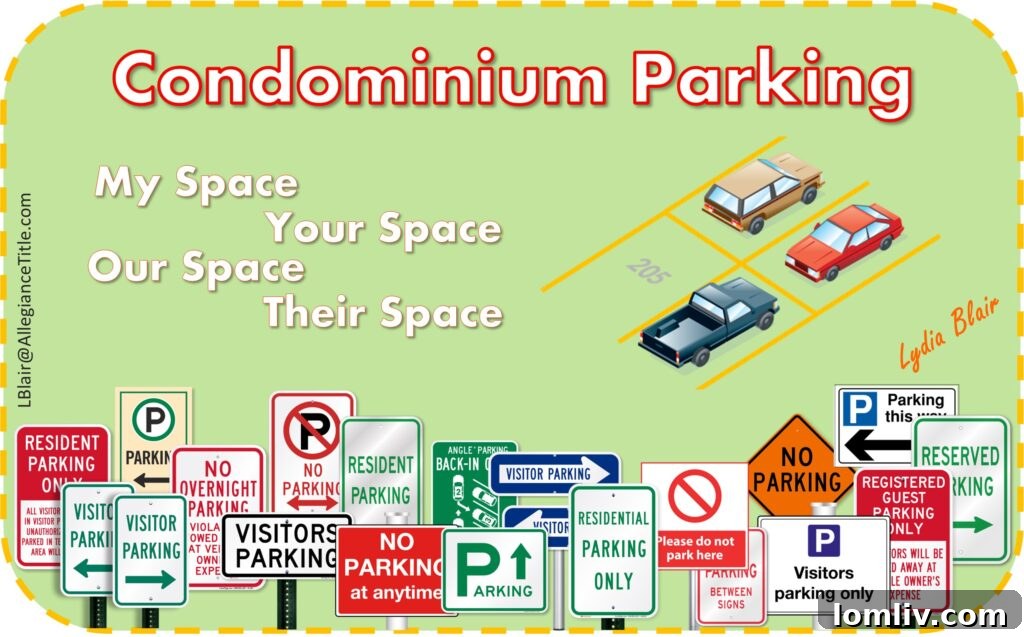
Navigating the intricacies of condominium living often brings forth a myriad of questions, and few are as frequently debated or misunderstood as those surrounding parking spaces. For many prospective condominium purchasers, the expectation is straightforward: a unit comes with an explicitly owned and guaranteed parking spot. However, the reality within the complex legal framework of condominiums is far more nuanced, often leading to confusion, disputes, and unexpected challenges for both buyers and current residents. Understanding the precise nature of condo parking rights is paramount, as the conventional idea of “ownership” rarely applies in the traditional sense.
Demystifying Condo Parking: The Unique Legal Landscape
Unlike single-family homes where land and associated amenities are typically part of a unified property deed, condominiums operate under a distinct legal structure. When you purchase a condominium unit, you are acquiring an interest in a specific airspace (your unit) and an undivided proportional interest in the common areas of the entire development. This distinction is crucial, particularly when it comes to shared resources like parking facilities. Generally, individual parking spaces are not conveyed with a separate title or deed in the same manner as the condominium unit itself. Instead, they are almost universally classified as part of the condominium’s common elements, albeit with specific usage rights attached.
This fundamental difference means that while you enjoy exclusive use of a designated parking space, your legal relationship to that space is distinct from your ownership of your living unit. A direct transfer of title for a parking space, much like transferring a car title, is uncommon and often legally unfeasible within the standard condominium framework. Grasping this core concept is the first step toward understanding your rights and responsibilities regarding your condo parking.
Common Areas and Limited Common Elements: Where Parking Fits In
To fully comprehend condo parking, it’s essential to differentiate between various types of common areas within a condominium development. These areas are broadly categorized into two main groups:
- General Common Elements: These are areas accessible and usable by all unit owners without restriction. Examples include lobbies, hallways, elevators, recreational facilities (pools, gyms), shared landscaping, and structural components of the building. Every unit owner has an undivided ownership interest in these areas, and the costs associated with their maintenance are shared proportionally among all residents through association fees.
- Limited Common Elements: These common areas are designated for the exclusive use of one or more, but not all, specific unit owners. While the ownership interest in these areas still rests with all unit owners collectively, the right to use them is restricted. Parking spaces are the quintessential example of limited common elements. Other examples often include balconies, patios, storage lockers, and sometimes specific external utility connections.
The key takeaway here is that parking spaces, as limited common elements, are collectively owned by all unit owners. However, their use is exclusively assigned to the owners of a particular condo unit. This creates a situation where a unit owner has significant rights concerning their assigned space – such as the ability to prevent unauthorized vehicles from occupying it – but does not possess legal title to that specific piece of property. This distinction between “ownership interest” (in the common elements) and “exclusive use rights” (of a specific parking spot) is fundamental and often a source of confusion for new condo owners.
Assigned Parking vs. Deeded Parking: A Critical Distinction for Buyers
While most condo parking falls under the “limited common element, assigned use” category, it’s vital to recognize that other arrangements can exist, primarily “deeded parking.” Understanding the difference is crucial for buyers seeking certainty about their parking provisions.
Assigned Limited Common Element Parking
As discussed, this is the most prevalent model. In this scenario, the condominium’s governing documents, typically the Declaration of Condominium, specify which unit is allocated the exclusive use of a particular parking space. The specifics, such as the space’s number or location, are detailed within these documents. When you purchase a unit, you acquire the right to use that designated space. This right is typically tied to the unit and transfers automatically with the sale of the unit. However, because it’s a limited common element, it does not come with a separate property deed. The parking space is not a separately parcelled piece of real estate, meaning you can’t typically sell or mortgage it independently of your condo unit unless specifically allowed and structured differently within the declaration.
Deeded Parking Spaces
In some, less common, condominium developments, parking spaces can be structured as completely separate, individually deeded parcels of real estate. When parking is “deeded,” it means that the parking space itself has its own legal description, parcel number, and a separate title that can be conveyed independently of the condo unit. This structure offers a higher degree of individual ownership and control. A deeded parking space can often be bought, sold, or leased separately from the condo unit, provided there are no restrictions in the condominium’s governing documents. If you have a deeded parking space, the title company can typically issue title insurance for it, much like they would for your condo unit. While offering greater flexibility and legal clarity, this setup is less common due to the increased complexity in legal drafting and management for the developer and the association.
For buyers, clarifying whether parking is assigned (limited common element) or deeded (separate parcel) is one of the most important questions to ask during the purchasing process. This information will dictate your long-term rights and the potential for transferring or modifying parking arrangements in the future.
The Indispensable Role of Governing Documents and the HOA
The precise details and regulations surrounding condominium parking are meticulously outlined in the condominium’s governing documents. These legal instruments form the bedrock of community life and dictate how all common elements, including parking, are managed and utilized. Key documents include:
- The Declaration of Condominium: This master document formally creates the condominium and defines the units, common elements, and limited common elements. It is where specific parking space assignments are typically recorded, linking a particular space (by number or location) to a specific unit.
- Bylaws: These provide the operational rules for the condominium association, detailing how the HOA is run, voting procedures, and general administrative matters.
- Rules and Regulations: These are specific, often more flexible, rules created and enforced by the Homeowners Association (HOA) board, covering day-to-day conduct, including detailed parking policies.
The Homeowners Association (HOA) plays a central role in managing common element parking spaces. Their responsibilities and powers typically include:
- Regulation and Enforcement: The HOA has the authority to establish and enforce rules regarding parking. These might include restrictions on vehicle types (e.g., forbidding commercial vehicles, boats, RVs, or inoperable cars), limitations on the number of vehicles per unit, guest parking policies, and designated loading zones. They can implement fines for violations and even have vehicles towed at the owner’s expense.
- Maintenance: The association is responsible for the upkeep of the parking areas, including lighting, paving repairs, snow removal (in relevant climates), and security measures.
- Reassignment and Reallocation: While less common for permanently assigned limited common elements, the governing documents may grant the HOA the power to reassign or reallocate parking spaces under specific circumstances. However, changes to permanently assigned spaces typically require significant hurdles, such as obtaining the consent of the affected unit owners, a vote of the general membership, and often an amendment to the Declaration itself. This process ensures stability and protects owners’ established rights.
Prospective buyers must meticulously review these documents to understand their exact parking rights and any potential limitations or future changes that could impact their ability to use their designated space.
Navigating Parking When Buying, Selling, or Transferring Rights
The complexities of condominium parking significantly impact transactions and ownership experiences.
For Buyers: Due Diligence is Key
When purchasing a condo, simply being told “it comes with a parking spot” is insufficient. Buyers must undertake thorough due diligence, which includes:
- Reviewing Governing Documents: Obtain and meticulously read the Declaration of Condominium, Bylaws, and Rules & Regulations. Confirm how parking spaces are designated (assigned limited common element or deeded) and specifically identify your unit’s assigned space.
- Understanding HOA Rules: Be aware of any restrictions on vehicle types, guest parking policies, and potential fees associated with parking.
- Asking Specific Questions: Inquire about guest parking availability, overflow parking, potential for future reassignments, and any ongoing disputes related to parking.
- Consulting Professionals: Work with a knowledgeable real estate agent and an attorney specializing in condominium law to interpret complex documents and ensure your rights are protected.
Without a clear and legally sound description in the governing documents, a buyer cannot be guaranteed a specific parking space. The adage “get it in writing” applies with paramount importance here.
For Sellers: Transferring Parking Rights
If you are selling your condo and wish to transfer or even rent out your assigned parking space, you must first verify that the condo declaration permits such actions. Private agreements between unit owners regarding parking space usage (e.g., renting out an extra space) are only valid if explicitly allowed by the association. Any permanent change or reallocation of a limited common element parking space typically necessitates an official amendment to the condominium declaration, a process that can be lengthy, costly, and require a supermajority vote of owners.
The Challenge of Title Insurance
One of the most significant challenges with non-deeded condo parking lies with title companies. A title company’s role is to ensure that a property’s title is clear and transferable. For an assigned limited common element parking space, title companies generally cannot issue a warranty or specific title insurance for that space because it is not a separately deeded property. They can only confirm that the right of exclusive use, as described in the condominium declaration, is associated with your unit. Unless the parking space is accurately and sufficiently described as a separate legal parcel in the property records filed with the county, a title company will not be able to warrant that the seller has title to a precise parking space in the traditional sense. This reality often comes as a surprise to buyers expecting full title protection for their parking spot.
Common Parking Disputes and Association Solutions
Given the shared nature of condominium parking, disputes are not uncommon. Understanding common issues and how HOAs typically address them can help mitigate potential conflicts:
- Unauthorized Parking: The most frequent issue, where a vehicle parks in an assigned space without permission. HOAs typically have clear enforcement mechanisms, including warning notices, fines, and towing policies.
- Guest Parking Overuse: Guests occupying limited visitor spots for extended periods can frustrate residents. HOAs often implement time limits or permit systems for guest parking.
- Maintenance Issues: Concerns about lighting, potholes, snow removal, or security in parking areas are common. The HOA is responsible for addressing these through common element maintenance funds.
- Vehicle Restrictions: Disputes can arise if an owner’s vehicle (e.g., a commercial truck, an old non-running car) violates established rules. Consistent enforcement by the HOA is key.
- Parking Shortages: In developments with insufficient parking, HOAs might implement waiting lists, lottery systems for additional spots, or even explore off-site rental agreements.
Effective communication, clear rules, and consistent enforcement by the HOA are crucial for maintaining harmony within the community’s parking facilities.
Ensuring Clarity and Protection for Your Condo Parking
In conclusion, the seemingly simple concept of a “parking space” takes on considerable legal complexity within a condominium framework. It is rarely a simple matter of direct ownership. Instead, it involves a blend of collective ownership, exclusive use rights, and stringent regulations dictated by a web of legal documents. For anyone involved in a condominium transaction, whether buying or selling, a thorough understanding of these nuances is not just beneficial but absolutely essential. Consulting with legal professionals and meticulously reviewing all governing documents related to parking will provide the necessary clarity and protection, ensuring that your expectations align with the legal realities of your condominium parking arrangements.