
The landscape of real estate is continually evolving, and at the forefront of this transformation is artificial intelligence (AI). Far from being a mere industry buzzword, AI is actively reshaping the daily operations and strategic approaches of real estate professionals across North America. A comprehensive survey conducted by VirtualStaging.com, gathering insights from over 500 real estate professionals spanning the United States and Canada, reveals compelling trends in AI adoption and perception.
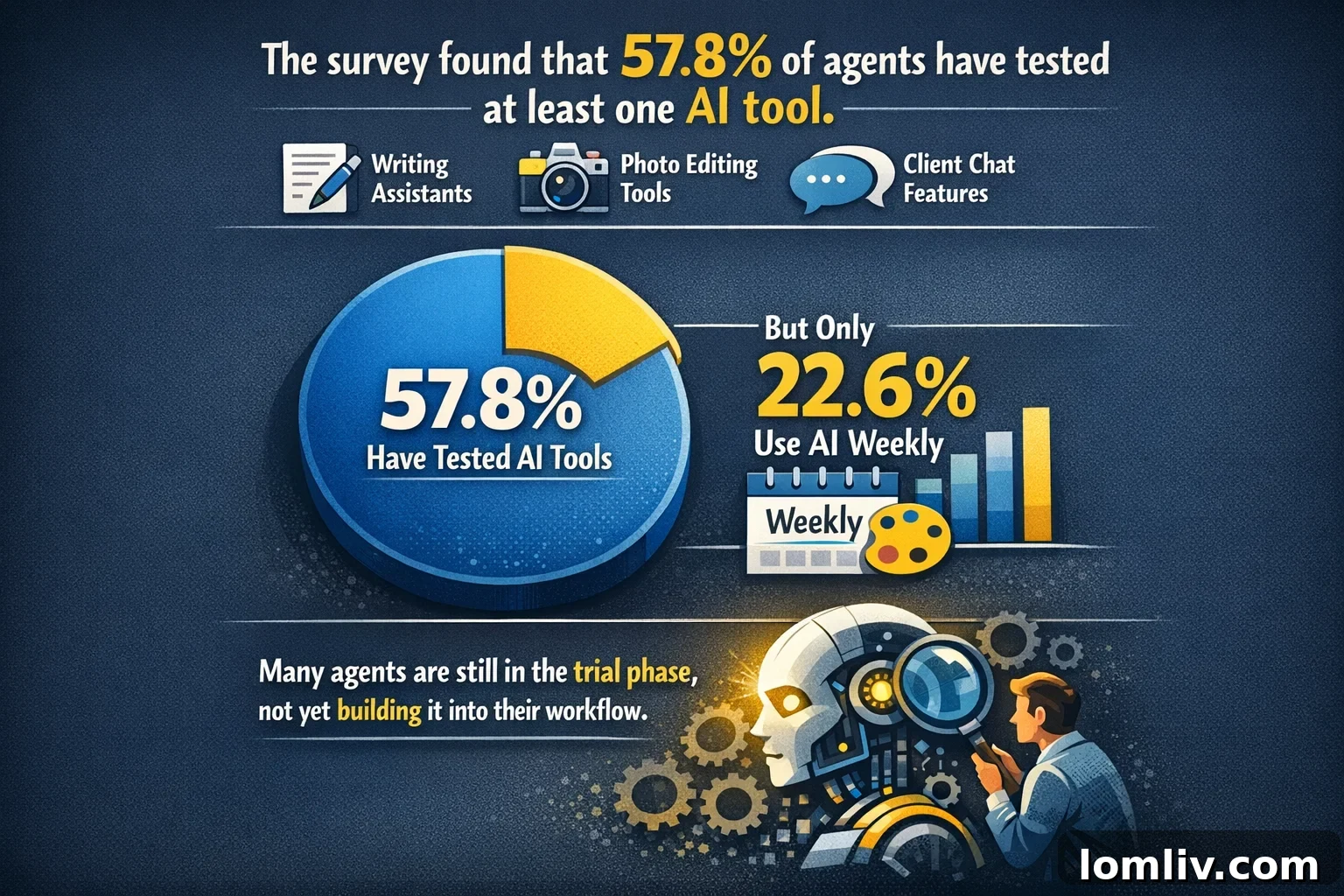
While a significant majority of respondents have engaged with at least one AI-powered tool, the transition from initial experimentation to consistent, routine integration remains a key challenge. The survey indicated that approximately 58 percent of real estate professionals have experimented with AI in some capacity, demonstrating a high level of interest and curiosity. However, the proportion of agents who leverage AI on a weekly basis drops considerably to roughly 22 percent. This disparity underscores a critical narrative: while the potential of AI is widely acknowledged, its deep integration into everyday real estate workflows is still in nascent stages.

Decoding Real Estate Agents’ AI Adoption Trends
The most striking revelation from the survey data is the significant chasm between initial exploration of AI tools and their sustained, routine application. Nearly 58 percent of real estate agents have taken the step to test at least one AI-driven solution. This broad experimentation encompasses a range of applications, from sophisticated writing assistants designed for crafting compelling property descriptions to advanced photo editing tools that enhance visual appeal, and even AI-powered chat features facilitating smoother client communication.
However, the leap from curiosity to integration is a considerable one, as evidenced by only 22.6 percent of agents reporting weekly AI usage. This suggests that a substantial portion of the industry is still in an exploratory phase, evaluating the practicality and efficacy of these tools rather than seamlessly incorporating them into their established operational frameworks. This gap is crucial because it highlights the enduring barriers to widespread adoption. While interest is undeniably high, factors such as trust in AI capabilities, comfort with new technologies, and a clear, measurable return on investment (ROI) are still evolving and proving their worth to a discerning professional base.
Agents also shared their forward-looking perspectives on AI’s future in the industry. A substantial 43.1 percent anticipate that AI will become an integral and standard component of listing preparation by the year 2026. Another 29.8 percent foresee using AI selectively, integrating it only when its specific benefits clearly outweigh traditional methods. Significantly, a mere 10.4 percent believe that AI will eventually replace any aspects of their job currently performed by humans. This collective outlook points towards a vision of gradual transformation and augmentation rather than a disruptive takeover, emphasizing AI as a powerful ally in enhancing professional capabilities.
AI’s Role in Real Estate: Augmentation, Not Replacement
One of the most resounding messages emanating from the survey results is the prevailing sentiment among agents that artificial intelligence is positioned to serve as a powerful assistive tool, not a substitute for human expertise. The vast majority of real estate professionals envision AI becoming a standard component in the meticulous process of preparing listings, yet very few foresee it automating the multifaceted, nuanced responsibilities that define an agent’s role entirely.
This perspective is pivotal in understanding how AI should be strategically positioned within the real estate sector. Agents inherently recognize that their core value proposition lies in cultivating strong client relationships, devising intricate sales strategies, and exercising astute professional judgment. Consequently, they demonstrate a clear receptiveness to technological innovations that effectively streamline and reduce laborious administrative tasks. However, this openness is coupled with a strong aversion to tools that introduce undue risk, compromise ethical integrity, or could potentially mislead clients, thereby undermining the critical trust element inherent in real estate transactions.
Where AI truly excels is in its capacity to elevate the foundational quality and consistency of marketing efforts. By leveraging AI to ensure that more property listings appear polished, professionally presented, and uniformly high in quality, agents are empowered to shift their competitive focus. Instead of vying for who possesses the most available time or the largest production budget, competition can pivot towards demonstrating superior service, offering deeper market insights, and leveraging unparalleled local knowledge. This elevation of baseline marketing standards frees agents to concentrate on the human-centric aspects of their profession, where their unique skills in negotiation, empathy, and problem-solving create irreplaceable value.
Key Areas of AI Implementation by Real Estate Professionals
The adoption of AI within the real estate industry is not uniformly distributed across all operational tasks; rather, it is highly concentrated in areas where its benefits are immediate, tangible, and carry minimal risk. Visual marketing unequivocally stands out as the predominant use case for AI technologies among real estate professionals.

A significant 41.8 percent of agents reported utilizing AI specifically for virtual staging or advanced image enhancement. These tools enable agents to transform vacant or unappealing spaces into inviting, fully furnished virtual showcases, dramatically improving a property’s online presentation without the logistical challenges and costs of physical staging. Following closely, approximately 31.2 percent of agents employ AI to assist in crafting compelling listing descriptions or other marketing copy, benefiting from AI’s ability to generate coherent, persuasive text quickly.
Further down the spectrum of adoption, about 18.7 percent of professionals leverage AI for initial lead screening or integrating intelligent chat tools to handle preliminary client inquiries. This application helps streamline the sales funnel, allowing agents to focus on more qualified leads. In contrast, the use of AI for complex transaction or administrative work remains lower, at around 7.9 percent, and for sensitive legal or contract-related tasks, it dips to a mere 2.1 percent. This clear pattern reveals that agents gravitate towards AI where the upside in presentation and efficiency is readily apparent and the associated risks are inherently low.
Visual AI tools, in particular, offer a clear pathway to improving a property’s market presence without interfering with critical aspects of the deal, such as pricing decisions, negotiation strategies, or expert client advice. They primarily enhance how a home is perceived and showcased, rather than how an agent navigates the intricacies of a sale. This clear delineation of function makes visual AI highly palatable for adoption.
Among the agents actively using AI for visual enhancements, a commanding 71.3 percent affirmed that these tools significantly contribute to making their listings appear more polished and attractive. Additionally, about 39.2 percent indicated that AI allows them to virtually stage a greater number of listings that would otherwise remain empty and less appealing. While approximately 18.5 percent acknowledged that clients occasionally express confusion regarding what aspects of a listing have been digitally altered, the overall sentiment is one of careful and transparent application. Most agents demonstrate a conscientious approach to how they deploy these powerful visual tools and how they communicate these digital enhancements to prospective buyers, ensuring ethical standards are maintained.
Addressing the Practical Skepticism Towards AI in Real Estate
Despite the burgeoning interest and demonstrated utility of AI in specific real estate applications, a degree of skepticism persists among professionals. This skepticism is not random or unfounded; rather, it is deeply rooted in practical concerns, predominantly revolving around the critical element of trust. The nuances of real estate transactions demand absolute confidence in information and representation, making agents naturally cautious about technologies that could compromise this trust.
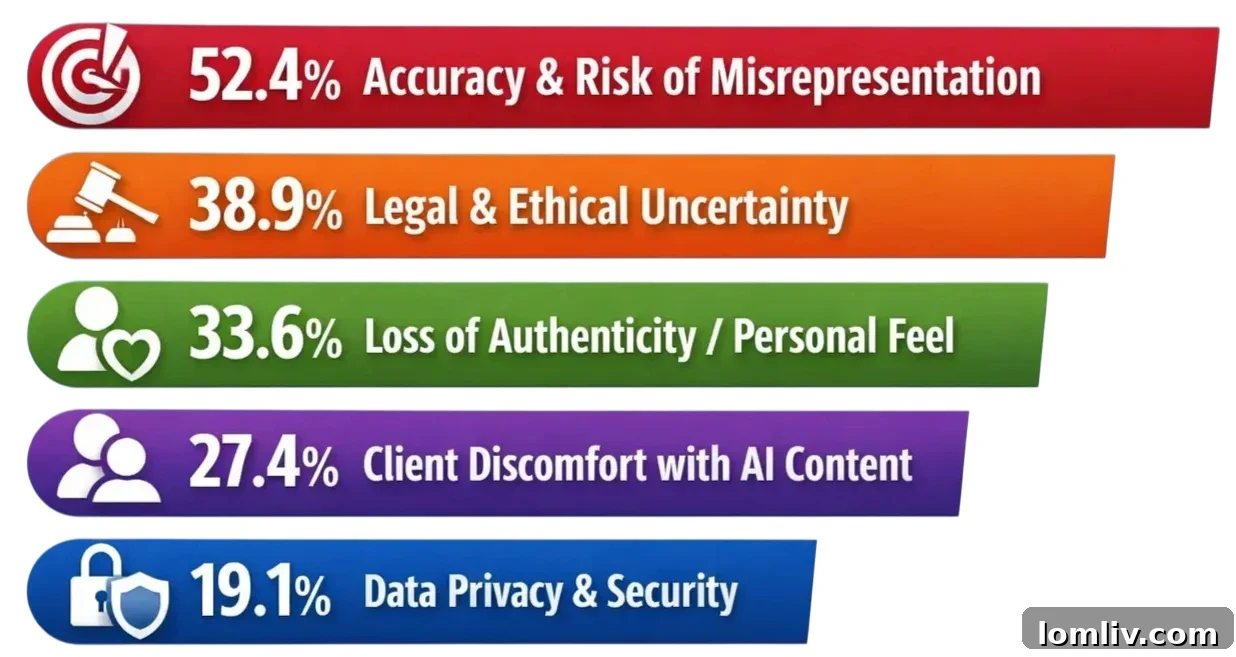
When survey respondents were probed about their primary concerns regarding AI, a majority, 52.4 percent, highlighted accuracy and the inherent risk of misrepresentation as their top worry. This concern is particularly acute in an industry where legal repercussions for inaccurate property descriptions can be severe. Following this, approximately 38.9 percent of agents voiced unease over legal or ethical uncertainties surrounding AI-generated content and processes. This includes questions about intellectual property, liability, and the fair use of data. Around 33.6 percent expressed apprehension about potentially losing the authentic, personal touch that is often central to successful client relationships, fearing that AI might dehumanize the interaction.
Furthermore, approximately 27.4 percent of agents worried about potential client discomfort with AI-generated content, suggesting a need for clear communication and education about these tools. Finally, about 19.1 percent raised critical issues related to data privacy and security, underscoring the importance of robust safeguards when sensitive client and property information is involved. These well-founded concerns collectively explain the selective pattern of AI adoption within the industry. Agents are not outright rejecting AI; rather, they are making judicious choices, implementing it in domains where it feels secure, controllable, and where the benefits unequivocally outweigh the perceived risks.
This practical skepticism also sheds light on another notable disparity identified in the survey: while a substantial 67 percent of agents believe that AI possesses the potential to save considerable time, only 23.7 percent reported experiencing real, measurable efficiency gains at the current moment. This discrepancy suggests that while the promise of AI is clear, the journey to true, tangible time-saving can involve an initial learning curve, integration challenges, and the need for ongoing refinement. Early-stage AI tools often introduce additional steps or require significant user input before they genuinely streamline or eliminate existing workloads, particularly in an industry where precision, trust, and human oversight are paramount.
Strategic Implications of AI for Today’s Real Estate Agents
The insights gleaned from the VirtualStaging.com survey offer a clear roadmap for real estate professionals navigating the integration of AI into their practice. The data strongly suggests that AI achieves its maximum efficacy when it functions as a supportive layer, enhancing and optimizing existing agent workflows, rather than mandating a complete overhaul of established operational methodologies. This ‘assistive’ model prioritizes seamless integration and leverages AI to augment human capabilities, thereby minimizing disruption and maximizing adoption.
AI technology demonstrates particular strength in several key areas. It excels at managing repetitive tasks, which are often time-consuming but essential. Furthermore, AI proves invaluable in scenarios where visual quality directly impacts buyer interest and perception, as seen in property marketing. Crucially, AI is best utilized when the agent retains ultimate control and oversight over the final output, ensuring that human judgment and professional standards are consistently met. Virtual staging, for instance, serves as an exemplary application; it allows agents to transform vacant spaces into appealing virtual environments quickly and cost-effectively, significantly enhancing a listing’s attractiveness. Similarly, AI-powered photo cleanups and design previews ensure that properties are showcased in their best light, helping listings stand out faster and more consistently, especially within highly competitive markets. When employed responsibly and transparently, these tools can dramatically improve presentation without compromising on accuracy or ethical representation.
Simultaneously, agents are rightly exercising caution about over-reliance on AI, particularly in areas demanding nuanced human interaction and ethical judgment. The survey highlights that comfort and trust remain paramount, often superseding the allure of novelty. Tools that are intuitive, transparent in their operation, and provide agents with a high degree of control over the outcomes are far more likely to be adopted and integrated successfully. Conversely, AI solutions that introduce ambiguity, feel overly complex, or present perceived risks tend to face significant resistance and often fail to gain traction within the professional community. This measured approach underscores the industry’s commitment to responsible technological advancement.
The Evolving Landscape: Embracing AI for a Future-Ready Real Estate Business
The comprehensive research conducted by VirtualStaging.com paints a vivid picture of a real estate market undergoing a nuanced and gradual evolution, rather than a sudden, seismic shift. The integration of artificial intelligence into real estate is following a trajectory similar to that of other transformative tools throughout history: professionals cautiously experiment, selectively adopt what proves effective and reliable, and judiciously set aside what appears cumbersome, unproven, or risky. This pragmatic approach ensures that technological advancement aligns with the practical demands and ethical considerations of the industry.
Visual content creation and enhancement are at the vanguard of this AI adoption, primarily because they deliver immediate, tangible value with minimal downside when implemented responsibly. Tools like virtual staging and advanced image enhancement directly address a critical need for compelling online presentations, which are more important than ever in attracting potential buyers. Over time, it is highly probable that AI will transition from an emerging technology to a commonplace, indispensable component of routine listing preparation. Crucially, this integration is not poised to displace the human element of real estate. Instead, AI will serve as a powerful enabler, empowering agents to present homes with greater appeal, efficiency, and consistency, thereby elevating the overall quality of service they provide.
For real estate agents and teams eager to delve deeper into the statistical underpinnings and qualitative insights that inform these findings, the complete State of AI in Real Estateresearch is readily available from VirtualStaging.com. This valuable resource offers a comprehensive dataset and detailed interviews, providing a more granular understanding of AI’s current impact and future potential in the dynamic world of real estate.