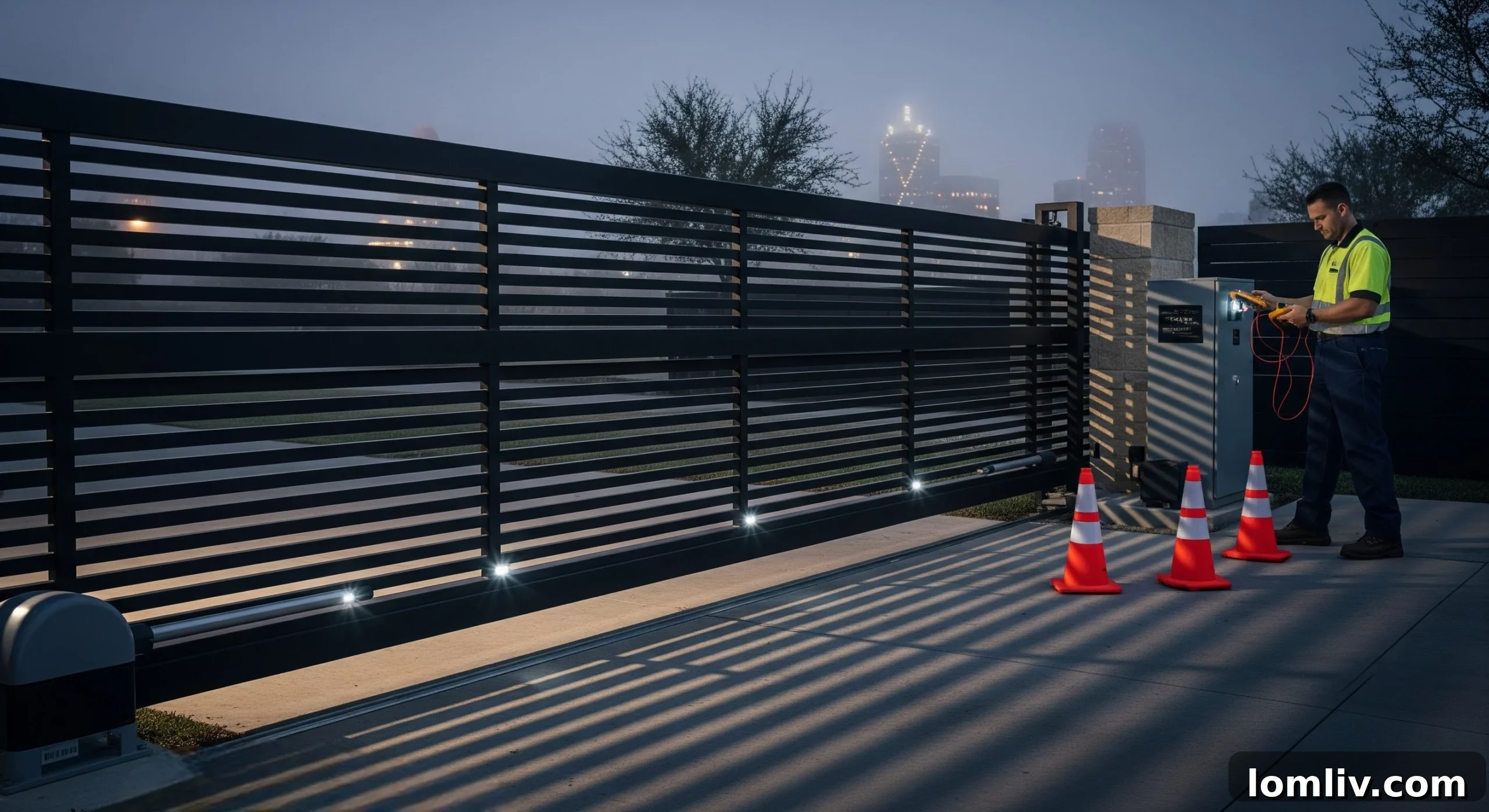

An unreliable or malfunctioning gate poses far more than just a minor inconvenience. It directly compromises the security of your property, creating potential vulnerabilities for unauthorized access. Beyond security, a faulty gate can lead to significant liability issues, especially if it causes injury or property damage. Furthermore, it causes immense frustration for everyone who relies on your entry system daily, whether for residential or commercial use. The key to resolving these issues isn’t just a quick fix, but partnering with the right repair service that not only addresses the immediate problem but also safeguards your system’s long-term integrity, performance, and safety.
Navigating the options for automatic gate repair can be daunting. This comprehensive guide is designed to empower you with a clear, practical, and in-depth set of criteria to thoroughly evaluate potential service providers. We will delve into critical aspects such as adherence to stringent safety standards, the robustness of their diagnostic processes, the reliability of their warranties, their approach to sourcing quality parts, and their transparent pricing structures. By understanding these elements, you can make an informed decision, ensuring your gate system operates flawlessly and safely for years to come.
Upholding Paramount Safety Standards in Gate Repair
Before you even begin discussing service fees or estimated arrival times for electric gate repair in Dallas-Fort Worth, the absolute priority must be to screen for a technician’s commitment to and competence in safety. For automatic gate systems, particularly those powered electrically, adherence to specific industry safety standards is non-negotiable. Reputable technicians are meticulously trained to follow UL 325 operator safety and entrapment protection standards, along with ASTM F2200 for gate construction. These regulations are not merely guidelines; they are critical safeguards designed to prevent accidents and ensure the safe operation of your gate.
This commitment means they will systematically verify the functionality of all monitored photo-eyes and safety edges, ensuring they detect obstructions reliably. They will also inspect guarded rollers, confirm correct infill spacing to prevent limb entrapment, and ensure safe travel paths are maintained throughout the gate’s operation. Crucially, a professional will never bypass or disable safety sensors to “make the gate run” faster or circumvent a problem; such actions instantly compromise safety and create severe liability risks. Always ask each prospective provider about their methods for testing the auto-reverse function, and what specialized tools they utilize to accurately verify force and limit settings. This deep dive into their safety protocols will quickly distinguish true professionals from less scrupulous operators.
Essential Safety Questions to Ask Your Gate Technician:
- Could you specify which UL/ASTM clauses directly govern the entrapment protection features on my particular operator model?
- How do you typically document the status and functionality of safety sensors—do you rely on the controller’s built-in diagnostics, or do you employ external testing devices?
- In the event of a failed safety device, will you exclusively replace it with a listed, compatible part that meets original specifications and safety certifications?
Rigorous Lockout/Tagout Procedures and Electrical Expertise
An automatic gate operator is a complex piece of machinery that integrates multiple power sources, typically combining high-voltage line power, backup batteries, and in some advanced systems, hydraulics. Working with such systems demands the highest level of electrical discipline and safety protocols. Trustworthy gate repair firms rigorously adhere to Lockout/Tagout (LOTO) principles. This critical safety procedure involves systematically isolating all power sources, safely discharging any stored energy (such as in capacitors or hydraulic accumulators), and verifying a zero-energy state before any work commences. This meticulous process prevents unexpected movement or accidental re-energization of the gate during maintenance or repair, thereby protecting technicians and preventing further damage to the system.
Even for residential gate repair jobs, this level of discipline is paramount. It not only significantly reduces the risk of electrical shock or injury but also helps prevent costly damage to sensitive electronic components and circuit boards that can result from working on live circuits. When vetting a service provider, always inquire about their LOTO procedures: How do they isolate power? What personal protective equipment (PPE) do their technicians use? And critically, is any work involving permanent wiring performed or meticulously signed off by a licensed electrician? These questions ensure that your gate system is handled with the utmost care and professionalism, adhering to recognized electrical safety standards.
Confirming Proven Brand-Specific Expertise
The automatic gate operator market features a diverse array of manufacturers, each with its own proprietary technologies, components, and firmware. Leading brands include LiftMaster, FAAC, CAME, Nice/HySecurity, and BFT, among others. The internal workings, diagnostic codes, and even the physical parts can vary significantly not only between brands but also across different generations of operators from the same manufacturer. Selecting a repair team with documented, extensive experience specific to your gate’s brand and model is crucial for accurate diagnosis and effective repair. Look for service providers who demonstrate:
- Direct Access to OEM Parts: Ensure they can source genuine Original Equipment Manufacturer (OEM) parts or equivalent listed components that are fully compatible with your specific operator model. This is vital for maintaining the system’s original specifications, performance, and warranty.
- Up-to-Date Firmware Knowledge: Confirm their technicians are knowledgeable about the latest firmware updates and configuration nuances for your operator family. Outdated knowledge can lead to misdiagnoses or incorrect settings.
- Specialized Diagnostic Tools: A reputable company will invest in brand-specific diagnostic tools that interface directly with your operator’s control board to read error codes and monitor system parameters accurately.
- Detailed Repair Logs: Request to see photo logs or case studies of recent, similar repairs they’ve completed, specifically involving components like sensors, limit switches, control boards, or encoders for your gate type.
A provider intimately familiar with your hardware can diagnose issues far more rapidly and precisely, avoiding the use of incompatible components that could void your system’s warranty, compromise its listing, or even lead to recurrent problems down the line. Their expertise translates directly into a faster, more reliable, and ultimately more cost-effective repair.
Response Time, Efficient Service Windows, and Transparent Communication
When your gate is malfunctioning—whether it’s stuck wide open, half-closed, or completely unresponsive—speed is of the essence. Beyond mere inconvenience, it represents a direct threat to your property’s security and can severely impact daily operations. Therefore, the responsiveness and communication protocols of your chosen repair provider are vital indicators of their professionalism and customer commitment. Look for reliable providers who:
- Offer Rapid Emergency Assessment: The best companies provide same-day or next-day emergency assessment services, especially for security outages where your gate is stuck in an unsafe position. This demonstrates an understanding of the urgency involved.
- Provide Predictable Arrival Windows: Vague arrival times are frustrating. Reputable services offer precise 2-hour arrival windows, coupled with live tracking or automated alerts, so you know exactly when to expect their technician.
- Communicate Pre-Arrival Instructions: Effective communication starts even before the technician arrives. They should clearly explain what you need to do to prepare for their visit, such as how to manually release the gate if it’s safe to do so, designating a coned-off work area for safety, and ensuring pets are secured indoors to prevent interference.
For homeowners and businesses alike, especially those seeking urgent electric gate repair, it’s essential to weigh immediate response time against a proven track record of compliance with safety standards. While a fast arrival is undoubtedly beneficial, a safe, standards-compliant, and lasting fix is paramount. Ideally, you should aim for a provider who can deliver both prompt service and uncompromising quality, ensuring peace of mind and enduring functionality.
A Transparent and Methodical Diagnostic Process

One of the clearest indicators of a truly professional gate repair service is their diagnostic methodology. Beware of any technician who resorts to a “swap-till-it-works” approach, replacing expensive components without a clear understanding of the root cause. A trustworthy and skilled technician will always follow a transparent and methodical diagnostic process:
- Initiate with Mechanical Checks: Before delving into electrical components, a professional will always begin by thoroughly inspecting the gate’s mechanical integrity. This includes checking the stability of posts, the condition of swing gate hinges, the functionality of rollers, the cleanliness and alignment of a sliding gate track, and the security of all stops. Often, issues like excessive drag or overload that mimic electrical failures are simply mechanical in origin.
- Review Controller Diagnostics: They will then move to the gate’s control panel, reviewing all LED indicators, error codes, and diagnostic outputs. This provides crucial insights into the system’s operational status, limit switch inputs, and any obstruction detection events.
- Thorough Safety Circuit Testing: A critical step involves comprehensively testing all safety circuits. This means actively demonstrating the auto-reverse function upon beam break (e.g., photo-eye interruption) and edge compression (e.g., safety edge contact). This verifies that the gate will reliably reverse direction when an obstruction is detected, preventing entrapment.
- Detailed Documentation: Every finding, every test, and every component checked should be meticulously documented. This often includes taking photos of problem areas and compiling a concise report that you can keep for your records and future reference.
This systematic diagnostic process not only pinpoints the exact issue efficiently but also ensures that the repair aligns perfectly with UL 325’s intent, verifying that entrapment protection remains fully functional and compliant after the repair is completed. It’s an investment in the longevity and safety of your gate system, preventing repeat issues and unnecessary expenses.
Key Considerations for Parts Sourcing, Warranties, and Ongoing Aftercare
The quality of a gate repair service extends far beyond the moment your gate operates again. It encompasses the longevity of the repair, the reliability of the components used, and the support provided afterward. When evaluating a service provider, pay close attention to these vital aspects:
- Quality Parts Sourcing: Insist that the repair service uses either genuine OEM (Original Equipment Manufacturer) parts or equivalent listed components that are certified compatible with your specific gate operator. Using substandard or generic parts can lead to premature failure, void warranties, and potentially compromise the safety and performance of your entire system.
- Comprehensive Labor Warranty: A standard labor warranty typically ranges from 30 to 90 days. However, premium repair shops often demonstrate their confidence in their workmanship by offering extended labor warranties, sometimes stretching from 6 to 12 months for clearly defined repair scopes. This extended coverage provides significant peace of mind.
- Transparent Parts Warranty: Ensure that any new parts installed come with a pass-through manufacturer’s warranty. The repair company should provide you with proof of installation and all necessary documentation to claim this warranty if a component fails within the specified period.
- Proactive Aftercare and Maintenance Plans: A truly excellent service doesn’t just fix; it prevents. They should offer a brief, actionable maintenance plan following the repair, which might include recommendations for sensor cleaning, lubrication points, and periodic battery tests. Furthermore, they should suggest a recommended service schedule for routine preventative maintenance, helping to extend the lifespan of your gate and preempt future issues.
Crucially, if a shop ever suggests “defeating” or temporarily disabling a safety sensor to “get by,” consider it an immediate red flag. Such a suggestion directly violates UL/ASTM safety requirements, creates unacceptable safety hazards for users, and exposes you to considerable liability risks. Always prioritize safety and compliance over shortcuts.
Understanding Pricing Models for Fair Comparison
Transparent pricing is a hallmark of an honest and professional gate repair service. Before authorizing any work, ensure you have a clear, itemized understanding of all charges. Don’t hesitate to ask for clarity on each line item:
- Service Call/Diagnostic Fee: Most companies charge an initial fee for a service visit, which covers the technician’s travel and the time spent diagnosing the issue. In many reputable firms, this diagnostic fee is often applied as a credit towards the total cost of the repair if you decide to proceed with their services.
- Hourly vs. Flat-Rate Pricing: Understand how labor is billed. Flat-rate pricing offers predictability for common, well-defined jobs, allowing you to know the total cost upfront. Hourly rates, while potentially more open-ended, are often more appropriate and fairer for complex diagnostic work or repairs where the extent of the issue isn’t immediately clear. Discuss which model applies to your situation.
- Parts Markup: It’s standard business practice for repair services to apply a reasonable markup on parts. However, you should insist on an itemized list that includes SKU numbers for all components. This allows you to verify the parts used and ensures you’re paying a fair price.
- Second Visit Charges: If a repair requires a special-order part that isn’t immediately available, clarify whether a second trip fee will be charged for the subsequent installation visit. Transparent companies will outline this policy clearly upfront.
Remember, the cheapest quote is not always the most economical in the long run. A low price can often mask overlooked safety standards, an incomplete diagnosis, or a failure to identify underlying structural issues that an operator simply cannot overcome. Investing in a properly diagnosed and executed repair from a reputable provider will save you headaches and expenses down the road.
Safety “Extras” That Elevate Professionalism
Beyond baseline compliance, truly professional gate repair technicians go the extra mile to enhance safety and ensure lasting performance. These “safety extras” are often subtle but speak volumes about their commitment to quality and client well-being:
- Photo-Eye Maintenance: They will routinely clean and meticulously realign photo-eyes, even if they aren’t the primary cause of the service call. They will also confirm that these essential safety devices are properly monitored by the gate controller, as required by standards.
- Slide Gate Infill and Roller Checks: For sliding gates, professionals will diligently check for correctly guarded rollers and ensure that the infill spacing meets ASTM F2200 guidelines, preventing potential entrapment hazards.
- Manual Release Testing & Labeling: They will test the gate’s manual release mechanism, ensuring it functions smoothly in emergencies. Crucially, they will clearly label the release key or handle and provide a concise explanation of emergency procedures to the property owner.
- Pre- and Post-Repair Testing Documentation: Professionals provide written notes or a detailed service report documenting the gate’s operational parameters both before and after the repair. This includes verifying limit settings, force measurements, and the proper functioning of the auto-reverse system.
These thoughtful touches and thorough checks align perfectly with the spirit of UL 325 and ASTM F2200, not only enhancing the immediate safety of your gate but also significantly reducing the likelihood of future service calls and ensuring long-term reliability.
Leveraging Reputation, Customer Reviews, and Verifiable References
In today’s digital age, online ratings and reviews are invaluable resources, but their utility depends on how you interpret them. When researching potential gate repair contractors, go beyond the star rating. Focus on recent reviews that specifically mention your gate’s brand or model, and pay attention to detailed descriptions of the problems fixed and the quality of service received. These specifics provide far more insight than generic praise.
Furthermore, don’t shy away from asking for two references from the last six months. A reputable company will gladly provide contacts of satisfied customers for similar repair jobs. When speaking with references, ask targeted questions about their experience, particularly regarding communication, adherence to timelines, and the durability of the repair. If possible, request photos of similar repairs (before and after) from the prospective provider. For discerning clients comparing providers for a trusted gate repair contractor, prioritize shops that willingly share documented checklists and tangible before/after evidence of their work. This level of transparency is a powerful indicator of real-world expertise, accountability, and a consistent commitment to quality.
Critical Red Flags to Watch Out For
While vetting, certain behaviors or statements should immediately raise concerns and serve as definitive warning signs:
- Bypassing Safety Devices: Any recommendation to bypass, disable, or tape over photo-eyes or safety edges, even “temporarily,” is an absolute deal-breaker. This is a severe safety violation and creates unacceptable liability risks.
- Vague Warranties: A refusal to provide clear, written warranties for labor and parts, or offering only extremely vague warranty statements, indicates a lack of confidence in their work or an unwillingness to stand behind it.
- Lack of Safety Discussion: If a technician avoids discussing UL/ASTM requirements or dismisses the importance of Lockout/Tagout (LOTO) procedures, they likely do not prioritize safety.
- “Parts Cannon” Approach: A diagnostic method that involves replacing expensive control boards or other components without a thorough investigation to identify the root cause is often referred to as a “parts cannon.” This is costly, inefficient, and rarely resolves the underlying problem.
- No Proof of Insurance or Licensure: Where required by local regulations, a refusal or inability to provide proof of adequate insurance coverage and proper licensure is a serious red flag, indicating potential non-compliance and exposing you to risk.
Your Comprehensive Gate Repair Vetting Checklist
Use this checklist to systematically evaluate and select the best gate repair professional for your needs:
- Confirms familiarity and documented experience with your specific gate operator brand and model.
- Clearly explains their lockout/tagout (LOTO) steps and the personal protective equipment (PPE) utilized on site.
- Commits to performing thorough mechanical checks before considering any electrical component swaps.
- Demonstrates the ability to run controller diagnostics (LEDs/inputs) and actively shows the auto-reverse functionality.
- Provides a detailed, itemized estimate or quote that clearly outlines labor costs, specific parts SKUs, and their policy regarding second-visit charges.
- Guarantees the use of listed, compatible safety devices and documents the operational status of all sensors.
- Offers comprehensive written labor and parts warranties, alongside a recommended aftercare or maintenance schedule.
- Is willing to share recent, similar repair photos and provide verifiable references.
- Supplies a brief, yet informative, service report or invoice that you can keep for your records and insurance purposes.
Selecting the right electric gate repair service is about finding the perfect blend of rapid response and unyielding commitment to industry standards. Begin your search by rigorously confirming their competence in adhering to UL 325 and ASTM F2200 safety guidelines, their disciplined application of lockout/tagout procedures, and their specialized diagnostic capabilities for your specific gate brand. Move beyond mere star ratings to compare transparent pricing structures, documented pre- and post-repair tests, and robust, real-world warranties.
When a gate repair provider treats critical safety devices as absolutely non-negotiable and articulates their repair process with clarity and confidence, you can expect a repair that truly lasts, effectively protects all users, and diligently preserves your valuable investment. Choose wisely, and your gate will continue to swing or slide smoothly and securely for many years to come, providing unparalleled convenience, fewer unwelcome surprises, and significantly strengthened property security.