

The financial implications for the City of Dallas are substantial when it comes to external consulting services. A recent review of city expenditures reveals significant outlays, prompting questions about efficiency, necessity, and transparency in government spending. From legislative advocacy to intricate urban planning, consultants play a multifaceted role in shaping Dallas’s future, often at a considerable cost to taxpayers.
Just last month, the Dallas City Council sanctioned nearly half a million dollars for legislative consultants alone. This figure is part of a broader trend. An additional $306,704 was recently allocated to TDA Consulting Inc. Their mandate: to facilitate community engagement and craft a refined version of the city’s Comprehensive Housing Policy. Concurrently, $100,000 was directed to Community Equity Strategies, a distinct group of experts tasked with spearheading 11 critical housing equity initiatives. These contracts frequently include provisions for logistical expenses, such as the more than $27,000 earmarked for food and supplies for community engagement events. However, the effectiveness of such spending sometimes comes into question.
One particular community event, intended to gather crucial public input, saw a paltry attendance of just eleven individuals. Of these, only four confirmed a Dallas address. Such low turnout raises concerns about the prudent use of funds, especially when a significant portion is dedicated to event provisions. It’s reasonable to infer that a considerable amount of prepared food might have gone to waste that evening, highlighting a potential disconnect between planning and actual public participation.
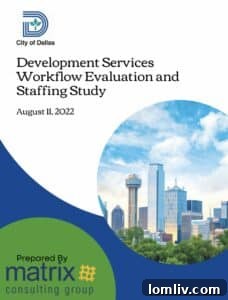
Beyond housing, consultancy fees extend to critical operational reviews. California-based Matrix Consulting Strategies received $109,500 in 2020 and a further $133,870 in the subsequent year. Their mission was to diagnose deficiencies within the Development Services Department, a department notoriously plagued by an “epic building permit backlog.” Yet, as Phil Crone, Executive Officer of the Dallas Builders Association, observed during a review meeting, many of these issues were already common knowledge among stakeholders. “In the big picture, it didn’t tell us anything we didn’t know already,” Crone stated regarding the Matrix report. However, he acknowledged the value in specific organizational recommendations, particularly the identification of “silos” between the Planning Department and Development Services. The report underscored the need to consolidate functions like plan review for conservation districts under the department that specializes in such reviews, aiming for greater efficiency and coherence.
Dallas City’s Annual Spending on Consulting Services: A Quest for Clarity
Determining the exact annual expenditure on consulting fees by the City of Dallas proves to be a complex challenge. Despite inquiries directed to every Dallas City Council member and Mayor Eric Johnson, a definitive figure remained elusive. This ambiguity suggests a lack of centralized tracking or a complex categorization system that makes comprehensive reporting difficult. District 10 Councilman Adam McGough echoed this sentiment, responding to a request for comment on the city’s consulting contracts with, “I look forward to your findings. I ask these questions often.” This indicates that even city officials struggle to grasp the full scope of these expenditures.
Our attempts to obtain a precise annual spending total from Dallas Budget Director Janette Weedon were met with no response at the time of publication, underscoring the opacity surrounding these figures. However, our independent research into the current city budget provides some insights. Approximately $4 million is allocated for a wide array of consulting services, ranging from payroll and timekeeping system consultants to pavement management specialists. The very word “consult” appears 19 times within the 2023 Dallas City Budget document. It’s important to note that many of these references, while indicating a consultative role, are not explicitly tied to a specific dollar amount, making it harder to quantify total spending. For example, a strategic priority might be broadly defined as “dam inspection, consultation, rehabilitation, and erosion studies for various dams,” without detailing the cost of the consultative component.
Further adding to the challenge of transparency, open records requests for the scope of work and associated consulting fees for the Racial Equity Plan yielded a surprising response: the city stated it possessed no documents meeting those criteria. This raises serious questions about record-keeping and accountability for projects intended to address critical social issues within the city.
Harnessing External Expertise: The Value of Consulting Studies for Dallas
Despite the challenges in tracking expenditures, many city officials argue that consulting studies offer invaluable benefits. Mayor Pro Tem and District 1 Councilman Chad West articulates that the city generally gains from reports that scrutinize city processes, staffing levels, and existing systems, often benchmarking them against those of “best-in-class” cities. A prime example is the Development Services’ Permit Office, where many staff members have been “ingrained” in long-standing systems for years, potentially leading to a reluctance to identify or confront internal inefficiencies.

“No staff member wants to point fingers at each other or at other departments regarding inefficiencies and problems,” West observed. “Having an independent third party to dig in and understand underlying problems and lay them out has been essential in helping us, the policymakers, know where we need to apply resources.” This independent perspective is crucial for objective problem identification and strategic resource allocation.
The comprehensive Development Services report, for instance, was commissioned prior to the appointment of department Director Andrew Espinoza in June. Even though Espinoza, now serving as both department director and chief building official, was already initiating significant reforms that often exceeded the consultant’s recommendations when the report was presented to the city council, he emphasized the value of professional guidance. He explained in an October interview with Daltxrealestate.com, “As a department head, I think I know where I want to steer the ship. Having a professional consultant as a co-captain is very helpful. He’s engaged with other captains and can help navigate busy waters.” This analogy highlights how consultants can provide external benchmarks, broaden perspectives, and offer specialized navigational advice.
District 13 Councilwoman Gay Donnell Willis reinforced this perspective, stating that for her, hiring consultants “starts with a demonstrated need in better serving residents.” She further detailed the rigorous process: “Then, following through with a proper scope and procurement process to identify the best fit (expertise, cost, value, timing, and various other factors specific to the objective).” Willis also acknowledged that while external expertise is often sought, “many studies, assessments, etc. that are conducted in-house” should not be overlooked. She underscored the role of consultants in guiding sound policymaking, drawing a parallel with the private sector. “As in the private sector, consultants are usually hired for a few reasons: subject-matter expertise, objectivity, or dedicated and focused attention, as staff has their plate full serving Dallas residents with their own jobs and has to manage that productivity,” she explained. “With all that is involved in creating a plan, such as qualitative and quantitative research, planning and executing community engagement, and synthesizing data, turning to experts is not uncommon in private and public sectors.”
Consultants: Providing Visionary Expertise for Complex Urban Challenges
Another compelling instance where external expertise becomes vital is in crafting comprehensive urban development strategies, such as the city’s housing policy. Councilman West elaborated, “The city’s housing department is composed of many talented individuals who are skilled in processing applications, issuing and managing [requests for proposals] and contracts, and applying rules to programs.” However, he pointed out a crucial gap: “But city staff members, from what I understand, do not have experience in drafting visionary plans and goals for workforce and market-rate housing as compared to other cities across the country.”

This illustrates a key argument for consultants: they bring a broader, national perspective and specialized experience in conceptualizing and articulating forward-looking policies that internal staff, focused on day-to-day operations, may lack. The Washington, D.C.-based consultants engaged for the Comprehensive Housing Policy are engaged in precisely this type of “tangible work,” providing a framework that will directly guide future housing initiatives. Michele Williams of Community Equity Strategies, for example, distributed a “draft framework” for the city’s revised housing policy in a November 9 email to participants of public workshops, demonstrating the concrete outputs of their work.
Liaisons, Lobbyists, and Legislative Contracts: Navigating State and Federal Policies
The practice of municipalities engaging government liaisons or legislative lobbyists is widely accepted as an unavoidable cost of doing business, akin to membership fees paid to organizations like the Texas Municipal League or the National League of Cities for services rendered to member cities. These professionals help Dallas navigate the intricate corridors of state and federal government, influencing legislation and securing vital funding.
District 12 Councilwoman Cara Mendelsohn strongly supports the engagement of legislative lobbyists, particularly those possessing deep expertise in specialized legal domains like water rights. “Water law is the most complicated part of the law,” she asserted. “When the city is working on legislation to acquire, maintain and protect our water rights, do you think I am qualified to go down and advocate for that? No one on the council has that experience. We have one legislative consultant who does nothing but water lobbying. That’s why you do 20-, 30-, and 50-year planning to ensure the city has water. All the consultants have their own roles.” Her argument highlights the critical need for highly specialized advocacy that council members, despite their dedication, cannot realistically provide due to their broad responsibilities.
However, the concept of taxpayer-funded lobbyists is not without its critics. A March 2021 Texas Tribune report highlighted the debate, noting that lobbying limits often serve as a “conservative rallying point.” The core of the public argument questions whether taxpayers truly want local governments lobbying to increase state spending, which is ultimately funded by those same taxpayers. Despite these concerns, local officials have successfully argued that their lobbyists serve as essential watchdogs and advocates for voters at the state level. The report stated, “Local officials have argued, with some success, so far, that their lobbyists are keeping an eye on state lawmakers on behalf of those voters. And that the voters would boot them if they didn’t like it.”
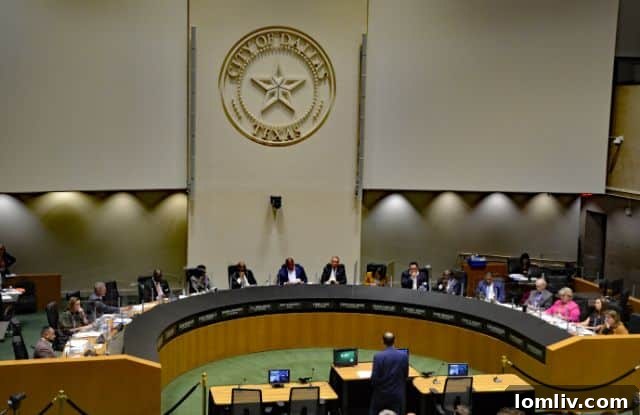
Mendelsohn acknowledges public skepticism but defends the practice by framing it as effective representation. “I’m a representative of my residents, and anyone I hire is representative of the issue I want them to talk about,” she explained. She argues that her physical presence in Austin would detract from her ability to serve her constituents locally. “If I spend all my time in Austin, how am I representing my residents? I can only be in one place at one time.” Furthermore, she posits that hiring consultants on a contract basis is a more fiscally responsible approach than increasing full-time staff: “What would be wasteful is if we’re hiring them as staff. What we’re paying as a contract rate is probably a quarter of what we’d pay to hire them [as full-time employees]. What would they do on the off-legislative years?” This perspective underscores the cost-efficiency argument for temporary, specialized expertise.
A recent overview of legislative lobbying contracts, unanimously approved by the Dallas City Council on October 26, illustrates these expenditures. Notably, there was no discussion about these contracts during the meeting, raising further questions about scrutiny. These contracts, spanning November 2022 to September 2023, total $485,375 and include:
- Burkland Consulting, state legislative services, $50,000
- Campos Consulting, state legislative services, $60,000
- Kwame Walker & Associates, state legislative services, $70,000
- Paul Schlesinger, federal legislative services, $74,375
- Randy C. Cain, state legislative services, $71,000
- Capital Edge Strategies, federal legislative services, $160,000
Official City Stance and Broader Implications of Consulting
Following the initial publication of this story, additional insights were provided by Dallas City Council members and city officials. A representative for District 2 Councilman Jesse Moreno confirmed that he was at a conference but would address questions upon his return, indicating a willingness to engage on the topic. District 11 Councilwoman Jaynie Schultz forwarded inquiries to Dallas Public Information Officer Page Jones Clark, who issued a comprehensive statement outlining the city’s official position:
“There are a number of reasons consultants are employed by local governments. Consultants are brought on for their expertise to advise how to best execute needed changes; they allow the City to ramp up for an acute need and subsequently ramp back down quickly without the year-round expenses of a full-time employee. As you noted, this is a very common practice among governmental entities. Local municipalities will often team up on a shared consultant need for cost savings.” This statement reiterates the common arguments for consultants: specialized expertise, flexibility for temporary projects, and cost-effectiveness compared to permanent hires.
Regarding legislative consultants specifically, the statement emphasized their strategic importance: “Regarding legislative consultants, these are people who help us identify and leverage millions of dollars in federal and state funding for city projects, as well as on policy directives the City Council has voted on for the benefit of our residents. What we spend on those services comes back exponentially. The legislative process can be complex and intensive, making it essential to have knowledgeable advisers who can effectively negotiate the rapidly-changing legislative environment. Certainly, local officials are the best advocates for the residents of Dallas. However, the dynamic day-to-day local needs do not recede while the Legislature is in session.” This highlights the significant return on investment perceived by the city, where consultant fees are viewed as a necessary expenditure to secure far greater funding and influence policy, ultimately benefiting Dallas residents. It also underscores the practical limitation of elected officials needing to balance legislative advocacy with immediate local responsibilities.
In conclusion, the City of Dallas’s reliance on external consultants is a complex issue balancing the necessity of specialized expertise, objective analysis, and strategic advocacy against concerns regarding transparency, accountability, and the efficient use of taxpayer dollars. While officials consistently articulate the value consultants bring to complex challenges and legislative navigation, the call for clearer financial reporting and demonstrable impact remains a vital point of public and journalistic inquiry.
Recommended Reading: In-Depth Consultant Documents
For those interested in the specifics of consultant engagement, the following documents, obtained through open records requests, offer detailed insights into their scopes of work and contractual agreements: