Embracing the Unexpected: A Midcentury Modern Enigma in Bellevue, Nebraska
For those who frequently follow my observations, my profound affection for the vibrant culture of the 1980s is no secret. This nostalgia stretches across various facets of the decade, even extending to the captivating world of the World Wrestling Federation (WWF). Ah, the good old days, before the real WWF – the World Wildlife Fund – flexed its legal muscles, forcing a name change. It always brings a chuckle to my mind, picturing those larger-than-life wrestlers being metaphorically pinned by a panda in a court of law. But I digress from the legal ring to the architectural arena.
The Unforgettable Flair of Randy “Macho Man” Savage: A Design Analogy
What truly elevated the experience of watching professional wrestling was its delightful predictability, juxtaposed with moments of outrageous surprise. You knew Hulk Hogan was the hero, and Randy “Macho Man” Savage was typically the villain. Yet, it was their larger-than-life personas, often teetering on the edge of parody, that kept us glued to the screen. And speaking of personas, Macho Man was, without a doubt, my personal favorite. His character was an absolute spectacle – flamboyant costumes, a booming, distinctive voice, and an ability to swing from endearing to infuriating in a single week. He was pure entertainment, a master of captivating an audience, eliciting strong reactions whether you loved him or loved to hate him. His presence was so strong, so unforgettable, that he transcended the wrestling ring and became an icon.

You understand the appeal, don’t you? How could you possibly turn away from such an engaging character? Well, the very same sentiment, a powerful mix of fascination and mild exasperation, can be applied to the architectural marvel (or mystery) featured in this week’s exploration. It is undeniably a Midcentury Modern home. Now, let me be clear: my affinity for Midcentury Modern architecture is profound. The clean lines, the integration with nature, the emphasis on functionality and open spaces – it’s typically my jam. However, this particular residence, much like Macho Man, evokes a complex reaction. It’s a “love it but it makes me hate it” kind of situation, a truly unique property that demands attention and discussion.

Discovering a Midcentury Enigma in Bellevue, Nebraska
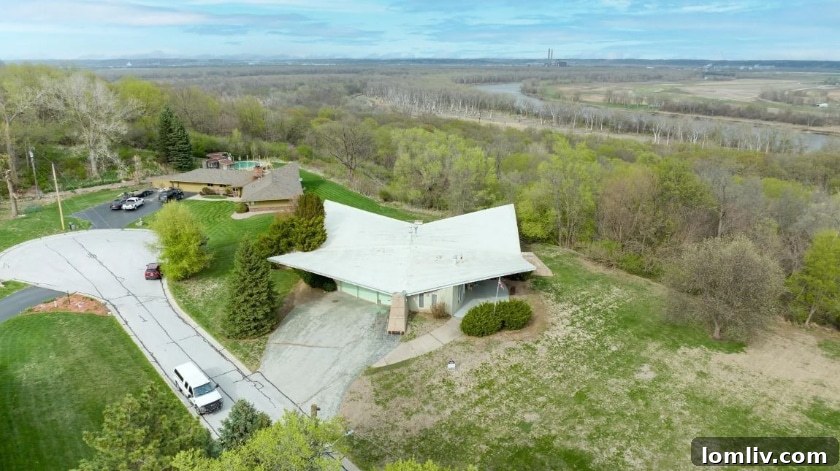
Nestled at 505 Ridge Road in Bellevue, Nebraska, this distinctive Midcentury Modern home presents a compelling proposition for those seeking a property with character. Spanning a generous 3,476 square feet, this residence boasts four well-appointed bedrooms and five bathrooms, offering ample space for comfortable living and entertaining. The current owners are offering this intriguing piece of architectural history for $695,000. On paper, it ticks many boxes for the discerning Midcentury enthusiast. But as we delve deeper, much like uncovering the layers of a complex wrestling storyline, the plot thickens.
A Glimpse into 505 Ridge Road: Specifications and First Impressions
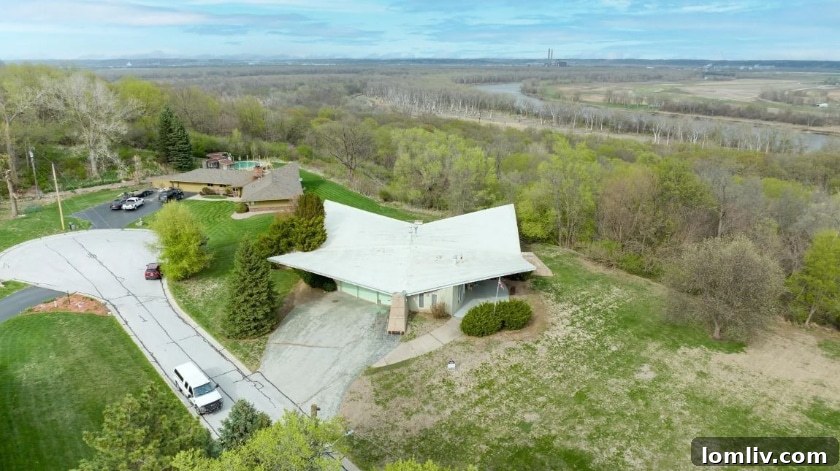
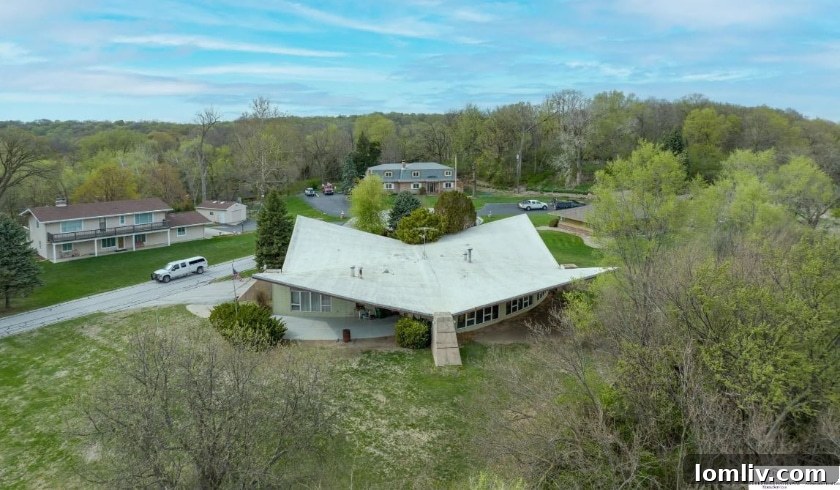
From its initial presentation, the home commands attention with its characteristic Midcentury Modern lines and integration into the landscape. The flat or low-sloping roof, expansive windows, and connection to the outdoors are all signature elements of the style. The asking price positions it as a significant investment in the Bellevue real estate market, reflecting both its size and its unique architectural pedigree. However, a closer inspection reveals some points of contention, leading us to ponder the practicalities behind its bold design.
If, upon viewing this house, your immediate thought is, “I wonder if they’ve had any issues with roof leaks?” then picture me, dear reader, looking at you with a shared sense of bewilderment. This concern, often a perennial challenge with certain Midcentury flat roof designs, is not unwarranted and, as we’ll discover, becomes a recurring theme in this property’s narrative.

Architectural Intrigue: Embracing the Midcentury Aesthetic
Stepping inside, the home truly begins to reveal its Midcentury soul, presenting spaces that celebrate light, openness, and innovative design. The open floor plan is immediately apparent, fostering a sense of flow and connectivity between living areas, a hallmark of the era’s forward-thinking approach to residential architecture. This design choice maximizes natural light and encourages social interaction, creating an inviting atmosphere that is as relevant today as it was decades ago.
Open Spaces and Iconic Features: The Heart of the Home
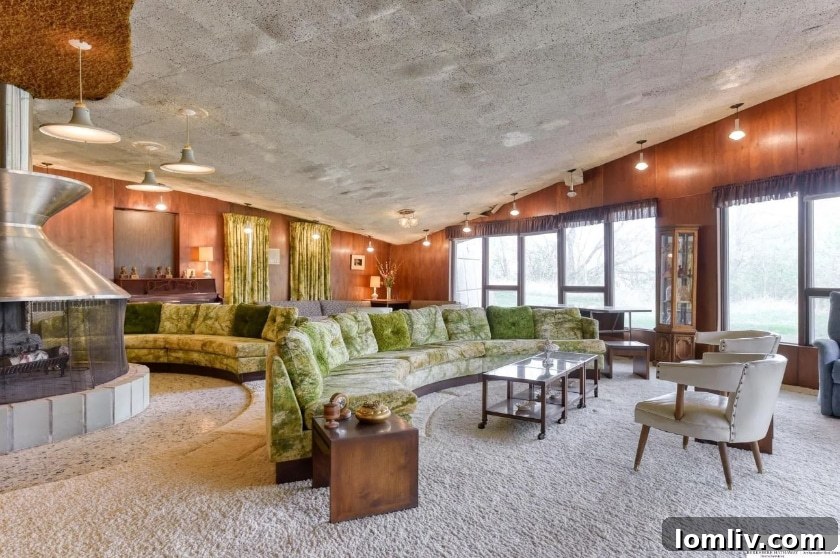
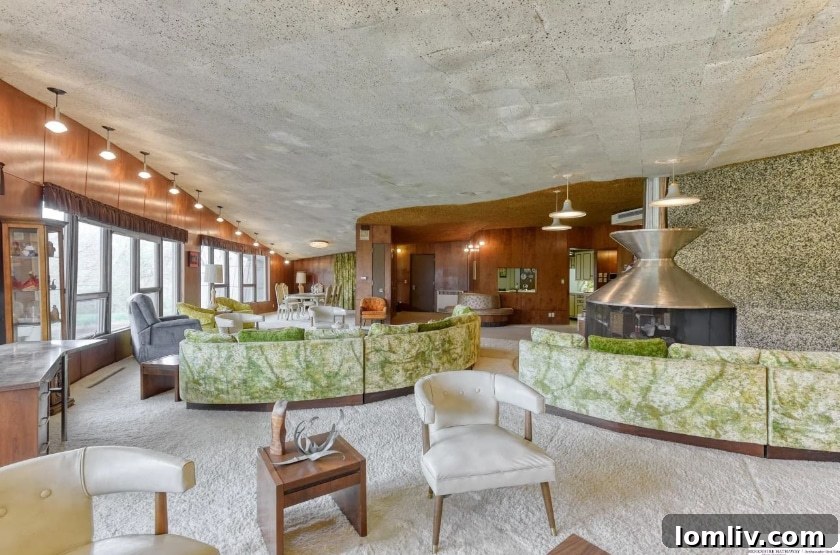
The living area features a striking stainless steel fireplace, a common yet always impressive centerpiece in many Midcentury homes. Its sleek, minimalist design perfectly complements the clean aesthetic of the era, offering both warmth and a strong visual statement. Adjacent to this, a magnificent half-moon wall of windows floods the space with an abundance of natural light, blurring the lines between indoor and outdoor living – another signature of Midcentury architecture. This feature alone would win me over any day of the week, and twice on Sunday, immersing the interior in a vibrant, airy ambiance. The white chairs, reminiscent of pieces I recall from my own childhood home, add a touch of nostalgic charm, blending seamlessly with the vintage yet timeless appeal of the room. It’s a space that beckons you to relax, to read, and to simply be. However, this immediate appreciation comes with a caveat: try not to look up.
Navigating the Quirks: A Closer Look at Design Choices
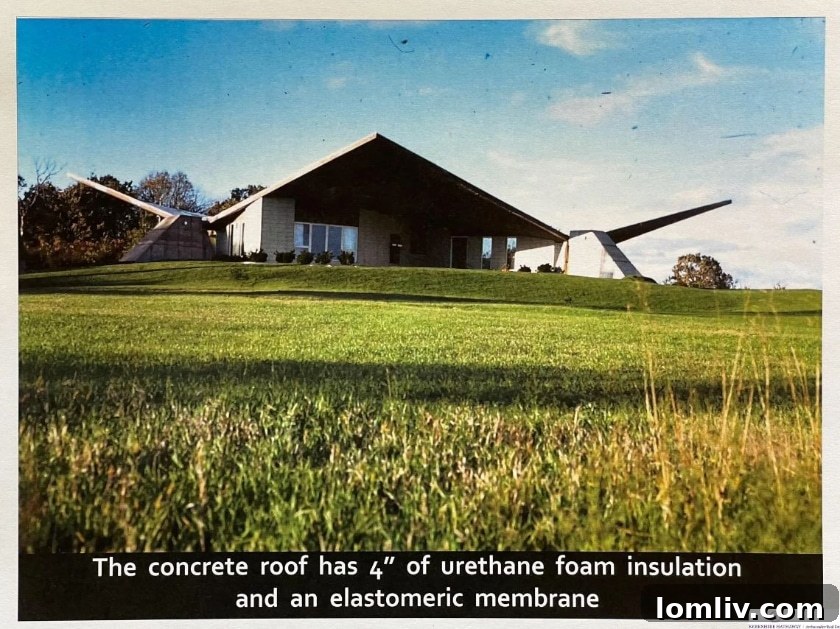
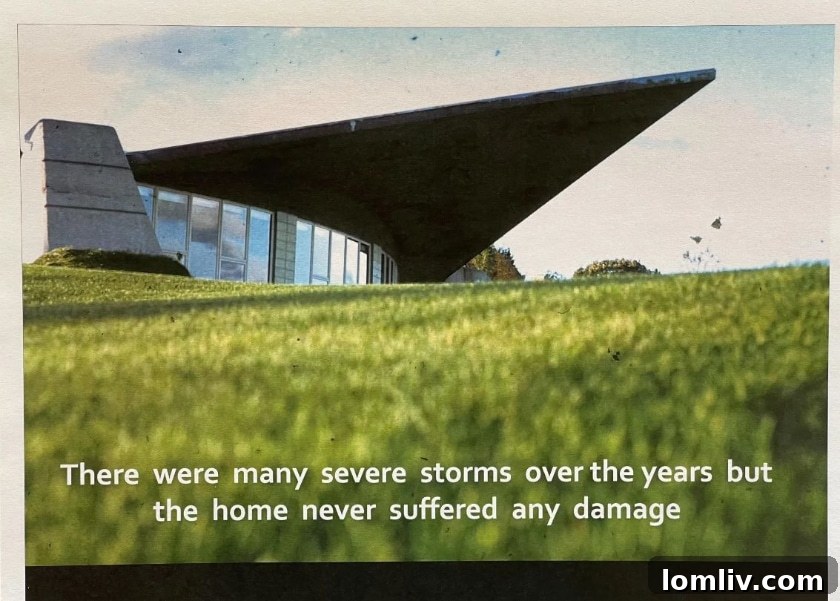
Here, the narrative takes a turn, moving from admiration to a more critical examination of the property’s unique challenges. The flat roof design, while aesthetically consistent with Midcentury principles, often requires meticulous construction and maintenance to prevent issues, especially in climates prone to varied weather. The listing likely refers to modern solutions like “urethane insulation and elastomeric membrane” as preventative measures against leaks. These technologies are designed to create a seamless, waterproof barrier and enhance thermal performance.
The Persistent Puzzle of the Roof: Form vs. Function
However, despite these stated protective measures, the visual evidence within the house suggests that, regrettably, these systems may not have performed their intended function perfectly. It appears the individual responsible for the original commentary highlighting the roof’s robust construction might not have fully surveyed the interior ceilings. This disparity between advertised prevention and visible reality creates a puzzling scenario for potential buyers and underscores the importance of thorough home inspections, especially for homes with unique architectural features that carry inherent maintenance considerations. The struggle between form and function, a common debate in architecture, seems to play out vividly within these walls, hinting at a past where water may have found its way inside.
Unconventional Ceilings and Unseen Challenges
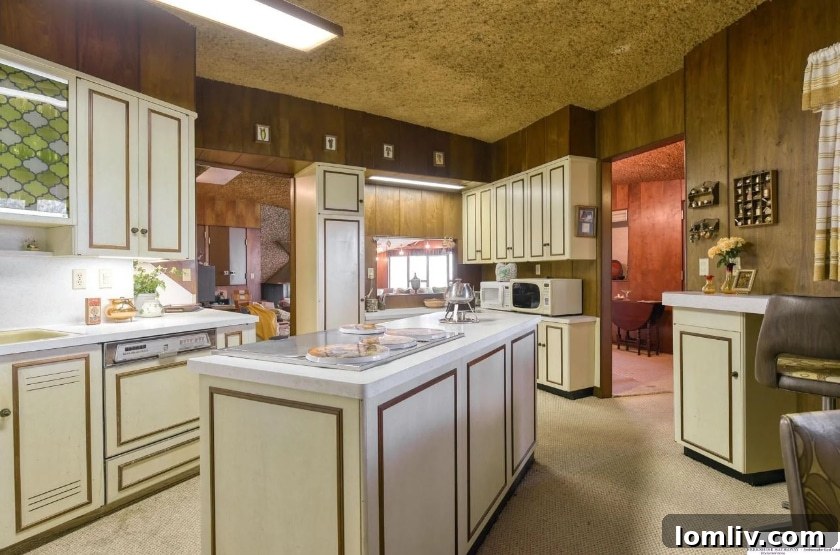
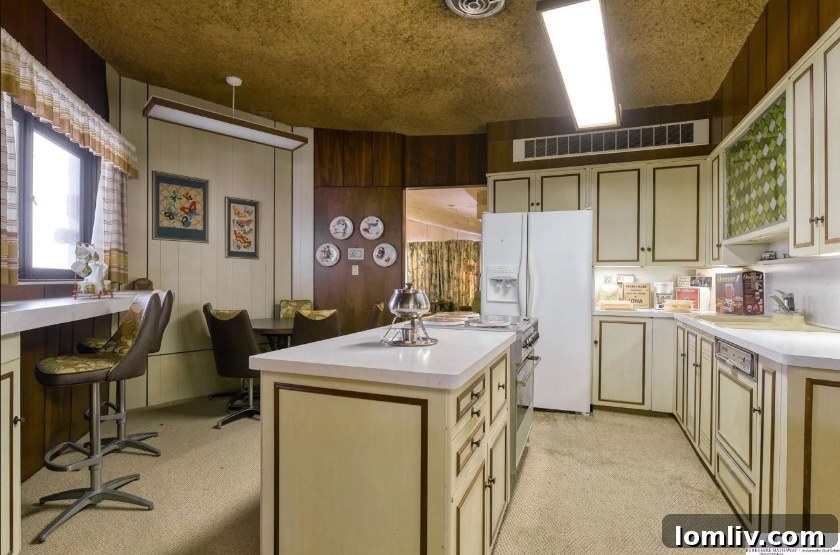
The kitchen, as seen in the photographs, boasts striking elements, such as the exquisite glass paneling above the sink, which is nothing short of sensational, allowing light to cascade into the space. The cabinets, with their pristine appearance, seem almost ready for a formal debut, suggesting a careful and perhaps recent update. Yet, once again, the eye is inevitably drawn upwards to the ceiling. Is that… carpeting? The texture, the pattern – it certainly gives the impression of a textile finish. While carpeted ceilings were a niche trend in some historical contexts, often for acoustic purposes or unique aesthetic statements, seeing it here prompts a genuine, incredulous “Surely it is not carpeting. Please. No.” It’s a design choice that profoundly divides opinion, adding another layer to the home’s “love it or hate it” personality. This unexpected feature, coupled with the previously discussed roof issues, raises concerns about potential past or current water damage, which could be discreetly hidden or exacerbated by such an unconventional ceiling material.
Interior Details: Blending Vintage Charm with Modern Living

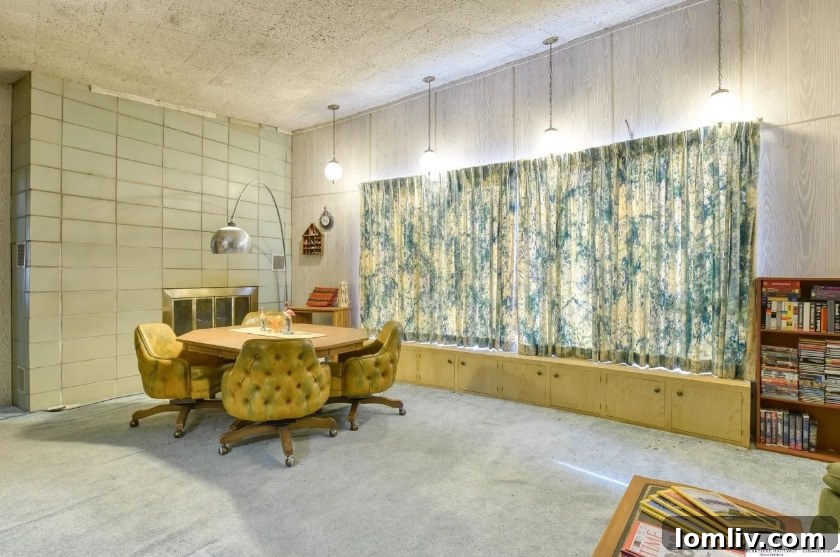
Despite its eccentricities, the overall layout and decor of the house present a compelling vision of Midcentury living. The interior design successfully balances functional spaces with aesthetic appeal, employing a thoughtful arrangement that maximizes comfort and style. The attention to detail is evident in the subtle touches, such as the artfully fanned-out issues of National Geographic and Time magazines on the coffee table. These vintage publications serve as more than just decor; they are conversation starters, period-appropriate accents that underscore the home’s historical context and evoke a sense of nostalgic sophistication. They contribute to a carefully curated atmosphere that transports you back to the golden age of Midcentury design. However, the photographic composition, which in certain instances focuses more heavily on the pristine floor than the potentially problematic ceiling, leads one to imagine that significant water damage may have previously impacted this room, or perhaps still presents an ongoing concern that has been artfully minimized in the visual presentation. It’s a subtle but significant detail for any prospective buyer to consider.
A Nod to History: The Enigmatic Builders and Their Vision
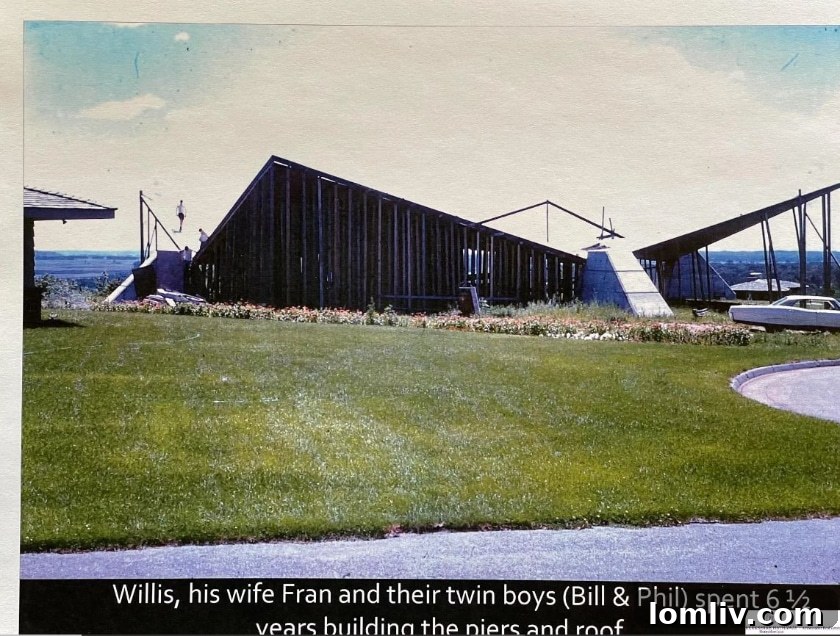
The original description playfully mentions that the house was built by “Will, Bill, Phil, and Fran.” This colloquial attribution, while perhaps a humorous shorthand, hints at a construction process that might have been more bespoke or less conventional than a typical corporate development. It suggests a personal touch, perhaps even a collaborative effort among friends or family, imbuing the home with an almost legendary origin story. Such a backstory only adds to the property’s unique charm and distinctive character, reinforcing the idea that this isn’t just a house, but a passion project brought to life by individuals with a particular vision. And on a purely aesthetic note, the vintage car prominently featured in one of the images is an absolute delight, perfectly complementing the Midcentury vibe and adding another layer of period-appropriate coolness to the overall presentation.
The Nebraska Landscape: Views and Context
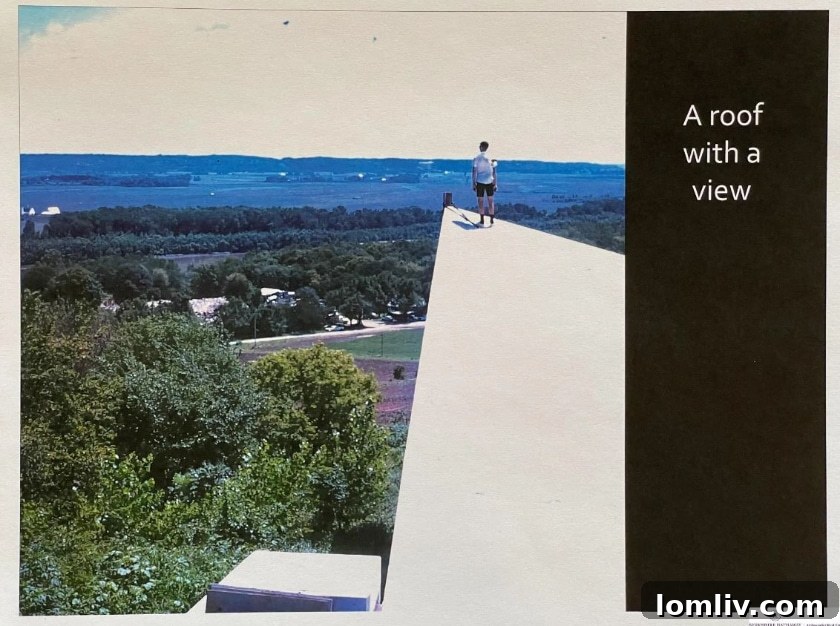
From the vantage point of the rooftop, an incredible panoramic view unfolds across the vast landscape of Nebraska. This elevated perspective highlights the home’s connection to its natural surroundings, a core tenet of Midcentury Modern design philosophy. While Nebraska might not be the first state that comes to mind when one pictures iconic Midcentury architecture, this residence proves that exceptional design can flourish anywhere. The vista, stretching out towards the horizon, offers a sense of tranquility and space, grounding the home within its unique geographic context. It reinforces the idea that Midcentury homes were designed not just for living inside, but for experiencing and interacting with the world outside.
The Midcentury Modern Dilemma: Love, Hate, and the Pursuit of Uniqueness
Ultimately, this Midcentury Modern home presents a fascinating dilemma. My usual inclination is to unconditionally adore these architectural gems, yet this particular property leaves me absolutely torn. Its stunning attributes – the open plan, the iconic fireplace, the wall of windows, the curated decor – are undeniable. But then there are the enigmas: the perplexing ceiling, the implied history of roof issues, the tension between what should be and what is. It’s a house that challenges expectations and defies easy categorization, much like a beloved but unpredictable character. In its unique imperfections and bold design choices, it embodies a spirit of individuality that is both admirable and, at times, perplexing. It’s a property that refuses to be ignored, prompting discussion and strong reactions – a true character home in every sense.
As I navigate this architectural conundrum, grappling with the blend of admiration and mild frustration, I find myself seeking guidance once again from my beloved wrestling hero, Macho Man Randy Savage. His career was a tapestry of dramatic highs and unexpected twists, of moments that made you cheer and others that left you bewildered. This house, in its own peculiar way, mirrors that journey. It’s not just a dwelling; it’s an experience, a narrative waiting to unfold for its next owner.

Final Thoughts: The Enduring Appeal of Architectural Character
The property at 505 Ridge Road in Bellevue, Nebraska, is more than just a house for sale; it’s a statement. It’s a testament to the enduring appeal of Midcentury Modern architecture, even when that appeal comes with a healthy dose of intrigue and the need for careful consideration. For those who appreciate homes with genuine character, homes that spark conversation and challenge the mundane, this residence offers a unique opportunity. It requires a buyer with a keen eye for design, a practical understanding of historical properties, and perhaps, a touch of Macho Man’s “take it or leave it” confidence to embrace its full potential. In a world increasingly dominated by homogenous design, this Midcentury Modern enigma stands out, daring to be different, and demanding a reaction. It reminds us that the most memorable homes are often the ones that provoke the strongest emotions, echoing the unforgettable personas of the past.
Explore This Unique Property Further
For more detailed photographs and information about this captivating Midcentury Modern home, you can explore the full listing here.