By Lydia Blair
Special Contributor
The Final Countdown: Navigating Your Real Estate Closing Process
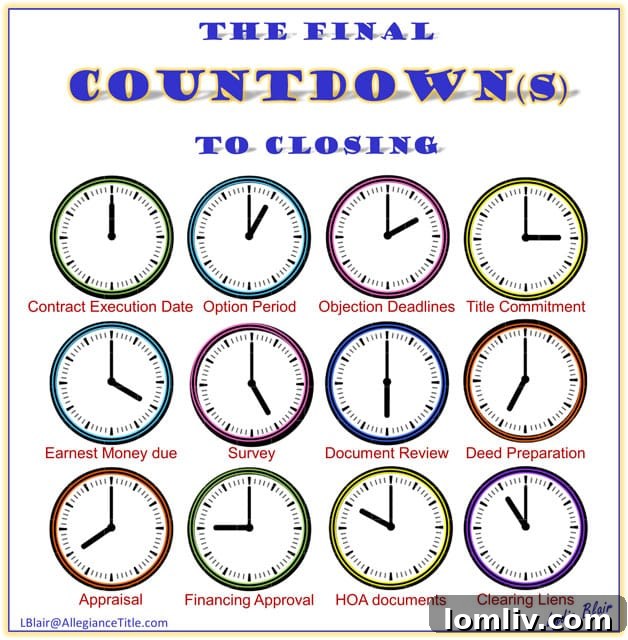
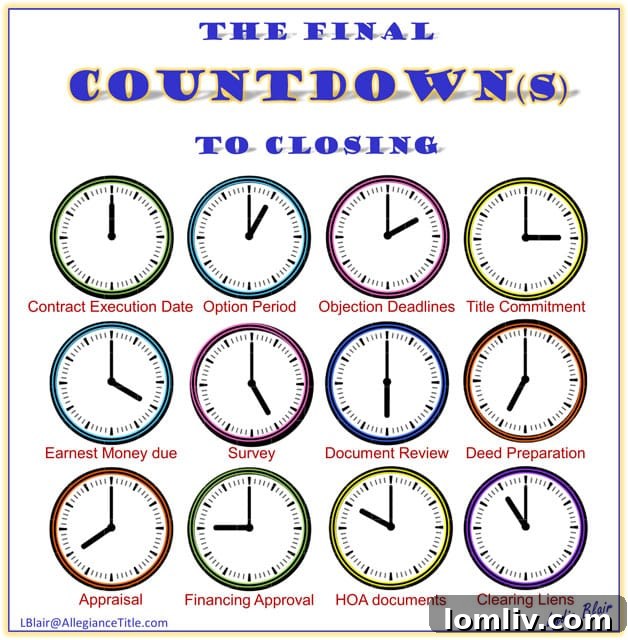
You’ve done it! The exhilarating moment has arrived where both buyer and seller have officially put pen to paper, signing on the dotted line of the real estate contract. Now, as the iconic tune suggests, it’s truly the Final Countdown. Cue the music: Daa! Da-da-daa! But beyond the excitement, what exactly happens between contract signing and the joyful exchange of keys or funds? This period, often filled with anticipation and sometimes a touch of anxiety, is a meticulously orchestrated sequence of events governed by strict timelines.
Understanding these critical deadlines is paramount for a smooth and stress-free transaction. Various “clocks” begin ticking simultaneously, each with its own start and stop times, and some even differentiate between business days and calendar days. Missing a single deadline can lead to frustrating delays, additional costs, or even the unfortunate termination of the contract. This comprehensive guide will demystify the countdown to closing, providing buyers and sellers with the knowledge they need to stay on track and ensure a successful outcome.
Understanding the Key Milestones in Your Real Estate Transaction
The journey from a signed contract to closing day involves numerous interdependent steps. Let’s break down each crucial phase, explaining its significance and what you, as a buyer or seller, need to know to navigate it effectively.
1. The Execution Date: Setting the Pace
Also commonly referred to as the Effective Date, this is the cornerstone of your real estate contract. It’s carefully filled in by one of the Realtors once all parties have reached a full agreement, and all necessary sections of the contract have been signed and initialed. This date is not just a formality; it acts as the primary anchor from which most subsequent deadlines for performance are calculated. Understanding this date is crucial because it dictates the entire timeline of your transaction, impacting everything from earnest money delivery to option period expiration. Any miscalculation here can cascade into significant problems down the line.
2. Contract Delivery: Kicking Off the Title Process
Once the contract is fully executed, its prompt delivery to the title company is absolutely vital. The title company, a neutral third party responsible for ensuring a clear title transfer, cannot begin its extensive work until it receives this crucial document. Swift delivery initiates their own countdown, allowing them to start the intricate process of title research, document preparation, and coordination with all parties involved. Delays in delivering the contract can set back the entire closing schedule, so it’s a step where speed and efficiency are highly valued.
3. Earnest Money Due: Buyer’s Commitment
The earnest money deposit is a demonstration of the buyer’s serious intent to purchase the property. Typically, the buyer is required to deliver this earnest money to the title company within three days of the execution date. It’s important to note that if this three-day window falls on a weekend or a holiday, the deadline is extended to the end of the next business day. This deposit is held in an escrow account by the title company and will eventually be applied towards the buyer’s down payment or closing costs. Failing to deliver the earnest money on time can be considered a breach of contract, potentially jeopardizing the entire transaction.
4. The Option Period: Buyer’s Due Diligence Window
The option period is a critical, negotiated number of calendar days agreed upon by both parties before the contract is executed. During this period, the buyer holds the unique right to terminate the contract for virtually any reason, often with minimal financial penalty (typically, only forfeiting a small option fee paid directly to the seller). This is the buyer’s designated time for exhaustive due diligence. It’s when key activities such as professional home inspections are performed, allowing the buyer to uncover any potential issues with the property. Following inspections, if problems are discovered, the buyer often uses this period to negotiate repairs or a price reduction with the seller. If an agreement cannot be reached, or if the buyer simply changes their mind, they can terminate the contract and retrieve their earnest money, provided they do so within the specified option period.
5. Property Survey: Defining Boundaries and Discoveries
The question of when and by whom the property survey is provided is a crucial element negotiated within the contract. A survey is a detailed drawing of the property that shows its boundaries, locations of improvements (like the house, garage, fence), and any easements or encroachments. Once the existing survey and any necessary affidavits have been delivered to the title company, they undergo a thorough review. The title company assesses whether the existing survey is sufficient for issuing title insurance. If the existing survey is outdated, incomplete, or reveals issues, a new survey may need to be ordered, which can add both time and cost to the transaction. Understanding the survey’s findings is essential as it can highlight potential property line disputes or zoning violations.
6. HOA Documents & Resale Certificate: A Separate Time Zone
Navigating Homeowners Association (HOA) documents and the resale certificate can often feel like entering an entirely different time zone, fraught with potential delays if not managed carefully. The deadline for delivering these documents is meticulously negotiated in the contract. It’s vital to note that the contract specifies ‘delivering,’ not merely ‘ordering.’ While the title company can initiate the order once the seller provides their HOA contact information, payment—often required in advance—must be received by the HOA before they even begin processing the request. This is where significant delays often occur.
By Texas law, for instance, HOAs are granted up to 10 business days to deliver documents *after* the order is placed and payment has been successfully received. It’s common to see contracts with less than 14 calendar days allocated for HOA document delivery. In such scenarios, someone usually ends up paying a substantial “rush fee” to the HOA management company. These rush fees can range significantly, from $50 to a staggering $350, on top of the standard cost of the resale certificate, all just to expedite the delivery of documents within two weeks. Proactive communication and prompt payment for these documents are key to avoiding unnecessary stress and expenses in this phase.
7. The Title Commitment: Ensuring Clear Ownership
The title company’s primary responsibility is to ensure that the buyer receives clear and marketable title to the property. Within a typical timeframe, often 20 days from the receipt of the executed contract, the title company is obligated to issue a commitment for title insurance. This commitment is a promise to issue a title insurance policy once certain conditions are met. As part of this process, they conduct extensive research into public records, meticulously reviewing deeds, liens, judgments, and other property records to uncover any potential clouds on the title. The commitment will also disclose any existing restrictions, easements, or exceptions that might affect the property. Buyers should carefully review this document with their agent or attorney to understand any limitations or conditions associated with their future ownership.
8. The Objection Period: Addressing Title and Survey Issues
The objection period, also a negotiated timeframe within the contract, provides the buyer with an opportunity to formally object to items disclosed on either the survey or the title commitment. This includes potential defects, exceptions, or encumbrances that were previously unknown or are deemed unacceptable by the buyer. This clock begins ticking only when the buyer has received *both* the survey and the title commitment. Common objections might relate to unknown easements, property line discrepancies, or unreleased liens. During this period, the buyer can request the seller to resolve these issues. If the seller is unwilling or unable to cure the objections, the buyer typically has the right to terminate the contract and recover their earnest money.
9. The Appraisal: Validating Property Value
For buyers utilizing financing, the appraisal is a non-negotiable step. The buyer’s lender orders this crucial assessment during the loan process. Typically, the appraisal order isn’t placed until the loan application is complete, and often, the borrower is required to pay for it in advance. A licensed appraiser evaluates the property to determine its fair market value, ensuring that it supports the loan amount. If the appraisal comes back lower than the agreed-upon sales price, and therefore doesn’t meet the lender’s requirements, the buyer may face several options: renegotiating the price with the seller, paying the difference in cash, or, if stipulated in the contract and within a certain timeframe (e.g., at least 3 days prior to closing), the buyer may be able to terminate the contract. An appraisal gap can be a significant hurdle, and buyers should be prepared for potential adjustments.
10. Financing Approval: Securing Your Loan
Another critical deadline, negotiated between the buyer and seller, is the financing approval period. This is the amount of time the buyer has to receive full approval for their loan. It’s distinct from pre-qualification or pre-approval; this stage signifies that the lender has thoroughly reviewed all financial documents, credit history, and employment verification and has issued a commitment to lend. Should the buyer fail to secure financing approval within this timeframe, the contract may be terminated, often with the return of the earnest money to the buyer, depending on the contract’s specific terms. It is in both parties’ best interest for the buyer to provide all necessary financial documentation to their lender promptly to avoid any last-minute issues.
11. Document Review, Curing Liens, and Deed Preparation: Title Company’s Unseen Work
Behind the scenes, the title company engages in a myriad of tasks that, while not always visible to buyers and sellers, are absolutely essential for a successful closing. These include meticulous document review, working to cure any discovered liens, and preparing the necessary deeds and closing statements. This phase often requires significant time and collaboration, as the title company relies on receiving accurate and timely information from various parties and sources. Delays can frequently arise if unexpected complexities emerge. For example, if a property owner is deceased and probate is required, or if someone’s marital status has changed since the last transaction, or if a Power of Attorney (POA) is being utilized, or if a party needs to sign documents from outside the title company’s office. Each of these situations demands additional time, documentation, and careful legal review to ensure that title can be properly transferred. Often, the title company will request specific information from buyers or sellers, and then the waiting game begins. Timely responses are paramount to keep this phase moving forward.
Avoiding Delays and Ensuring a Smooth Closing
The most common cause of closing delays stems from incomplete or delayed information provided to the title company or other parties. Whether it’s a seller forgetting to disclose a marital status change, a buyer taking too long to provide requested bank statements, or an HOA being slow to release documents, these small holdups can quickly snowball. The title company and real estate agents often find themselves in a cycle of requesting information, waiting, reminding, and waiting some more. This back-and-forth can push back critical deadlines and, ultimately, the closing date itself.
To avoid these frustrations and keep your closing on schedule, proactive communication is your most powerful tool. Respond promptly to any requests for information from your agent, lender, or title company. Provide all necessary documents as quickly and accurately as possible. Ask questions if you’re unsure about any step or document. Staying informed and engaged throughout the process will significantly contribute to a timely closing, allowing everyone involved to celebrate a successful transaction. Then, tick-tock – we’re all happy, keys exchanged, and funds disbursed!
The opinions expressed are of the individual author for informational purposes only and not for the purpose of providing legal advice. Contact an attorney to obtain advice for any particular issue or problem.
Lydia Blair (formerly Lydia Player) was a successful Realtor for 10 years before jumping to the title side of the business in 2015. Prior to selling real estate, she bought, remodeled and sold homes (before house flipping was an expression). She’s been through the real estate closing process countless times as either a buyer, a seller, a Realtor, and an Escrow Officer. As an Escrow Officer for Allegiance Title at Preston Center, she likes solving problems and cutting through red tape. The most fun part of her job is handing people keys or a check.