The commercial real estate (CRE) sector is currently navigating a period of profound transformation and uncertainty. Over the past few years, a confluence of persistent supply chain disruptions, fundamental shifts in work culture, and rapidly escalating interest rates has exerted immense pressure across retail, office, and industrial property segments. This dynamic environment challenges traditional investment strategies and demands a new approach to asset management.
As the commercial real estate market becomes increasingly complex and precarious, innovative solutions are vital for investors seeking to maintain a competitive edge. Amidst this backdrop, a pioneering proptech startup from Dallas, Dottid, has emerged with a clear mission: to empower investors with the tools necessary to thrive. Following our September coverage of Dottid’s unveiling of Asset OS – its next-generation, all-in-one asset management platform – we are now exploring how this cutting-edge software is actively assisting investors in navigating today’s decidedly uncertain CRE landscape. Its timely introduction marks a pivotal moment for those grappling with market volatility and the need for enhanced operational efficiency.
Recently, Kyle Waldrep, the visionary CEO and founder of Dottid, engaged in an insightful discussion with daltxrealestate.com. The conversation delved deep into the current state of the market and elucidated how Asset OS provides investors with unparalleled efficiency and critical insights, positioning them for success in an era defined by rapid change and strategic reevaluation.
Navigating the Post-COVID Commercial Real Estate Market Shifts
The commercial real estate market today presents a stark contrast to its state just 12 to 18 months ago, and an even greater divergence from the pre-COVID era, as Waldrep highlighted. The pandemic acted as a powerful catalyst, accelerating a dynamic shift towards hybrid work models, a trend that technology has now firmly cemented as a long-term viable solution for businesses worldwide. This evolution has profound implications for how commercial spaces are utilized and valued.
While Waldrep acknowledges the positive aspects of this adaptability and technological enablement, he also emphasizes the significant adjustment period currently underway within the commercial real estate sector. This period is characterized by a re-calibration of property values and a strategic re-evaluation of asset classes, particularly within the office space segment.
“There’s been a noticeable slide in value, especially prominent in the office space sector,” Waldrep explained. He further elaborated on a fascinating duality emerging in the market: “On one hand, we’re witnessing Class A, highly amenitized buildings commanding incredible rental rates, reflecting a flight to quality for companies seeking to entice employees back to the office. Conversely, value-add investors are seizing opportunities to acquire lower Class A or Class B office assets, with the strategic intent of upgrading them with modern amenities to meet evolving tenant demands and unlock significant value.” This bifurcated market underscores the importance of granular data and strategic foresight for successful investment.
However, when observing the capital markets transaction side, Waldrep notes a conspicuous lack of activity. This slowdown is largely attributable to the Federal Reserve’s aggressive series of interest rate increases implemented over the past year, which have significantly impacted borrowing costs and investor sentiment, creating a climate of caution and indecision.
“With all the prevailing uncertainty, there isn’t a great deal of market activity, and consequently, not many buildings are changing hands,” Waldrep observed. He attributes this inertia to the fact that “debt and equity markets currently lack a clear purview into the next four to eight months.” This ambiguity leads to a scenario where “there’s actually tons of capital just waiting to transact; it’s simply sitting on the sidelines as we collectively await more definitive clarity from the Fed regarding future monetary policy.” This substantial dry powder signifies underlying demand, yet it remains unleveraged due to current market apprehension.
Despite a tendency among many market observers to paint office properties with an overly negative brush, Waldrep maintains a more nuanced and optimistic perspective. For him, even the seemingly bleakest market conditions inherently present significant opportunities for those investors equipped with the foresight, data, and willingness to embrace a calculated degree of risk. This perspective underscores a fundamental truth in real estate: downturns often create the most attractive entry points for strategic growth.
“Does the market look different? Absolutely. Is there going to be some fundamental reset in value? Undoubtedly. But within this transformation lies significant opportunity,” Waldrep affirmed, encouraging a forward-thinking and proactive stance towards market fluctuations rather than a reactive one. Identifying and capitalizing on these opportunities is where innovative technology truly becomes indispensable.
Asset OS: The Comprehensive Answer for Modern Commercial Real Estate Investment
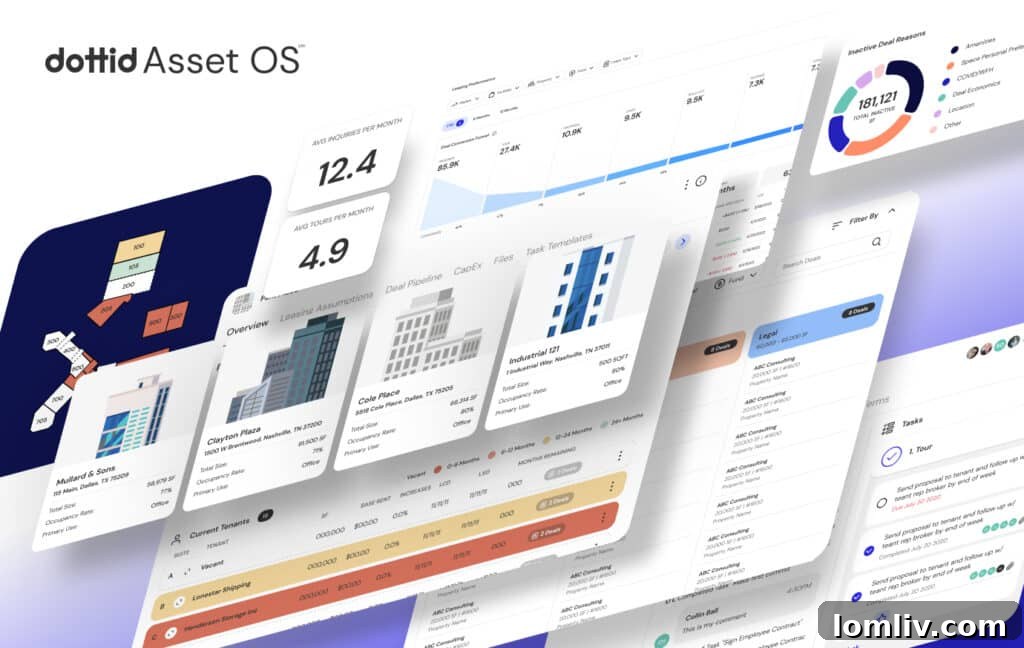
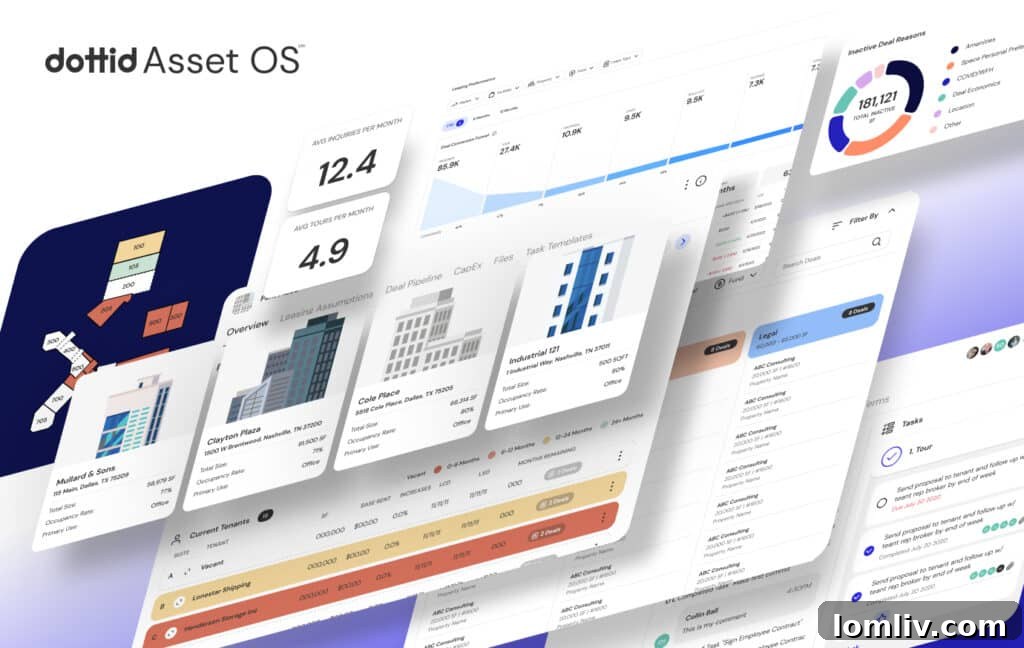
As a trailblazing, all-in-one asset management platform, Dottid’s Asset OS represents a monumental leap forward, offering an intuitive and robust solution designed to arm investors with the essential information and agility required to navigate any market condition, irrespective of its inherent volatility. Its comprehensive design integrates disparate functions into a cohesive ecosystem, providing a holistic view of asset performance.
“When sectors like office start to undergo significant transformations, as they are now, and when there’s a tangible reduction in capital markets activity, it fundamentally means that the majority of professionals in the business are increasingly performing critical asset management roles,” Waldrep elucidated. “This is precisely where Dottid comes into play, stepping alongside these professionals to empower and enable them. That is the core brilliance and immense value proposition of Asset OS.” The platform serves as a force multiplier, enhancing the capabilities of asset managers in a challenging environment.
With its comprehensive and consolidated platform architecture, Asset OS furnishes users with every conceivable tool and piece of data needed to meticulously manage a vast spectrum of real estate operations. This ranges from the intricate oversight of major capital projects and expenditure tracking to the strategic management of property debt portfolios, ensuring that no detail is overlooked and every aspect of an asset’s lifecycle is optimized for performance.
“By seamlessly tying in crucial elements such as debt obligations, capital expenditures, intricate leasing agreements, and even sophisticated valuation integrations, Asset OS provides an unprecedented level of control and insight,” Waldrep elaborated, highlighting the platform’s ability to create a single source of truth for all critical asset data. This integration eliminates data silos, reduces manual errors, and provides real-time access to information that is vital for informed decision-making.
Looking ahead, as we contemplate the future trajectory of commercial real estate, innovative products like Dottid’s Asset OS will prove absolutely instrumental. They will be the defining factor in determining whether investors possess the innate ability to swiftly identify and capitalize on emergent opportunities, or whether their fates will remain predominantly swayed by broader economic forces alone. The traditional reliance on fragmented systems and historical data is no longer sufficient; the modern investor requires predictive capabilities and real-time responsiveness. This proptech advancement is not merely a tool; it is a strategic imperative for long-term success in an increasingly competitive market.
Crucially, the dedicated and forward-thinking team at Dottid is actively bringing the industry one significant step closer to establishing a commercial real estate market that is inherently more adaptable, more resilient, and ultimately, more advantageous for all stakeholders. Their commitment to innovation is reshaping the landscape of asset management, fostering an ecosystem where efficiency and insight drive superior outcomes.
“We are genuinely enabling those dedicated asset managers to not only manage exceptional assets but also to cultivate and sustain relationships with outstanding tenants,” Waldrep concluded, underscoring Dottid’s overarching goal: to enhance every facet of the asset management process, from financial oversight to tenant satisfaction, thereby maximizing returns and ensuring the long-term viability of commercial real estate investments.