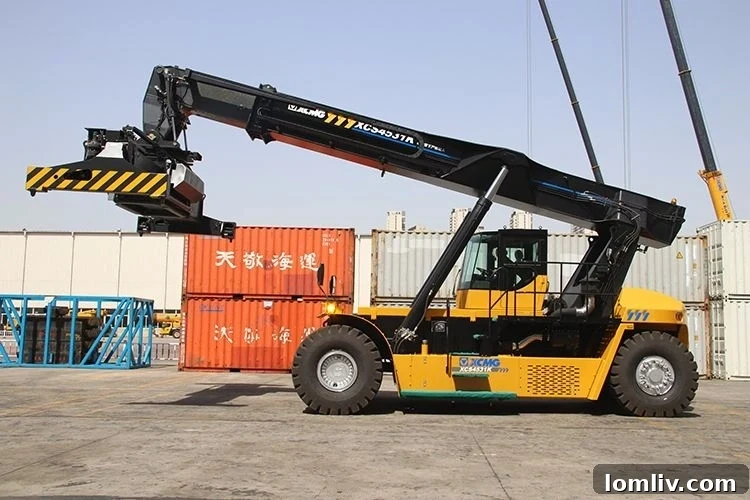
In the demanding world of modern logistics, port operations, and extensive construction projects, the efficient and safe movement of heavy containers is paramount. Container stackers are the indispensable workhorses that make this possible, significantly boosting operational speed, enhancing safety standards, and streamlining workflows across storage ports, sprawling industrial yards, and various industrial sites. When your business considers investing in such critical machinery, the decision extends far beyond merely finding the cheapest option. It requires a strategic evaluation of the overall cost, functional capabilities, and long-term value to ensure the equipment serves as a sustainable asset.
This comprehensive guide is designed to empower you with the knowledge needed to make an informed purchasing decision for a container stacker. We will meticulously break down the essential factors to consider, from assessing your specific operational needs to evaluating performance, durability, and the true cost of ownership. Furthermore, we will highlight why the XCMG reach stacker container XCS4531K 45-ton model stands out as an exemplary choice, offering a compelling blend of power, efficiency, and reliability for businesses seeking a robust material handling solution.
1. Assess Your Operational Needs: The Foundation of Smart Investment
Before diving into the specifications of various container stackers, the crucial first step is to conduct a thorough assessment of your company’s unique operational requirements. Understanding your workflow and site conditions will guide you toward the most suitable equipment, preventing costly mismatches and optimizing productivity. Consider the following key aspects:
- Material Handling Volume and Container Weight: How much material do you process daily, weekly, or monthly? What are the typical and maximum weights of the containers you will be lifting? This isn’t just about the average load; you must account for the heaviest containers you expect to handle, including future projections. Overloading can lead to significant safety risks, equipment damage, and operational delays.
- Container Types and Dimensions: Are you primarily handling standard 20ft or 40ft ISO containers, or do your operations involve specialized, high-cube, or refrigerated containers? The type of spreader and its adjustability will be critical.
- Frequency of Use: Will the stacker be in continuous operation for multiple shifts, or will it be used intermittently? High-frequency usage demands robust construction and reliable components designed for endurance.
- Site Layout and Space Constraints: Evaluate your operating environment. What are the dimensions of your storage yard, the width of your aisles, and the maximum stacking height permitted? Tight spaces necessitate a stacker with superior maneuverability and a compact footprint. Conversely, large, open yards might benefit from machines with greater speed and longer reach. Consider ground conditions—paved, unpaved, or uneven terrain will influence tire selection and chassis design.
- Stacking Configuration: Do you need to stack containers one-deep, two-deep, or even three-deep? The machine’s horizontal reach capability will be paramount here.
- Future Growth and Expansion Plans: Anticipate your company’s growth. Investing in a machine with slightly more capacity or advanced features than your immediate needs might prove more cost-effective in the long run, avoiding premature replacement.
By meticulously defining these parameters, you can select a container stacker that not only meets your current demands but also provides flexibility for future operational shifts. A precise understanding of your needs ensures that your investment truly aligns with your business goals, enhancing efficiency and preventing unnecessary expenditure.
2. Capacity and Reach: The Core Capabilities of a Container Stacker
Two fundamental specifications that dictate a container stacker’s utility are its lifting capacity and reach. These directly impact the range of tasks the machine can perform and its efficiency in your specific environment.
- Lifting Capacity: This refers to the maximum weight the stacker can safely lift. However, it’s crucial to understand that capacity can vary depending on the load center and the boom extension. A 45-ton stacker, for instance, might be able to lift 45 tons when the container is positioned close to the machine (first row) but a lower weight when extended further out (second or third row). Always match the stacker’s rated capacity to the heaviest loads you routinely handle, including a safety margin to prevent overloading. Operating beyond the rated capacity is extremely dangerous, leading to structural fatigue, instability, and potential catastrophic failure, jeopardizing both personnel and assets.
- Reach: This encompasses both the vertical and horizontal extent to which the stacker’s boom can extend.
- Vertical Reach (Stacking Height): How many containers high do you need to stack? Standard reach stackers can typically stack 4 to 5 containers high in the first row. Ensure the machine can comfortably reach your required stacking height without strain, allowing for efficient use of vertical storage space.
- Horizontal Reach (Row Capability): How many rows deep do you need to place or retrieve containers from the aisle? Some stackers can place containers up to three rows deep, which is vital for maximizing yard density in ports and large logistics hubs. Insufficient horizontal reach can force you to reconfigure your yard layout or rely on additional, less efficient equipment, slowing down your entire operation.
Carefully evaluating these two features ensures that the container stacker you choose can handle your specific operational demands without compromising safety or productivity. A well-matched capacity and reach profile means smoother operations and optimized use of your valuable space and time.
3. Evaluate Performance Features: Beyond Basic Functionality
Modern container stackers are sophisticated machines equipped with advanced features designed to enhance operational efficiency, safety, and operator comfort. Investing in models with superior performance features can significantly impact your bottom line through increased uptime and reduced operational costs.
- Advanced Control Systems and Hydraulics: Look for precise hydraulic systems that offer smooth, responsive, and accurate movements, critical for safely handling heavy and often delicate cargo. Automated controls, such as automatic spreader leveling and container detection systems, can reduce operator workload, minimize errors, and accelerate cycle times.
- Operator Comfort and Ergonomics: The cabin environment directly affects operator productivity and well-being. Features like ergonomic seating, climate control, excellent all-around visibility, low noise levels, and intuitive digital displays reduce fatigue during long shifts. A comfortable operator is a more efficient and safer operator.
- Enhanced Safety Features: Modern stackers integrate a multitude of safety technologies:
- Stability Control Systems: Essential for preventing rollovers, especially when handling off-center loads or operating on uneven terrain.
- Overload Protection: Alerts operators and prevents lifts exceeding the machine’s safe working load.
- Anti-Slip and Traction Control: Improves grip and stability in adverse weather conditions or on slippery surfaces.
- Advanced Braking Systems: Ensures reliable stopping power under heavy loads.
- Visibility Aids: Features like rearview cameras, proximity sensors, and comprehensive lighting packages (LEDs for night operation) significantly improve situational awareness.
- Emergency Stop Buttons: Strategically placed for immediate shutdown in critical situations.
- Fuel Efficiency and Environmental Compliance: With rising fuel costs and increasing environmental regulations, consider stackers that offer superior fuel economy. Many manufacturers now offer engines compliant with strict emission standards (e.g., Tier 4 Final/Stage V), or even hybrid and fully electric models, which can lead to substantial long-term savings on fuel and contribute to your company’s eco-friendly initiatives. Telematics systems can also monitor fuel consumption and operational patterns to identify areas for improvement.
- Telematics and Connectivity: Modern machines often come with telematics systems that provide real-time data on machine performance, location, fuel consumption, and diagnostics. This data can be invaluable for predictive maintenance, fleet management, and operational optimization.
By evaluating these performance features, you can select a container stacker that not only gets the job done but does so with maximum efficiency, safety, and sustainability.
4. Durability and Maintenance: Ensuring Long-Term Value and Uptime
Investing in a container stacker is a significant capital expenditure, making durability and ease of maintenance critical considerations for ensuring a healthy return on investment. A robust machine guarantees longevity, minimizes downtime, and maintains operational continuity.
- Construction Quality and Materials: Examine the structural integrity. High-quality steel, robust chassis design, and components from reputable, specialized suppliers (engines, transmissions, axles, hydraulics) are indicators of a durable machine. Manufacturers known for their rigorous testing and quality control processes typically produce more reliable equipment.
- Manufacturer Reputation and Reliability: Opt for a machine from a well-established and trusted manufacturer with a proven track record in heavy equipment. A strong brand reputation often correlates with superior engineering, consistent quality, and commitment to customer satisfaction.
- Ease of Maintenance and Serviceability: Even the most durable machine requires regular maintenance. Choose a stacker designed for easy access to service points, making routine checks and repairs simpler and quicker. Modular design can also expedite part replacement. Inquire about recommended service intervals and the complexity of common maintenance tasks. Reduced maintenance time directly translates to increased operational uptime.
- Availability of Spare Parts: The global supply chain for parts is crucial. Ensure that common wear parts and critical components are readily available, either locally or through an efficient international distribution network. Delays in receiving spare parts can lead to extended downtime, significantly impacting productivity and revenue.
- Warranty and After-Sales Support: A comprehensive warranty signals the manufacturer’s confidence in their product. Beyond the warranty, investigate the quality of after-sales support. Does the manufacturer or dealer offer prompt technical assistance, operator training, and reliable field service? A strong support network is invaluable for quickly resolving issues and keeping your operations running smoothly.
A durable, easily maintainable container stacker saves money on frequent repairs, prevents costly operational interruptions, and ensures consistent productivity throughout its lifespan. It’s an investment in uninterrupted service and peace of mind.
5. Balanced Price and Value: The Total Cost of Ownership
While the initial purchase price is an important factor, it should never be the sole determinant when selecting a container stacker. A truly smart investment considers the “Total Cost of Ownership” (TCO), which encompasses all costs associated with the machine over its entire operational life. Focusing on value, rather than just price, ensures long-term economic benefits.
- Understanding Total Cost of Ownership (TCO):
- Initial Purchase Price: The upfront cost of the machine.
- Operating Costs: Fuel consumption, lubricants, tires, and operator wages. More fuel-efficient or technologically advanced models, though potentially higher in initial cost, can offer significant savings here.
- Maintenance and Repair Costs: Routine servicing, wear parts replacement, and unexpected repairs. Durable machines from reputable brands typically incur lower repair costs over time.
- Downtime Costs: The financial impact of equipment being out of service. This includes lost productivity, potential contract penalties, and the need for alternative (often more expensive) solutions.
- Insurance and Licensing: Ongoing costs associated with operating heavy machinery.
- Depreciation and Resale Value: High-quality, well-maintained equipment often retains a better resale value, recouping a larger portion of your initial investment.
- The Pitfalls of a “Cheap” Stacker: A stacker with a very low upfront cost might seem attractive, but it can quickly become an expensive liability. Lower-quality machines often suffer from frequent breakdowns, higher fuel consumption, more expensive spare parts, and a shorter operational lifespan. These issues translate into increased maintenance costs, significant downtime, and ultimately, a much higher TCO.
- The Value of Efficiency and Quality: Paying a slightly higher initial price for a more robust, efficient, and technologically advanced model can lead to substantial savings over time. These savings come from reduced fuel consumption, lower maintenance requirements, increased operational efficiency (faster cycle times), enhanced safety, and greater operator satisfaction.
- Financing Options and Discounts: Explore various financing solutions offered by manufacturers or dealerships. Many companies provide flexible payment plans, lease options, or trade-in programs that can make a high-quality stacker more accessible for your budget. Understanding these options can help you acquire the best equipment without straining your immediate cash flow.
- Return on Investment (ROI): Calculate the potential ROI. How quickly will the machine’s efficiency gains, reduced operating costs, and increased productivity pay for its investment? A higher-value machine often delivers a faster and more substantial ROI.
By shifting your focus from a simple price tag to the comprehensive value proposition and TCO, you can make a strategic investment in a container stacker that not only meets your operational demands but also contributes positively to your company’s long-term financial health.
Summing Up with the XCMG Reach Stacker Container XCS4531K: A Smart Investment
Choosing the optimal container stacker for your construction, logistics, or port operations is a complex decision that extends far beyond merely comparing price tags. It necessitates a diligent evaluation of your company’s specific needs, the machine’s lifting capacity and reach capabilities, its array of performance and safety features, and the crucial factors of durability and long-term maintenance. Only by meticulously considering these elements can you select a stacker that genuinely enhances operational efficiency, bolsters safety protocols, and effectively reduces overall operational costs.
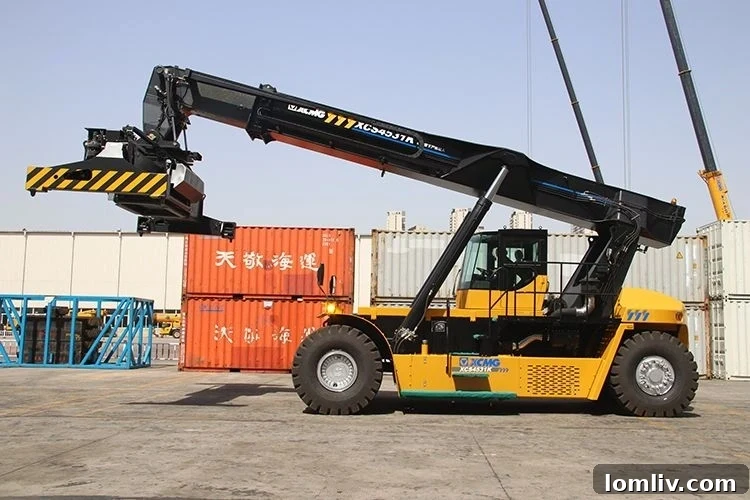
In the competitive landscape of heavy equipment, the XCMG reach stacker XCS4531K emerges as an outstanding contender for businesses seeking a reliable, powerful, and cost-effective solution. This robust 45-ton capacity machine is engineered to tackle the most demanding material handling tasks with remarkable ease and precision, making it an invaluable asset for a diverse range of construction and logistics companies.
The XCS4531K exemplifies XCMG’s commitment to quality and innovation, incorporating many of the critical features discussed in this guide:
- Impressive Capacity and Reach: With its 45-ton lifting capacity, the XCS4531K is capable of handling heavy standard and specialized containers, offering excellent stacking height and horizontal reach to optimize yard utilization and throughput.
- Advanced Performance: XCMG integrates state-of-the-art hydraulic systems for smooth and accurate load handling, coupled with intuitive controls and an operator-friendly cabin designed for maximum comfort and visibility, reducing fatigue during extended shifts.
- Robust Durability: Constructed with high-grade materials and precision engineering, the XCS4531K is built to withstand the rigorous demands of continuous industrial operation, ensuring long service life and minimal downtime.
- Enhanced Safety: Equipped with a suite of modern safety features, including stability control, overload protection, and comprehensive lighting, it prioritizes the well-being of operators and the integrity of your cargo.
- Balanced Value: The XCMG XCS4531K offers a flexible price range, reflecting various configurations and options to meet different budgetary constraints and operational needs. Its strong performance and durability translate into a favorable Total Cost of Ownership, making it a smart, long-term investment that delivers significant value and a solid return.
Ultimately, the XCMG XCS4531K 45-ton reach stacker stands as a testament to intelligent engineering and cost-effectiveness. It provides an excellent balance of initial investment and sustained operational benefits, empowering businesses to achieve peak productivity and efficiency in their heavy material handling operations.