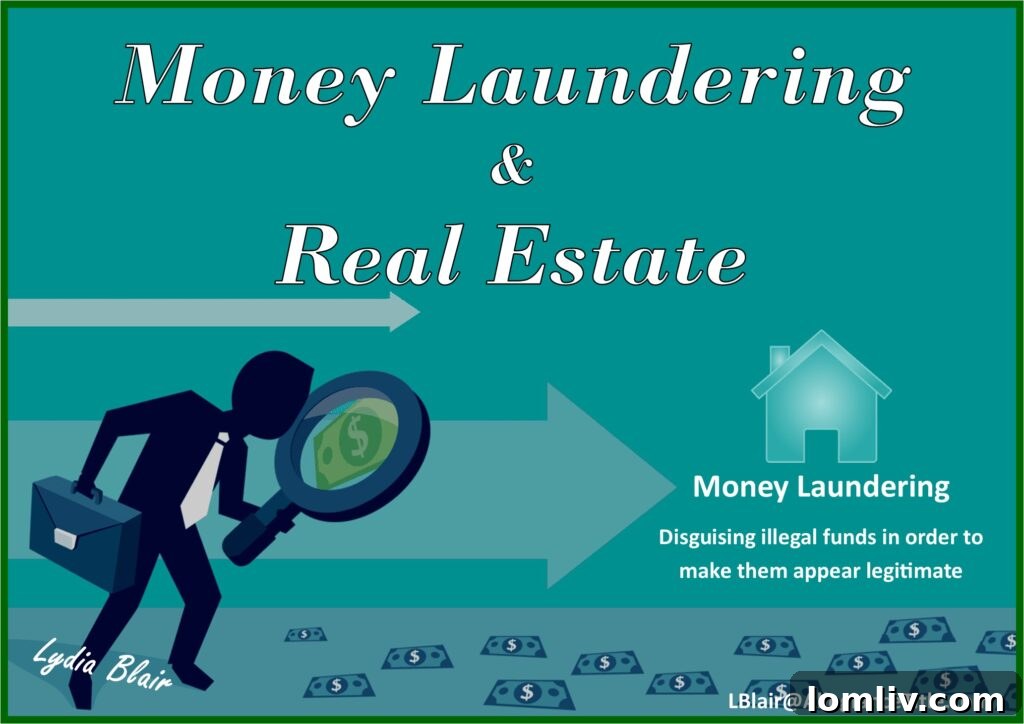
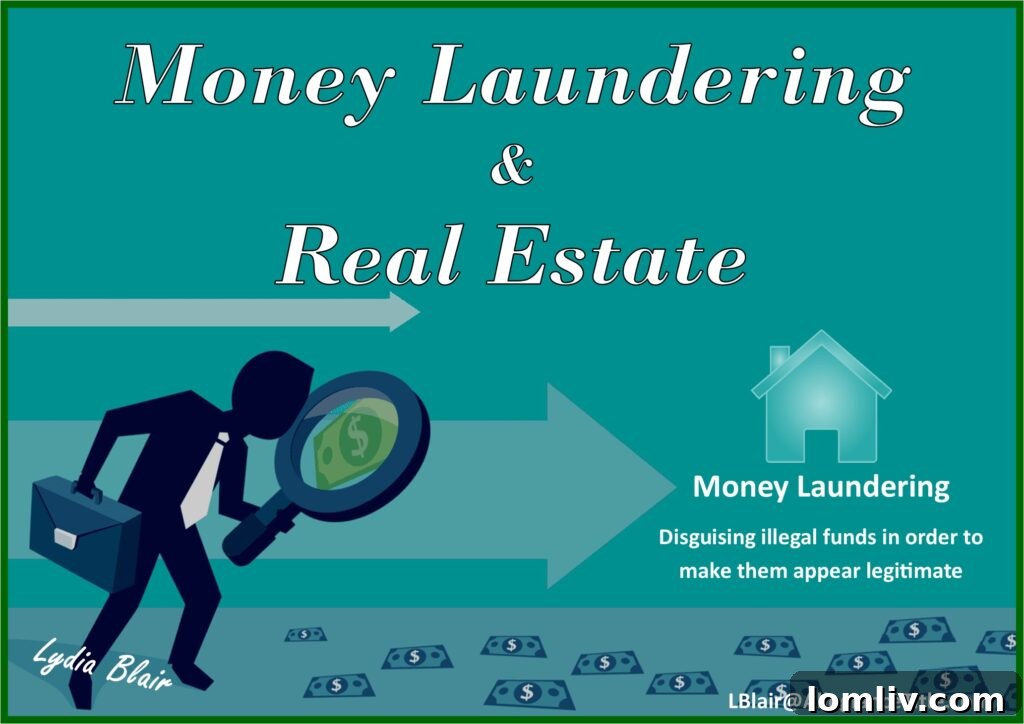
The allure of the U.S. real estate market, with its stability and often opaque transactional structures, has unfortunately made it a prime target for illicit financial activities. Criminals worldwide are increasingly leveraging both residential and commercial properties across the United States as a preferred vehicle for money laundering, effectively transforming ill-gotten gains into legitimate-looking assets. This widespread financial crime poses a significant threat not only to the integrity of the nation’s financial system but also to its broader national security interests.
According to a recent and alarming report from Global Financial Integrity (GFI), a leading Washington-based research institute dedicated to studying illicit financial flows, the figures are nothing short of staggering. Their comprehensive analysis reveals that billions of dollars were laundered through U.S. real estate between 2015 and 2020 alone. This torrent of illicit capital underscores a critical vulnerability in the U.S. financial landscape, painting the nation as an unwitting “safe haven” for those seeking to clean dirty money.
The individuals and entities engaged in these nefarious activities are far from petty criminals. They encompass a wide spectrum of serious offenders, including international drug traffickers, notorious arms dealers, terror financiers, and corrupt political figures from kleptocracies around the globe. These criminals acquire vast sums of money through their illegal enterprises and then meticulously seek to obscure the true source of these funds, often by channeling them into high-value real estate investments. Their methods are sophisticated, frequently involving intricate webs of anonymous shell companies or complexly structured corporations designed to conceal beneficial ownership and evade detection.
A significant portion of real estate money laundering cases originates from abroad. The GFI report highlights how foreign political figures, often referred to as kleptocrats, have systematically plundered their home countries’ national treasuries, subsequently looting and laundering these stolen assets through the perceived safety of the U.S. property market. The report cites numerous instances of millions of dollars laundered by investors hailing from countries such as Russia, Ukraine, Venezuela, and Equatorial Guinea. A particularly egregious example involves the purchase of a lavish Beverly Hills property for $100 million, a sum directly traced back to funds embezzled from Kuwait’s Department of Defense, illustrating the global reach and brazenness of these financial crimes.
The problem of real estate money laundering is not confined to the glitzy luxury markets of major metropolitan hubs, as the GFI report explicitly states. While high-end properties in cities like New York, Miami, and Los Angeles are certainly attractive targets due to their high values, the issue permeates far deeper into the American fabric. Illicit funds are also being injected into properties in remote towns, vibrant suburban areas, and even rural communities, indicating a pervasive vulnerability across the entire real estate spectrum. Both residential properties, from single-family homes to apartment complexes, are popular choices for money launderers seeking to integrate funds into the mainstream economy. However, commercial properties present an equally, if not more, enticing target. Income-producing commercial assets, such as hotels, office buildings, large-scale condominium developments, and expansive retail centers, often carry much higher values, allowing for larger sums of money to be laundered in fewer transactions. These properties also offer the added benefit of generating legitimate rental income, further obscuring the illicit origins of the initial investment.
Alarmingly, a diverse array of professionals can find themselves, either wittingly or unwittingly, assisting these criminals. The GFI report reveals that individuals such as attorneys, real estate agents, and title agents sometimes facilitate these transactions “either through willful blindness or direct complicity.” This highlights a critical regulatory gap and a severe ethical challenge within these professions. Furthermore, the report pointed out a troubling decline in the monitoring and enforcement of these types of illegal activities during the previous government’s administration, creating a more permissive environment for financial criminals.
The current U.S. approach to combating residential real estate money laundering, which primarily relies on geographic targeting orders (GTOs) focused on specific high-risk counties, is described as woefully inadequate by the GFI report. While these GTOs have provided some insights, they do not offer a comprehensive solution to a nationwide problem. Even more concerning is the complete lack of federal disclosure requirements for commercial real estate transactions, making this sector an open invitation for money launderers. This stark absence of transparency creates a massive loophole, allowing vast sums of illicit money to flow unchecked into large-scale commercial developments, with little to no scrutiny regarding the ultimate beneficial owners.
Federal Efforts to Combat Illicit Real Estate Finance
Recognizing the profound implications for national security and economic integrity, the current White House administration has elevated the fight against illicit finance to a core priority. Earlier this year, a comprehensive National Security Study Memorandum was issued, specifically designed to counter these sophisticated criminal efforts. The overarching objective of this directive is to erect substantial barriers for money launderers and other financial criminals, making it significantly more difficult for them to conceal their illicit activities within the U.S. financial system. Targeted directly at criminal organizations and individuals who exploit systemic weaknesses, the memorandum aims to bolster the government’s overall capacity to combat corruption, and crucially, to freeze and recover stolen assets that have been funneled into the United States.
A significant area of focus for reform involves the regulatory landscape for real estate professionals. The Treasury Department is currently under considerable pressure from the president to repeal a long-standing regulatory exemption that has shielded real estate agents from anti-money laundering (AML) obligations. Unlike many other financial gatekeepers, real estate agents are not currently required to identify their clients’ ultimate beneficial owners or to report suspicious activity to federal authorities. This glaring loophole makes the U.S. a distinct outlier among its allies; it is the only major member of the G7 that does not mandate real estate professionals to adhere to robust money laundering rules. Removing this exemption would be a monumental step towards enhancing transparency and accountability across the property market, forcing agents to conduct critical due diligence on their clients and report questionable transactions.
Complementing these policy reforms, the Justice Department is committed to intensifying its efforts on the enforcement front. It continues to rigorously review evidence of financial crimes and anticipates a substantial increase in both the number and scope of its monitoring and investigative activities. These heightened enforcement actions are designed to impose significant impediments on financial criminals, disrupting their operations, seizing their assets, and bringing them to justice. The combination of legislative changes and increased enforcement signals a serious commitment from the federal government to close the loopholes that have historically enabled money laundering in the U.S. real estate sector.
The Role of Title Companies in Combating Financial Crime
Title insurance companies, as crucial intermediaries in real estate transactions, play a vital, albeit sometimes challenging, role in the broader anti-money laundering ecosystem. While they are legally mandated to report suspicious activity, the specific details and operational guidelines for doing so have historically been somewhat vague, creating inconsistencies in implementation. Nevertheless, title companies operating in specific geographic areas, notably including Dallas and Tarrant Counties, are under explicit instructions to file reports to the Financial Crimes Enforcement Network (FinCEN). FinCEN, an integral bureau of the U.S. Department of the Treasury, serves as the nation’s financial intelligence unit, with the primary mission of safeguarding the financial system from illicit use and combating money laundering and terrorist financing. These FinCEN reports are instrumental in identifying patterns and reducing criminal purchases.
Under current FinCEN Geographic Targeting Orders (GTOs), title companies in designated high-risk areas must proactively identify and report instances where residential properties valued over $300,000 are purchased with cash, particularly when the buyer is identified as a business, a Limited Liability Company (LLC), or another legal entity. This reporting requirement aims to pierce the veil of anonymity often provided by corporate structures, making it harder for criminals to hide behind shell companies. By collecting data on such transactions, FinCEN can better track the flow of illicit funds and identify potential networks of money launderers.
Further strengthening the defense against financial crime, the Texas Department of Insurance has imposed specific prohibitions on title companies regarding the acceptance of certain forms of payment for real estate purchases. This critical measure is designed to enhance protection against crime and fraud by limiting the methods through which large sums of money can change hands. To ensure greater accountability and traceability, funds for real estate transactions must be delivered exclusively via wire transfer, cashier’s check, certified check, money order, or personal check. This strict adherence to verifiable payment methods helps to mitigate risks associated with untraceable cash transactions and other high-risk payment instruments.
Beyond these specific directives, all title companies are subject to broader federal regulations requiring them to report any cash or personal check payments for a single purchase that total more than $10,000 to the IRS. This reporting obligation, typically fulfilled through IRS Form 8300, is a foundational element in the government’s strategy to discourage money laundering, tax evasion, and other illegal financial activities. While these existing measures are important safeguards, the persistent prevalence of large-scale financial crime within the real estate sector clearly indicates that more robust and coordinated efforts are still needed to truly slow down and ultimately deter major criminals.
As the landscape of financial crime evolves, so too must the regulatory frameworks and enforcement mechanisms. There is a palpable sense of urgency and hope that the current focus on these vulnerabilities will lead to meaningful and lasting change, ensuring that the U.S. real estate market remains a symbol of legitimate investment rather than a sanctuary for illicit wealth.