Navigating the Highs and Lows of Dallas High-Rise Living: The Park Towers Saga
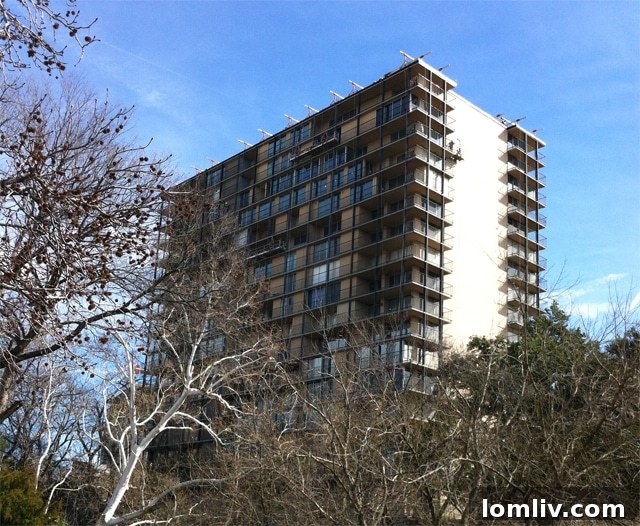
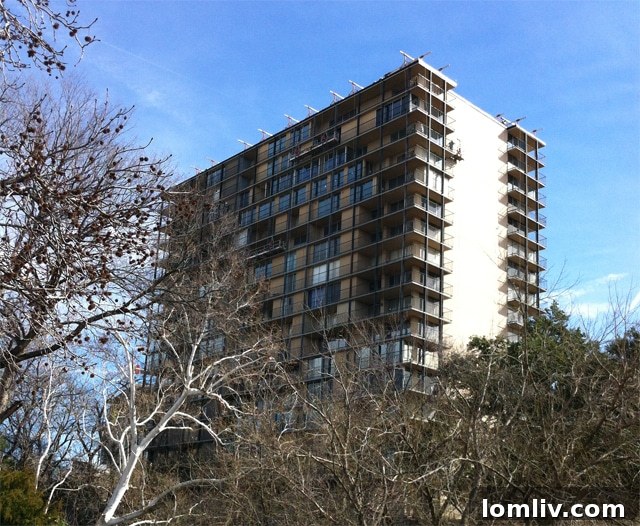
Dallas’ architectural landscape is dotted with iconic structures, and among its original high-rises stands Park Towers. Erected in 1964, this prominent building at Fairmount and the Katy Trail has long been a subject of discussion among real estate enthusiasts and residents alike. While I’ve always appreciated the thoughtful floor plans within Park Towers, the building’s exterior – historically a patchwork of mismatched, enclosed balcony “sheds” – has been a point of contention. Thankfully, these have now been painted a uniform color, improving the aesthetic. Back in 2012, when I was actively searching for a high-rise unit in Dallas, I harbored hopes of finding the perfect unit at Park Towers. Today, I find myself saying, “Thank goodness that never materialized.”
Recent developments at Park Towers underscore the critical importance of robust HOA management, transparent communication, and meticulous financial planning in the realm of high-rise living. Insights from residents and realtors reaching daltxrealestate.com paint a concerning picture: barely after completing a hefty $3.7 million in special assessments – approximately $40,000 per unit – to address years of severely neglected infrastructure, Park Towers’ Homeowners Association (HOA) dues have been abruptly increased by a staggering 38 percent.
The Shocking Dues Hike: A Community Uproar
The announcement of the unprecedented increase sparked an immediate uproar. The HOA meeting where the hike was approved saw standing room only, a testament to the community’s concern. The board justified the increase as necessary to cover a $247,000 shortfall from the recently completed $3.7 million capital improvements project. Many residents passionately argued for an alternative approach: another special assessment to bridge the gap, coupled with a more moderate adjustment to the monthly dues. Their pleas, met with fervent cheers from fellow homeowners, ultimately fell on deaf ears as the board remained unyielding. With residents facing an approximate $500 monthly increase in their dues, the palpable anger and frustration within the community are entirely understandable.
This incident at Park Towers serves as a stark illustration of the consequences when communication between residents, HOA boards, and management companies falters. Reports indicate that residents were largely unaware of the impending magnitude of the increase. They were merely informed that the budget would be discussed at the meeting and encouraged to attend. As one resident succinctly put it, “Shazam!” The substantial increase seemingly materialized out of nowhere, without adequate forewarning or detailed explanation. It’s particularly disorienting for residents to learn that after enduring a multi-million dollar special assessment, the financial challenges for their building are, in fact, just beginning.
Unpacking the Reasons: Decades of Neglect and Empty Coffers
Beyond addressing the immediate shortfall from the recent infrastructure work, this new, significantly higher HOA contribution is slated for several critical purposes. Firstly, it will be used to fund repairs for even more neglect stemming from what appears to be years, if not decades, of ignoring fundamental building infrastructure. Secondly, and perhaps most critically for the building’s long-term health, a portion of these increased funds will finally be allocated towards re-establishing a capital savings account – a crucial financial safeguard that the building had alarmingly ceased contributing to years ago.
This situation presents a painful, albeit vital, lesson for all property owners in aging high-rise condominiums. It underscores the peril of placing blind trust in board members who may lack the necessary management skills or foresight. Furthermore, it acts as yet another urgent wake-up call for disengaged or apathetic owners. The immutable truths of life – death, taxes, and the necessity of plumbing repairs – apply equally to collective property ownership. Whatever decisions an HOA board ultimately makes, residents are legally and financially bound to comply, highlighting the imperative of active participation.
A Personal Encounter: My Near Miss with Park Towers Unit 12B
The unfolding events at Park Towers resonate deeply with my own history. Coincidentally, Unit 12B recently went under contract, a unit I personally explored in June 2012. At that time, it was a foreclosed property listed at $187,000, in dire need of a complete renovation – a transformation it appears to have since undergone. My notes from 2012 indicate that the HOA dues for this 1,570 square-foot unit were $995 per month. Fast forward to today, and the listed HOA dues have soared to an astonishing $1,533 per month.
My decision to step back from purchasing at Park Towers in 2012 was heavily influenced by my discovery of the building’s near-zero capital savings. During my due diligence, the then-building manager openly admitted that the HOA had artificially suppressed monthly dues by halting the capital expenditure contribution component. This created an illusion of affordability – an “HOA holiday” – which knocked approximately $200 per month off all units’ dues. This deceptive strategy was employed precisely during a period when serious age-related structural and systemic issues were increasingly coming to light. It was this cessation of payments into the capital fund that undoubtedly contributed significantly to the eventual size of the $3.7 million special assessment approved shortly thereafter. Only those who moved out or, tragically, passed away, genuinely benefited from those temporarily lowered dues. For everyone else, it was akin to living paycheck-to-paycheck while playing Russian roulette with a building’s future.
Comparing Value: Park Towers Dues vs. Dallas’ Luxury High-Rises
To truly grasp the implications of Park Towers’ current HOA rates, a comparative analysis with other prominent Dallas high-rises is essential. Consider the Ritz, a benchmark for luxury living, where a 1,466 square-foot unit incurs HOA dues of $1,319. While the Ritz unit is slightly smaller and does not include utilities, its dues encompass a comprehensive hotel management package, spa access, access to celebrity chef Dean Fearing’s culinary expertise, valet services, and the quintessential “white glove” treatment synonymous with luxury hospitality. Crucially, it comes with the undeniable prestige and market value of the Ritz brand. This translates to a rate of approximately 90 cents per square foot for a Ritz unit, contrasted with 97 cents per square foot for Park Towers 12B. (I specifically reference 12B because I’m intimately familiar with its history, and unlike many high-rises, Park Towers’ dues scale higher with the unit’s elevation in the building).
The disparity becomes even more pronounced when examining other luxury buildings. A larger 1,777 square-foot unit at One Arts Plaza, for instance, lists its HOA dues at $1,102 (excluding utilities). Even Dallas’ venerable first high-rise, 3525 Turtle Creek – a building notoriously associated with exorbitant HOA dues – now boasts rates that are roughly 10 cents less per square foot than Park Towers, and notably, these include utilities. Such comparisons highlight the disproportionate cost burden now placed upon Park Towers residents, raising serious questions about the perceived value for money.
Market Ramifications: How High Dues Impact Buyers and Sellers
The recent news from Park Towers represents the second instance in recent months where I’ve felt a profound sense of having “dodged a bullet” in my real estate journey. For any prospective buyer, this situation should trigger an immediate red flag, prompting them to accelerate past Park Towers without a second glance. The drastic increase in HOA dues will undoubtedly price out a significant segment of potential buyers, particularly those operating on fixed budgets. This impact is especially acute for younger buyers who require mortgage financing, as the increased monthly obligations can severely limit their purchasing power and long-term financial planning.
Beyond the immediate financial strain, buyers would be wise to be wary of Park Towers’ recent history, which presents an erratic and unsettling series of events: first, the puzzling decision to pause capital contributions, followed by a massive special assessment, and now, a “surprise” 38 percent dues increase. This pattern suggests a building that has historically failed to act in its own best long-term interests, ostensibly “saving residents pennies” while the overall financial burdens mounted into dollars – and then thousands of dollars. Such capricious decision-making inevitably leads to the critical question: “What’s next?” A breach of trust, particularly concerning financial stewardship, can be more damaging than the monetary costs themselves, although a $500 monthly dues increase combined with a $40,000 special assessment within a three-year span undeniably constitutes a major financial blow.
Furthermore, these soaring costs invariably call into question the actual value owners receive for their substantial financial contributions. When paying HOA fees that rival those of the Ritz, one might reasonably expect commensurate amenities and services, such as room service or access to exclusive facilities like the Rattlesnake Bar. However, a Park Towers resident recently informed daltxrealestate.com that even seemingly trivial services, such as package delivery directly to residents’ doors, have been suspended. This disparity in services further underscores the perceived lack of value for the elevated cost.
The Power of Engagement: Be an Involved Homeowner
The Park Towers saga is a powerful reminder that for any HOA board, transparency and proactive communication are not merely desirable; they are absolutely non-negotiable cornerstones of effective governance. Moreover, a certain level of financial accountability, often referred to as “financial handcuffs,” should be legally enshrined within HOA bylaws. This prevents boards from halting critical capital contributions or postponing necessary maintenance for any reason, thereby safeguarding the long-term health and value of the property.
Homeowners must remain vigilant. If you notice an unending series of secretive, closed-door “executive sessions” at your HOA, be concerned. If the same faces dominate the board year after year, without fresh perspectives or challenging voices, be worried. And if the nominating committee – responsible for identifying future board candidates – is predominantly comprised of existing board members, you should be particularly apprehensive about elected officials effectively hand-picking their own replacements. These issues are not unique to Park Towers; they sadly manifest in many high-rise buildings across the country.
When HOA boards operate without sufficient oversight, making decisions that ultimately harm the building’s structural integrity and, consequently, owners’ investments, there must be a critical mass of residents who are not only paying attention but are also willing to listen, question, and act. All too often in these “Gay Nineties” buildings, a term often used to describe aging structures from the mid-20th century, many residents are unfortunately too passive, mistakenly waiting for external intervention rather than actively engaging to protect their most significant asset.
Your Due Diligence is Paramount
Whether you’re embarking on the exciting journey of purchasing a high-rise condominium or any other multi-family dwelling, the fundamental principle remains: do your homework, and do it diligently! Investigate the HOA’s financials, review board meeting minutes, understand the capital reserve study, and engage with current residents. Your financial future in collective living spaces depends on it.
Do you have your own HOA story to share? Perhaps a piece of high-rise history that sheds light on common challenges or successes? Realtors, are you looking to feature a listing desperately in need of renovation, or perhaps one that has been impeccably transformed? Or how about hosting a Candy’s Dirt Staff Meeting at your unique property? Feel free to reach out. Marriage proposals are also accepted (they’re legal, after all)! Contact Jon at [email protected].