By Brenda Masse
Special Contributor
Welcome to our continuing series where we delve into the fascinating and often bewildering world of home inspections. As professional home inspectors, we serve a crucial role in educating homeowners, prospective buyers, and real estate professionals alike. Our mission extends beyond merely identifying structural or mechanical defects; we aim to shed light on potential hazards, maintenance oversights, and the sometimes-hilarious peculiarities found within homes. This column is dedicated to offering practical advice on what to look for around your property, providing essential home maintenance tips, and occasionally sharing those truly unforgettable “OMG, LOL, and WTF” moments that make our job uniquely entertaining. After all, a little humor goes a long way, even when discussing serious property issues.
It’s a rare and exciting day when a seasoned home inspector can declare, “I have never seen that before!” Such instances are truly noteworthy and, without fail, become the stuff of legend in our profession. They serve as vivid reminders that every home has a story, and sometimes, those stories are stranger than fiction. These extraordinary discoveries not only provide us with a good laugh but also underscore the unpredictable nature of homeownership and the endless array of challenges properties can present. Let’s explore some of these memorable findings, offering insights and a chuckle along the way.
The Unlikely Art of a Toilet Tank Ice Sculpture
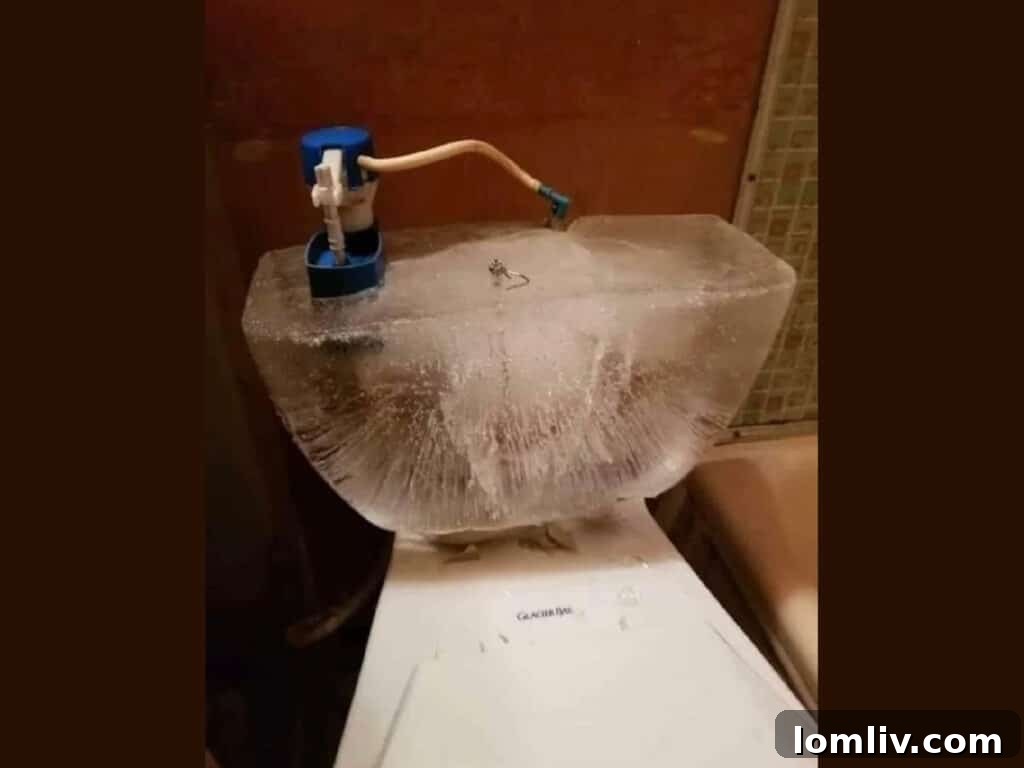
The sheer artistic quality of this frozen marvel truly deserves a round of applause for the homeowner who managed to capture it. While seemingly bizarre, this phenomenon, a cracked toilet tank revealing a perfect ice mold of its interior, is surprisingly less uncommon than one might think, especially in regions prone to severe cold snaps. It typically occurs when a toilet is located in an unheated or poorly insulated space, such as an outdoor outhouse, a detached shed, a garage, or even a seldom-used basement bathroom without adequate heating. During a hard freeze, like the intense cold fronts we’ve experienced recently, the water inside the toilet tank expands as it freezes. The immense pressure exerted by this expansion is often too much for the porcelain tank to bear, leading to dramatic cracks and, in this case, a truly remarkable icy sculpture.
This incident serves as a stark reminder of the destructive power of freezing water and the critical importance of winterizing your home. Beyond the humor, a cracked toilet tank represents a significant plumbing issue and potential water damage. Homeowners must be diligent in ensuring that all areas of their property, especially those containing water lines and fixtures, are adequately protected against extreme temperatures. Simple preventative measures such as insulating pipes, allowing faucets to drip slightly during severe cold, or using a small space heater in vulnerable areas can prevent thousands of dollars in repairs and mitigate the risk of extensive water damage, mold growth, and structural compromise. Always remember that prevention is far more cost-effective than dealing with the aftermath of burst pipes or shattered fixtures. Understanding basic home maintenance tips for cold weather is crucial for every homeowner.
The Most Creative (and Concerning) Water Stain Cover-Up
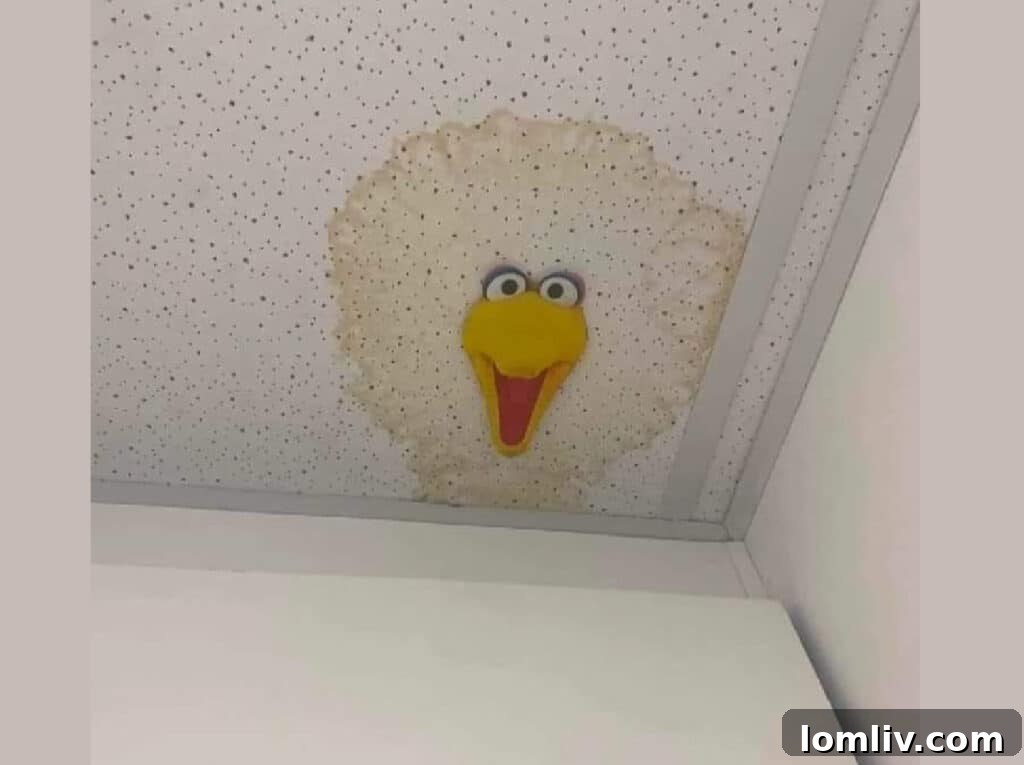
Speaking of a great sense of humor, or perhaps a moment of sheer desperation, we have never encountered a more inventive or artistic attempt to conceal a water stain. Bravo for the creativity, but as home inspectors, our applause is tinged with concern. Water stains are among the most common property issues we encounter, and while this particular cover-up is undeniably unique, it perfectly illustrates a fundamental homeowner pitfall: attempting to hide or simply paint over a problem rather than addressing its root cause. A water stain, regardless of its aesthetic adornment, is a tell-tale sign of an ongoing or past moisture intrusion, which can originate from a variety of sources – a leaking roof, compromised plumbing, foundation issues, or even condensation problems.
Ignoring or merely camouflaging a water stain is a gamble that rarely pays off. Prolonged moisture exposure can lead to a host of severe and costly issues, including structural damage to wood framing, drywall deterioration, and the insidious growth of mold and mildew. Mold, in particular, not only compromises indoor air quality and poses potential health risks but can also significantly devalue a property. When a water stain is discovered, the priority must always be a thorough investigation to identify the source of the leak, assess the extent of the damage, and implement a lasting repair. Only after the moisture problem has been fully resolved, and the affected materials properly dried and, if necessary, replaced, should any cosmetic repairs be considered. For homeowners and real estate professionals, understanding the difference between a quick fix and a proper repair is vital for maintaining property value and ensuring a safe living environment. Don’t let a clever cover-up distract you from essential home maintenance.
When Your Gas Meter Develops Roots: A Serious Safety Hazard
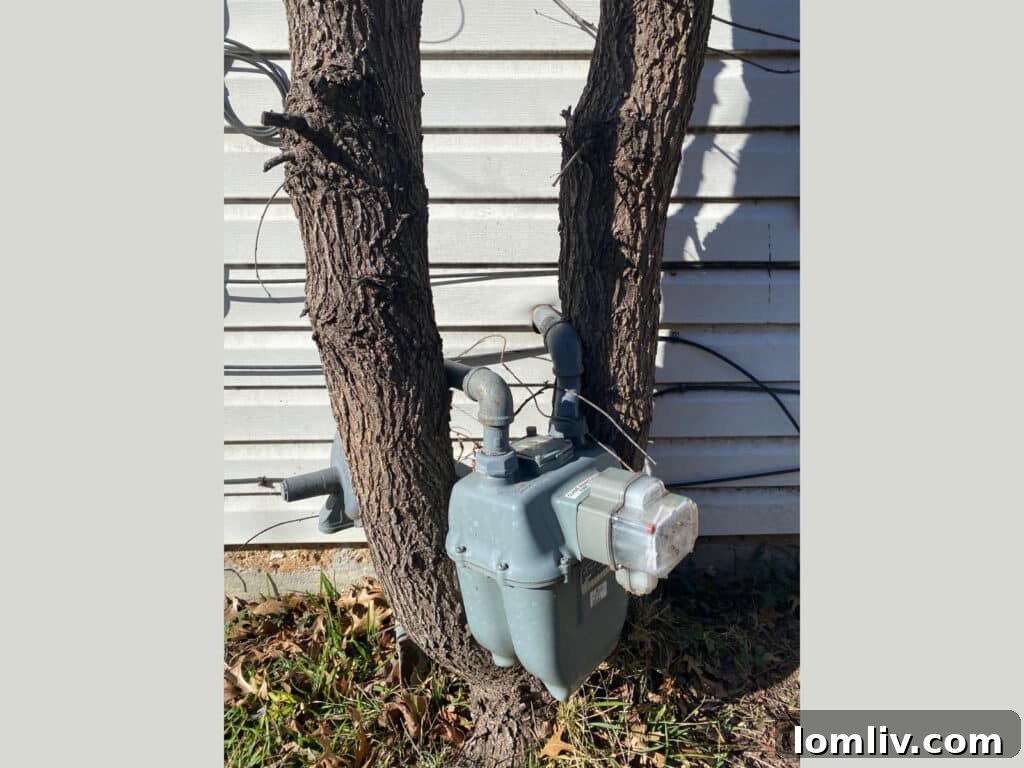
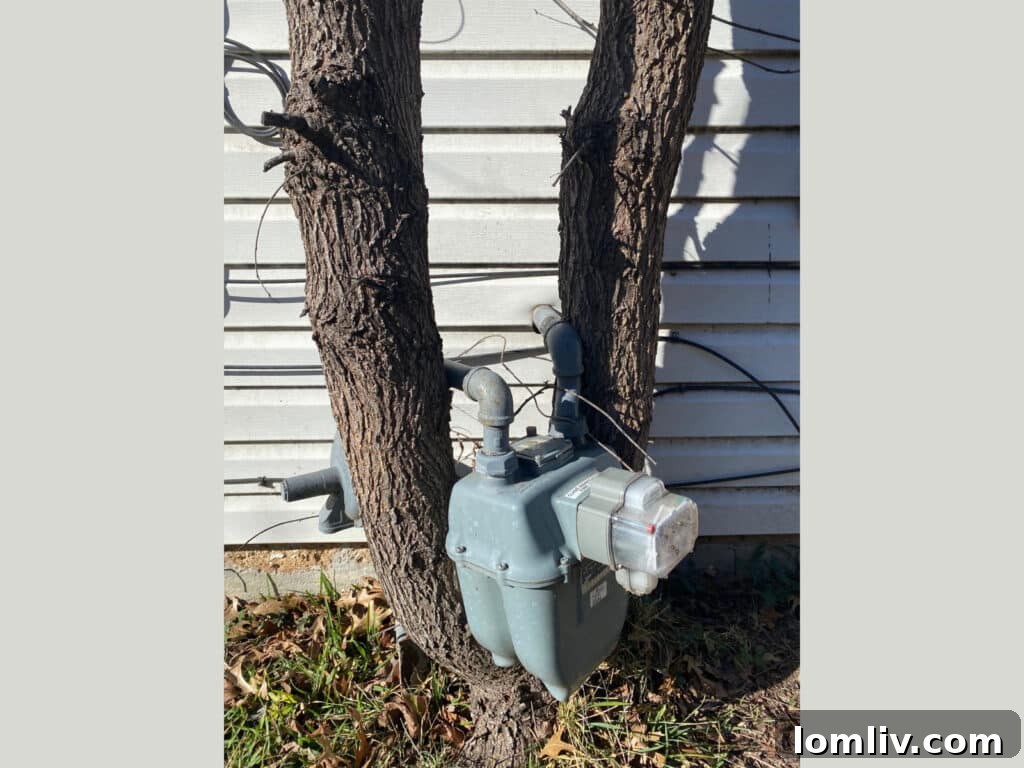
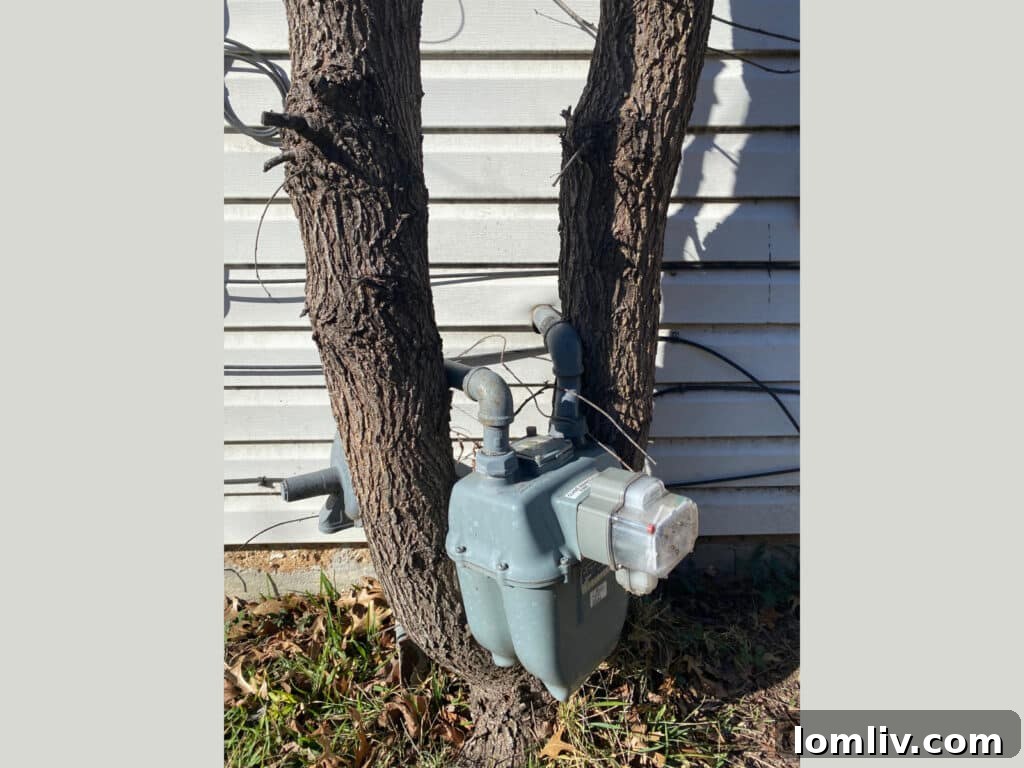
While the previous examples offered a chuckle, this particular image of a gas meter engulfed by tree roots transitions us abruptly from humor to serious concern. It’s not uncommon to observe roots, shrubs, or other landscaping growing a bit too close to utility meters; however, this scenario depicts a level of neglect that is genuinely alarming. Imagine the countless years this tree must have been growing, gradually enveloping the gas meter and its crucial supply lines, without anyone realizing the profound safety implications. Tree roots are incredibly strong and relentless in their growth, seeking out water and nutrients wherever they can be found. Over time, their relentless expansion can exert immense pressure on buried or partially buried utility lines, including gas pipes.
The potential consequences of such an oversight are grave. Compressed or damaged gas lines can lead to leaks, which pose an immediate and severe risk of explosion, fire, or carbon monoxide poisoning. These are life-threatening hazards that every homeowner must take seriously. Utility companies universally recommend maintaining clear zones around all service meters – gas, electric, and water – to ensure easy access for maintenance, readings, and, most critically, in emergencies. Homeowners should regularly inspect their property’s perimeter, especially around utility installations, to ensure that no vegetation is growing too close or threatening to compromise these vital systems. If you notice roots encroaching on a gas meter or any utility line, it’s imperative to contact your utility provider immediately. They can assess the situation safely and advise on appropriate action. Never attempt to remove large roots near gas lines yourself, as this could inadvertently cause a dangerous rupture. Proactive home safety tips, especially concerning utilities, are non-negotiable for property owners.
The Puzzling Portal: A Case of Confusing Door Design
This next example might genuinely make you pause and scratch your head for a moment. It’s a classic “wait, what am I looking at?” kind of situation that epitomizes the unexpected oddities we sometimes discover during a home inspection.
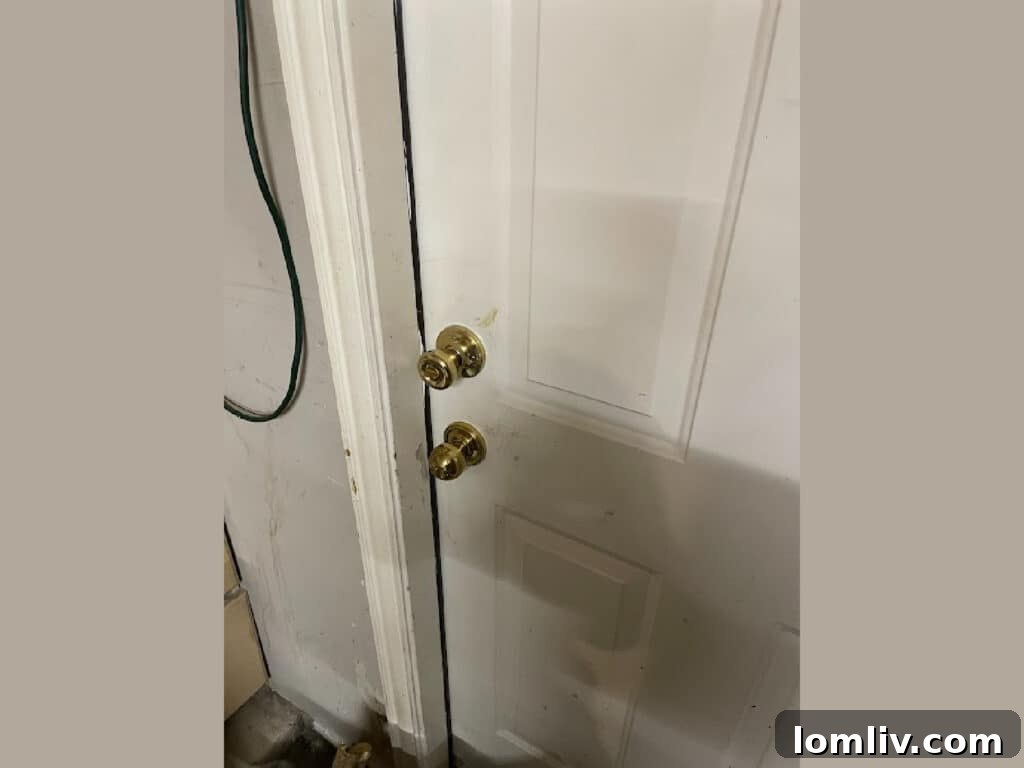
Upon closer inspection, the design of this door, or perhaps its installation, evokes a sense of surrealism. One can almost picture a whimsical character, perhaps from a fantasy novel, residing in a home where all portals exhibit this perplexing aesthetic. While undeniably unique, such an installation raises immediate questions regarding functionality, security, and practicality. Doors are fundamental components of any home, serving not just as entry and exit points but also providing security, insulation, and privacy. When their design or installation deviates significantly from conventional standards without clear purpose, it can impact their ability to perform these essential functions effectively. This particular example could be the result of an unconventional DIY project, a creative but impractical design choice, or simply an oversight during construction or renovation.
As home inspectors, we routinely encounter a variety of door-related issues, from improperly hung doors that stick or don’t close securely, to damaged frames, faulty locks, and inadequate weatherstripping. Each of these can lead to problems ranging from minor inconveniences and increased energy bills to significant security vulnerabilities. While this “confusing door” stands out for its visual oddity, it serves as a humorous metaphor for the less obvious but equally problematic issues that can be hidden within a property. It reminds us that even the most seemingly straightforward elements of a home can sometimes present unexpected challenges or reveal a curious story about its history and inhabitants. Ensuring all doors and windows are correctly installed, functional, and secure is a basic but critical aspect of comprehensive home maintenance and safety. Don’t let unique aesthetics compromise fundamental safety or functionality.

Our journey through these curious and sometimes concerning home discoveries truly highlights the diverse experiences that come with property ownership. From a frozen toilet tank’s artistic demise to a gas meter’s battle with nature, and even a door that defies conventional logic, each example serves as a memorable lesson. These observations, shared from the frontline of home inspections, are designed to empower you with knowledge, encourage vigilance, and perhaps spark a deeper appreciation for the integrity of your own living space.
We firmly believe that an informed homeowner is a protected homeowner. Regular inspections, both professional and DIY, coupled with proactive maintenance, are your best defense against unexpected repairs and potential hazards. Understanding the common problems, as well as the truly rare ones, can save you significant time, money, and stress in the long run. Whether you’re a first-time homebuyer or a seasoned property owner, the insights gleaned from these real-world scenarios are invaluable for maintaining a safe, functional, and valuable home.
What’s the craziest, most puzzling, or laugh-out-loud moment you’ve ever encountered in a house, whether your own or someone else’s? We love hearing your stories and learning from your experiences. Share your incredible home tales and any unique home inspection moments in the comments below! Your insights not only entertain but also contribute to a larger community of well-informed homeowners.